
 Skip to content
 Gas Fireplace Repair In Atlanta from Clean Air Duct Cleaning & Chimney. Fast diagnostics, safe repairs, and chimney service. Call now to book today
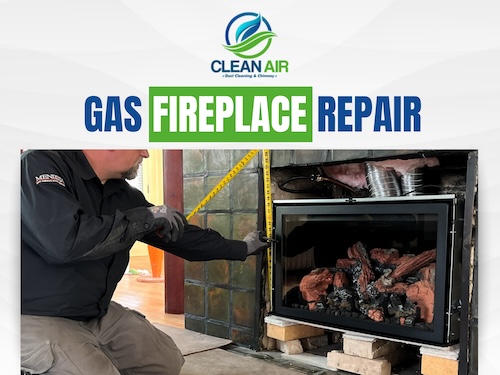
Gas fireplaces combine ignition components, burners, controls, safety sensors, and venting into one operating system.
A problem in one area can affect how the entire fireplace behaves.
Our Gas Fireplace Repair in Atlanta service may involve evaluating:
The first step is determining why the fireplace is not operating as expected rather than replacing parts based only on the symptom.
Need Help? Call Clean Air Duct Cleaning & Chimney Near You
Gas fireplace problems often appear during startup or after the unit has been running for a short time.
Common signs include:
These symptoms can have different causes, so troubleshooting comes before deciding which component needs repair.

The pilot and ignition system are common starting points when a gas fireplace will not light properly.
Depending on the system, problems may involve:
A fireplace that repeatedly clicks without lighting may have a different problem from one that lights normally and then shuts down.
Testing the startup sequence helps narrow down where the problem begins.
When the issue is specifically centered on pilot operation, pilot system repair may be the appropriate service.
Some gas fireplaces use components such as thermocouples or thermopiles to detect heat from the pilot flame.
The source page identifies weakened sensing components as one possible reason a pilot may light but fail to remain on.
Other conditions can produce similar symptoms.
That is why the pilot flame, sensing components, ignition sequence, and overall fireplace behavior should be evaluated together before deciding what needs replacement.
The burner determines how the flame spreads across the fireplace.
Dust, lint, debris, component wear, or log placement can affect what you see during operation.
Possible symptoms include:
Cleaning can sometimes address buildup around accessible burner areas.
However, when the problem involves damaged components or continues after cleaning, repair may be necessary.
If the fireplace mainly needs buildup removed rather than functional repair, gas fireplace cleaning may be the better service.
Need Help? Call Us For Gas Fireplace Repair Services!
Repeated shutdowns are a common gas fireplace complaint.
The source page identifies several areas that may need evaluation, including:
Because several components can create similar behavior, the shutdown pattern matters.
We look at when the fireplace stops, what the flame was doing beforehand, and how the system responds when restarted.
That helps avoid treating every shutdown as the same repair.
Not every gas fireplace problem begins at the burner.
Sometimes the fireplace itself can operate correctly while the control system responds inconsistently.
Problems may involve:
Testing the control path helps determine whether the problem is with the command reaching the fireplace or with the fireplace failing to respond after receiving it.
A gas fireplace still needs the venting arrangement designed for that system.
Depending on the fireplace type, venting concerns may contribute to:
During repair evaluation, we can look at accessible vent connections and other visible venting conditions associated with the unit.
If the gas fireplace vents through an existing chimney and the concern extends beyond the appliance itself, a gas chimney inspection may be appropriate.
The source page identifies several gas fireplace configurations found in Atlanta homes.
Direct-vent systems use a dedicated vent arrangement to bring in combustion air and move exhaust outside.
Repair may involve ignition, controls, burner operation, or accessible vent-related conditions depending on the symptoms.
Gas logs installed in a traditional fireplace have a different setup.
Pilot operation, burners, log placement, damper position, and the existing chimney vent path can all be relevant.
Vent-free units operate differently because they do not use a traditional chimney exhaust path.
Their burner condition, placement, airflow, and operating components therefore need to be evaluated according to that setup.
Identifying which system is installed is an important part of diagnosing the problem correctly.
Atlanta homes include newer direct-vent units as well as older masonry fireplaces that have been converted to gas logs.
These systems do not all fail in the same way.
Long periods without use can also allow dust and debris to collect around accessible components before the fireplace is started again for cooler weather.
For Gas Fireplace Repair in Atlanta, identifying the fireplace type and reproducing the actual problem are more useful than assuming every ignition or flame issue has the same cause.
A typical repair visit may include:
After repair, the fireplace can be checked again to confirm how it starts and operates.
Gas fireplace cleaning and gas fireplace repair solve different problems.
Cleaning may be appropriate when:
Repair may be appropriate when:
Identifying the difference prevents a functional problem from being treated as a cleaning issue.
Not every symptom originates within the gas fireplace itself.
For fireplaces connected to masonry chimneys or other existing vent systems, conditions farther along the vent path can sometimes affect operation.
If the gas fireplace components appear functional but venting concerns remain, the chimney may need separate evaluation.
Likewise, structural firebox or surrounding fireplace damage belongs under broader fireplace repair rather than gas appliance troubleshooting alone.
Gas fireplace troubleshooting should focus on finding the actual failing component or condition.
Our approach includes:
If the problem is straightforward, we keep the repair focused.
If the issue extends into the chimney or another fireplace component, we explain the appropriate next step.
Clean Air Duct Cleaning & Chimney provides professional Gas Fireplace Repair in Atlanta for ignition problems, pilot issues, repeated shutdowns, burner concerns, controls, and other gas fireplace operating problems.
Tell us what the fireplace is doing, when the problem happens, and whether it occurs during startup or after the unit has been running.
We will evaluate the system and recommend the appropriate repair based on what we find.
Call (470) 706-6431 or contact us online to schedule service.
 Optimized by Seraphinite Accelerator