1. Home
  2. »
  3. Chimney Repointing

Chimney Repointing in Atlanta, GA

Chimney Repointing In Atlanta by Clean Air Duct Cleaning & Chimney restores mortar joints, stops leaks, and protects your brickwork. Book today now
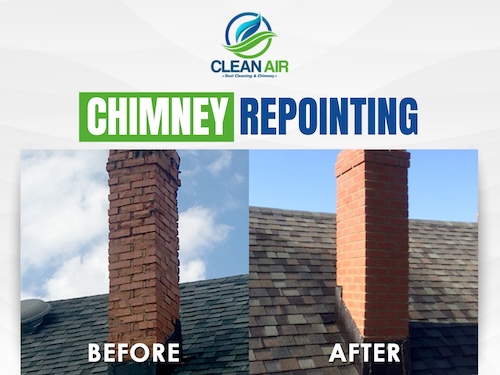
Table of Contents
Chimney Repointing In Atlanta Masonry Repair Pros
Chimney Repointing In Atlanta by Clean Air Duct Cleaning & Chimney restores mortar joints, stops leaks, and protects your brickwork. Book today now

Chimney Repointing

Chimney repointing replaces worn mortar between bricks so your chimney stays stable and water stays out. For Chimney Repointing In Atlanta, Clean Air Duct Cleaning & Chimney finds weak joints, removes failing mortar, and packs in new mortar that fits your brickwork. Chimney Repointing In Atlanta helps stop leaks and slow brick damage.

Need Help? Call Clean Air Duct Cleaning & Chimney Near You

Why chimney repointing matters

Failing mortar joints spread damage

Chimney repointing fixes failing mortar joints before brick damage spreads. Chimney mortar is the glue that holds brickwork together. When that mortar cracks, crumbles, or washes out, water and wind can work deeper into the structure. Repointing removes the bad mortar and replaces it with new mortar placed to the right depth and finish.

If you have a masonry chimney, repointing is normal maintenance. It is not a cosmetic add-on. It helps keep your chimney solid, reduces water entry, and supports safe venting for fireplaces and gas appliances.

Early moisture clues

Are you seeing white stains on brick or damp marks inside near the chimney. Those are often early signs of mortar and moisture trouble.

Signs you may need repointing

You may need repointing if you see gaps, loose sand, or water signs near the chimney. Mortar problems rarely show up all at once. They usually start small, then spread as rain and temperature swings do their thing. Catching it early is less disruptive and helps protect surrounding brick. If you are also tracking water entry, chimney leak troubleshooting can help connect the dots.

Outdoor signs to watch for

You should take a closer look if you notice these signs outdoors. Small clues on the outside often point to bigger issues behind the brick face. If the top of the chimney is taking on water, a chimney inspection can help confirm where it is coming from.

  1. Cracks running along the mortar lines
  2. Mortar missing in spots or looking scooped out
  3. Crumbly mortar that breaks off when touched
  4. Bricks that look loose, shifted, or uneven
  5. White, chalky staining on brick or mortar after rain
  6. Plant growth in joints, even tiny green sprouts

If you see daylight through joints in the attic near the chimney chase, that is a strong sign something is open where it should not be. In many cases a camera inspection helps document what cannot be seen from the ground.

Indoor signs that can trace back to the chimney

You may also spot indoor signs that trace back to the chimney. Water does not always drip in the same place where it enters. It travels and stains wherever it can. If the fireplace area is involved, a fireplace safety inspection can be a smart next step.

  1. Damp drywall near the chimney wall
  2. Musty smells after rain
  3. Bubbling paint or peeling wallpaper by the fireplace
  4. Rust on the fireplace damper or firebox components
  5. Water staining on ceiling areas near the chimney path

If your home has a metal flue cap or chase cover, staining or rust can still tie back to failing mortar where brick meets flashing. A roofline check often pairs well with chimney flashing repair and replacement.

Why mortar fails faster in Atlanta

Atlanta weather and roofline details often cause mortar to fail faster than people expect. Mortar wears down from water exposure, heat, and movement. In Atlanta, you get heavy rain events, humid stretches, and plenty of sun that dries and shrinks materials. The cycle of getting soaked, drying out, and getting soaked again is rough on mortar joints.

Roofs also move slightly with temperature changes. Where the chimney meets the roof, flashing and brickwork must work together. If mortar joints near flashing fail, water can sneak into the seam. The chimney can look fine from the yard while the weak area sits right at the roofline. If moisture damage is ongoing, chimney waterproofing may be part of the plan after repairs.

Common causes around Atlanta GA homes

  1. Aging mortar that has turned sandy or powdery
  2. Water splashback where roofs dump heavy flow near the chimney
  3. Loose or failing flashing that lets water sit against masonry
  4. Mortar that is too hard or too soft for the brick type
  5. Past patching that did not bond well or was applied too thin

If you have tall trees over the roof, shade can keep parts of the chimney damp longer. Moss and algae love that, and mortar does not. When masonry needs broader attention, masonry repair may be recommended.

Our inspection and plan

Our visit starts with a hands-on inspection and a clear plan for the joints that need work. We start by checking the chimney from multiple angles. That includes mortar joints, brick faces, the crown area, and the points where the chimney meets the roof. We also look for signs that moisture is entering and traveling. If you want a broader overview, this is often aligned with a chimney repair evaluation.

We keep the process straightforward. You will know what we found, what sections need repointing, and what should be addressed first.

Need Help? Call Us For Air Duct Services!

Key areas we inspect

We inspect key areas that often hide the worst mortar failure. Some joints fail where you cannot easily see them from the ground. If the top area is suspect, we may also recommend a look at chimney crown repair needs.

  1. The roofline courses near flashing
  2. Corners and edges exposed to wind-driven rain
  3. The upper third of the chimney where weather hits hardest
  4. Areas under caps where water can get trapped
  5. Previous repairs that look smooth but are not bonded well

If the mortar is failing over large areas, we map out sections so the work stays controlled and consistent. For more extensive structural issues, chimney rebuilding may be discussed.

Repointing vs other repairs

We confirm whether repointing is the right fix or if another repair is needed. Repointing helps when the brick is generally sound and the issue is the mortar joints. If bricks are spalling, cracking through the body, or shifting, the repair plan may also include brick replacement or stabilization steps such as chimney brick repair.

We will also flag conditions that can mimic mortar problems, like a damaged crown or missing cap. Mortar is often blamed for leaks that come from the top. In some cases chimney cap installation can help keep water out once the joints are restored.

How chimney repointing works

Chimney repointing is a step-by-step process that removes weak mortar and installs new mortar correctly. Good repointing is not smearing new mortar over old joints. New mortar needs clean, solid sides to bond to. That means removing the failing mortar to a proper depth, cleaning the joints, then packing in new mortar in layers.

Here is how the work typically goes

  1. Protect the area. We set up to keep dust and debris controlled around landscaping and roof areas.
  2. Remove deteriorated mortar. We carefully take out failing mortar without damaging the brick edges.
  3. Clean the joints. Dust and loose grit get removed so the new mortar can grip.
  4. Dampen the masonry as needed. Mortar can dry too fast on hot days, so moisture control matters.
  5. Pack new mortar in lifts. We place mortar in layers so it cures evenly and stays strong.
  6. Tool the joints. The joint finish is shaped to shed water and match the existing look.
  7. Final clean-up and review. We check for uniform joints and address small touch-up needs.

If you have ever tried to patch mortar with a hardware store tube, you already know the truth. Gravity wins, and rain laughs. Proper repointing holds up because it is built into the joint. For ongoing safety, pairing repairs with a chimney inspection can help confirm performance after storms.

Matching mortar and joint style

Matching mortar matters because the wrong mix can damage brick over time. Mortar is supposed to be the sacrificial part of a brick wall. It should take weathering so the brick does not. If mortar is too hard compared to the brick, the brick can crack or flake instead of the mortar wearing down.

We look at the existing masonry and choose a mortar approach that fits the brick and exposure level. We also match joint style so the chimney sheds water properly. When water protection is a priority, chimney waterproofing may be suggested after the mortar has cured.

Common joint finishes and why they matter

This small table shows common joint finishes and why they matter.

Joint finishWhat it looks likeWhy it helps
ConcaveSlightly scooped inwardSheds water well and resists cracking
FlushEven with the brick faceClean look, can hold water if not done right
WeatheredAngled faceDirects water off the joint surface

The goal is simple. Keep water moving away from the masonry instead of letting it sit. For more on masonry as a building method, see masonry.

Related masonry fixes we may combine

We can combine repointing with related chimney masonry fixes when it makes sense. Chimneys often need more than one repair at a time. That does not mean you need a full rebuild. It may mean addressing the spots that let water in, then repointing the joints that took the hit. If the mortar loss is widespread, chimney repair planning helps prioritize.

Depending on what we find

  1. Spot repointing for small areas of joint failure
  2. Full repointing on exposed faces where mortar is uniformly worn
  3. Brick replacement where bricks are cracked, spalled, or loose
  4. Crown repair if the top surface is cracked or letting water in
  5. Flashing evaluation at the roofline to reduce leak paths
  6. Cap or spark arrestor check to help keep water and animals out

If we see staining inside the firebox or smoke chamber, we may suggest a deeper chimney inspection. Some moisture and drafting issues are connected, and services like chimney flue repair may be relevant.

Clean Air Duct Cleaning & Chimney

Timeline and curing

Most repointing projects can be completed in a day or two, depending on access and cure time. Time depends on how much mortar is failing, how high the chimney is, and how easy it is to reach safely. A smaller job may be completed quickly. A larger chimney with widespread mortar loss needs more removal and more careful placement. If access is complex, we may recommend a broader chimney inspection first.

What can slow the job down

  1. Rainy weather that prevents proper mortar curing
  2. Hard-to-reach rooflines or steep roofs
  3. Multiple previous patch layers that must be removed
  4. Brick damage discovered after mortar is removed
  5. Very hot or very dry days that require extra moisture control

Mortar cure is not the same as mortar drying. Curing is the process that helps it gain strength. Rushing it is like pulling a cake out early and calling it rustic.

Safety and when to call a pro

Safety comes first because chimney work involves height, debris, and hidden weak spots. Chimneys are not the place for guesswork. Loose bricks can fall. Roof surfaces can be slick. And older mortar can release dust and grit during removal. If you suspect a bigger structural concern, chimney rebuilding may be the safer route than patching.

You should stop and call a pro if

  1. Bricks wiggle when touched
  2. You see sections leaning or bowing
  3. Pieces of brick or mortar are falling onto the roof
  4. The chimney has large, stair-step cracks
  5. You have active leaks during storms

If you are using a fireplace or gas appliance and notice strange odors, smoke spillage, or poor draft, pause use and get the venting system checked. Masonry problems can affect airflow paths. A chimney inspection can help confirm safe venting.

Preparing your home

Preparing your home helps the work go smoother and keeps the area cleaner. A little prep saves time and reduces stress. Most chimney repointing is outside work, but we may need to look inside around the fireplace or attic areas to trace moisture. If your fireplace needs attention during the same visit, fireplace repair can be discussed.

Simple prep checklist

  1. Move vehicles from the driveway if access is needed for ladders and materials.
  2. Clear patio furniture or grills away from the work zone.
  3. Keep pets inside during active work hours.
  4. If you have an attic access near the chimney, clear a path to it.
  5. Point out any past leak spots inside so we can check those areas.

Do you have gutters overflowing near the chimney corner. Let us know. Water management around the roof edge makes a difference, and chimney leaks often trace back to runoff patterns.

After repointing

After repointing, basic care helps you spot problems early and keep water out. Repointing is built to handle weather, but your chimney still needs normal checks. The goal is to catch water entry points before they soak the brick and framing around it. Many homeowners schedule a follow up chimney inspection during the next season of heavy rain.

What to watch for in the weeks after service

  1. Look for new staining after heavy rain.
  2. Check that downspouts and gutters are moving water away from the chimney area.
  3. Note any loose debris in the fireplace or on the roof near the chimney.
  4. If you see fresh cracks, report them so we can review the cause.

Good habits that protect chimney masonry year-round

  1. Keep tree limbs trimmed back from the roofline when possible.
  2. Clean gutters so water does not overflow onto brick.
  3. Watch for missing chimney caps after storms.
  4. Schedule periodic chimney inspections, especially if you use your fireplace often.

If your chimney takes a lot of wind-driven rain on one side, that face often shows wear first. A quick visual check from the ground a few times a year helps. If you spot changes up top, chimney cap replacement may be needed after storms.

Atlanta chimney wear patterns

Atlanta homes see specific chimney wear patterns tied to roof designs, shade, and storm cycles. Many homes around Atlanta, Georgia have rooflines that create heavy water flow valleys. If a chimney sits near a valley, it can get more splash and runoff than chimneys on simpler roof planes. That extra water load often shows up as joint erosion near the roofline. Addressing roofline entry points may include chimney flashing repair and replacement.

Older brick chimneys in established neighborhoods may also have mortar that has reached the end of its service life. Newer builds can still have mortar issues if water is trapped by poor drainage or if earlier repairs used mortar that does not match the brick. If the brick units themselves are failing, chimney brick repair may be necessary along with repointing.

Common local scenarios

  1. Mortar washout on the side facing prevailing storms
  2. Leaks that start at flashing but show up on interior drywall
  3. White staining after repeated summer downpours
  4. Soft mortar joints hidden behind gutter lines
  5. Chimneys shaded by pine and oak canopies that stay damp longer

If you are in Metro Atlanta and your chimney sits above a two story roofline, access and safety planning matter. That is normal, and it is part of doing the work the right way. Planning often starts with a chimney inspection to confirm scope before work begins.

Why homeowners choose our team

Homeowners choose our team because we explain the problem clearly and focus on long-term water control. You should know what you are paying for in plain language. We walk you through what failed, why it likely failed, and what the repair will address. If we think another issue is the real leak source, we say so. You can also review who we are on our About Us page.

Clean Air Duct Cleaning & Chimney works on homes every day where indoor air, moisture, and venting all overlap. Chimney masonry problems can affect more than the bricks you see outside. They can contribute to drafts, odors, and damp conditions that nobody enjoys. When airflow issues overlap with home comfort, services like air duct cleaning may also be part of a wider plan.

What you can expect

  1. Clear inspection notes and photos when helpful
  2. Careful mortar removal that protects brick edges
  3. Joint finishing that sheds water, not collects it
  4. Jobsite respect for your roof, yard, and entry points
  5. Practical next steps if we spot related chimney issues

If you have been putting off that crumbling mortar because it still looks okay, you are not the only one. Most chimneys do their best to look innocent.

Related Services

Schedule Chimney Repointing In Atlanta GA

Schedule Chimney Repointing In Atlanta, GA to protect your chimney and reduce leak risks. Chimney mortar does not heal itself, and water usually does not get bored and leave. If you think your chimney joints are failing, it is worth addressing now before loose bricks and deeper moisture damage show up.

For Chimney Repointing In Atlanta, contact Clean Air Duct Cleaning & Chimney. Call (470) 706-6431 or use the Contact Us page to schedule a visit and get a clear plan for your chimney repair.

Frequently Asked Questions (FAQs)

Chimney repointing is the process of repairing and renewing the mortar joints between bricks or stone to help maintain the chimney’s structural integrity.
Mortar can deteriorate over time due to weather exposure and normal aging, which can allow moisture intrusion and lead to further masonry damage.
Typical signs include crumbling or missing mortar, gaps between bricks, loose masonry, or visible deterioration around the chimney exterior.
Repointing focuses on renewing mortar joints, while rebuilding involves replacing larger sections of the chimney structure when damage is more extensive.
Repointing can help reduce pathways for water to enter through deteriorated joints, though overall moisture control may also depend on other chimney components and conditions.
It can be both—repointing can improve appearance while also supporting the stability of masonry by restoring compromised mortar joints.
The timeframe varies based on the chimney’s size, condition, and access, as well as weather and curing considerations.
Professionals generally use mortar compatible with the existing masonry to support proper bonding and performance without stressing the bricks or stone.
Many property owners choose a professional because proper mortar selection, joint preparation, and safe access are important for effective, durable results.
Clean Air Duct Cleaning & Chimney provides chimney repointing services and can help address deteriorated mortar joints as part of chimney maintenance.
Why Your Home Airflow Drops When Dust Builds Up in Ducts

Why Your Home Airflow Drops When Dust Builds Up in Ducts

Your home airflow drops when dust builds up in ducts because that dust acts like…

Why Regular Chimney Sweeping Helps Keep Your Fireplace Safe

Why Regular Chimney Sweeping Helps Keep Your Fireplace Safe

A clean chimney lets smoke move out of your home, not back into your face.…

Signs Your Air Ducts Need Cleaning Before the Seasons Change in Atlanta, GA

Signs Your Air Ducts Need Cleaning Before the Seasons Change in Atlanta, GA

Your air ducts may need cleaning before a seasonal change if you notice more dust,…

How Creosote Forms and Why It Needs Removal

How Creosote Forms and Why It Needs Removal

Creosote forms when wood smoke cools inside your chimney and turns into a sticky, dark…

Dryer Vent Lint Buildup and Fire Risk, What Every Atlanta Homeowner Should Know

Dryer Vent Lint Buildup and Fire Risk, What Every Atlanta Homeowner Should Know

Lint buildup in a dryer vent raises fire risk because it blocks airflow. When hot…

Why Annual Chimney Inspections Protect Your Fireplace and Home

Why Annual Chimney Inspections Protect Your Fireplace and Home

An annual chimney inspection helps you catch hidden trouble before it grows. A pro can…