1. Home
  2. »
  3. Dryer Vent Booster Fan Install

Dryer Vent Booster Fan Install in Atlanta, GA

Dryer Vent Booster Fan Install In Atlanta by Clean Air Duct Cleaning & Chimney. Improve airflow on long vent runs. Fast scheduling in Atlanta today
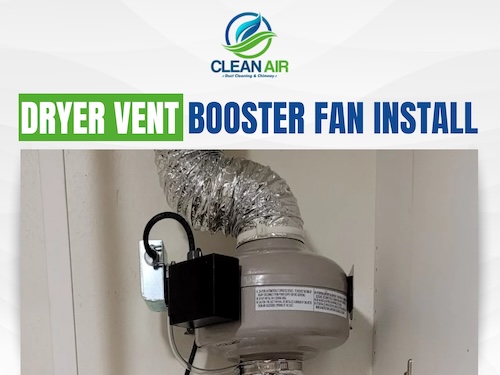
Table of Contents
Dryer Vent Booster Fan Install In Atlanta Pros
Dryer Vent Booster Fan Install In Atlanta by Clean Air Duct Cleaning & Chimney. Improve airflow on long vent runs. Fast scheduling in Atlanta today

Dryer Vent Booster Fan Install

Dryer vent booster fans help long dryer vent runs move air better, and we install them the right way for Atlanta homes. Clean Air Duct Cleaning & Chimney handles Dryer Vent Booster Fan Install In Atlanta with proper fan placement, safe wiring coordination when needed, and airflow checks so your dryer can vent the way it should in Atlanta, GA.

Need Help? Call Clean Air Duct Cleaning & Chimney Near You

What a dryer vent booster fan does

A dryer vent booster fan install adds powered airflow where your vent line struggles. If your vent run is long, has several turns, or travels up through an attic or roof, your dryer may not push air strongly enough on its own. A booster fan is an in line fan installed in the dryer vent duct. It helps pull and push moist exhaust air to the outside.

A booster fan is not a make the dryer stronger gadget. It is a vent system helper. The goal is steady airflow from the dryer to the exterior vent hood, without backdrafting lint or moisture into the home.

If you are asking, will this stop my dryer from taking two cycles, it often helps when the main issue is vent resistance. If the dryer itself is failing, a fan will not fix that, and we will tell you what we see. When airflow is the concern, we may also recommend a dryer vent inspection to confirm what the vent path is doing.

Signs a booster fan may be a good fit

You may need a booster fan if drying takes too long or the laundry room feels warm and damp. Long dry times are the most common sign, but they are not the only one. Poor venting affects comfort and can raise the chance of lint buildup inside the duct.

Here are signs a booster fan may be a good fit

  • Clothes still feel damp after a normal cycle
  • The dryer feels hotter than usual on the outside
  • The laundry room gets humid during a cycle
  • The vent hood outside has weak airflow
  • You find lint around the dryer or near the wall connection
  • The vent line travels up, across a ceiling, or a long distance to an outside wall

What do you notice most, slow drying or heat in the room. That detail helps us narrow down whether airflow is the problem, and whether dryer vent repair or a booster fan is the better next step.

Why Atlanta vent layouts struggle

Long vent runs, tight turns, and roof exits often cause the airflow problem in Atlanta homes. Many Atlanta houses and townhomes have laundry areas placed far from an exterior wall. Builders may route the vent up into the attic, across framing, then out a roof cap. Every extra foot and every turn adds resistance.

Common causes we see

  • Vent duct that runs more than a short, direct path to the outside
  • Multiple elbows, kinks, or crushed sections behind the dryer
  • Roof venting that fights gravity and adds length
  • Older vent materials that collect lint more easily
  • Exterior vent hood flaps that stick or screens that clog

A booster fan can help, but it still needs a clean, properly sized vent line. If the duct is packed with lint, adding a fan is like putting a bigger engine on a car with the parking brake on. In those cases we may recommend dryer vent cleaning first, or pairing it with the install.

When a home is not a good candidate yet

Some homes are not good candidates until the vent system is corrected first. A booster fan is a tool, not a bandage for a broken vent. If the vent is unsafe or poorly built, we may recommend corrections before installing a fan.

We may pause and talk through options if we find

  • Flexible foil duct used for long runs
  • Duct sections that are disconnected in an attic or crawlspace
  • A vent that terminates indoors or into a soffit area that traps moisture
  • Heavy lint buildup or wet lint that signals a blockage
  • A vent diameter that is reduced or patched with the wrong parts

Do you know where your dryer vent exits the home. Many people do not, and that is normal. We can trace it and confirm the exit point, and when needed we can use a camera inspection to verify conditions inside the line.

What to expect during our install visit

Our visit focuses on airflow, safe placement, and a clean install that supports your vent design. We keep the process simple and clear, and we explain what we are doing as we go. We also protect the work area and keep lint mess under control.

Here is what typically happens during a service call

  1. System review. We look at the dryer location, the transition duct, and where the vent line runs.
  2. Exterior check. We inspect the outside vent hood for airflow, damage, and blockage.
  3. Vent condition check. We check for restrictions, crushed duct, excess turns, and lint buildup.
  4. Fan placement plan. We choose a location that fits the fan model rules and your vent layout.
  5. Install and connection. We mount the fan, connect duct sections correctly, and seal joints as needed.
  6. Control setup. We set up the pressure switch or sensing method used by the fan so it turns on at the right time.
  7. Airflow test. We run the dryer and confirm the fan starts, airflow improves, and the vent hood opens properly.
  8. Final walkthrough. We show you what we changed and what to watch for going forward.

Every home is different, so we do not guess. We verify. That is how you avoid repeat problems, and it also helps us spot when dryer vent rerouting would solve the root issue better than adding equipment.

Fan placement matters

Fan placement is the difference between it works and why did we do this. A booster fan must go in the right spot on the line. Put it too close to the dryer and it can see too much lint. Put it in the wrong attic area and service becomes a headache later.

General placement goals
  • Install where the fan can move air efficiently without fighting the dryer
  • Keep it accessible for future cleaning and inspection
  • Follow the fan maker rules for distance from the dryer and direction of airflow
  • Avoid spots where moisture could pool in the duct

If your vent exits through the roof, we often look for a straight section in the attic with enough room to mount and service the unit. If it exits through a far wall, we plan around framing and access panels. In some layouts, combining the install with dryer vent installation improvements can reduce resistance even more.

Need Help? Call Us For Air Duct Services!

Choosing the right setup for your vent layout

The right booster fan setup depends on your vent length, layout, and how your dryer is used. Not all booster fans work the same way. Many use a pressure switch that senses when the dryer is running, then powers the fan. Some setups use current sensing or other triggers. The key is that the fan should run when the dryer runs, and shut off after.

We match the approach to the home

  • How long and complex the vent route is
  • Whether the vent goes up through the attic
  • Whether the duct has a history of lint buildup
  • How easy it will be to access the fan later

If you run frequent loads, you will benefit from a setup that starts reliably and does not short cycle. We confirm that operation during testing, and we can suggest a simple dryer vent maintenance routine after the install.

Cleaning vs booster fan

A clean vent line is often needed before a booster fan install makes sense. Airflow issues are often caused by lint buildup. If we install a fan on a clogged line, the fan may still struggle, and you still have a safety concern.

We may recommend vent cleaning before or during the install if we find

  • Visible lint deposits in accessible sections
  • Weak airflow at the outside hood
  • Damp lint at the termination point
  • Signs of prior blockage, like overheating or repeated thermal shutoffs

Our business focuses on air movement systems, and dryer vents are a big part of that. Clean ductwork plus good airflow equals better performance. If your home also has broader airflow comfort issues, we can discuss options like air duct cleaning and duct leakage testing for the HVAC side of the house.

Comparison table

Here is a simple table to help you compare needs cleaning versus needs a booster fan. Many homes need one or the other. Some need both. This quick chart helps explain what we look for.

What you noticeMore likely causeWhat we check first
Sudden drop in airflowBlockage or crushed ductLint buildup, kinked transition, stuck hood flap
Long term slow drying in a long runVent length and resistanceTotal run length, number of elbows, roof exit
Very hot dryer exteriorRestricted ventingDuct condition, backpressure, termination airflow
Lint around dryer areaLoose connections or poor ductTransition duct fit, clamps, joint sealing
Outside hood barely opensWeak airflow or blockageHood type, screen issues, duct restriction

This is not a perfect diagnosis tool, but it keeps the conversation clear. If needed, we can verify airflow performance and system condition with a more detailed air duct testing approach on the HVAC side, especially when whole home airflow complaints overlap.

Time and access factors

Installation time depends on access, duct condition, and whether changes are needed. Many installs are straightforward once the vent path is confirmed and accessible. Others take longer if the fan location is hard to reach or if the duct needs correction first.

Things that can slow the job down

  • Fan location inside a tight attic area with limited decking
  • Duct sections that are damaged, disconnected, or the wrong material
  • A roof termination that needs careful inspection and safe access planning
  • Multiple vent problems stacked together, like length plus lint plus crushed sections

We will talk through what we find before we commit to a plan. Clear expectations beat surprises. When we find bigger layout issues, we may recommend air duct repair principles applied to the dryer line, meaning correct materials, correct connections, and correct support.

Safety guidance for homeowners

Safety comes first, and there are times you should stop running the dryer. A struggling vent is not only annoying. It can be unsafe. If your dryer is overheating or shutting off, treat it as a warning sign.

Stop and call for help if you notice
  1. A burning smell during a cycle
  2. The dryer shutting off mid cycle often
  3. The laundry room getting very hot
  4. No airflow outside while the dryer runs
  5. Lint blowing into the room

Also, do not ignore moisture problems. A poorly vented dryer can push humid air into the house, which is the last thing you want during a sticky Atlanta summer. For general dryer fire safety guidance, you can review information from the US Consumer Product Safety Commission.

Clean Air Duct Cleaning & Chimney

How to prepare and what to do after

You can prepare in a few minutes and help the visit go faster. A little prep makes the work smoother and helps us inspect the full setup.

Before we arrive

  1. Clear a path to the laundry area and the exterior vent exit if you know it
  2. Remove items stored behind the dryer or in a nearby closet
  3. Keep pets in another room during the inspection and testing
  4. Let us know if you have had past vent cleaning or repairs
  5. If your vent runs through the attic, tell us where the attic access is

If your dryer is stacked or in a tight closet, no problem. Just tell us ahead of time so we plan for access. If your vent line is due for routine service, pairing this with dryer vent maintenance can help keep performance consistent.

After the install

After the install, a few habits help keep airflow strong and lint under control. A booster fan is not set it and forget it. It still depends on a vent line that stays reasonably clean.

Good habits after service

  • Clean the lint screen every load
  • Do not overload the dryer, since heavy loads shed more lint
  • Watch dry times for changes over the next few weeks
  • Check the outside vent hood flap every so often for smooth movement
  • Keep the area behind the dryer from pushing and crushing the duct

If you ever notice airflow dropping again, do not wait until it becomes a full blockage. Catching it early is easier, and scheduling a dryer vent inspection can help confirm what changed.

Atlanta GA and Georgia homes

Atlanta homes often have vent layouts that benefit from a booster fan when the run is long. Many properties in Atlanta, Georgia have laundry rooms placed in the center of the home, on upper floors, or near interior bathrooms. That layout keeps plumbing efficient, but it can make vent routing long.

Situations we see often around ATL neighborhoods and suburbs

  • Second floor laundry closets venting through attic space
  • Townhomes with long horizontal runs to a rear wall termination
  • Older homes with retrofitted laundry locations and patchwork duct routing
  • Roof exits where heat and moisture meet seasonal humidity

Humidity is part of life in GA. Your vent system should move moist air out quickly, not let it linger in ductwork. If your home also struggles with HVAC airflow, services like duct balancing can support comfort room to room.

Why homeowners choose us

We focus on clear communication, clean workmanship, and results you can see and feel. We do not treat your home like a job site. We treat it like a lived in space, because it is. We explain what is happening, show you the vent route we find, and confirm airflow at the end.

Homeowners call us because they want

  • A straightforward plan that fits their vent layout
  • An install that respects manufacturer requirements and venting basics
  • A real airflow check, not a quick swap of parts
  • Help spotting vent issues that could cause repeat problems

If we think a booster fan will not solve your issue, we will say so and explain why. That saves you time and frustration, and sometimes the better fix is dryer vent repair or rerouting the dryer vent to reduce resistance.

Dryer Vent Booster Fan Install benefits

Dryer Vent Booster Fan Install is a smart upgrade when your vent run is long and your dryer is working too hard. If your dryer takes forever to dry clothes, it is easy to blame the appliance. Many times the vent path is the real problem. A booster fan supports the system so exhaust air exits the home with less resistance.

A booster fan can help you

  • Shorten dry times when vent resistance is the main issue
  • Reduce heat and humidity in the laundry area
  • Improve outside vent hood airflow
  • Support safer venting habits when paired with regular vent maintenance

Want us to check your setup and tell you what is really going on. We can start with a dryer vent inspection and recommend the most practical next step.

Schedule service

Schedule your Dryer Vent Booster Fan Install In Atlanta with Clean Air Duct Cleaning & Chimney. If you are ready to improve airflow on a long vent run, we are ready to help. We handle Dryer Vent Booster Fan Install In Atlanta with careful placement, proper operation testing, and practical guidance for keeping the vent clear.

Related Services

Call (470) 706-6431 to get started, or use our Contact Us page to book service.

Frequently Asked Questions (FAQs)

A dryer vent booster fan is an inline fan that helps move dryer exhaust through longer or more restrictive vent runs, supporting better airflow when the existing vent path is challenging.
It’s often considered when the vent run is unusually long, has multiple bends, or the dryer is located far from the exterior termination, and airflow may be difficult to maintain.
Installation is typically handled by qualified professionals familiar with dryer venting and applicable electrical and venting requirements; Clean Air Duct Cleaning & Chimney provides this service.
No. A booster fan is not a substitute for proper vent maintenance; keeping the vent system clean and unobstructed remains important for normal operation.
It’s commonly installed inline within the dryer vent ductwork at a location that supports effective airflow and access for service, based on the layout of the vent system.
Not always. Compatibility can depend on the dryer type, vent material, duct routing, and local requirements, so a general evaluation of the setup is usually needed.
Many models do require electrical power and may use controls that activate the fan when the dryer runs, depending on the product and installation approach.
Maintenance commonly involves keeping the vent system clear, checking the fan for lint buildup as applicable, and ensuring the unit remains accessible for periodic service.
Vent materials and configurations vary, and some setups may not be ideal. A professional can advise on general suitability and whether changes to the venting may be recommended.
Yes. Clean Air Duct Cleaning & Chimney provides dryer vent booster fan installation services as part of general dryer vent airflow support solutions.
Why Your Home Airflow Drops When Dust Builds Up in Ducts

Why Your Home Airflow Drops When Dust Builds Up in Ducts

Your home airflow drops when dust builds up in ducts because that dust acts like…

Why Regular Chimney Sweeping Helps Keep Your Fireplace Safe

Why Regular Chimney Sweeping Helps Keep Your Fireplace Safe

A clean chimney lets smoke move out of your home, not back into your face.…

Signs Your Air Ducts Need Cleaning Before the Seasons Change in Atlanta, GA

Signs Your Air Ducts Need Cleaning Before the Seasons Change in Atlanta, GA

Your air ducts may need cleaning before a seasonal change if you notice more dust,…

How Creosote Forms and Why It Needs Removal

How Creosote Forms and Why It Needs Removal

Creosote forms when wood smoke cools inside your chimney and turns into a sticky, dark…

Dryer Vent Lint Buildup and Fire Risk, What Every Atlanta Homeowner Should Know

Dryer Vent Lint Buildup and Fire Risk, What Every Atlanta Homeowner Should Know

Lint buildup in a dryer vent raises fire risk because it blocks airflow. When hot…

Why Annual Chimney Inspections Protect Your Fireplace and Home

Why Annual Chimney Inspections Protect Your Fireplace and Home

An annual chimney inspection helps you catch hidden trouble before it grows. A pro can…