Skip to content
An annual chimney inspection helps you catch hidden trouble before it grows. A pro can spot cracks in the flue, gaps in the crown, and weak masonry that you cannot see from your living room. That matters because heat, smoke, and water all travel through your chimney system. When a small issue gets ignored, it can turn into smoky fires, water stains, and bigger repairs.

What a chimney inspection really checks, and why it matters
A chimney is not just a brick stack with a hole. It is a working system. It has parts that handle heat, draft, smoke, sparks, and rain.
A typical inspection looks at:
- The firebox, damper, and smoke shelf
- The flue liner and flue walls
- The chimney crown and cap area
- The masonry, mortar joints, and flashing where the chimney meets the roof
- Signs of creosote buildup, soot, or blockages
Think of it like checking the tires, brakes, and oil on a truck. You may be able to drive without looking for a while, but you are rolling the dice.
The flue, the hidden tunnel that can cause big trouble
Your flue is the passage that moves smoke and gases out of the house. You cannot see most of it. That is the problem.
What can go wrong inside the flue
- Cracks in the liner that let heat reach wood framing
- Gaps and missing mortar in clay tile liners
- Heavy creosote that can catch fire
- Blockages from nests, leaves, or broken tiles
A flue issue can stay quiet for a long time. Then you light a fire on a cold night and the smoke acts weird. It might spill into the room. It might smell sharp. It might leave black marks near the fireplace opening.
A pro inspection can find these problems early, when they are still small.
Short safety note
If you ever see smoke rolling into the room, stop using the fireplace and get it checked. Do not try to “burn it off” with a hotter fire. That is like fixing a leak by turning up the water.
The chimney crown, your chimney’s “umbrella”
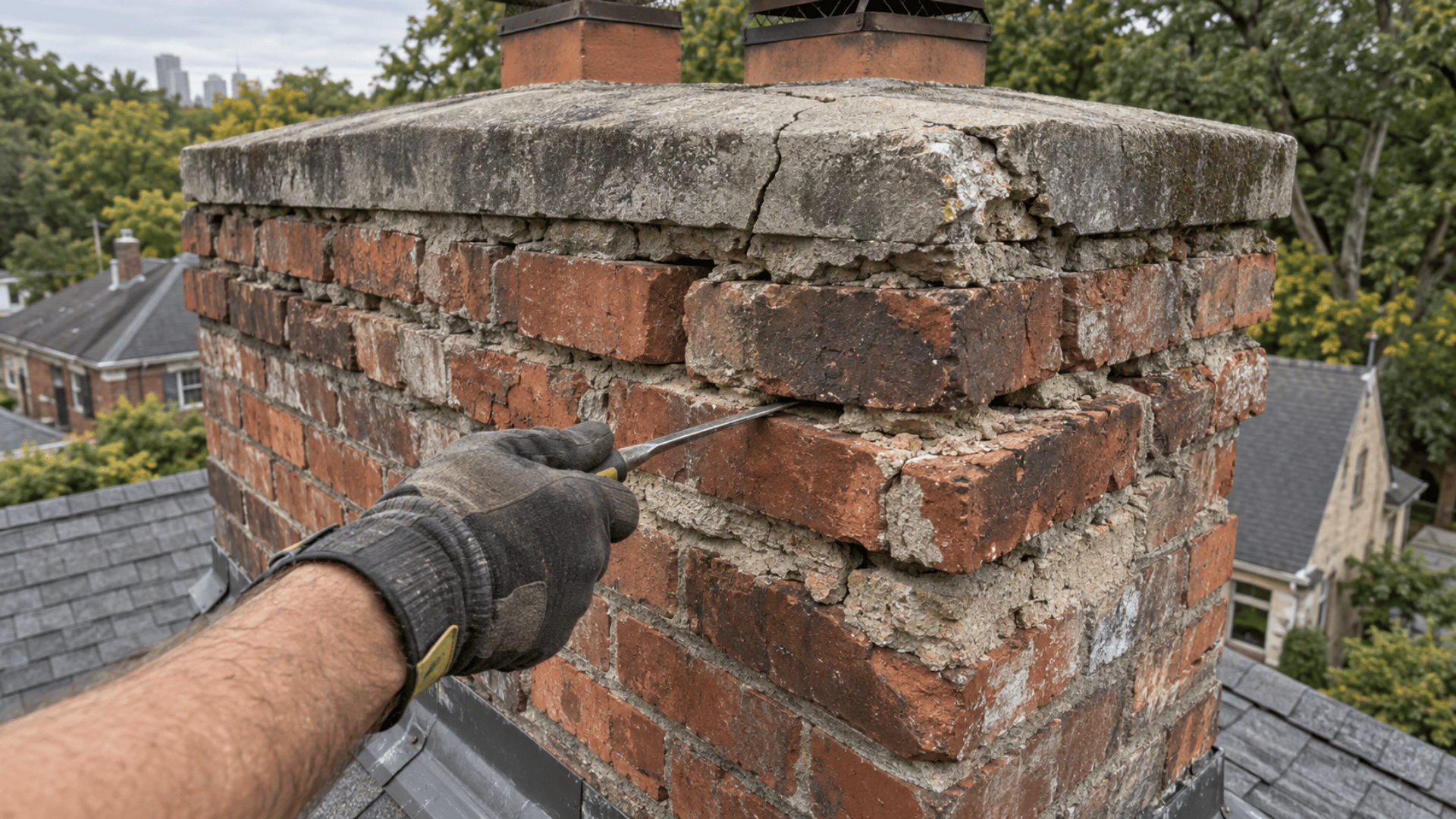
The crown is the top slab that sheds water away from the bricks. When it cracks, water gets in. Then Atlanta weather does the rest.
How crown damage spreads
- Rain soaks into brick and mortar
- Sun bakes it, then the moisture expands and shrinks the material
- Cold snaps can freeze that trapped water and widen cracks
- Over time, bricks and joints break down
You might not see crown damage from the ground. Yet it can lead to leaks, stains, and musty smells.
A yearly inspection is a simple way to keep that “umbrella” doing its job.
Masonry and mortar, small gaps that act like open doors
Bricks look tough. Mortar looks tough too, until it is not.
When mortar joints wear out, they let in water and air. That causes:
- Loose bricks
- Crumbling joints
- Leaks near the ceiling or attic
- Draft problems that make the fireplace hard to start
This is the part where many homeowners say, “But it looks fine.” That is fair. From the driveway, most chimneys look fine. Up close, tiny gaps and spalling bricks tell a different story.
Why yearly checks matter more in Atlanta weather
Atlanta gets humid summers, heavy rain, and quick swings in temp. Your chimney takes all of that, year after year.
Here is what the weather can do:
- Humidity helps soot and creosote hold moisture and smell worse
- Rain tests the crown, cap, and flashing every storm
- Heat bakes cracks wider, then storms push water into them
- Cold snaps, even short ones, can stress wet masonry
If your home is near older areas with mature trees, falling leaves and critters can add to the mess. A cap helps, but inspections still matter.
What we usually see in Atlanta, GA homes
Homes across Atlanta have a mix of older masonry chimneys and newer prefab units. Each has its own weak spots. In areas like Virginia Highland and near older brick homes, we often see worn mortar joints and crowns with small cracks. Along corridors like I 285 where wind can push rain hard, we often see flashing trouble and water marks around the chimney chase or ceiling nearby.
Common finds during annual checks include:
- Small crown cracks starting to open up
- Early flue liner damage that is not visible from below
- Caps missing screens or sitting loose
- Light to moderate creosote from low, slow fires
Early warning signs you can spot at home
You do not need to be a chimney pro to notice clues. You just need to look and sniff a little.
Watch for:
- Smoky smell in the room even when the fireplace is off
- Trouble starting a fire or keeping it drafting up
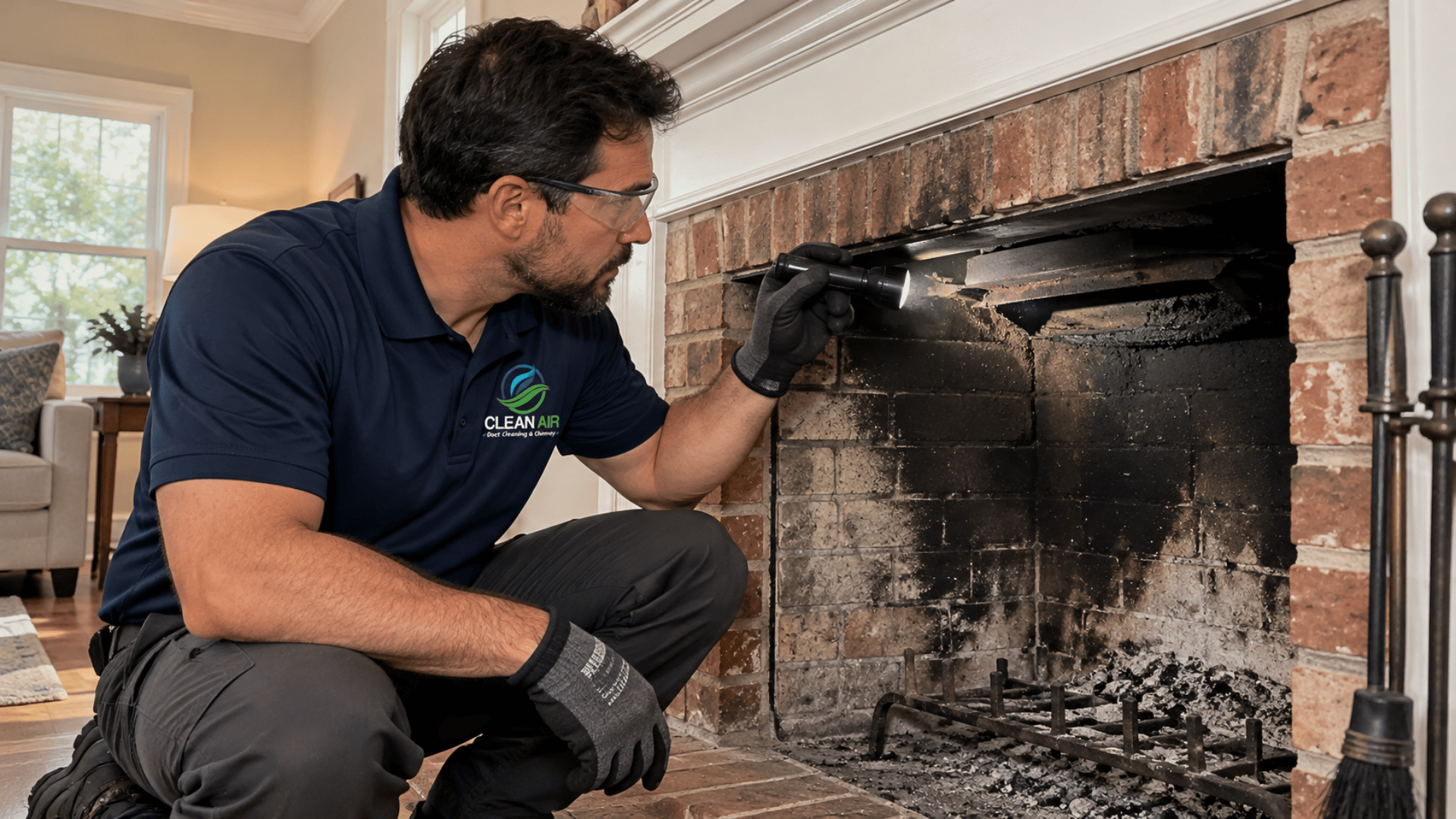
- Black soot stains around the fireplace opening
- Bits of tile, brick, or sandy grit in the firebox
- Water stains on walls or ceiling near the chimney
- White stains on brick outside, called efflorescence, which can hint at moisture
If you see any of these, a yearly inspection moves from “nice idea” to “please do this soon.”
https://en.wikipedia.org/wiki/Efflorescence
Simple troubleshooting steps you can use
- If smoke comes into the room when you light a fire, then stop using it and schedule an inspection.
- If you smell a strong, smoky odor on humid days, then check for creosote buildup and draft issues.
- If you see water stains near the chimney after rain, then have the crown and flashing checked.
- If you find small brick chips in the firebox, then have the flue liner checked for damage.
- If your damper will not open or close smoothly, then have it inspected for rust, warping, or debris.
- If you hear scratching or fluttering sounds, then check for animals and get the chimney screened and cleaned.
Common myths and the real facts
Myth: “I do not use my fireplace much, so I do not need inspections.”
Fact: Rain, humidity, and animals can cause problems even if you never light a fire.
Myth: “If smoke goes up, the chimney is fine.”
Fact: A chimney can draft and still have liner cracks or hidden creosote.
Myth: “A little creosote is normal and not a big deal.”
Fact: Even thin layers can build fast, and flaky or glazed creosote needs careful removal.
Myth: “Chimney leaks always show up right away.”
Fact: Water can travel inside masonry and show up far from the entry point.
What happens during a professional inspection
Most homeowners want to know, “What will you actually do?”
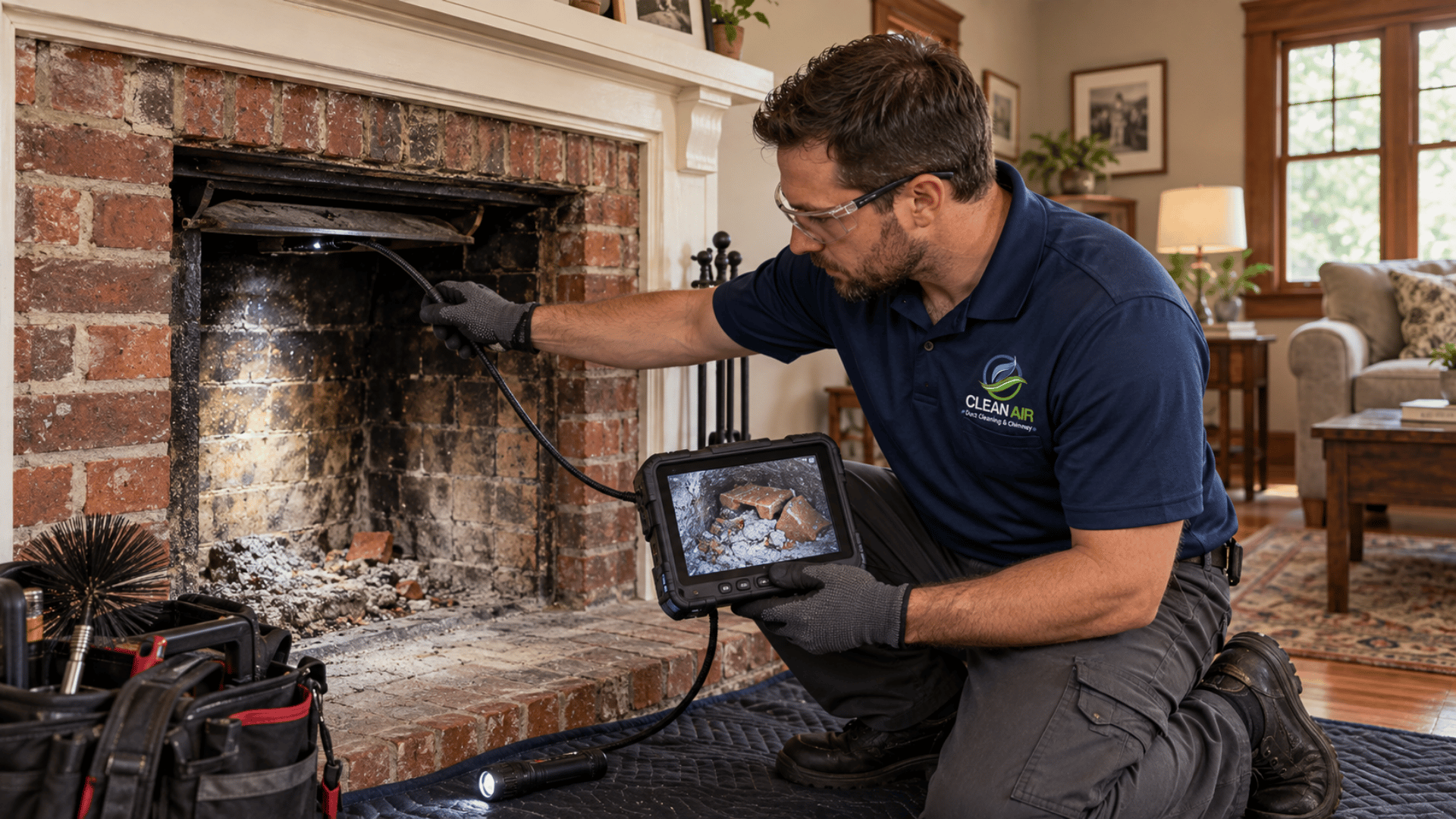
A chimney inspection often includes:
- Checking the firebox and damper area for cracks and rust
- Looking up the flue for damage, soot, and creosote
- Inspecting the crown, cap, and exterior brickwork
- Looking for gaps at flashing and signs of water entry
- Noting any airflow problems tied to the fireplace setup
If cleaning is needed, that is handled with tools made for the job, not guesswork and a shop vacuum.
Annual inspections also protect indoor air
A fireplace is part of the air story in your home. A blocked or damaged flue can lead to smoky odors, soot, and poor venting. That can make the house smell like last winter’s bonfire, even when you are just trying to watch a game.
If you also run a gas fireplace or gas logs, proper venting matters even more. Combustion gases must go out, not hang around.
https://www.cdc.gov/carbon-monoxide/about/index.html
A simple care schedule you can follow
Weekly during fireplace season
- Scoop out extra ash once it cools, leave a thin layer if you burn wood often
- Check that the damper opens and closes smoothly
- Look for new soot stains or odd smells
Monthly during fireplace season
- Shine a flashlight up into the firebox area and look for heavy buildup
- Check the chimney cap from the ground, look for missing parts
- If you store firewood, keep it dry and outside, wet wood makes more smoke and creosote
Yearly
- Schedule an annual chimney inspection
- Get chimney sweeping when needed based on use and buildup
- Check for water protection needs at the crown, cap, and flashing
Why “waiting until something breaks” costs more stress
Most chimney damage starts small. A thin crack. A loose joint. A small leak. If you catch it early, the fix is often smaller and less disruptive.
If you wait, damage spreads like a spill under the fridge. You do not notice until your socks get wet.
Yearly inspections are your chance to spot problems when they are still in the “easy to fix” phase.
FAQs
How often should I get a chimney inspection?
Once a year is a common schedule, even if you do not use the fireplace much. Weather and animals still affect the system.
Is a chimney inspection the same as chimney cleaning?
No. An inspection checks condition and safety. Cleaning removes soot and creosote. Many visits include both when needed.
What is creosote and why do people worry about it?
Creosote is a sticky or crusty residue from burning wood. It can build up inside the flue and it can catch fire.
Can I inspect my own chimney with a flashlight?
You can spot some clues near the fireplace opening, but you cannot see most of the flue and top areas. A pro has the right tools and angles to find hidden issues.
What causes chimney leaks in Atlanta homes?
Common causes include crown cracks, worn flashing, missing caps, and masonry joints that let rain in. Heavy storms and humid months speed up the damage.
Is it safe to use my fireplace if I smell smoke when it is off?
It is safer to pause use until you get an inspection. Odors can point to creosote, draft issues, or debris in the flue.
Do gas fireplaces need chimney inspections too?
Yes, many gas units still vent through a chimney or venting system that can get blocked or damaged. Venting needs to stay clear.
What should I do if I hear animals in my chimney?
Stop using the fireplace and get help. Animals can block the flue and nesting material can burn.
Clean Air Duct Cleaning & Chimney helps homeowners in Atlanta, GA with chimney inspections, chimney cleaning, and fixes tied to flues, crowns, and masonry, so small problems do not grow legs and run through your house. To book service, call (470) 706-6431 or visit https://cleanairductcleaningandchimney.com/.