
 Skip to content
 Commercial Chimney Inserts In Atlanta by Clean Air Duct Cleaning & Chimney. Expert install, relines and repairs for apartments and businesses. Call today
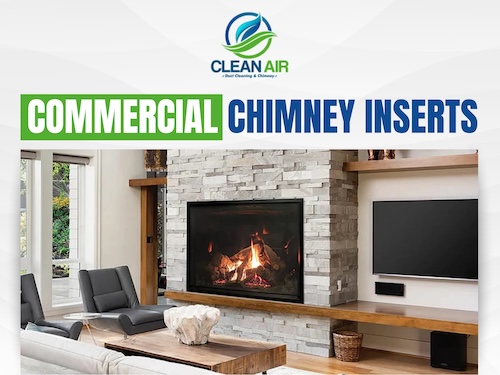
A chimney insert is a self-contained unit installed within an existing fireplace opening.
The insert works with a venting system that carries exhaust through the chimney. Depending on the property and existing flue, the project may also require a properly sized liner.
For commercial properties, planning involves more than finding an insert that fits the opening.
We also consider how the fireplace is used, who operates it, the condition of the existing chimney, and how the installation will affect the building’s day-to-day operation.
Our Commercial Chimney Inserts in Atlanta service starts with evaluating those details before installation decisions are made.
Commercial fireplace use varies significantly from one property to another.
The source page identifies applications such as:
A fireplace operated by staff has different practical needs from one accessible to tenants or guests.
That is why we ask how the unit will actually be used before discussing the insert and venting setup.
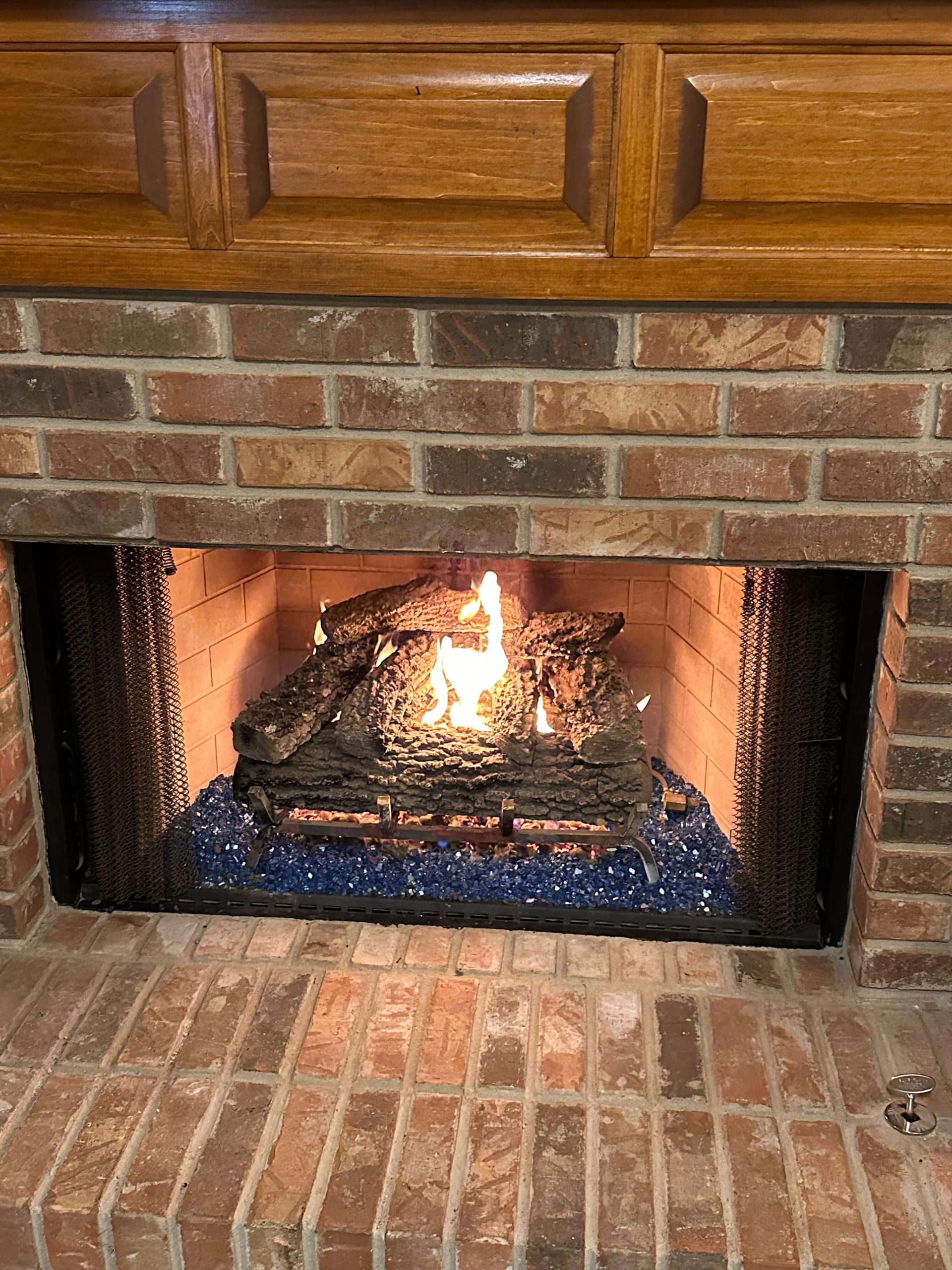
The insert should fit both the fireplace and the way the building operates.
The source page discusses three common options.
Gas inserts may suit commercial spaces where controlled operation and predictable use are priorities.
The existing fuel source, fireplace opening, and venting path still need to be evaluated before installation.
Wood inserts may be considered in properties where fuel storage, ash handling, and regular fireplace management are practical.
The chimney and liner also need to suit the intended wood-burning setup.
Electric units may suit spaces where the primary goal is appearance or supplemental heat without using the existing chimney for combustion venting.
Because these units have different installation needs, they should not be treated the same as gas or wood inserts.
An insert should not simply be placed inside an existing fireplace without evaluating what is already there.
Before planning the installation, we may review:
If the chimney has not been evaluated recently, a chimney inspection can help establish whether the existing structure and vent path are suitable for the planned insert.
Physical fit is only one part of the project.
The insert also needs a suitable path for exhaust through the chimney.
A commercial insert project may involve:
When the existing liner is damaged, unsuitable, or does not match the new setup, chimney relining may need to be considered as part of the project.
Need Help? Call Us For Commercial Chimney Inserts Services!
Commercial properties often operate differently from single-family homes.
Restaurants may have strong exhaust systems.
Apartment buildings may have multiple common-area systems running at the same time.
Automatic doors, exhaust fans, and HVAC operation can also change air movement within a building.
The source page notes that these pressure changes can affect chimney draft.
That is why it is useful to tell us whether fireplace performance changes when:
These details can help separate an insert issue from a broader venting or building-operation problem.
Commercial fireplace projects often involve more people than a residential installation.
A manager may approve the project while staff members operate the fireplace and tenants or guests use the surrounding space.
Before installation, it helps to establish:
This allows the project to be planned around the building rather than treating the property like an occupied single-family home.
A site visit gives us a clearer picture of both the fireplace and the building. Our CSIA Certified Chimney Professionals evaluate accessible chimney and fireplace conditions that may affect the planned insert or venting setup.
The evaluation may include:
If several fireplaces are involved, property managers can also discuss whether a more consistent approach across the property would make future operation and maintenance easier.
A new insert does not correct structural chimney damage by itself.
Before installation, we may find conditions such as:
These conditions should be evaluated before new equipment is installed.
The recommendation should be based on what directly affects the insert, chimney, and vent path rather than automatically adding unrelated work.
Need Help? Call Clean Air Duct Cleaning & Chimney Near You
Once the appropriate insert and venting approach have been determined, the installation can move forward.
Depending on the system, work may include:
The exact scope depends on the insert type and existing chimney.
Commercial properties with several fireplaces have an additional concern: consistency.
Different units, different venting configurations, and undocumented past alterations can make future maintenance harder.
For multi-unit or multi-fireplace properties, it can be useful to document:
This gives property managers a clearer record when future work is needed.
Atlanta commercial properties may combine older masonry fireplaces with newer renovations and building systems.
The source page also identifies humidity, storms, moisture exposure, and heavy HVAC use as factors that can affect chimney performance.
Some properties have fireplaces that have been modified more than once over the years.
Others may experience fireplace problems only when certain exhaust or HVAC systems are operating.
For Commercial Chimney Inserts in Atlanta, understanding that building history can be as important as measuring the fireplace itself.
Commercial fireplace work needs clear communication because property managers often need to coordinate access, occupants, staff, and building schedules.
Our approach focuses on:
We keep the recommendations focused on what the fireplace and venting system actually require.
Clean Air Duct Cleaning & Chimney provides Commercial Chimney Inserts in Atlanta for apartment properties, restaurants, shared spaces, and other commercial buildings with existing fireplace systems.
Tell us what type of property you manage, how the fireplace is currently used, and what changes or problems you are trying to address.
We can evaluate the existing fireplace and chimney, review insert and venting needs, and explain the appropriate next steps.
Call (470) 706-6431 or contact us online to schedule a site evaluation.
Any facility with fuel-burning equipment or vented systems may use them, including restaurants, multi-unit buildings, hospitality properties, and light industrial sites, depending on the setup and local requirements.
Compatibility depends on the insert type, listing, and the appliance being vented. The correct system is chosen to match the fuel type and operating conditions.
 Optimized by Seraphinite Accelerator