
 Skip to content
 Custom Chimney Cap In Atlanta made to fit your flue. Stop rain, animals, and downdrafts with expert measuring, fabrication, and install. Call today!
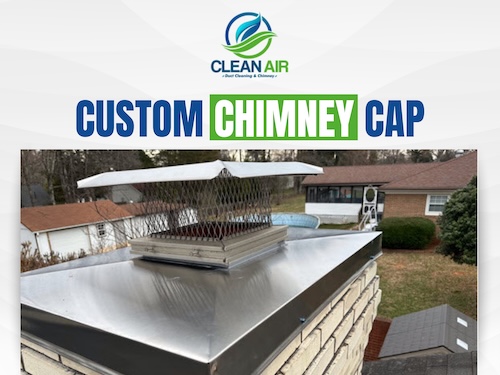
A custom chimney cap is made to fit the dimensions and layout of a specific chimney rather than relying on a standard size.
This can be useful when the chimney has an unusual shape, several flues, irregular masonry, or an opening that does not work well with an off-the-shelf cap.
A properly fitted cap helps protect the chimney top from direct rain, leaves, debris, and animal entry while leaving adequate space for exhaust to exit.
Our Custom Chimney Cap in Atlanta service focuses on creating a cap solution around the chimney you actually have.
Need Help? Call Clean Air Duct Cleaning & Chimney Near You
A standard cap may work well on a simple, common flue configuration.
A custom option becomes more useful when the chimney itself is not standard.
You may need a custom cap when:
The goal is not simply to install a larger cap. The cap needs to match the actual dimensions and layout of the chimney.
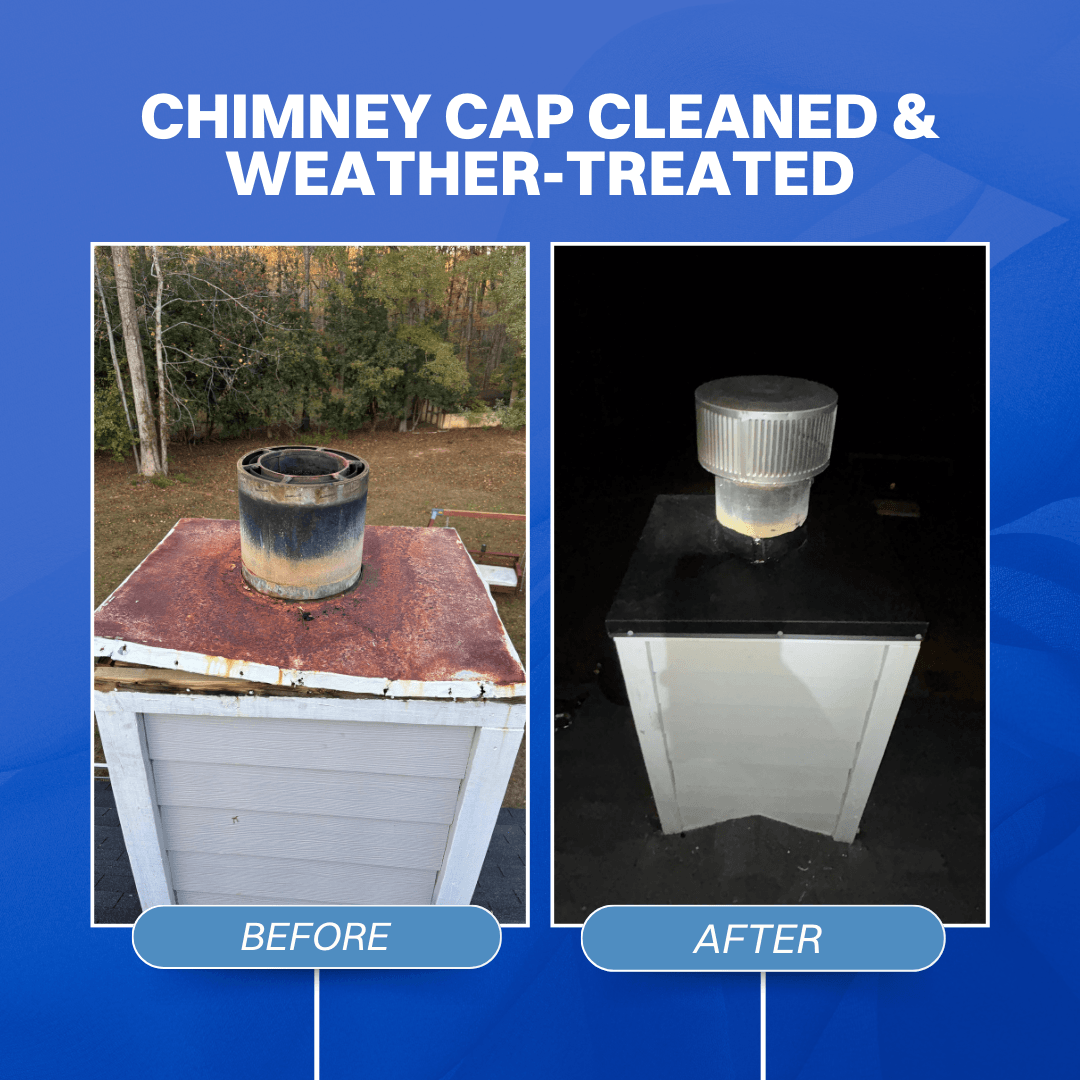
Accurate measurements are one of the most important parts of a custom chimney cap.
We may look at:
We also consider how much clearance is available around the flue opening.
These measurements help determine how the cap should sit, where it can attach, and how much of the chimney top needs coverage.
Different chimney configurations call for different solutions.
A chimney with two or more flues may benefit from a cap that covers the larger top area rather than placing separate small caps over every opening.
A wider cap can provide coverage around multiple flues while still leaving each vent opening clear.
Older or modified chimneys may have dimensions that do not match common cap sizes.
A made-to-fit cap can be planned around the actual chimney dimensions instead of forcing a standard product onto an irregular surface.
Some vent systems use round metal openings or other configurations that require a specific fit.
The mounting method and cap dimensions should match the termination rather than relying on a generic opening size.
A flue tile that sits close to the chimney crown can limit the mounting options for some standard caps.
The top needs to be measured carefully so the final cap has suitable positioning and clearance.
A custom chimney cap should protect the opening without unnecessarily restricting the venting path.
A wider lid can help shield the opening from direct rainfall.
Screening can help limit leaves, debris, and animal entry.
The attachment also needs to remain secure.
At the same time, the cap needs appropriate clearance around the flue.
That balance is why we consider both the shape of the chimney top and the venting layout when planning the cap.
Need Help? Call Us For Custom Chimney Cap Services!
Even a well-fitted custom cap needs a stable surface. Our CSIA Certified Chimney Professionals inspect the chimney top and surrounding components for visible conditions that could affect the cap’s fit, mounting, or installation.
Problems may include:
A custom cap should not be used to cover or compensate for unstable chimney masonry.
If the crown is damaged enough to affect the mounting area, chimney crown repair may need to be completed first.
Custom chimney cap service begins with understanding the chimney rather than selecting a cap first.
A typical process may include:
If we discover that a standard cap will fit the chimney properly, we can explain that as well.
Custom work should be used because the chimney requires it, not simply because it is another option.
Repeated cap problems often point to fit or mounting issues.
A cap may continue shifting, rattling, or leaking because:
If an existing cap is badly damaged rather than simply poorly fitted, chimney cap replacement may be the more appropriate service.
Atlanta chimneys are regularly exposed to heavy rain, humidity, storm winds, tree debris, and animal activity.
These conditions make coverage and secure attachment especially important.
A chimney surrounded by mature trees may receive more leaves, twigs, and falling debris.
An exposed chimney on a taller roof may experience stronger wind.
Multi-flue masonry chimneys can also have larger top surfaces where rain collects between individual flues.
A properly planned Custom Chimney Cap in Atlanta can account for the chimney’s layout and the exposure around the home rather than relying on a generic size.
A custom cap is not necessary for every chimney.
A standard chimney cap may be enough when:
A custom cap may be more appropriate when:
If you are unsure which option applies, a chimney inspection can help confirm the chimney-top configuration and condition.
Custom chimney cap work starts with accurate information.
We measure the chimney rather than guessing from the ground or relying on a one-size-fits-all solution.
Our approach focuses on:
If the chimney does not require a custom solution, we explain that.
If its size or layout makes a custom cap the better fit, we explain what makes the chimney different.
Clean Air Duct Cleaning & Chimney provides Custom Chimney Cap in Atlanta services for multi-flue chimneys, unusual openings, irregular chimney tops, and other configurations where a standard cap may not provide the right fit.
We inspect the chimney top, take the necessary measurements, and determine what cap configuration makes sense for the structure.
Call (470) 706-6431 or contact us online to schedule service.
Custom caps are often selected when a chimney has unique dimensions or features, or when a tailored fit and appearance are preferred.
 Optimized by Seraphinite Accelerator