1. Home
  2. »
  3. Chimney Repair

Chimney Repair in Atlanta, GA

Book Chimney Repair In Atlanta with Clean Air Duct Cleaning and Chimney. Fast inspections, honest pricing, masonry and flashing fixes. Call today to schedule
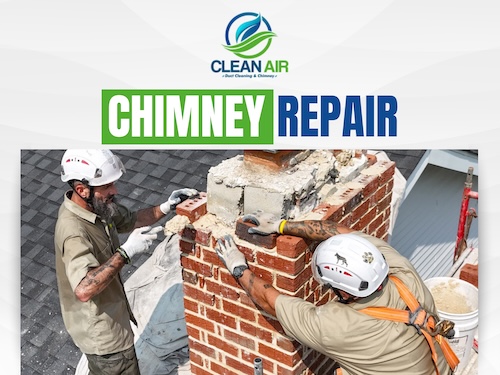
Table of Contents
Chimney Repair In Atlanta by Clean Air Duct Cleaning
Book Chimney Repair In Atlanta with Clean Air Duct Cleaning and Chimney. Fast inspections, honest pricing, masonry and flashing fixes. Call today to schedule

Chimney Repair

Chimney repair fixes the parts of your chimney that leak, crack, or vent poorly so your fireplace works safely and your home stays protected. Clean Air Duct Cleaning & Chimney handles Chimney Repair in Atlanta with clear inspections, practical fixes, and straightforward communication from start to finish. If something looks off, we help you pinpoint the cause and correct it.

Need Help? Call Clean Air Duct Cleaning & Chimney Near You

One visit plan for structure, water control, and safe venting

Chimney Repair focuses on the parts that keep smoke moving out and water staying out. A chimney can look fine from the yard and still have gaps, loose mortar, or hidden leaks. Small issues can turn into bigger problems once wind driven rain and heat cycles keep working on the same weak spots.

Clean Air Duct Cleaning & Chimney approaches each job by answering two questions first. What is failing, and what is causing it to fail. Fixing only the visible damage can leave the real problem behind. That is how you end up repairing the same area again later.

Chimney repair often includes

Have you noticed stains near your fireplace, a musty smell, or bits of mortar in the firebox? Those are not normal old house signs. They are your chimney asking for help, sometimes loudly.

Signs you may need chimney repair

You may need chimney repair when you see water, crumbling masonry, or draft problems. A chimney usually gives warnings before it fails in a dramatic way. Catching the early signs can prevent interior damage to drywall, framing, and flooring. It can also keep your fireplace from sending smoke back into the home. If you are seeing more than one of these signs, it is smart to schedule a chimney inspection.

Common signs homeowners notice

  1. Water stains on ceilings or walls near the chimney
  2. White staining on brick efflorescence on the exterior
  3. Spalling brick where the face of the brick flakes off
  4. Loose or missing mortar between bricks
  5. Cracked crown at the top of the chimney
  6. Rust on the damper, firebox metal, or fireplace doors
  7. Musty odors that get worse after rain
  8. Smoke smell indoors or poor draft when using the fireplace
  9. Debris in the firebox that looks like sand or mortar grit
  10. Visible gaps around roof flashing or chimney siding
When to stop guessing

If you see active dripping or you can place your finger into a mortar gap, it is time to stop guessing and schedule chimney repair.

What causes chimney damage in Atlanta and across Georgia

Most chimney damage starts with water entry, heat stress, or movement over time. Chimneys take a beating. They are exposed to sun, rain, humidity, and temperature swings. They also handle heat, smoke, and acidic byproducts from burning wood. Over time, those forces can break down materials that looked solid a few seasons ago. If you are concerned about moisture and odors in the home, a related option is Sanitization & Disinfection.

Typical causes we find in Atlanta, Georgia and nearby areas

  • A cracked or worn chimney crown that lets water soak into masonry
  • Bad flashing details where shingles and metal meet the chimney
  • No cap or a damaged cap allowing rain entry from the top
  • Brick and mortar aging and breaking down from moisture cycling
  • Freeze and thaw damage during cold snaps after wet weather
  • Rusting components from moisture inside the chimney
  • Settlement and roof movement that opens seams around flashing

Water is the usual troublemaker. It travels, it hides, and it keeps working even when the fireplace is not being used. If your chimney has been fine for years, water still does not care. For background on chimney construction, see Chimney.

What to expect during a chimney repair visit

Our chimney repair visit starts with a clear inspection and a plan you can understand. You should know what we found, where we found it, and what needs to happen next. We keep the process simple and documented. We also explain what is urgent versus what can be scheduled later, based on condition and exposure. If needed, we may recommend a dedicated camera inspection to confirm what is happening in hard to see areas.

Here is what a typical visit looks like

  1. Listen to your concerns and ask a few focused questions about leaks, smells, draft, and past repairs.
  2. Inspect the exterior including brick, mortar joints, crown, cap, and visible flue area.
  3. Check roofline areas around flashing and counter flashing where leaks often start.
  4. Inspect the fireplace area for rust, soot patterns, and signs of moisture intrusion.
  5. Identify the failure point and the likely path water or smoke is taking.
  6. Explain repair options with simple pros and cons so you can choose what fits the situation.

Do you want photos of what we are seeing? Ask us. Most homeowners appreciate a quick set of pictures, since chimney problems love to hide above the roofline. If a deeper evaluation is needed, we can pair repairs with a chimney inspection.

Masonry repairs and repointing

Masonry repairs fix crumbling joints and damaged brick before the chimney loses strength. Masonry issues are common because mortar is meant to be the sacrificial part. It wears before brick does, but once it is gone, brick faces start to break down faster. Repairing the joints restores strength and helps stop water from getting deeper into the chimney. If the chimney needs broader structural attention, we may discuss masonry repair options.

Masonry repair may include

A good repair match matters

Mortar that is too hard or applied poorly can cause brick damage later. We focus on sound prep and clean joint work so the repair holds up to Atlanta weather.

Repointing restores mortar joints

Repointing restores mortar joints so bricks stop shifting and leaking. Repointing replaces weak mortar with new mortar packed into cleaned joints. The goal is to stabilize the brickwork and reduce pathways for water. It also improves how the chimney handles normal expansion and contraction.

A practical homeowner tip. If you can scrape mortar out with a key or screwdriver, it is already too soft. That does not mean you should start chiseling it yourself on a Saturday. It means the chimney needs attention before the next heavy rain. For related structural work, see chimney repointing.

Need Help? Call Us For Air Duct Services!

Crown repair and chimney caps

Crown repair stops top side water entry that can ruin masonry from the inside out. The crown is the sloped surface at the top of many masonry chimneys. It should push water away from the flue opening and toward the edge so it drips clear of the brick. When crowns crack, water finds a straight shot into the chimney.

Crown issues often lead to

  • Moisture trapped inside brickwork
  • Rusting of metal parts below
  • Staining and odors inside the home
  • Faster mortar breakdown near the top

We inspect for cracks, poor slope, and gaps around the flue. Then we recommend the repair path based on condition. A minor crack fix is different from a crown that is breaking apart. If a flue issue is involved, we may pair it with chimney flue repair.

A chimney cap helps protect the flue opening

A cap keeps rain from dropping directly into the flue. It also helps reduce animal entry. In Atlanta, squirrels and birds can treat an open chimney like a condo with great views. The cleanup is not fun, and it can block venting. If a cap is missing or damaged, we may recommend chimney cap installation or chimney cap replacement.

If you hear scratching, chirping, or flapping in the chimney, stop using the fireplace and call for help. Smoke and wildlife do not mix. If needed, we can coordinate animal removal to clear the obstruction safely.

Flashing repair and chimney leaks

Flashing repair protects the roofline where many chimney leaks begin. Flashing is the metal system that seals the joint where the chimney passes through the roof. Even a small gap can let water run along framing and show up inside weeks later. That is why chimney leaks can feel mysterious. If you are tracking water intrusion, our chimney leaks service page may help you compare symptoms.

We look for

  • Lifted shingles or exposed fasteners near the chimney
  • Rusted or bent flashing
  • Failing seal points where counter flashing meets masonry
  • Evidence of water trails or staining

Chimney leaks often show up after storms. The water enters at the roofline and travels before it appears on drywall. If your ceiling stain is a foot away from the chimney, the chimney can still be the source.

Step flashing and counter flashing work together

Step flashing layers with shingles. Counter flashing covers the top edge and helps keep water from getting behind it. When either piece is wrong or loosens over time, leaks start. We repair the system so water sheds the right way.

Sealant alone is not a long term plan

If someone fixed flashing with a big bead of sealant in the past, we take a careful look. Sealant alone is not a long term water control plan.

Chase cover repair for factory built chimney systems

Chase cover repair helps stop leaks on factory built chimney systems. Many homes use a factory built chimney with a metal chase cover on top. When that cover rusts or warps, water can enter the chase and cause damage you do not see until it is serious. When water entry is ongoing, chimney waterproofing may be part of the longer plan.

Signs of chase cover problems include

  • Rust streaks down the sides of the chase
  • Musty smells near the fireplace
  • Water marks around the firebox or in the attic near the chase

We inspect the cover, fasteners, seams, and nearby components. Then we recommend repairs that address both the leak point and any damage it caused. For additional verification, a chimney inspection can help confirm the full scope.

Draft and venting repairs

Draft and venting related repairs address smoke issues that can make the fireplace unpleasant. A fireplace should draw smoke up and out. If smoke rolls into the room, something is off. It might be a blockage, a damper issue, a flue problem, or an air pressure imbalance inside the home. In some cases, the next step is chimney flue cleaning to clear buildup and restore airflow.

Things that can cause poor draft

  1. A blocked or restricted flue
  2. A damaged or stuck damper
  3. An undersized or damaged flue liner area
  4. A cap issue affecting airflow
  5. House pressure problems from exhaust fans, dryers, or HVAC

Because our business also serves homeowners with air flow concerns, we pay attention to how the home breathes. Sometimes the fireplace is fighting the kitchen hood fan, and the fireplace loses. If your home has overall airflow issues, duct balancing can be a related improvement.

If your eyes burn or the room smells smoky after a fire, stop using it until it is checked. A smoky living room is not a cozy vibe. It is a warning. For additional safety evaluation, consider a fireplace safety inspection.

When to treat chimney repair as urgent

Some chimney issues need immediate attention for safety and to limit home damage. A damaged chimney can create fire and air quality risks. It can also cause hidden rot if water keeps entering. Not every crack is an emergency, but some conditions should move to the front of the line. If you have not had a recent evaluation, scheduling a chimney inspection can help prioritize next steps.

Call for service soon if you notice

  • Active water dripping inside the fireplace
  • Strong smoke odor with no fire burning
  • Loose bricks at the top or visible leaning
  • Large cracks in the crown or missing crown sections
  • Heavy rust on damper or metal components
  • Pieces of tile or masonry falling into the firebox

If you suspect a chimney fire happened, do not use the fireplace again until it is inspected. Loud cracking sounds, a sudden roaring noise, or intense heat can be signs. If you are not sure, treat it seriously. For general fire safety information, see CDC fire safety.

Timeline and planning

Chimney repair timelines depend on access, weather, and how far damage has spread. Many repairs can be completed efficiently once the scope is clear. The main factors that slow work are rain, steep roof access, and hidden damage that shows up after the first weak layer is removed. If multiple areas are involved, we may combine repairs with chimney rebuilding planning where appropriate.

What can affect timing

  • Roof pitch and safe access needs
  • Height of the chimney and staging requirements
  • Drying time for masonry materials when weather is wet
  • Multiple repair areas that tie together, like crown and flashing
What you will get from us

We will give you a realistic plan based on what we can see and what the chimney is telling us. Chimneys are honest in a blunt way. When you open up a failing joint, you learn quickly whether the issue is isolated or widespread.

How to prepare for your chimney repair visit

Preparing for a chimney repair visit is simple and helps the inspection go faster. A little prep helps us work safely and keeps your home clean. You do not need to overthink it. Just clear access and share what you have noticed. If indoor air and odor issues are part of the concern, air duct testing can be a helpful complement in some homes.

Before we arrive

  1. Clear a path to the fireplace and move breakables from the mantel.
  2. If you have photos of leaks or stains after rain, keep them handy.
  3. Let us know about past repairs or repeated issues.
  4. Keep pets in a separate room during the inspection if they are curious.

If the attic access is near the chimney, tell us. Interior clues often help confirm where water is entering.

Clean Air Duct Cleaning & Chimney

After care and ongoing maintenance

After chimney repair, ongoing care helps prevent repeat problems. Most chimneys fail in predictable ways. Water finds a weakness, then keeps working it. Basic habits can slow that cycle and help you spot trouble early. Many homeowners pair repairs with periodic chimney sweep service to keep the system operating as expected.

Good after care steps

  • Look at the chimney from the ground after big storms and note changes.
  • Watch for new stains on ceilings or walls near the chimney.
  • Keep gutters and downspouts flowing so water does not spill near the chimney area.
  • Avoid stacking wet firewood indoors since it adds moisture and odor.

If you use your fireplace often, keep an eye on draft. If smoke behavior changes, it is telling you something. Better to check it early than to keep opening windows in January and pretending it is fresh air. If moisture and odors persist beyond the chimney area, mold treatment may be relevant.

Atlanta conditions and why water control matters

Atlanta specific conditions make water control and masonry upkeep especially important. Atlanta gets humid summers, heavy rain events, and quick weather shifts. Those conditions can speed up masonry wear and reveal flashing problems fast. Trees and wind can also drop debris onto the roof, which pushes water where it should not go. For persistent water entry concerns, chimney leaks troubleshooting can help narrow the likely source.

Local situations we often hear about

  • Leaks that show up only during sideways rain
  • Musty fireplace smells after humid weeks
  • Brick faces flaking after repeated wet and dry cycles
  • Rust on metal components from long term moisture

Georgia homes also vary widely in roof styles and chimney types. Some have classic masonry chimneys. Others have chase structures with siding. We work with both and focus on the same goal. Keep the system venting right and keep water out. In other states such as TX, the weather pattern can be different, but in Georgia and GA the moisture load makes preventive steps especially valuable.

Why homeowners choose Clean Air Duct Cleaning & Chimney

Homeowners choose Clean Air Duct Cleaning & Chimney for clear answers and practical repairs. You should not have to translate contractor talk to understand your own house. We keep communication simple, show you what we see, and explain the repair path. Our work is organized, and we respect your time and your home. If your home comfort issues extend beyond the fireplace, air duct cleaning can also support cleaner airflow.

What you can expect from us

  • A focused inspection that looks at both symptoms and causes
  • Straightforward explanations without pressure
  • Repair recommendations based on condition and exposure
  • Clean work habits around the fireplace area
  • A team that understands airflow and home comfort, not only brick and mortar

We also know that many customers find us for air duct cleaning first. If your home has odor, moisture, or draft issues, it can be connected. It is helpful having one team that thinks about the whole system. Depending on what we find, we may suggest air duct maintenance as part of your broader plan.

Quick guide for symptoms and likely repair areas

Use this quick guide to match a symptom to a likely chimney repair area. This table helps you decide what to report when you call. It is not a diagnosis, but it can help you describe the issue clearly. If you need confirmation of the source, schedule a chimney inspection.

What you noticeWhat it often points toWhy it matters
Water in the firebox after rainCap, crown, or flue top opening issueWater can rust parts and carry odors
Ceiling stain near chimneyFlashing or masonry water entryWater may travel before showing indoors
White staining on brickMoisture moving through masonryOften a sign of ongoing water absorption
Rusty damper or metal firebox partsWater entry from above or condensationRust can affect function and airflow
Smoke rolls into roomDraft or venting problemSmoke indoors is a safety and comfort issue

If you are not sure what you are seeing, that is normal. Most chimney problems are not obvious from the living room.

Schedule chimney repair in Atlanta GA

Schedule chimney repair when you want the problem identified and fixed the right way. If your chimney is leaking, crumbling, or smoking back into the home, it is time to act. Clean Air Duct Cleaning & Chimney provides Chimney Repair in Atlanta with inspection led recommendations and repairs that focus on water control, masonry stability, and safe venting. We also handle Chimney Repair needs tied to airflow concerns in the home.

Related Services

Ready to get it checked out? Call (470) 706-6431 or reach out through our Contact Us page to schedule chimney repair in Atlanta GA.

Frequently Asked Questions (FAQs)

Chimney repair generally covers addressing damaged masonry, deteriorated mortar joints, chimney crown issues, flashing concerns, and other conditions that can affect safety and performance. Clean Air Duct Cleaning & Chimney provides chimney repair services.
Common signs include cracked or missing bricks, crumbling mortar, water stains near the fireplace, a damaged crown, rusted components, or a noticeable draft change. A qualified technician can help evaluate the condition.
Yes. Sweeping focuses on removing soot and creosote buildup, while repair addresses structural or component problems. Many homeowners schedule both as part of routine upkeep.
Water can accelerate masonry deterioration, contribute to staining and odors, and affect interior areas near the chimney. Repairs may involve correcting entry points like the crown, flashing, or masonry joints.
Flashing is the material that seals the gap where the chimney meets the roof. If it’s damaged or deteriorated, it can allow moisture intrusion and may require repair or replacement.
The crown is the top surface that helps shed water away from the chimney. If it’s cracked, worn, or improperly formed, repairs may be recommended to help reduce moisture-related issues.
In some cases, yes. Drafting issues can be related to chimney condition, blockages, or component wear. A professional can identify whether repairs are relevant to the symptoms you’re noticing.
Timelines vary depending on the type and extent of the issue, weather conditions, and access to the chimney. A service provider can outline the general scope after reviewing the chimney’s condition.
Many repairs can be performed in various seasons, though weather and temperatures can affect scheduling and materials. It’s often helpful to plan repairs before periods of heavy fireplace use.
Clean Air Duct Cleaning & Chimney provides chimney repair services and can help you plan next steps based on your chimney’s condition and needs.
Why Your Home Airflow Drops When Dust Builds Up in Ducts

Why Your Home Airflow Drops When Dust Builds Up in Ducts

Your home airflow drops when dust builds up in ducts because that dust acts like…

Why Regular Chimney Sweeping Helps Keep Your Fireplace Safe

Why Regular Chimney Sweeping Helps Keep Your Fireplace Safe

A clean chimney lets smoke move out of your home, not back into your face.…

Signs Your Air Ducts Need Cleaning Before the Seasons Change in Atlanta, GA

Signs Your Air Ducts Need Cleaning Before the Seasons Change in Atlanta, GA

Your air ducts may need cleaning before a seasonal change if you notice more dust,…

How Creosote Forms and Why It Needs Removal

How Creosote Forms and Why It Needs Removal

Creosote forms when wood smoke cools inside your chimney and turns into a sticky, dark…

Dryer Vent Lint Buildup and Fire Risk, What Every Atlanta Homeowner Should Know

Dryer Vent Lint Buildup and Fire Risk, What Every Atlanta Homeowner Should Know

Lint buildup in a dryer vent raises fire risk because it blocks airflow. When hot…

Why Annual Chimney Inspections Protect Your Fireplace and Home

Why Annual Chimney Inspections Protect Your Fireplace and Home

An annual chimney inspection helps you catch hidden trouble before it grows. A pro can…