1. Home
  2. »
  3. Fireplace Conversion

Fireplace Conversion in Atlanta, GA

Get Fireplace Conversion In Atlanta from Clean Air Duct Cleaning & Chimney. Convert wood to gas or insert upgrades with safe venting and pro install in Atlanta
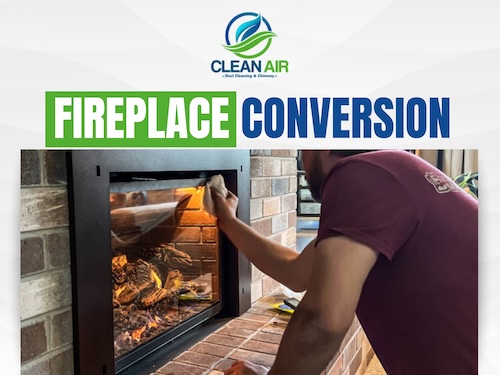
Table of Contents
Fireplace Conversion In Atlanta by Clean Air Experts
Get Fireplace Conversion In Atlanta from Clean Air Duct Cleaning & Chimney. Convert wood to gas or insert upgrades with safe venting and pro install in Atlanta

Fireplace Conversion

Fireplace Conversion in Atlanta turns an old wood burning fireplace into a cleaner, easier system like gas logs, a gas insert, or a wood or gas insert with the right venting. Clean Air Duct Cleaning & Chimney handles the inspection, setup, venting work, and final safety checks so your fireplace conversion in Atlanta works right for your home.

Fireplace conversion changes how your fireplace works, not just how it looks. A fireplace conversion updates your fireplace so it fits how you live today. Some people want instant flames with a switch. Others want better heat without the mess of wood. The right conversion can also fix problems that make a fireplace smoky, drafty, or hard to use.

Need Help? Call Clean Air Duct Cleaning & Chimney Near You

Conversion goals and what changes

Clean Air Duct Cleaning & Chimney helps Atlanta homeowners choose a conversion that matches the firebox size, chimney condition, and how you want to use the space. Do you want simple ambiance, real heat, or both in GA and across Georgia homes.

Common conversion goals include

A conversion is not a quick swap of parts. The venting path, clearances, and gas connection rules must match the appliance and the home.

Signs you may need a conversion

You may need a conversion if your fireplace is avoided more than it is used. Most homeowners call us because the fireplace is sitting there, but nobody wants to deal with it. A fireplace should be relaxing, not a weekend chore and a fireplace tune-up can help confirm what is realistic.

Watch for these signs

  1. Smoke rolls into the room when you light a fire
  2. The damper is stuck broken or hard to reach
  3. You smell smoky odors on mild days
  4. The fire burns poorly even with dry wood
  5. The fireplace looks dated and you avoid using it
  6. You want to stop hauling wood and cleaning ash
  7. Your chimney shows heavy buildup or past water damage and may need creosote removal
  8. You want more heat than an open fireplace can give

Do you find yourself cracking a window every time you light a fire, then wondering why the room still smells like smoke. That is a common call and it often starts with a full chimney sweep.

Draft venting and firebox issues behind poor performance

Many fireplace problems come from draft, venting, and old firebox conditions. A fireplace depends on proper draft. If the chimney is dirty, damaged, too small, or leaking air in the wrong places, it can cause smoke, odors, and poor burn. Atlanta weather swings can also bring humid air and pressure changes that make draft problems feel random and can connect to whole home airflow concerns like air duct testing.

Common underlying issues include

  • Creosote or soot buildup restricting flow and calling for chimney flue cleaning
  • A cracked flue tile or damaged liner that may need chimney relining
  • A missing rusted or poorly sealing damper
  • A firebox with worn mortar joints and possible firebox repair
  • An oversized firebox connected to a weak drafting chimney
  • Negative air pressure from kitchen fans bath fans or tight homes
  • Water entry that has weakened masonry and may require chimney leaks troubleshooting

A conversion does not ignore these issues. It works with them. Before we install an insert or set up gas logs, we look at the whole system so the new setup vents correctly.

What our visit looks like

Our visit focuses on fit, venting, and safety details that affect daily use. We start by checking what you have, what you want, and what the fireplace can support. The goal is a conversion that lights reliably, vents correctly, and looks right in your room using a process that can include camera inspection when needed.

Here is what typically happens

  1. Talk through your goals Heat ambiance or a mix and how often you will use it
  2. Inspect the firebox and chimney We look for damage buildup and signs of water entry with a full chimney inspection
  3. Measure the opening and depth Inserts and log sets must fit the firebox size
  4. Check the damper area and smoke chamber This area often needs attention for proper venting and may involve chimney repair
  5. Review venting options Some setups use the existing flue while others use a liner sized to the appliance
  6. Plan the install path We consider access shutoffs routing and clearances
  7. Confirm the finish details Surround panels trim and how the final look will meet the existing masonry

We keep the process simple. You get clear options, what each option changes, and what needs to happen to install it safely.

Conversion options we handle

Conversions we handle include gas logs, gas inserts, and insert upgrades with proper venting. Fireplace conversion is not one single product. The best choice depends on whether you want strong heat or mainly the look of flames and may include coordinated work like gas appliances support.

Need Help? Call Us For Air Duct Services!

Gas log sets

Gas log sets provide quick ambiance with simple operation. Gas logs are a popular step away from wood. They can be easier to use and keep the firebox cleaner. Some setups are vented through the chimney. Others are vent free depending on the home and local requirements and the right plan often starts with gas fireplace installation.

Key points to consider
  • The chimney and firebox still matter even with gas logs
  • A working damper and correct opening setup help the system vent right
  • The gas connection must be properly routed and shutoff access must be safe and may involve gas fireplace repair if issues are found

If your goal is mostly the look, gas logs can be a good fit. If your goal is heat, an insert often makes more sense and can be compared during a fireplace safety inspection.

Gas inserts

Gas inserts turn an open fireplace into a heating appliance. A gas insert sits inside the existing firebox and uses a sealed glass front. Many models use a dedicated venting system that runs through the chimney. That setup can reduce drafts and improve comfort and it often pairs well with chimney flue repair when the vent path needs attention.

Why homeowners choose inserts
  • Heat stays in the room better than an open fireplace
  • The flame is controlled and consistent
  • The install can update the entire look of the fireplace using options like custom fireplace doors

We focus on correct sizing, vent routing, and a clean finish so it looks built in, not jammed in.

Wood inserts

Wood inserts can give real heat while using the fireplace opening. Some Atlanta homeowners still love burning real wood but want better heat and less smoke. A wood insert can improve burn control and send more heat into the home and may connect with wood fireplace inserts planning.

Important factors include
  • Chimney liner sizing and condition
  • Clearances to combustibles
  • Firebox condition and hearth protection
  • How you plan to store and use wood

If you like the idea of wood heat but do not love the mess, an insert can be the middle ground and we can also discuss wood fireplace installation and repair needs.

Insert upgrades

Fireplace insert upgrades fix weak performance from older units. If you already have an insert that is dated noisy smoky or hard to run, an upgrade may solve comfort and usability issues. Older venting setups may also be incorrect for newer equipment and may require chimney pipe replacement depending on the configuration.

An upgrade plan often includes
  • Removing the old unit
  • Inspecting the firebox and chimney with chimney inspection
  • Updating the venting or liner
  • Setting the new insert with proper sealing and finish work

We aim for a setup that runs clean and feels easy, not finicky.

Venting and chimney liner choices

Venting and chimney liner choices decide how well the conversion performs. A fireplace is basically a controlled exhaust system. If the exhaust path is wrong, you can get smoke smells, poor flame behavior, and soot where you do not want it. Venting is the part people do not see, and it is often the part that matters most and it can involve services like chimney relining.

Venting is the hidden part that can make or break daily comfort

Venting decisions we review include whether the existing flue is suitable for the new appliance, whether a liner is needed and what size it should be, how the damper area will be handled for the vent path, and how to reduce drafts and air leaks around the system. When water issues show up, we may also recommend chimney waterproofing to protect the structure.

Quick comparison

OptionBest forWhat to keep in mind
Gas logsAmbiance and simple operationFirebox and chimney condition still matter
Gas insertBetter heat and comfortUses a dedicated venting setup through the chimney
Wood insertReal wood heat with more controlLiner sizing clearances and firebox condition are critical

If you are not sure what fits your home, that is normal. Most people are deciding between easy flames and real heat and we help you sort it out with the right inspection and a clear plan.

Timeline and what can affect the schedule

Most conversions take one visit, but chimney condition and access can slow things down. Many installations can be completed without a long project timeline. That said, older fireplaces can hide surprises. If we find damage heavy buildup or moisture issues, we may need to address those items first with services such as fireplace repair.

Things that can affect schedule

  • Firebox repairs needed before installing an insert including firebox repair
  • Chimney liner requirements and chimney height
  • Tight access to the damper area or roof
  • Prior modifications that must be corrected
  • Waiting on specific appliance dimensions you choose

We will explain what is driving the timeline so you can plan around it. Nobody wants a half finished fireplace right when guests show up.

Safety checks during a conversion

Safety matters most with gas lines combustion air and clearance rules. A fireplace conversion is not the place for guesswork. Flames and exhaust need proper control, and building materials need proper spacing. If you smell gas see soot stains growing quickly or feel dizzy around a running fireplace, stop using it and call a pro and consider a gas chimney inspection.

Safety checks we take seriously

  • Gas shutoff placement and access
  • Leak checks at connections supported by experienced gas appliances work
  • Proper venting path and termination
  • Clearances around the unit and surround
  • Damper area sealing when required for the vent setup
  • Draft performance and system startup behavior

If your fireplace has been mostly fine but occasionally smokes, that is still a sign something is off. Fireplaces do not get moody for no reason.

Clean Air Duct Cleaning & Chimney

How to prepare and what to do after

You can prepare for your appointment with a few simple steps. A little prep helps the work go faster and keeps your home cleaner. We will treat your space with care, but fireplaces are still fireplaces and a quick camera inspection plan can be easier when the area is accessible.

Before we arrive

  1. Clear the area within 6 feet of the fireplace
  2. Remove breakables from the mantel and nearby shelves
  3. Keep pets in a separate room if they are curious
  4. If you have a key for a gas shutoff or access panel set it aside
  5. Share photos of the current fireplace if requested including the chimney exterior if you can safely do so

If you have a TV above the mantel, let us know. Heat and clearance details matter, and we can talk through safe placement and use habits.

Good post conversion habits

  • Keep the area around the unit clear
  • Do not burn wood in a fireplace that has been converted to gas logs or a gas insert
  • Watch for new stains odd odors or changes in flame pattern and schedule a fireplace safety inspection if anything changes
  • Use the unit the way the manufacturer intends including start up and shut down steps
  • Schedule routine chimney and vent inspections based on how often you use the system such as a regular chimney inspection

If you went from wood to gas, you may notice your room stays cleaner. That is a nice bonus. Your vacuum will not miss the ash.

Atlanta GA fireplace challenges we plan for

Atlanta, GA has a mix of older brick fireplaces and newer prefab units. We see everything from historic masonry chimneys to builder grade fireplaces that were used a few times and then forgotten. We look at the full vent path and the home airflow so the conversion fits real conditions, not ideal ones and when drafts relate to whole home circulation we can also discuss air duct cleaning.

Local situations we often run into

  • Older masonry chimneys with worn mortar joints and past patch work that may need masonry repair
  • Dampers that stick after humid Georgia summers
  • Water entry from worn flashing or chimney caps and possible chimney cap installation
  • Strong kitchen exhaust fans that affect draft in tighter homes
  • Fireplaces in finished basements where draft can be more sensitive

If your fireplace is in a room that always feels a little stuffy, tell us. That detail matters.

Why homeowners choose us

Homeowners choose Clean Air Duct Cleaning & Chimney because we connect fireplace work to indoor air concerns. We work in homes every day where airflow, venting, and cleanliness are tied together. A fireplace that backdrafts or smokes can affect comfort far beyond the hearth. Our approach is practical and focused on how the system will behave after we leave and it aligns with services like air duct maintenance.

What you can expect from us

  • Clear recommendations that match the condition of your fireplace and chimney
  • Attention to venting details, not just the visible parts
  • Respect for your home and your time
  • Straight talk on what is realistic for your setup

We are an air duct cleaning service company, but fireplaces and chimneys are part of the same bigger picture. You breathe what your home circulates. A cleaner burning setup can make the whole room feel better.

Ready to plan your fireplace conversion

Fireplace Conversion in Atlanta starts with a real look at your fireplace, not a guess. If you are ready to stop dealing with smoke ash or a fireplace that barely warms the room, a conversion may be the right next step. Clean Air Duct Cleaning & Chimney will help you choose the right system, handle the venting details, and install it for safe daily use.

Related Services

Call (470) 706-6431 to schedule, or use the Contact Us page to book your fireplace conversion.

Frequently Asked Questions (FAQs)

A fireplace conversion is changing an existing fireplace to a different fuel type or configuration, such as converting from wood-burning to gas or electric, or updating components to better match your home’s needs. Clean Air Duct Cleaning & Chimney provides fireplace conversion services.
Common reasons include convenience, reducing wood handling, changing the look of the fireplace, addressing maintenance preferences, or updating an older setup to a newer system.
Conversions vary by home and existing fireplace, but often include wood-to-gas, wood-to-electric, or converting an open fireplace to a sealed insert-style setup, depending on what’s compatible.
Not every fireplace is a good candidate. The feasibility depends on the current firebox, chimney/venting, clearances, and local code requirements, which should be reviewed before deciding.
It can. Some conversions may use the existing chimney, while others may require changes to venting or the addition of a liner or alternative venting method, depending on the appliance and setup.
Many conversions involve code and safety requirements, and permits may apply depending on the scope and location. It’s best to plan for compliance as part of the project.
Timelines vary based on the type of conversion, the condition of the existing fireplace and chimney, and whether any venting or structural updates are needed.
Yes. Different fuel types and appliances have different operating steps and maintenance needs, such as periodic cleaning, inspections, and checking components as recommended by the manufacturer.
Consider your preferred heat style, availability of utilities, desired appearance, maintenance expectations, and how you plan to use the fireplace (ambiance vs. frequent use).
A qualified fireplace and chimney provider can help evaluate your existing setup and outline appropriate options. Clean Air Duct Cleaning & Chimney offers fireplace conversion services and can help guide the process.
Why Your Home Airflow Drops When Dust Builds Up in Ducts

Why Your Home Airflow Drops When Dust Builds Up in Ducts

Your home airflow drops when dust builds up in ducts because that dust acts like…

Why Regular Chimney Sweeping Helps Keep Your Fireplace Safe

Why Regular Chimney Sweeping Helps Keep Your Fireplace Safe

A clean chimney lets smoke move out of your home, not back into your face.…

Signs Your Air Ducts Need Cleaning Before the Seasons Change in Atlanta, GA

Signs Your Air Ducts Need Cleaning Before the Seasons Change in Atlanta, GA

Your air ducts may need cleaning before a seasonal change if you notice more dust,…

How Creosote Forms and Why It Needs Removal

How Creosote Forms and Why It Needs Removal

Creosote forms when wood smoke cools inside your chimney and turns into a sticky, dark…

Dryer Vent Lint Buildup and Fire Risk, What Every Atlanta Homeowner Should Know

Dryer Vent Lint Buildup and Fire Risk, What Every Atlanta Homeowner Should Know

Lint buildup in a dryer vent raises fire risk because it blocks airflow. When hot…

Why Annual Chimney Inspections Protect Your Fireplace and Home

Why Annual Chimney Inspections Protect Your Fireplace and Home

An annual chimney inspection helps you catch hidden trouble before it grows. A pro can…