1. Home
  2. »
  3. Chimney Leaks

Chimney Leaks in Atlanta, GA

Stop Chimney Leaks In Atlanta fast with Clean Air Duct Cleaning & Chimney. Expert inspections, flashing fixes, caps, crowns, masonry sealing. Call now
Table of Contents
Chimney Leaks In Atlanta Repair and Waterproofing
Stop Chimney Leaks In Atlanta fast with Clean Air Duct Cleaning & Chimney. Expert inspections, flashing fixes, caps, crowns, masonry sealing. Call now

Chimney Leaks

Chimney leak repair and waterproofing stops water damage before it spreads through your home. Chimney leaks can soak ceilings, stain brick, and turn small gaps into big repairs. Clean Air Duct Cleaning & Chimney tracks down chimney leaks in Atlanta with careful inspection, practical repairs, and targeted waterproofing work. If your fireplace smells musty after rain, it is time to act.

Need Help? Call Clean Air Duct Cleaning & Chimney Near You

What chimney leak service covers

Chimney leak service covers the roofline, masonry, and the firebox where water sneaks in. A chimney is a system, not just a stack of brick. Water can enter at the top, the sides, or where the chimney meets the roof. It can also travel inside the structure and show up far from the real entry point. That is why leak work starts with a full check, not a guess.

Our chimney leak service commonly addresses

Are you seeing water near your fireplace but the roof looks fine? That is a common setup. Water can run along framing or inside masonry before it finally drips where you notice it.

Signs of a chimney leak

The most common signs of a chimney leak show up after rain or during humid weeks. Leaks rarely announce themselves politely. They show up as stains, smells, and damage that gets worse over time. If you catch them early, you avoid rot, mold growth, and interior repairs.

Watch for these warning signs

  1. Brown or yellow stains on drywall near the chimney or ceiling line
  2. Dampness on the hearth, firebox, or inside cleanout doors
  3. Musty odor near the fireplace after storms
  4. White powder on brick or mortar, called efflorescence
  5. Peeling paint or bubbling plaster around the chimney wall
  6. Rust on the damper, firebox doors, or metal components
  7. Drips heard in the flue during rain
  8. Loose bricks, crumbling mortar, or spalling brick faces
Quick self check after a storm
  • Look at the ceiling corners near the chimney chase. Any faint rings?
  • Smell near the fireplace opening. Any damp basement smell?
  • Check the damper area with a flashlight. Any rusty streaks?
If you answered yes

If you answered yes to any of these, chimney leaks often get worse with each storm. Water is patient. It keeps coming back.

Common causes in Atlanta Georgia

Chimney leaks in Atlanta are often caused by flashing gaps, crown cracks, and water soaked masonry. Atlanta weather brings heavy rain, wind driven storms, and humid swings that punish roof details. Small gaps open and close with temperature changes. Mortar and sealants age under sun and moisture. The chimney sits right in the line of fire.

Flashing problems

Flashing problems usually happen where roofing meets brick. Flashing is the metal and seal system that bridges the roof to the chimney. If it is bent wrong, rusted, loose, or patched poorly, water can slide right behind it.

Common flashing issues include

  • Loose counter flashing pulled from mortar joints
  • Missing step flashing under shingles
  • Old roof cement patches that crack and fail
  • Water running behind siding on a chimney chase

If you have ever seen tar fixes around a chimney, you already know the punchline. Tar cracks. Water wins. When the intersection is the issue, chimney flashing repair and replacement is often the real fix.

Crown cracks

A cracked crown can funnel water straight into the chimney. The crown is the sloped top surface that sheds water away from the flue. When it cracks, water soaks in and can move down into the brick and liner area.

Crown trouble often looks like

  • Hairline cracks that spread over time
  • Chunks missing along edges
  • Flat crowns that hold puddles
  • Gaps around the flue pipe

If crown damage is suspected, a chimney inspection helps confirm the entry point and the right repair approach.

Missing caps and damaged covers

Missing caps and damaged covers let rain enter from above. A cap keeps rain and debris out. It also helps keep animals out, which is a problem you do not want to meet face to face.

Top entry leak causes include

  • No cap at all
  • Loose cap that lifts in wind
  • Damaged mesh or broken fasteners
  • Chase cover rusted through on prefab systems

Top protection often starts with chimney cap installation or replacement when parts are missing or damaged.

Masonry absorption and mortar wear

Brick and mortar can absorb water if they are worn or unsealed. Brick is tough, but it is not waterproof. Mortar joints can erode. Brick faces can flake, called spalling. Once masonry holds water, it can push damage outward.

Masonry absorption problems often come with

  • Cracked or missing mortar joints
  • Spalling brick faces
  • Efflorescence that keeps returning
  • Dark damp patches that never fully dry

When water is moving through the sides, chimney repointing and chimney brick repair may be part of the solution.

Condensation that looks like a leak

Condensation can look like a leak, so we rule it out. Not every wet firebox is from rain. Humid Georgia air can condense inside a cool flue, especially if the chimney cap is missing or the damper does not seal well. We look for patterns, staining paths, and entry points to separate leak water from moisture buildup.

If moisture and odor are part of the problem, chimney sanitation can be a supportive step after the leak source is corrected.

Need Help? Call Us For Air Duct Services!

Our chimney leak inspection process

Our chimney leak inspection focuses on tracing the entry point, not just the water stain. Fixing a chimney leak starts with finding where water gets in. The stain you see is often the last stop, not the first.

During a typical visit, we

  1. Ask what you have noticed and when it shows up
  2. Check the interior signs at the fireplace and nearby walls
  3. Inspect the exterior masonry for cracks, spalling, and joint loss
  4. Examine the crown, cap, and top area for openings
  5. Look closely at flashing and roof intersection details
  6. Check nearby roof surfaces that can send water toward the chimney
  7. Explain what we found in plain language and show photos when possible

Do you notice leaks only during wind driven rain? That detail matters. Wind can force water into spots that look fine on a calm day. When access is limited or the path is unclear, a camera inspection can help document conditions.

Chimney leak repairs and waterproofing

Chimney leak repairs usually combine several small fixes for one solid result. Most leaks are not solved with a single patch. A chimney may need one main repair and a couple of support repairs to stop water fully. We focus on durable, practical work that matches the chimney type and the real entry path.

Flashing repair

Flashing repair stops roofline leaks at the source. Flashing work is often the most important fix. When flashing is corrected, water sheds away instead of slipping behind brick.

Flashing solutions may include

  • Re securing loose sections
  • Replacing failed sections where needed
  • Sealing the right points while keeping drainage paths open
  • Correcting details that trap water

We also look for roof issues that mimic chimney leaks. A shingle problem uphill from the chimney can send water down and make the chimney look guilty. If the chimney structure needs broader work, chimney repair may be recommended.

Crown repair or crown coating

Crown repair or crown coating blocks top side water entry. A crown should slope and shed water. If it is cracked, the fix depends on severity. Small cracks may be sealed and coated. Larger damage may call for rebuilding.

Common crown solutions

  • Filling and sealing cracks after proper prep
  • Adding a protective crown coating
  • Rebuilding a crown that is too far gone
  • Sealing the gap around the flue where appropriate

If crown and top damage is extensive, chimney rebuilding can be the long term path instead of repeated patching.

Chimney caps and top covers

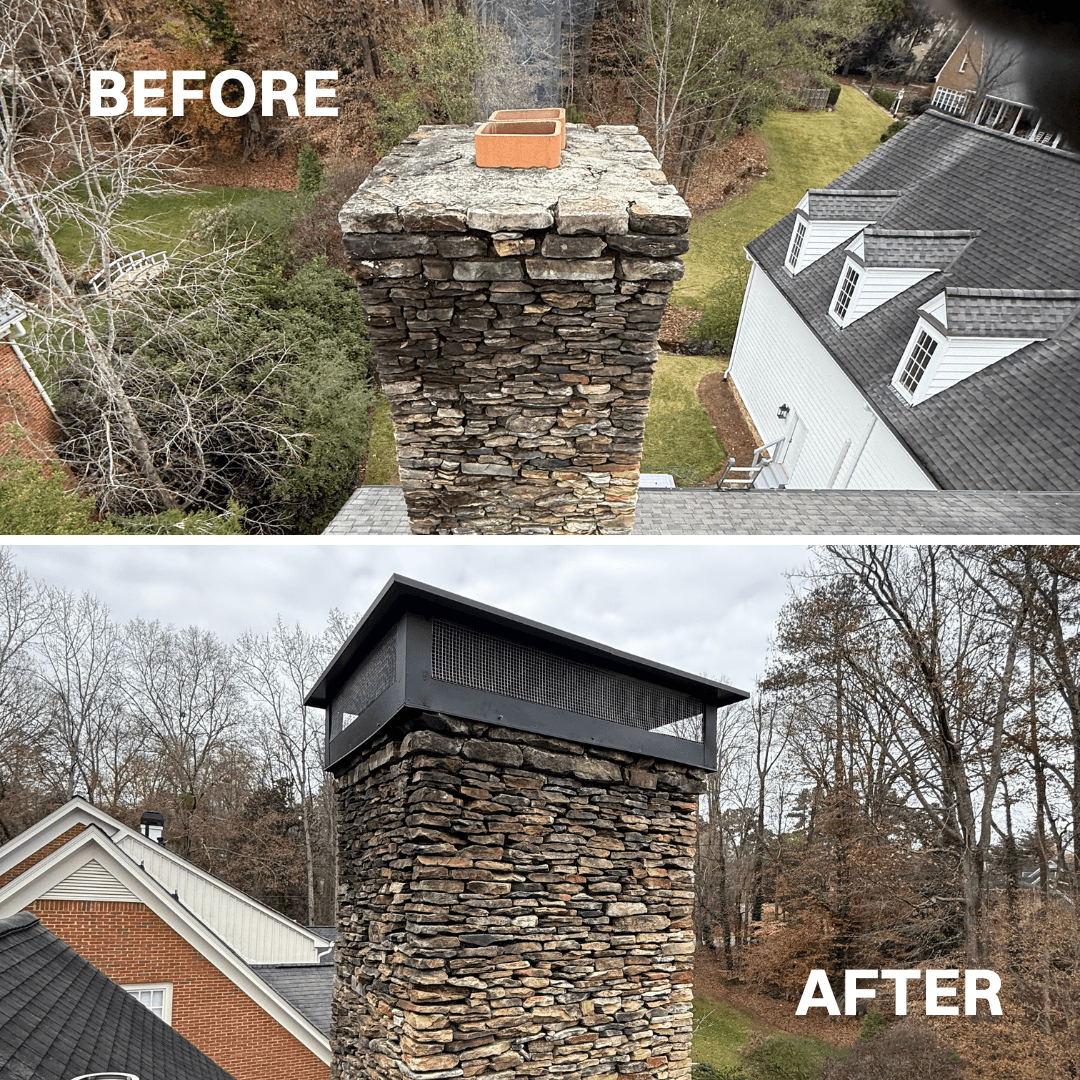
Chimney caps and top covers prevent rain entry and animal visits. A proper cap keeps rain out and reduces downdrafts and debris. For chase style systems, a chase cover needs to be sound and properly fitted.

Top protection options may include

  • Installing a correctly sized cap
  • Replacing a damaged cap
  • Repairing or replacing chase covers
  • Securing loose components that rattle in wind

If you have ever heard scratching in the chimney, you already know why caps matter. Squirrels and birds do not pay rent. If animals are already involved, animal removal may be needed before sealing entry points.

Tuckpointing and masonry repair

Tuckpointing and masonry repair address water absorption through the sides. When mortar joints fail, water enters and spreads. Tuckpointing removes damaged mortar and replaces it to restore the joint. Brick repair may also be needed if faces are breaking down.

Masonry repair work can include

  • Grinding out failing mortar joints
  • Repointing with the right mortar type for the chimney
  • Replacing damaged bricks when needed
  • Sealing small masonry cracks that are letting water in

In some cases, masonry repair supports chimney specific work to help stop ongoing saturation.

Waterproofing treatment

Waterproofing treatment helps shed rain while letting masonry breathe. Waterproofing is not paint. A good masonry water repellent reduces absorption but still allows moisture vapor to escape. That matters in humid GA conditions.

Water repellent is often used after

  • Mortar joints are restored
  • Cracks are repaired
  • Crown and top issues are corrected

If waterproofing is used as a shortcut before repairs, water can still enter through openings. We avoid that trap by tying treatment to the right repairs and finishing with chimney waterproofing when it makes sense.

Symptom to source guide

This table helps match symptoms to likely leak sources so you know what to look for. The exact cause still needs inspection, but patterns help narrow it down.

What you noticeWhat it often points toWhere we check first
Drips inside firebox during rainMissing cap or crown cracksCap, crown, flue top
Stains on ceiling near chimneyFlashing or roof intersectionFlashing, shingles uphill
Rusty damper or firebox odorLong term moisture entryCap, crown, masonry absorption
Efflorescence on brick exteriorWater passing through masonryMortar joints, brick faces
Wet wall beside chimney chaseChase cover or siding detailsChase cover, corners, flashing

If the pattern points to top side entry, pairing an inspection with cap work or chimney crown repair is often part of a solid plan.

Timelines and what can slow a job down

Chimney leak timelines depend on access, weather, and how many areas need repair. Some fixes are quick. Others take longer because prep and curing matter. We also plan around rain because wet masonry and sealants are a bad mix.

What can slow a chimney leak job down

  1. Steep roofs or limited safe access
  2. Multiple entry points, like flashing plus crown damage
  3. Masonry that needs drying time before sealing or coating
  4. Hidden rot around a chase that needs carpentry work by others
  5. Stormy weeks that keep surfaces wet

If you need the leak stopped fast, the best move is to schedule an inspection as soon as you spot the issue. Waiting often turns a small opening into larger interior damage. When buildup is found during evaluation, chimney sweep service may be suggested to support overall fireplace performance after leak repairs.

Clean Air Duct Cleaning & Chimney

When to pause DIY fixes

You should pause DIY chimney leak fixes when safety or roof access becomes a factor. Some homeowners try to seal gaps with roof cement or caulk from a ladder. That can be risky and it often fails. Chimney leaks are also easy to misdiagnose.

Stop and call a pro if

  1. The roof pitch feels unsafe or you cannot maintain stable footing
  2. You see loose bricks, shifting masonry, or pieces falling
  3. The leak is near electrical fixtures, ceilings, or attic insulation
  4. You suspect the flashing is wrong or missing under shingles
  5. You smell strong musty odors inside the firebox after every rain
  6. You see water in the cleanout, basement area, or around framing

If you have to lean to reach the chimney, the ladder has already voted no. It just has not told you out loud. If moisture has spread into nearby materials, mold treatment may be needed after the leak is stopped.

How to prepare for your visit

Preparing your home before we arrive helps the inspection go faster and cleaner. A little prep gives us clear access and helps us confirm the right leak path. It also helps protect your floors and belongings.

Before the visit, please

  1. Move decor, screens, and breakables away from the hearth
  2. Clear a path to the fireplace and the nearest wall surfaces
  3. Note when the leak happens, light rain or heavy wind driven rain
  4. Take photos of stains right after storms, if possible
  5. Keep pets secured if they are curious or protective

If you have attic access near the chimney, tell us. Interior roofline clues can help confirm a flashing leak. If insulation has been affected by moisture, we can also discuss attic insulation needs after the leak source is addressed.

After repairs and basic care

After repairs, you can reduce repeat problems with simple watch points and routine care. Chimneys live outdoors, so ongoing checks matter. You do not need to stare at it daily. Just build a simple habit after big storms.

What to watch for after service

  1. Any new staining after the next two or three rain events
  2. Musty smells that return after humidity spikes
  3. New white efflorescence lines on brick
  4. Loose metal sounds near the cap during wind
  5. Mortar dust at the base of the chimney outdoors
Basic care tips
  • Keep gutters and downspouts clear so roof water does not overflow near the chimney
  • Trim branches that scrape the chimney or drop debris onto the cap
  • Avoid coating bricks with waterproof paint that traps moisture
  • If you spot small cracks in the crown, address them early

Routine maintenance helps catch issues before they become leak paths. Many homeowners pair seasonal checks with inspection and needed repairs, especially after major storms in GA.

Atlanta area leak patterns

Atlanta homes often face leak patterns tied to storms, tree cover, and older masonry. Many neighborhoods around Atlanta have mature trees and shaded rooflines. Shade can slow drying and keep masonry damp longer. Heavy rain can also expose small flashing gaps quickly.

Local situations we commonly run into

  • Older brick chimneys with mortar wear that soaks up water
  • Roof replacements where flashing was reused or patched instead of rebuilt
  • Chimney chases with aging covers that rust at seams
  • Water stains that appear far from the chimney because water travels along framing
  • Musty fireplace odor after long humid stretches even without heavy rain

If your chimney is on the side of the house that takes the most wind and rain, it may leak sooner than the rest of the roof system. Orientation matters. For ongoing prevention, waterproofing can help after repairs are complete.

Why homeowners call us

Homeowners call us because we focus on clear answers and practical repairs that fit the real cause. Clean Air Duct Cleaning & Chimney is known for air quality work, and we bring that same mindset to moisture problems. Water in a chimney can affect odors, indoor comfort, and the condition of the fireplace area. We aim to stop the leak and help you understand why it happened.

What you can expect from our team

  • Straight talk about what we see and what it means
  • Photo documentation when it helps clarity
  • Repair options based on the entry point, not guesses
  • Respect for your home, with a clean work area mindset
  • Help spotting related issues that can feed leaks, like gutter overflow or roof drainage paths

Have you had the leak fixed before but it came back? That usually means the first fix treated a symptom, not the source. If the chimney also needs performance and safety review, fireplace safety inspection may be a helpful next step after water entry is corrected.

Related Services

Related Services

Schedule chimney leak help

If you need help with chimney leaks in Atlanta, we are ready to schedule an inspection and next steps. Leaks do not stay small, and water damage loves to spread into drywall, framing, and insulation. If you suspect chimney leaks, let us track down the entry point and handle the right repairs. Clean Air Duct Cleaning & Chimney helps homeowners deal with chimney leaks in Atlanta with inspection, flashing work, crown repair, caps, masonry repair, and waterproofing.

Call (470) 706-6431 or use our Contact Us page to book service in Atlanta, GA and nearby areas.

Frequently Asked Questions (FAQs)

Common signs include water stains on walls or ceilings near the fireplace, damp odors, rust on the damper or firebox, dripping sounds, and deteriorating masonry. Clean Air Duct Cleaning & Chimney can help assess and address chimney leak concerns.
Leaks often come from damaged flashing, cracked chimney crowns, worn mortar joints, missing or damaged chimney caps, or masonry that absorbs water over time. Clean Air Duct Cleaning & Chimney provides chimney leak services to help identify likely sources.
Even minor leaks can lead to moisture damage, mold-friendly conditions, and faster deterioration of chimney components if left unresolved. Clean Air Duct Cleaning & Chimney can help you understand the situation and next steps.
Yes, water can enter through gaps at the top, damaged caps, or flashing issues and still show up inside the firebox. Clean Air Duct Cleaning & Chimney provides service for chimney leak issues like these.
A chimney cap can reduce direct rain entry and help keep debris out, which can also reduce moisture-related problems. Clean Air Duct Cleaning & Chimney can assist with chimney leak-related solutions that may include cap considerations.
Flashing is the metal barrier where the chimney meets the roof; it can leak if it’s corroded, loose, improperly sealed, or if surrounding roofing materials fail. Clean Air Duct Cleaning & Chimney addresses chimney leak issues that may involve flashing.
The crown is the sloped top surface that helps shed water; cracks or poor drainage can allow water into the chimney structure. Clean Air Duct Cleaning & Chimney can help evaluate chimney leak symptoms related to crown conditions.
Yes, moisture can mix with soot and creosote residues, creating musty or smoky odors, especially in humid weather. Clean Air Duct Cleaning & Chimney provides chimney leak services that can help reduce moisture-related odor problems.
Regular maintenance, keeping masonry in good condition, ensuring proper water-shedding at the top, and addressing roofline gaps can help reduce risk. Clean Air Duct Cleaning & Chimney can provide service support for chimney leak prevention and repair needs.
It’s best to contact a qualified chimney service provider to review the signs and determine possible sources of moisture intrusion. Clean Air Duct Cleaning & Chimney provides chimney leak services and can help you plan appropriate next steps.
Why Your Home Airflow Drops When Dust Builds Up in Ducts

Why Your Home Airflow Drops When Dust Builds Up in Ducts

Your home airflow drops when dust builds up in ducts because that dust acts like…

Why Regular Chimney Sweeping Helps Keep Your Fireplace Safe

Why Regular Chimney Sweeping Helps Keep Your Fireplace Safe

A clean chimney lets smoke move out of your home, not back into your face.…

Signs Your Air Ducts Need Cleaning Before the Seasons Change in Atlanta, GA

Signs Your Air Ducts Need Cleaning Before the Seasons Change in Atlanta, GA

Your air ducts may need cleaning before a seasonal change if you notice more dust,…

How Creosote Forms and Why It Needs Removal

How Creosote Forms and Why It Needs Removal

Creosote forms when wood smoke cools inside your chimney and turns into a sticky, dark…

Dryer Vent Lint Buildup and Fire Risk, What Every Atlanta Homeowner Should Know

Dryer Vent Lint Buildup and Fire Risk, What Every Atlanta Homeowner Should Know

Lint buildup in a dryer vent raises fire risk because it blocks airflow. When hot…

Why Annual Chimney Inspections Protect Your Fireplace and Home

Why Annual Chimney Inspections Protect Your Fireplace and Home

An annual chimney inspection helps you catch hidden trouble before it grows. A pro can…