
 Skip to content
 Need Chimney Pipe Replacement In Atlanta? Clean Air Duct Cleaning & Chimney provides safe expert installs, honest pricing, fast scheduling. Call today for a quote
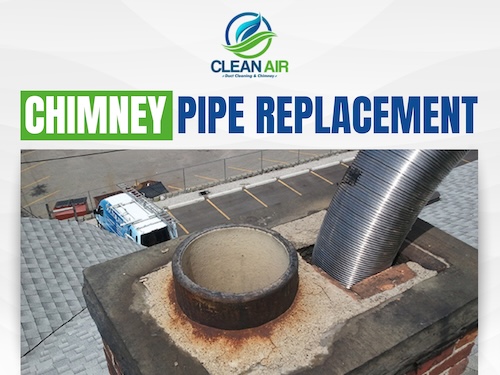
travel from the connected fireplace or appliance to the exterior.
Unlike masonry flue tiles, these systems use metal vent components and connections.
Problems can develop when pipe sections corrode, separate, shift, or become damaged by moisture and repeated heating and cooling.
Our Chimney Pipe Replacement in Atlanta service focuses on identifying the failed components and restoring the affected vent path with pipe suited to the existing system.
Need Help? Call Clean Air Duct Cleaning & Chimney Near You
Some pipe problems affect only one section. Others involve several joints or a larger portion of the vent run.
Replacement may be considered when we find:
Because much of the chimney pipe may run through an attic or chase, some damage is not visible from the living area.
A chimney inspection can help determine where the problem begins and how much of the vent path is affected.
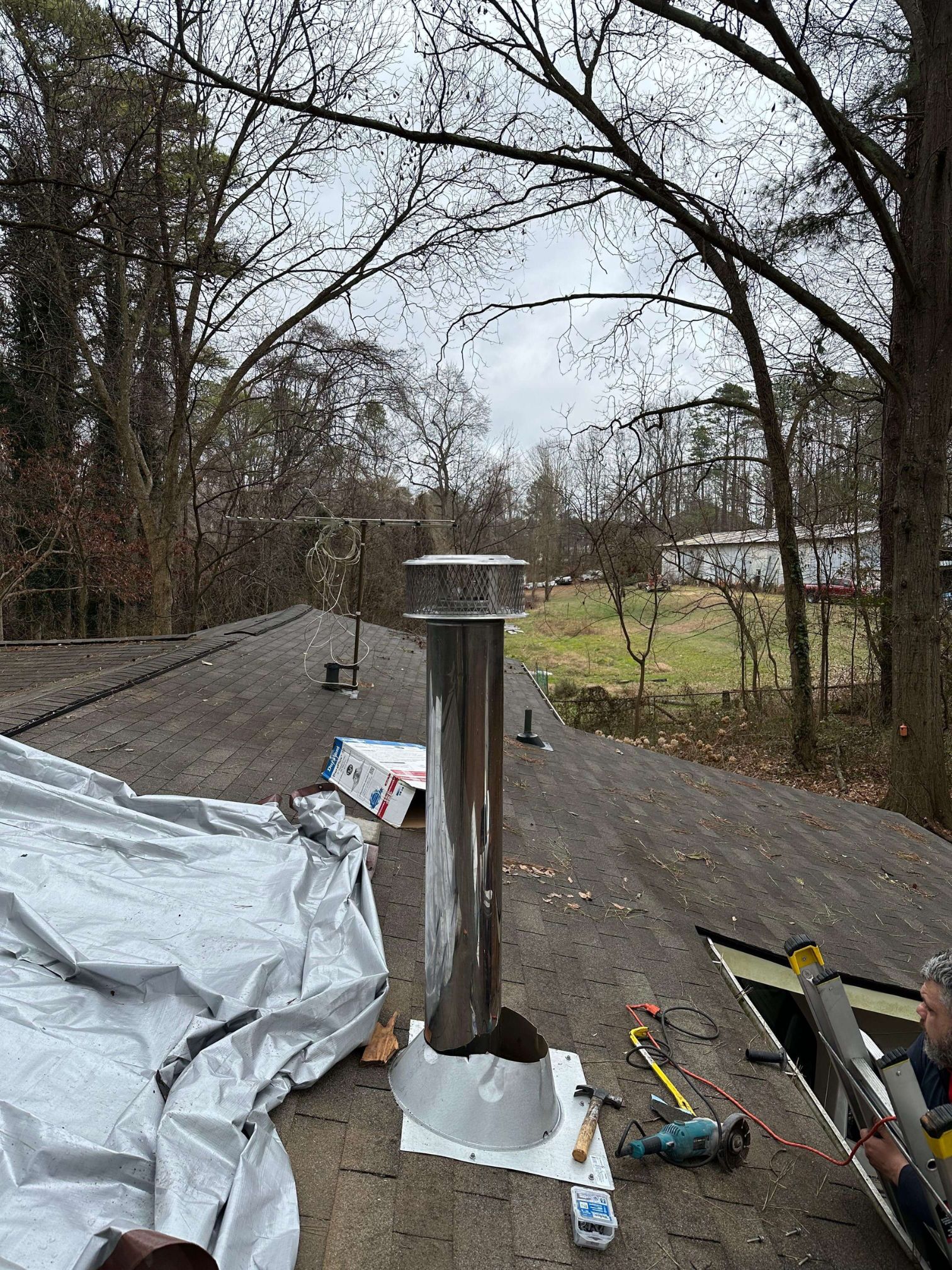
Pipe deterioration can sometimes show up before the damaged section itself is visible.
Possible signs include:
These symptoms do not always mean the pipe needs complete replacement.
The vent path needs to be evaluated to determine whether the problem is localized or more extensive.
Metal chimney components can deteriorate for several reasons.
Water entering around the top of the system can eventually affect metal pipe, joints, collars, and other components.
Moisture may enter because of problems around the cap, termination, or roof penetration.
Replacing rusted pipe without correcting active water entry can expose the new components to the same problem.
Repeated heating and cooling can place stress on joints and connections.
A poorly supported section may also shift over time and allow connections to loosen.
The chimney pipe needs to work with the fireplace or appliance connected to it.
An older venting configuration may no longer be appropriate after an appliance change, remodel, or previous repair.
That is why we identify the existing system before selecting replacement components.
Replacing only the first damaged section we see is not always enough. Our CSIA Certified Chimney Professionals look at the accessible chimney vent route and surrounding components to understand where the problem is located and how much of the system may be affected.
Depending on the setup, we may check:
If a hidden section requires a closer look, a camera inspection may help document areas that are difficult to evaluate directly.
Not every damaged system requires every section to be removed.
A limited replacement may be appropriate when damage is isolated and the surrounding pipe remains in suitable condition.
For example, one corroded or damaged section may be replaced while sound components remain in place when the system allows it.
If corrosion or separation affects several connected sections, replacing a larger portion of the run may provide a more appropriate repair.
A more extensive replacement may be considered when deterioration is widespread, incompatible components are present, or the existing pipe configuration no longer suits the connected system.
The recommendation should depend on the actual condition rather than automatically replacing everything.
Need Help? Call Us For Chimney Pipe Replacement Services!
Chimney venting systems can contain different types of metal components depending on the fireplace, appliance, and route through the home.
The replacement needs to match the system rather than simply match the diameter of the old pipe.
We consider:
Using components that do not belong together can create another venting problem instead of correcting the existing one.
The exact process depends on where the damaged pipe is located and how much of the system needs replacement.
A typical project may include:
If hidden deterioration becomes visible after damaged pipe is removed, we explain what we find before expanding the repair.
These services address different types of venting problems.
Chimney pipe replacement generally focuses on damaged metal chimney or vent pipe components.
Chimney relining focuses on restoring or installing a liner inside an existing chimney.
A masonry chimney with an internal metal liner may require a different approach from a factory-built or metal chimney pipe system.
If the problem involves an internal liner rather than replaceable pipe sections, chimney relining may be more appropriate.
The first step is identifying what type of venting system is actually installed.
Water is an important concern when replacing corroded chimney pipe.
Before completing the repair, we look for visible clues that moisture may be reaching the system.
Possible problem areas include:
If the pipe failed because water repeatedly reached it, correcting that source is important before considering the problem resolved.
For recurring chimney moisture problems, our chimney leaks service can help identify other possible entry points.
Atlanta’s humidity, heavy rainfall, storms, and mature tree coverage can expose chimney terminations and roof penetrations to repeated moisture.
Metal components that already have damaged coatings, loose joints, or poor protection may develop corrosion more quickly when water continues reaching them.
Older homes may also contain vent systems that have been changed during remodels or appliance replacements.
Those changes can leave a mix of older and newer components along the same route.
For Chimney Pipe Replacement in Atlanta, understanding both the pipe condition and the existing venting configuration is more useful than simply replacing the most visible damaged piece.
After replacement, pay attention to any changes in the system.
Contact us if you notice:
If a problem returns, another section of the vent path or an exterior moisture source may need further evaluation.
Chimney pipe replacement requires more than identifying a rusty section.
The pipe needs to work as part of the complete vent route.
Our approach focuses on:
If only one section needs attention, we explain that.
If deterioration affects a larger part of the system, we explain why a broader replacement may be more appropriate.
Clean Air Duct Cleaning & Chimney provides professional Chimney Pipe Replacement in Atlanta for rusted pipe, damaged sections, loose connections, corrosion, water-related deterioration, and other problems affecting metal chimney venting systems.
We inspect the vent path, determine which components need attention, and explain whether targeted section replacement or a larger replacement is appropriate.
Call (470) 706-6431 or contact us online to schedule service.
 Optimized by Seraphinite Accelerator