



Clean Air Duct Cleaning & Chimney333 Sandy Springs Cir Unit 207, Atlanta, GA 30328

 Skip to content
Tap any badge to check it for yourself.
Clean Air Duct Cleaning & Chimney installs caps, sweeps, inspects and repairs chimneys in Vinings, GA. Chimneys need regular care to stay clean, dry and sound. Creosote builds up inside the flue, while rain and weather wear down the brick, mortar, flashing, crown and cap.
We inspect the chimney first, explain what needs attention and recommend the service that fits. Our team provides chimney services.
CSIA Certified Chimney Sweep® on our team

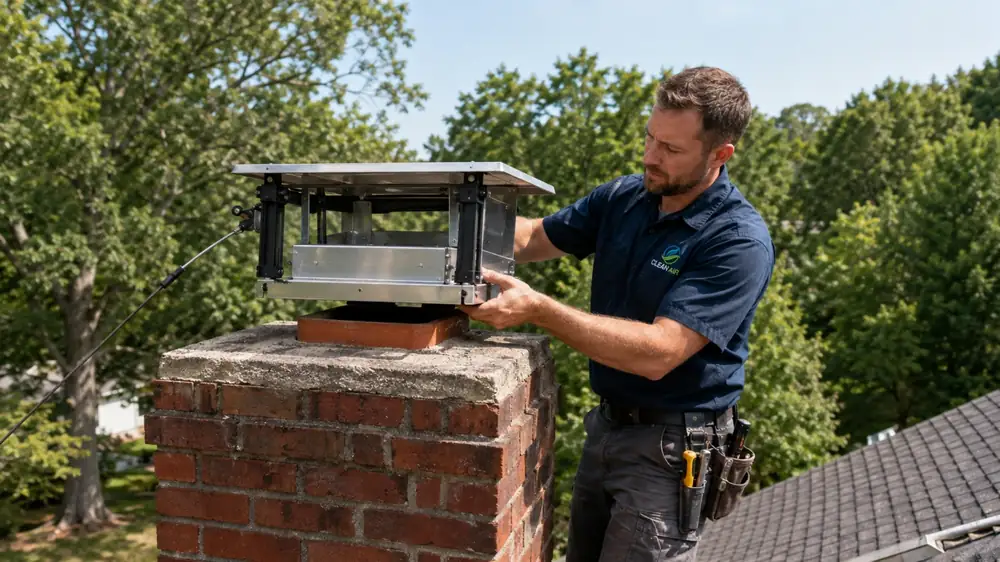
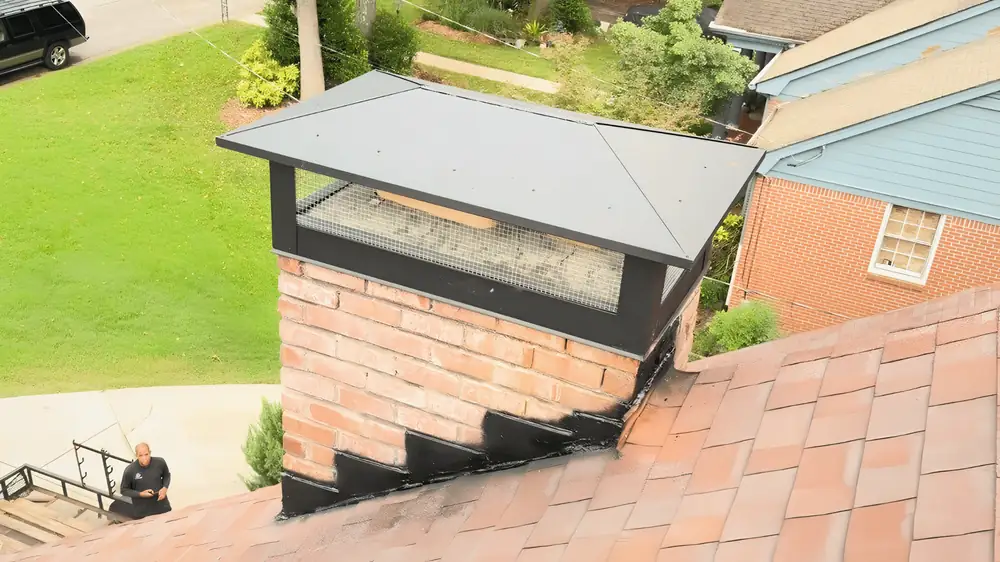
A cap being fitted, a stone chimney with a black cap, a rusted cap and a cap on a brick chimney.


Many chimney leaks start where the structure takes the most rain.
Flashing seals the joint between the chimney and the roof. If it loosens, gets damaged or deteriorates, water gets in at the roofline. Often the flashing can be repaired or replaced without touching the rest of the roof (flashing repair). The crown can also crack and let moisture into the masonry. Worn mortar absorbs water, and a damaged cap leaves the flue open.
We find the source before making repairs, so the problem is fixed, not covered up.
Answers to common questions. Need something else? Call (470) 706-6431 and we’ll help.
Call us and we’ll talk through your chimney and the right service.
Call (470) 706-6431Can moisture damage chimneys in Vinings?
Yes. Rain and humidity slowly affect chimney brick, mortar, flashing, crowns and other exposed parts. White staining, crumbling mortar, damp smells or water around the fireplace are good reasons to have the chimney inspected.
Do mature trees around Vinings homes make chimney caps more important?
Yes. Leaves, small branches and animals are more likely to cause trouble when the chimney opening isn’t protected. A secure cap keeps larger debris and animals out of the flue.
Why do I hear scratching or movement inside my chimney?
Birds or other animals may have gotten in through an open or damaged chimney top, and nesting material can block the flue. Don’t use the fireplace until the chimney has been checked and cleared.
Can chimney flashing be repaired without replacing the roof?
Often, yes. If the problem is limited to the flashing around the chimney, that area can be repaired or replaced without a new roof. We inspect the roof around it and the chimney joint first to confirm where the water is getting in.
My townhome has a metal chimney. Does it need a cap?
Factory-built chimneys usually have a chase cover and a cap from the manufacturer. If the chase cover is rusting or holding water, it needs repair or replacement. See chimney chase covers.
