Skip to content

How much does chimney repair cost in Atlanta in 2026? Depending on the problem, a small chimney repair may start around $150–$500, while major masonry repairs, stainless steel relining, or a complete chimney rebuild can cost several thousand dollars.
But here’s something many Atlanta homeowners don’t realize: two chimneys showing the same symptoms can need completely different repairs — and carry completely different price tags. A small water stain near your fireplace might be a minor flashing problem, or it might be the first visible sign of years of moisture damage inside the chimney. A few cracks in the mortar might call for simple tuckpointing, or the bricks underneath could already be unstable. That’s why chimney repair cost can’t be quoted accurately from a symptom alone.
At Clean Air Duct Cleaning & Chimney, we believe homeowners should understand what they’re paying for before approving an expensive repair. This 2026 guide covers realistic chimney repair cost ranges for homeowners across Atlanta, Sandy Springs, Roswell, Marietta, Alpharetta, Dunwoody, Brookhaven, Decatur, and Smyrna — what affects pricing, when repair makes more sense than replacement, how to evaluate an estimate, and how to prioritize repairs on a limited budget.
We’ll also walk through a representative scenario where a homeowner expecting a $250 fix faces a $7,400 restoration estimate — and explain how that happens.
Table of Contents
- How Much Does Chimney Repair Cost in Atlanta in 2026?
- Chimney Repair Cost by Service
- A Representative Scenario: $250 Leak, $7,400 Repair
- What Drives Chimney Repair Cost in Atlanta
- Chimney Repair vs. Replacement: Which Is the Better Investment?
- What a Cheap Chimney Repair Won’t Fix
- How to Evaluate Your Chimney Repair Cost Estimate
- Over Budget? How to Prioritize Repairs
- Does Homeowners Insurance Cover Chimney Repair?
- 7 Ways to Lower Your Chimney Repair Cost
- How to Choose the Right Chimney Company
- Final Answer
- Final Advice From Our Team
- FAQ
How Much Does Chimney Repair Cost in Atlanta in 2026?
Chimney repair cost depends on the component being repaired, how severe the damage is, chimney height, roof accessibility, materials, and whether additional problems turn up during the inspection. Here’s a practical breakdown of 2026 Atlanta chimney repair starting prices.
2026 Atlanta Chimney Repair Cost Chart
| Chimney Repair Service | Minor Repair / Starting Range | Extensive Repair / Replacement Range |
|---|---|---|
| Chimney crown repair | $150 – $500 | $600 – $1,500+ |
| Chimney tuckpointing | $200 – $500 | $1,000 – $2,500+ |
| Chimney flashing repair | $200 – $400 | $500 – $1,500+ |
| Chimney waterproofing | $150 – $400 | $500 – $900+ |
| Chimney chase cover replacement | $300 – $600 | $700 – $1,400+ |
| Chimney liner repair or relining | $500 – $1,500 | $2,500 – $5,500+ |
| Partial or full chimney rebuilding | $1,200 – $3,500+ | $5,000 – $15,000+ |
These are approximate Atlanta-area planning ranges supplied for this guide, not a statistically verified survey of contractor invoices. They represent possible starting and more extensive project costs — not guaranteed quotes, fixed maximums, or a promise that every chimney can be repaired at the lower price. Structural damage, unusual access, material requirements, or multiple repairs can increase the total.
Two smaller repairs sit outside this chart because each has its own full cost guide: chimney cap replacement (typically $300–$500 installed, within a broader $190–$651 range) and chimney damper repair ($100–$225 for a simple repair, $350–$700 for a throat damper replacement, and $500–$1,000+ for a top-sealing damper upgrade).
Chimney Inspection Cost in Atlanta
Before deciding on repairs, homeowners often need an inspection to identify the actual problem. Here are typical starting ranges for chimney inspection cost in Atlanta and related services:
| Service | Estimated Starting Range |
|---|---|
| Routine chimney sweep | $88 – $291 |
| Level 1 chimney inspection | $160 – $300 |
| Level 2 chimney inspection with camera scan | $260 – $460 |
| Level 3 invasive investigation | $500 – $800+ |
| Heavy creosote or glaze removal add-on | $100 – $300+ |
| Animal nest removal | $100 – $400 |
| Deep smoke chamber cleaning | $75 – $200 |
A Level 3 inspection can cost substantially more when portions of a building or chimney must be opened to investigate concealed conditions — our guide to the three chimney inspection levels explains when each one is appropriate. Some companies bundle sweeping and inspection; others price them separately, so always ask what’s included.
Chimney Repair Cost by Service
Here’s what drives chimney repair cost for each of the seven most common repairs, and when a minor fix is enough versus when replacement is the smarter move.
Chimney Crown Repair Cost: $150–$1,500+
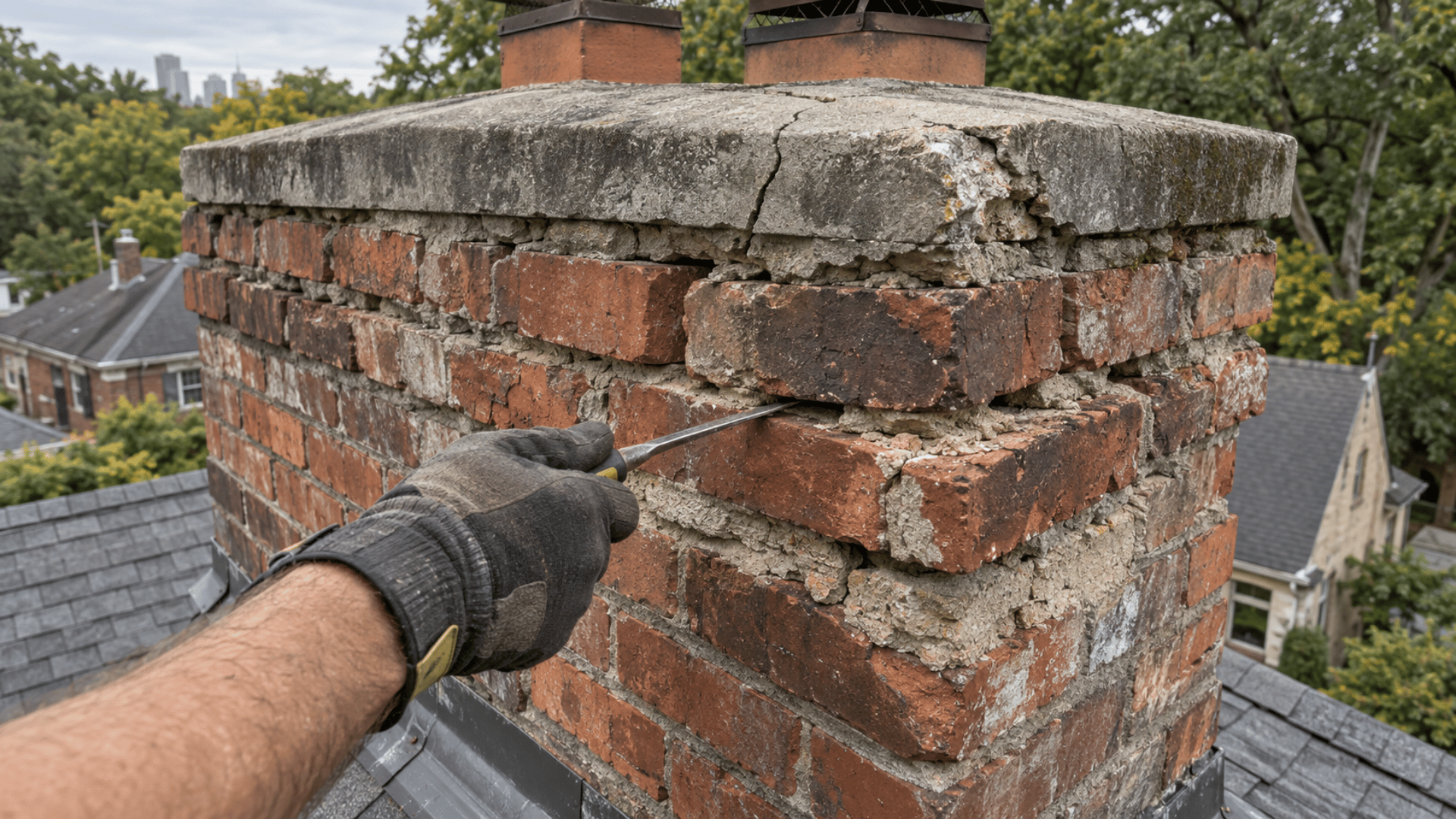
The crown is the concrete or masonry surface covering the top of a masonry chimney, and it directs rainwater away from the brickwork below. When it cracks, water can enter the masonry and contribute to deteriorating mortar, spalling brick, and damage to other chimney components. Crown work sits at the lower end of the chimney repair cost chart — as long as the crown is still sound.
Minor crown repair — starting around $150–$500. This typically means applying a compatible elastomeric crown-repair system to limited cracking, and it only makes sense when the cracks are superficial, the concrete isn’t crumbling, the crown drains properly, and the masonry underneath is stable.
Full crown replacement — starting around $600–$1,500+, depending on size and construction. A new crown is the better call when large chunks are missing, the fractures are extensive, the surface is crumbling, water collects instead of draining, or the crown lacks proper overhang and water-shedding details. If the concrete itself is failing, don’t keep paying to seal cracks that will reopen. Read more in our guide to chimney crown repair in Atlanta.
Chimney Tuckpointing Cost in Atlanta: $200–$2,500+
Tuckpointing, commonly called repointing, removes deteriorated mortar from between the bricks and replaces it with compatible new mortar. Mortar work is where chimney repair cost varies most, because it scales with chimney size and how much joint removal is needed.
Minor tuckpointing — starting around $200–$500 for small, accessible areas of deteriorating mortar where the surrounding bricks remain stable. Extensive tuckpointing — starting around $1,000–$2,500+, depending on chimney size and damage, when mortar has to be removed across several sides, the joints cleaned, an appropriate mortar mix matched, and replacement mortar packed and tooled, often with extra access equipment.
If the bricks themselves are crumbling, shifting, or loose, replacing the mortar alone may not be a reliable fix, and the chimney may need a partial rebuild. Historic homes need special care too: the National Park Service warns that overly hard mortar can damage older, softer brick, so in Grant Park, Inman Park, Midtown, Virginia-Highland, and similar neighborhoods, mortar compatibility can matter more than choosing the strongest modern mix. Read more about chimney tuckpointing in Atlanta.
Chimney Flashing Repair Cost: $200–$1,500+
Flashing is the metal system protecting the point where the chimney passes through the roof, normally built from step flashing and counterflashing. When it fails, rainwater can enter between the chimney and the roofing materials. It’s also a common place to overspend: the chimney repair cost jumps from a few hundred dollars to over a thousand once replacement is involved, and that money is wasted if the leak is actually coming from somewhere else.
Minor flashing repair — starting around $200–$400 for a limited joint or detail failure when the existing flashing is still serviceable (though sealant over damaged metal isn’t always a durable repair). Full flashing replacement — starting around $500–$1,500+, which can mean removing the defective flashing, evaluating adjacent roofing, installing new step flashing and counterflashing correctly, protecting the roof-to-chimney transitions, and checking for additional water damage.
A ceiling stain beside your fireplace doesn’t necessarily mean the flashing is the problem. Water can also enter through the crown, masonry joints, the cap, a chase cover, or another roof or siding detail, so identify the actual water-entry point before you commit to replacement. Read more about chimney flashing problems.
Chimney Waterproofing Cost: $150–$900+
Atlanta’s climate makes chimney water protection particularly important. The National Weather Service lists the city’s normal annual precipitation at approximately 49.7 inches, and exposed brick and mortar can absorb rainwater, especially when the masonry is porous or deteriorated.
Standard waterproofing — starting around $150–$400 for a smaller, accessible, structurally sound chimney, using a compatible penetrating masonry water repellent. Larger projects — starting around $500–$900+ when there’s more exposed masonry, significant cleaning, or difficult access. Waterproofing is usually one of the lower-priced entries in any chimney repair cost breakdown — but only when the masonry is already sound.
We generally prefer vapor-permeable repellents, often based on silane/siloxane chemistry, which resist liquid water while letting moisture vapor escape. Ordinary paint or film-forming coatings can interfere with masonry drying. And waterproofing isn’t a structural repair — it can’t fix missing mortar, loose bricks, major crown cracks, failed flashing, or structural movement. Read more in our chimney waterproofing guide.
Chimney Chase Cover Replacement Cost: $300–$1,400+
Chase covers are common on prefabricated chimney systems — the metal cover protects the top of the framed chase from rain. Chase cover chimney repair cost comes down mostly to material and roof access.
Budget galvanized chase cover — starting around $300–$600. Less expensive up front, but it can corrode over time, especially when water is allowed to pool. Custom stainless steel chase cover — starting around $700–$1,400+. A good custom cover includes corrosion-resistant sheet metal, proper drainage, a cross-break or equivalent slope, a raised flue collar, a suitable skirt and drip edge, and compatible storm-collar details. Large multi-flue covers and difficult roof access can cost more.
A failed storm-collar seal may be repairable when the metal itself is sound. With pinholes, deep corrosion, significant warping, or sagging that traps water, replacement is usually a better choice than repeated patching. Read more about chimney chase cover repair.
Chimney Relining Cost in Atlanta: $500–$5,500+
The chimney liner carries combustion products out of the home while helping contain heat within the venting system. Liner damage can mean cracked clay flue tiles, missing tile sections, failed joints, corroded metal, collapsed or displaced components, or incorrect venting dimensions. Because relining is a multi-thousand-dollar chimney repair cost, documentation matters before you approve it.
Localized liner repair — starting around $500–$1,500, if the damage is limited and the repair system is approved for the specific condition and application (not every crack can safely be patched). Stainless steel relining — starting around $2,500–$5,500+, which can include camera inspection and measurements, flue cleaning, removal of obstructing clay tiles when needed, an appropriately sized listed liner, insulation where required, appliance connections, top termination and weather protection, and final verification.
When damage is extensive or the liner can no longer do its job, patching isolated defects over and over isn’t a reasonable long-term solution — but the contractor should document the problem before recommending a full liner. The Chimney Safety Institute of America recommends internal video evaluation after a chimney fire because liner cracks, failed joints, and other damage may not be visible from below. Before approving a multi-thousand-dollar relining project, ask to see the inspection findings and how the selected liner meets your appliance’s requirements. Read more about chimney liner damage.
Chimney Rebuild Cost in Atlanta: $1,200–$15,000+
Rebuilding is usually the highest chimney repair cost category, because it can involve removing and reconstructing large sections of masonry.
Partial chimney rebuild — starting around $1,200–$3,500+, with complex jobs costing more. It may be appropriate when upper bricks are loose, mortar has failed deeply, damage is concentrated above the roofline, several courses are unstable, or severe spalling makes tuckpointing impractical. Full chimney rebuild — starting around $5,000–$15,000+, when there’s significant structural failure extending well below the roofline. That can involve masonry demolition, structural evaluation, new brick and mortar, crown construction, flashing, flue work, and additional framing or foundation work.
If the chimney is structurally stable and only the joints have deteriorated, tuckpointing can preserve most of the existing structure. But if bricks are unstable or large sections of masonry are failing, new mortar alone isn’t enough. The real question isn’t whether the chimney looks old — it’s whether the underlying structure is still sound. Read more in our guide to chimney repair vs. replacement.
A Representative Scenario: When a $250 Chimney Leak Becomes a $7,400 Repair
This is a representative Atlanta repair scenario, based on the types of conditions chimney professionals encounter — not a documented Clean Air customer invoice. The dollar figures are illustrative.
One of the best ways to understand chimney repair cost is to see how hidden damage changes the scope.
The Initial Problem
Consider a homeowner in Virginia-Highland who notices a small water stain on the ceiling near the fireplace after heavy spring rains, along with a few reddish masonry fragments in the firebox. The assumption is understandable: maybe the flashing needs a little caulk, or the crown needs a quick coating. They budget about $250 for what looks like a minor leak repair.
What the Inspection Reveals
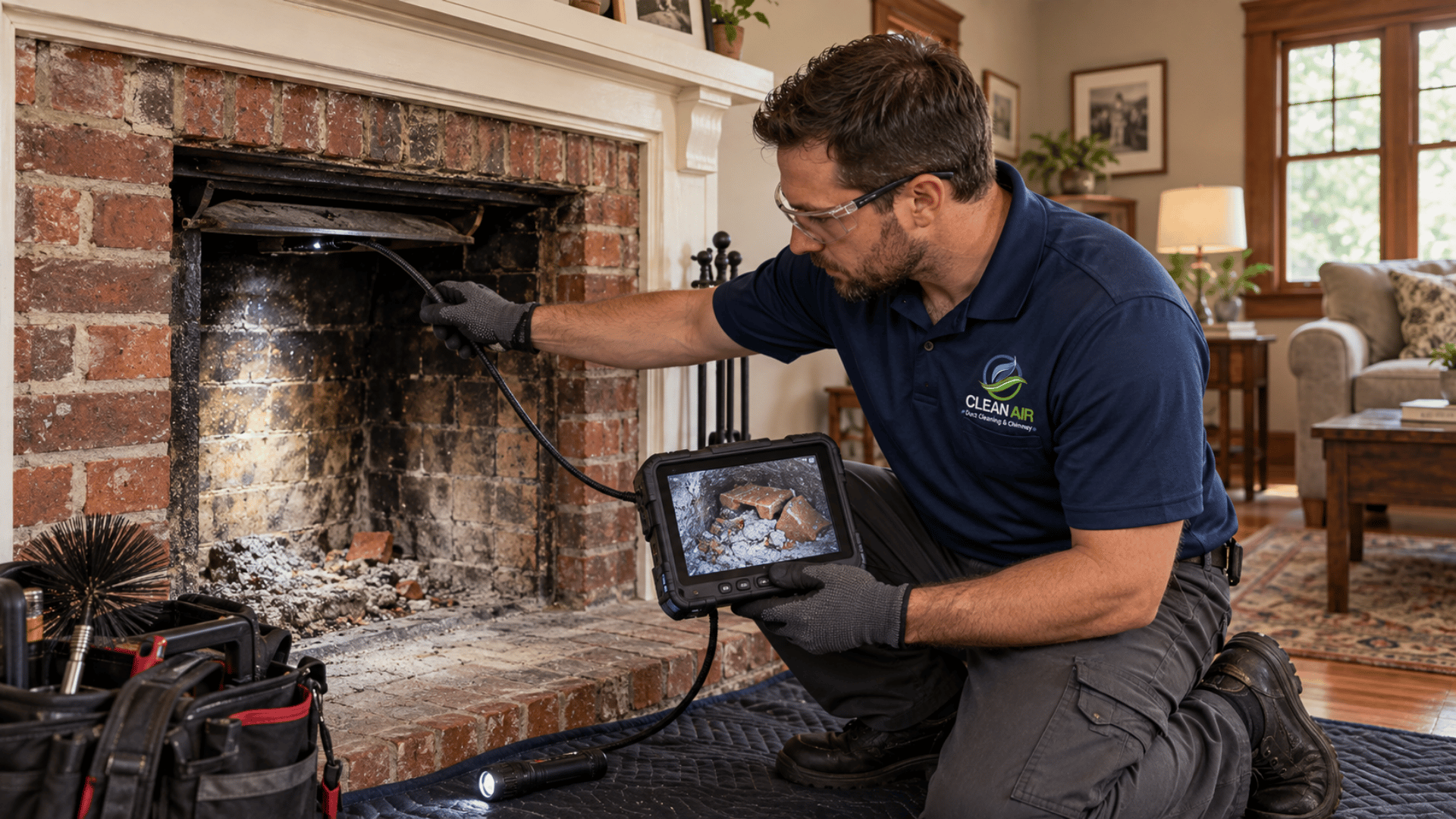
A closer inspection finds the chimney crown extensively cracked, with water entering the upper masonry and causing severe mortar deterioration. Several upper brick courses are unstable. The masonry fragments in the firebox also raise concern about internal flue damage, so a Level 2 inspection with a video scan is done — and it reveals cracked clay flue tiles and deteriorated internal joints. At this point, an inexpensive crown patch wouldn’t address the full condition.
The Actual Repair Estimate
| Required Work | Illustrative Cost |
|---|---|
| Partial upper chimney rebuild | $2,800 |
| New concrete chimney crown | $850 |
| Stainless steel relining | $3,750 |
| Total | $7,400 |
Expected minor repair budget: $250. Illustrative comprehensive restoration estimate: $7,400.
Why the Price Changed
The homeowner wasn’t simply paying more for the same repair — the actual scope was completely different. Instead of sealing a crown, the project required addressing unstable masonry and a damaged internal venting system. The chimney repair cost should reflect the damage that actually exists, not just the symptom the homeowner noticed first. That’s why a proper inspection matters, whether you’re about to approve an inexpensive patch or a major rebuild.
What Drives Chimney Repair Cost in Atlanta
Six factors account for most of the difference between one chimney repair cost and another.
Access, Roof, and Property Factors
- Roof height and accessibility. A single-story ranch in Alpharetta may have a relatively accessible chimney, while a three-story home in Inman Park with a steep roof is far more difficult. Extra staging, scaffolding, lift equipment, or specialized access can add roughly $500–$2,500+ in complex cases — not necessarily contractor markup, but equipment, setup time, labor, and safety requirements.
- Historic brick and mortar matching. Many older Atlanta homes need extra care to preserve original masonry — matching brick, mortar, color, and joint profiles takes more time and expertise (see our guide to chimney restoration for older Atlanta homes). Properties in designated historic districts may also need special approvals; check with the local jurisdiction.
- Dense tree canopy and obstructions. Large branches, debris, and limited equipment access can slow work or require separate tree services. Don’t climb trees or onto roofs to clear dangerous branches yourself.
- Multiple flues. A multi-flue stack can require more complicated liners, caps, terminations, or masonry work — but a problem with one flue doesn’t automatically mean every flue must be replaced. The added scope should be justified by inspection findings.
Hidden Damage Factors
- Hidden water damage. A chimney leak can eventually affect roof decking, attic framing, interior drywall, insulation, and surrounding materials. If structural carpentry becomes necessary, the project can expand well beyond the original repair — see why chimneys leak water inside for how that happens.
- Deeper masonry deterioration. A chimney can look sound on the surface while internal mortar or brick is badly deteriorated. Written estimates should explain how unexpected conditions will be documented and priced before extra work is approved.
Fees That May Appear on Your Estimate
Depending on the contractor and property, the estimate may also include:
- Service call or inspection fee: starting around $100–$400
- Scaffolding or special roof-access equipment: starting around $200–$800 for simpler setups, potentially much more for complex access
- Brick and debris disposal: starting around $50–$200
- Permit fees where required: starting around $75–$200, varying by jurisdiction
- Additional carpentry, roofing, or drywall repairs
- Specialty historic materials
These charges aren’t automatic. They should be explained in your estimate, and some may already be included in a quoted project price. A trustworthy chimney repair quote tells you what needs repairing, why it needs repairing, and what’s included in the total.
Chimney Repair vs. Replacement: Which Is the Better Investment?
The lowest chimney repair cost isn’t automatically the most economical. But replacing an entire component when a sound localized repair would work can be just as wasteful. Here’s how we approach the decision:
| Situation | Localized Repair May Make Sense | Replacement or Rebuilding May Make More Sense |
|---|---|---|
| Chimney crown | Minor cracks, stable concrete | Crumbling, missing sections, poor structure |
| Mortar joints | Sound bricks with localized joint deterioration | Loose or severely damaged masonry |
| Flashing | Limited repairable defect, sound underlying metal | Widespread corrosion or improper installation |
| Chase cover | Sound metal with isolated seal failure | Sagging, rust-through, perforation |
| Chimney liner | Limited defect suitable for an approved repair system | Extensive cracking, collapse, perforation |
| Chimney structure | Stable masonry with repairable local defects | Significant movement or deep structural deterioration |
Don’t Choose Based Only on How Long You Plan to Own the Home
Some homeowners think, “I’m selling in two years, so I’ll just do the cheap repair.” But unsafe work doesn’t become acceptable because you plan to move. Whether you’re staying twenty years or selling next month, the repair still needs to leave the chimney in a condition appropriate for its intended use. Choose the least expensive repair that adequately addresses the actual problem — not simply the lowest number on the proposal.
What a Cheap Chimney Repair Won’t Fix
A low chimney repair cost isn’t a problem when it matches a small, real repair. It’s a problem when it patches a symptom and leaves the cause in place. A low-cost chimney repair generally won’t fix:
- A crown whose concrete is failing. Sealant on a crumbling crown just means paying again when the cracks reopen.
- Mortar over unstable bricks. If bricks are crumbling, shifting, or loose, new mortar alone isn’t reliable.
- Masonry damage hidden under waterproofing. Waterproofing can’t fix missing mortar, loose bricks, major crown cracks, failed flashing, or structural movement.
- The wrong leak source. Replacing flashing doesn’t help if the water is actually entering through the crown, joints, cap, or chase cover.
- A liner that isn’t safe to patch. Not every crack can safely be repaired, and a patch on a failing liner can leave a real safety problem in place.
- Existing interior damage. Repainting a stained ceiling doesn’t stop the leak, and repeated tuckpointing is wasted money if rain keeps entering through failed flashing.
If a quote doesn’t explain why it solves the cause and not just the symptom, ask before you approve it.
How to Evaluate Your Chimney Repair Cost Estimate
Got a $5,000 chimney repair estimate? You should never feel pressured to approve a major repair without understanding what’s being proposed. A fair chimney repair cost comes with documentation, not just a number. A trustworthy estimate includes:
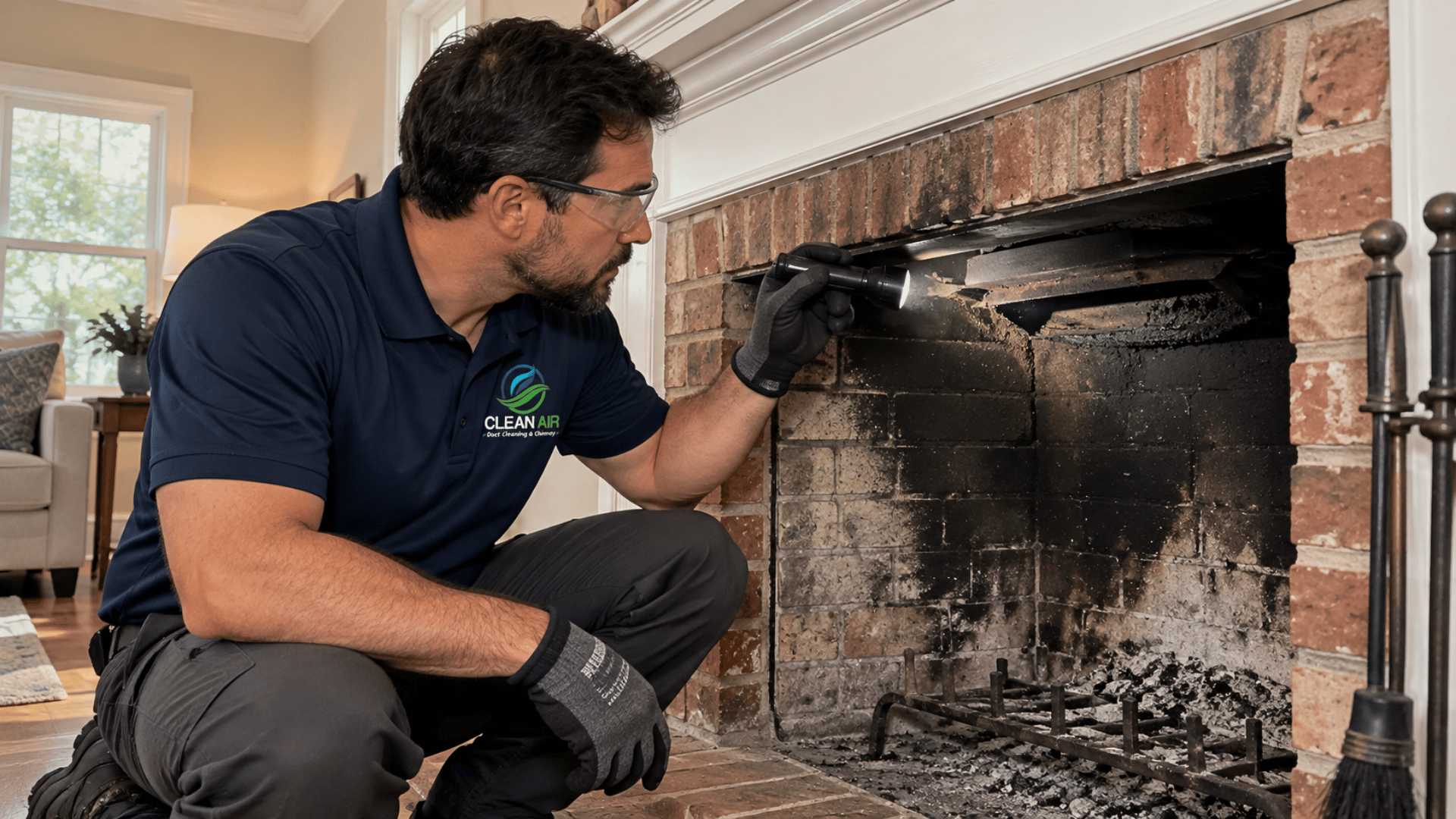
- Inspection photos and video evidence. For visible exterior damage, ask for photos of the crown, brickwork, mortar joints, flashing, and cap or chase cover. If expensive internal flue repairs are recommended, ask for camera footage or still images documenting the defects — a Level 2 inspection includes internal video scanning or a comparable examination of the flue.
- A cause-and-effect explanation. “The crown is cracked, allowing water to reach the upper masonry, and several brick courses have unstable joints, which is why tuckpointing alone isn’t sufficient” is useful. “Your chimney is bad and needs rebuilding” is not.
- An itemized scope of work. Clear phases — access and staging, demolition or material removal, masonry restoration, crown reconstruction, liner replacement, flashing, cleanup and disposal. It doesn’t need to price every bag of mortar, but the major work and related costs should be understandable.
- Repair alternatives. If a less extensive solution could safely address the defect, the contractor should explain it. Some situations allow phased repairs; others can’t be made safe with partial work. Both deserve a clear explanation.
- Written warranty terms. What work is covered, for how long, whether it covers materials, labor, or both, whether it’s transferable, what maintenance conditions apply, and who handles manufacturer claims. A lifetime warranty isn’t automatic just because stainless steel was used.
- Hidden-damage contingencies. If the contractor suspects concealed framing damage, the estimate should explain how unforeseen work will be handled and when a change order may be necessary.
Red Flags to Watch For
- Refusing to explain the diagnosis, or being unable to provide documentation
- High-pressure sales tactics, or demanding an immediate signature
- A big discount only if you approve on the spot
- Recommending expensive work without explaining why a smaller repair isn’t enough
- Claiming insurance will be voided unless the work is approved immediately
A major chimney repair should be a documented construction decision, not a fear-based purchase. And for a multi-thousand-dollar liner or masonry rebuild, a second qualified opinion — one that evaluates the actual condition, not just the price — can be well worth it.
What If Your Chimney Repair Quote Is $6,000 but You Only Have $2,000?
This is a common financial challenge. The answer isn’t automatically to reject the full estimate, or to approve every repair at once — it’s to work out what presents an immediate hazard, what’s allowing active damage, and what can reasonably be scheduled later.
Priority 1: Safety and Structural Hazards (Call a Professional Right Away)
These include unstable or falling brickwork, severely compromised flue liners, evidence of an active chimney fire, significant smoke backup, and major structural movement. If a flue is unsafe, stop using the connected fireplace or appliance until the defect has been corrected and the system cleared for use. If the chimney itself is structurally unstable, simply not lighting the fireplace doesn’t remove the falling-masonry hazard.
Priority 2: Active Water Intrusion
A leaking crown or flashing system should be addressed promptly. Sometimes a localized repair is appropriate; other times the damaged component needs replacement. Temporary water-management measures should be described as temporary — not promised to last for years.
Priority 3: Preventive Maintenance
Depending on the chimney’s condition, some work can be scheduled later: minor, stable mortar deterioration, preventive waterproofing, and non-urgent cosmetic restoration. Deferral should come from a professional assessment, not an automatic one- or two-year wait.
How a Phased Repair Plan Works
Suppose a chimney needs upper masonry stabilization, crown repair, flashing work, and relining, and your immediate budget is $2,000. A practical plan might start with a quote to stabilize an unsafe upper section and add limited temporary water protection — if those measures are technically appropriate and fit the budget. The chimney stays out of service if the liner is still unsafe, and the remaining work is scheduled once funds are available. Phasing can spread out chimney repair cost, but only when it doesn’t leave a hazard behind, and there’s no guarantee $2,000 will make every damaged chimney structurally safe or watertight.
A useful question to ask: “My full repair estimate is $6,000, but my immediate budget is $2,000. Can you identify what must be addressed now, what can safely wait, and what restrictions I need to follow in the meantime?” That gives the contractor room to explain a realistic repair sequence without compromising safety.
Does Homeowners Insurance Cover Chimney Repair in Atlanta?
Sometimes — but it depends on what caused the damage and what your policy covers. The National Association of Insurance Commissioners explains that homeowners insurance generally addresses covered events such as fire, wind, or hail rather than ordinary maintenance and wear.
Damage That May Be Covered
Depending on the policy: a tree limb damaging the chimney during a storm, lightning damage, certain chimney-fire damage, windstorm damage, and other sudden covered events.
Damage Commonly Considered Maintenance
Gradually deteriorating mortar, long-term water intrusion, rusted chase covers, age-related crown deterioration, ordinary wear and tear, and damage attributed to deferred maintenance.
What to Document
- Photos of the affected chimney components
- The approximate date of the event
- Relevant storm or incident information
- Inspection findings
- A written repair estimate
- Evidence of related interior damage
Photographs and inspection footage can help support a claim, but they don’t on their own prove when the damage occurred. An insurance adjuster determines coverage based on your policy and the available evidence. Don’t assume every chimney-fire repair is covered — or that every claim will automatically be denied because maintenance was overdue. Ask your insurance company what documentation it requires; when a loss is covered, insurance may offset part of the chimney repair cost.
7 Ways to Lower Your Chimney Repair Cost in Atlanta
Saving money doesn’t have to mean choosing lower-quality work.
- Schedule non-emergency repairs before winter. Chimney service demand typically rises in colder months, so inspections and non-urgent masonry projects in spring or summer may offer more scheduling flexibility. Some contractors offer seasonal promotions, but discounts aren’t guaranteed.
- Catch small problems early. A minor crown crack or localized mortar deterioration may cost less to fix before water causes additional damage, and regular inspections help you find problems while more repair options remain.
- Bundle repairs when it makes sense. If tuckpointing and crown repair are both needed, doing them in one project may reduce chimney repair cost by sharing access, staging, and mobilization. Ask whether combined scheduling saves anything meaningful.
- Get a second opinion on major repairs. For a multi-thousand-dollar liner or masonry rebuild, another qualified assessment can confirm whether the scope is appropriate — as long as it evaluates the actual condition rather than just competing on price.
- Prepare your home before the appointment. Clear the fireplace area and provide accessible parking or reasonable equipment access so the crew can work efficiently. Leave roof work and hazardous tree trimming to professionals.
- Compare materials, not just prices. Two quotes may differ because they use different materials — galvanized vs. stainless chase covers, different liner systems, historic-compatible vs. generic mortar, crown coating vs. crown reconstruction. Make sure you’re comparing chimney repair cost fairly, like for like.
- Fix the cause, not just the symptom. If a fractured crown is causing the leak, repainting the stained ceiling doesn’t solve anything. If rain keeps entering through failed flashing, repeated tuckpointing is wasted money. Choosing an appropriate repair the first time is the single biggest way to lower your chimney repair cost over time.
How to Choose the Right Chimney Company
Price matters. But chimney repairs also involve safety, construction details, and components homeowners can’t easily inspect themselves. Beyond the estimate checklist above, look for:
- CSIA certification — the Chimney Safety Institute of America sets the industry’s recognized training standard
- Proof of insurance — protects you if something goes wrong on your property
- BBB accreditation — a verifiable track record, not just a promise
- Local experience — Atlanta has a wide range of home styles, and a newer Alpharetta chimney can need a very different approach than a historic masonry chimney in Grant Park
- Clear explanations of materials and methods — mortar, crown materials, flashing, liner systems, caps, and chase covers, and why they’re suitable for your chimney
A technician should educate you, not pressure you. If the chimney is unsafe to operate, the contractor should explain the hazard and any restrictions while giving you a reasonable chance to review the proposed repair. And if one chimney repair cost comes in far below the rest, ask what’s been left out.
Final Answer
In 2026, chimney repair cost in Atlanta ranges from roughly $150–$500 for small repairs to $5,000–$15,000+ for a full rebuild, and where your chimney lands depends on what’s actually damaged — not on the symptom you noticed first. Minor crown, mortar, flashing, or waterproofing work can often stay in the hundreds, while relining and rebuilding run into the thousands. The most expensive mistake is paying for a patch that doesn’t address the cause, so get documentation before you approve anything.
Final Advice From Our Team
This depends on the chimney — but if you’ve received a $3,000, $5,000, or $7,000 estimate, the first question shouldn’t be “Can someone do it cheaper?” It should be: “Can you show me exactly what is damaged, explain why it needs repairing, and tell me whether there’s another appropriate option?”
A small chimney repair can prevent larger expenses when the underlying structure is still sound. But when masonry is unstable or the flue system has significant damage, a cheap patch may not resolve the actual problem. Whether you’re dealing with a leaking chimney, deteriorating mortar, a damaged liner, failed flashing, or a chimney that may need rebuilding, our team can evaluate it, show you what we find, and explain your options — so you know the real chimney repair cost before you commit.
Call (470) 706-6431 or contact us to schedule a chimney inspection in Atlanta, GA and get a clear chimney repair cost estimate.
FAQ
How much does chimney repair cost in Atlanta?
Minor chimney repairs may start around $150–$500, while extensive tuckpointing, flashing replacement, crown reconstruction, relining, or rebuilding can cost thousands. Chimney repair cost depends on the condition of the chimney and the scope of work.
What makes chimney repair estimates so expensive?
Costs rise when a project needs specialized roof access, masonry demolition, custom metalwork, internal flue repairs, or reconstruction — and hidden damage can expand the scope once work begins. Chimney repair cost also reflects the safety equipment and labor involved in working at height.
How much does it cost to rebuild a chimney in Atlanta?
Partial rebuilding may start around $1,200–$3,500+, while major structural rebuilding may start around $5,000 and exceed $15,000. The amount of masonry and related flue work makes a substantial difference.
What is the most expensive chimney repair?
Chimney rebuilding is usually the most expensive category — a full rebuild can start around $5,000 and exceed $15,000 — followed by multi-thousand-dollar work like stainless steel relining. For any one chimney, though, the most expensive repair is often the one that has to be done twice because the first fix addressed a symptom instead of the cause.
Is chimney crown repair expensive?
Minor crown repairs may start around $150–$500. Full crown reconstruction may start around $600–$1,500+, with more complicated projects costing more.
How much does chimney tuckpointing cost?
Small localized repairs may start around $200–$500. Comprehensive tuckpointing often starts around $1,000 and may exceed $2,500 depending on the chimney.
How much does chimney relining cost?
Localized liner restoration may start around $500–$1,500 when an appropriate repair method is available. Full stainless steel relining may start around $2,500–$5,500+.
Does every chimney repair need a Level 2 inspection?
No. A Level 2 inspection is appropriate in specific situations — certain system changes, property transfers, events likely to have caused damage, or concerns a Level 1 can’t adequately resolve. A major liner recommendation should be supported by appropriate internal inspection evidence.
Can chimney repairs be done in phases?
Sometimes. Work can be phased when doing so doesn’t leave an uncontrolled structural or safety hazard. The fireplace or connected appliance may need to stay out of service until the necessary venting repairs are complete.
Does homeowners insurance cover chimney repairs?
It may cover certain sudden, covered events such as fires or storm damage. Gradual wear and routine maintenance are usually excluded, but actual coverage depends on your individual policy.
Should I get a second opinion on chimney repairs?
For a multi-thousand-dollar liner or masonry rebuild, yes — a second qualified assessment can help confirm the scope is appropriate. It should evaluate the actual condition, not just compete on price.
Should I repair my chimney before selling my home?
If the chimney has known damage, get a professional assessment and decide what repairs are appropriate. A properly documented repair can help address buyer concerns, but an inexpensive cosmetic patch is not a substitute for correcting an unsafe condition.
Is the cheapest chimney repair estimate a red flag?
Not necessarily. A lower estimate may reflect a smaller legitimate scope or more efficient access. The concern is when the price is unusually low because important work, materials, or safety requirements have been left out.
How do I know whether a $4,500 estimate is reasonable?
Ask for documentation of the damage, a detailed scope, the proposed materials, and warranty information. For major internal or structural work, consider an independent second opinion before approving the project.