Skip to content
When your chimney has cracks, leaks, loose bricks, or smoke problems, most homeowners land on the same question: chimney repair vs replacement — which one do you actually need?
The honest answer depends on how much of the structure is damaged, and whether the main chimney is still structurally sound. A repair fixes a targeted problem while the core structure stays in place — good for damage limited to one area, like a cracked crown or a section of failing mortar. A replacement or rebuild goes further, tearing down and rebuilding a chimney section that’s no longer safe.
Think of it this way: a repair is like patching a roof leak. A replacement is like rebuilding the section underneath it because the roof itself has failed.
We walk homeowners through this exact decision across Atlanta, Sandy Springs, Roswell, Marietta, Alpharetta, Dunwoody, Brookhaven, Decatur, and Smyrna, and the biggest mistake we see is choosing based on price alone. A cheap patch is fine when the chimney still has good bones. But if the brick, mortar, liner, or foundation is genuinely failing, a patch job usually just delays a bigger bill — and can leave the home unsafe in the meantime.
What’s the Difference Between Chimney Repair and Replacement?
The difference comes down to how much of the chimney is damaged, and whether the main structure is still safe to use.
Chimney Repair
A repair is a targeted fix, and it usually makes sense when damage is limited to one area and the core structure is still strong. Common repairs include fixing a cracked crown, tuckpointing small mortar gaps, repairing or replacing flashing, installing a chimney cap, replacing a handful of damaged bricks, repairing a chimney damper, sealing early water entry, and applying breathable waterproofing. A repair is the right call when the damage hasn’t spread deep into the masonry or flue system.
Chimney Replacement or Rebuild
A replacement or rebuild is needed when the chimney is unsafe, unstable, or too deteriorated for a patch to hold. It can be partial — rebuilding the damaged section from the roofline up — or full, tearing down and rebuilding from the foundation up. Replacement tends to enter the conversation when there’s a leaning stack, widespread crumbling brick, deep vertical cracks, a collapsed flue liner, the chimney pulling away from the house, or a string of repairs that keep failing.
In short: repair fixes a damaged part. Replacement rebuilds a structure that’s already failed.
When Chimney Repair Is Usually Enough
Repair is often enough when the problem is caught early, before it spreads into the surrounding structure.
A Cracked Chimney Crown
The crown is the concrete surface at the top of the chimney, and its job is to shed water away from the brickwork. If the crown has small cracks but the brick underneath is still solid, sealing, resurfacing, or recasting the crown is usually enough. A cracked crown shouldn’t be ignored, though — water entering from the top can slowly damage the chimney from the inside out.
Small Mortar Gaps
Mortar softens, cracks, washes out, or turns sandy over time. If the surrounding brick is still stable, tuckpointing — removing the damaged mortar and replacing it with fresh mortar — solves the problem without touching the rest of the chimney. Chimney tuckpointing repair works well precisely because it’s targeted: it fixes the joints, not the whole structure.
Flashing Leaks
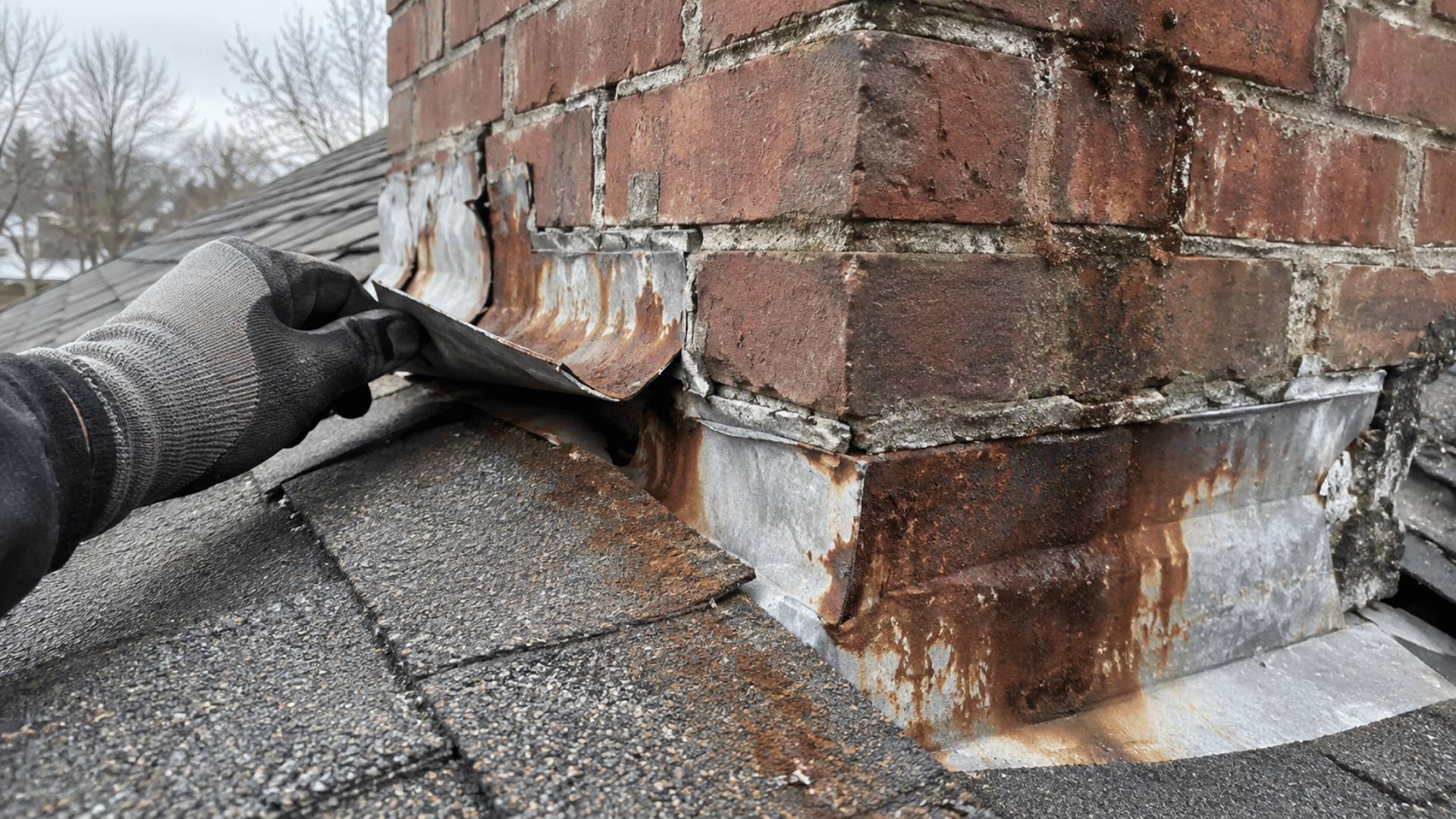
Flashing is the metal that seals the spot where the chimney meets the roof. If water is entering at the roofline but the masonry is otherwise sound, repairing or replacing the flashing usually solves it. Tuckpointing won’t fix a flashing leak — if the water’s coming in at the roofline, the flashing itself needs the attention.
A Missing Chimney Cap
A missing cap doesn’t mean the chimney needs replacing. In most cases, installing a properly sized stainless steel chimney cap solves it, keeping out rain, animals, leaves, and debris. It’s worth fixing quickly, though — an open chimney takes on water and debris fast, and that can create bigger problems the longer it sits.
Minor Brick Damage
If only a few bricks are cracked, loose, or spalling, replacing those individual bricks is usually enough to restore the chimney without touching the rest of it. This works well when the damage is isolated rather than spread across the structure.
Chimney Damper Issues
A stuck, rusted, or broken damper rarely means the chimney itself needs replacing — depending on its condition, it may just need repair, cleaning, replacement, or a top-sealing upgrade. The real question is why it failed. If rust caused the problem, water is likely entering from the cap, crown, or flashing, and that needs fixing too.
Light Water Damage, Caught Early
Early water damage is often repairable — mortar can be repaired, flashing corrected, the crown sealed, and breathable waterproofing applied once the chimney dries out. The key word is early. Once water spreads deep into the masonry or into the home’s framing, a simple repair can turn into a much larger restoration or rebuild.
When Chimney Replacement or Rebuilding May Be Needed
A chimney shouldn’t be patched once the structure itself is no longer safe. Here’s what tells us a repair won’t hold.
Warning Signs That Point to Replacement
- A leaning chimney stack. Tilting, pulling away from the home, or separating at the roofline is a structural warning sign, not a cosmetic one — it can point to foundation movement or serious masonry failure, and needs professional evaluation before the chimney is used again.
- Widespread spalling brick. A few flaking or cracked bricks are repairable. Dozens of them usually means moisture and freeze-thaw damage have compromised the structure more deeply, and replacing individual bricks won’t solve it.
- Deep vertical cracks. Small surface cracks can often be repaired. Deep cracks running through brick and mortar can indicate settling, shifting, or structural failure — if they run through large sections of the chimney, rebuilding may be the only real fix.
- Loose or missing bricks. If bricks can be moved by hand or are falling out on their own, the wall is losing stability. A chimney stack shouldn’t be held together by gravity.
- A collapsed flue liner. If clay liner pieces are falling into the firebox, the liner is cracked, shifting, or collapsing — a serious concern, since heat and gases may no longer be contained properly. This may call for a stainless steel liner, a major restoration, or a rebuild depending on the extent of the damage.
- Major water damage. If water has reached the roofline, the attic, interior walls, framing, or the firebox area, a surface patch usually isn’t enough — the chimney may need partial rebuilding, liner work, flashing repair, crown replacement, and waterproofing together.
What Tips the Decision Toward a Full Rebuild
Beyond the warning signs themselves, a few underlying factors push the decision further toward replacement. Damage above the roofline gets hit hardest by rain, sun, wind, and storms, so a chimney that’s failing mostly above the roof is a strong candidate for a partial rebuild. Age plays a role too — older chimneys often have softer brick, older mortar, or original clay liners, though age alone doesn’t automatically mean replacement; it just means the chimney deserves a full inspection before anyone decides.
Cost matters as well. If repeated repairs are creeping close to the cost of rebuilding the damaged section outright, rebuilding correctly is usually the smarter long-term move over paying for the same temporary fix twice.
A Real Example From a Marietta Home
A homeowner in Marietta called us expecting a simple leak repair. From the ground, the chimney looked mostly fine — a small water stain inside, maybe a quick flashing patch, a repair they figured would run a few hundred dollars.
Once a technician got on the roof, the real issue showed up. The concrete crown had been cracked for years, and every rain sent water soaking down inside the brick walls instead of shedding away from the chimney. Season after season, the brick and mortar stayed saturated. By the time we inspected it, the mortar had turned sandy — a light tap crumbled it, and some bricks moved by hand.
At that point, new flashing or sealant wasn’t going to cut it. The chimney needed a partial rebuild from the roofline up, because the upper structure had lost its strength. That’s the real difference in chimney repair vs replacement: a repair fixes a problem. A rebuild fixes a structure that no longer holds itself up.
Partial Rebuild or Full Replacement?
Not every rebuild means tearing the whole chimney down. There are two categories, and they solve very different problems.
Partial Chimney Rebuild
A partial chimney rebuild usually means rebuilding from the roofline up, removing the damaged section until the mason reaches solid masonry, then rebuilding with new brick, mortar, crown, cap, and flashing as needed. It’s common when the exposed upper chimney is damaged but the lower structure inside the home — and the foundation — are still sound, and the chimney isn’t leaning from the base.
Full Chimney Replacement
A full chimney replacement is the more serious option, needed when the entire structure is unsafe from the foundation up. This applies when the chimney is leaning badly, the foundation is sinking or cracking, brick damage extends below the roofline, the chimney is separating from the house, or interior sections show real structural damage. In these cases, rebuilding just the top won’t solve the underlying failure — the problem sits lower in the structure than a partial rebuild can reach.
What’s Included in a Proper Chimney Rebuild
A rebuild shouldn’t just be new brick stacked on top of the same old problems. A proper job typically includes:
- New brick and mortar, removed and rebuilt to match the home’s appearance while restoring real structural strength
- A new concrete crown, built with the right slope, overhang, and drip edge so water sheds away from the brick face instead of running down it — a poor crown is one of the fastest ways to ruin brand-new masonry
- New flashing, with proper step flashing and counter flashing to keep water from entering where the chimney meets the roof
- A chimney cap, ideally stainless steel for Atlanta’s humidity, protecting the flue from rain, animals, leaves, and debris
- Breathable waterproofing once the masonry cures — the product has to let trapped moisture vapor escape, since non-breathable paint or sealers can trap moisture and make damage worse
- Firebox repair, if the fireplace interior has heat damage, water damage, or missing refractory mortar
- A stainless steel liner, when the old one is cracked, missing, oversized, or unsafe, creating a safer exhaust path for smoke and gases
What Chimney Repair Won’t Fix
Not every problem responds to a patch, no matter how well it’s done. A repair generally won’t solve:
- Structural movement. If the chimney is leaning, bowing, or shifting because of foundation issues, new mortar or a new crown won’t stop the movement — that needs a structural evaluation first.
- A collapsed or badly cracked flue liner. Exterior repairs don’t reach the inside of the flue — a liner that’s failed needs its own fix, usually a full liner replacement, regardless of how good the outside looks.
- Mortar that’s turned to sand. Tuckpointing works on joints that still have integrity. Once the old mortar crumbles on contact across large sections, patch repairs don’t hold — that’s usually a sign a rebuild is coming either way.
- Water damage that’s already reached the framing. Once moisture has moved past the masonry into the home’s structure, a surface fix on the chimney doesn’t undo the damage already inside the walls.
- Repeated failures of the same repair. If the same spot has been patched more than once, the repair isn’t addressing the actual cause — and a third patch is unlikely to succeed where the first two didn’t.
Mistakes That Cost More Later
- Ignoring the cause of the damage. Don’t just patch the symptom — if mortar is crumbling because the crown is cracked, the crown needs fixing too. If a damper rusted because the cap is missing, fix the cap too. Always ask why the damage happened, not just what it looks like.
- Hiring the wrong type of contractor. A roofer may be great at roofing, and a handyman may be great at general repairs — but chimney systems involve masonry, fire safety, venting, liners, and water control together. Choose a chimney professional or qualified masonry specialist who actually understands chimney systems.
- Skipping the camera inspection. You can’t know the full condition of a chimney from the outside. A camera inspection can reveal a cracked, collapsed, or creosote-coated liner that’s completely invisible from the ground.
- Choosing the cheapest bid blindly. A low quote isn’t automatically a good deal — cheap masonry work can skip grinding out old mortar properly, using the right mortar mix, or checking the liner at all. Ask for an itemized quote so you know exactly what’s included.
- Delaying small repairs too long. A cracked crown, missing cap, or small mortar gap can let water in for months or years before it shows up as an interior stain. By the time you notice it inside, the problem is often much bigger than it needed to be.
What a Proper Chimney Inspection Should Include
Before recommending repair or replacement, a proper chimney inspection should look at the whole system, not just what’s visible from the yard:
- Roofline and exterior: the cap, crown, flashing, brick condition, mortar depth, spalling, cracks, rust stains, and whether the chimney is straight or leaning
- Interior firebox check: firebox brick and mortar, damper operation, the smoke chamber, and any signs of smoke backup or water entry
- A flue liner camera scan, to catch cracked clay tiles, missing mortar joints, collapsed liner pieces, creosote buildup, blockages, or heat and water damage — this is one of the most important parts of deciding whether repair is enough
- Attic, basement, and hidden areas, where accessible, for water stains, structural shifting, or moisture near framing that isn’t visible from inside the fireplace
- Photo and written documentation, including roof, brick, crown, flashing, and camera scan images, plus an itemized written report
If a contractor recommends a major rebuild but can’t show you clear evidence for it, that’s worth a second look.
Getting a Second Opinion: What to Ask When Quotes Disagree
It happens often — one company says repair, another says replace. When quotes conflict, don’t choose based on price alone. Choose based on proof. Ask both companies:
- Can you show me exactly why this work is necessary? Photos or video, not just a verbal explanation — localized damage for a repair recommendation, or structural failure and widespread deterioration for a replacement.
- What happens if I choose the repair instead of the rebuild? A trustworthy contractor explains the real risk calmly, without scare tactics, and tells you honestly whether the cheaper option is a real solution or a temporary patch.
- What materials and standards will you use? Mortar type, brick match, crown design, drip edge, flashing, cap material, and whether there’s a written warranty. A vague quote is a red flag.
- Is the flue liner safe? The outside can look fine while the liner inside is cracked or collapsed — don’t approve major work without knowing the liner’s actual condition.
- Is this damage exterior only, or structural? Exterior-only damage is often repairable. Structural movement, deep water damage, and liner failure usually call for something bigger.
Chimney Repair vs Replacement: Quick Decision Guide
When you strip away the details, the decision usually comes down to a short list on each side.
Choose Chimney Repair When:
- Damage is isolated to one area
- The main structure is stable
- Bricks are mostly sound
- Mortar damage is limited to a tuckpointing repair, not a full rebuild
- The crown crack or flashing leak is localized
- The damper issue is mechanical, not water-related
- The flue liner is intact
- There’s no leaning or major movement
Choose Chimney Replacement or Rebuild When:
- The chimney is leaning
- Brick damage is widespread
- Mortar crumbles like sand
- Deep vertical cracks run through the structure
- Bricks are loose or falling out on their own
- The flue liner has collapsed
- Water damage has spread through the system
- Repeated repairs are no longer cost-effective
How to Choose the Right Chimney Company
Whether you end up needing a repair or a full rebuild, the company matters as much as the diagnosis. Look for:
- CSIA certification — the Chimney Safety Institute of America sets the industry’s recognized training standard
- Proof of insurance — protects you if something goes wrong on your property
- BBB accreditation — a verifiable track record, not just a promise
- Willingness to show proof, not just tell you what’s wrong — photos, video, and a written report before you approve any work
Final Answer
Chimney repair vs replacement really comes down to one question: does the chimney still have good bones? A chimney with isolated damage and a stable structure is almost always a repair — tuckpointing, a new crown, flashing, or a cap. A chimney that’s leaning, deeply cracked, or failing inside the flue is a replacement candidate, whether that means a partial rebuild from the roofline up or a full rebuild from the foundation. The only way to know for certain is to inspect the whole system — the roofline, the masonry, and the inside of the flue — rather than deciding from the yard.
Final Advice From Our Team
This depends on the chimney — but do not decide between repair and replacement from the ground. A chimney that looks okay from the yard may have a cracked liner inside. A chimney that looks rough might only need tuckpointing and a cap. Before approving any major work, ask for clear photos, a written report, and an itemized explanation of why repair or replacement is being recommended. A good chimney company doesn’t just tell you what to do — they show you why.
Call (470) 706-6431 or contact us to schedule an inspection and get a clear answer on chimney repair vs replacement in Atlanta, GA.
FAQ
What is the difference between chimney repair and replacement?
Chimney repair fixes a specific problem while keeping the main structure in place. Replacement or rebuilding removes and rebuilds sections that are unsafe, unstable, or too deteriorated for a patch to hold.
How do I know if I need chimney repair vs replacement?
It comes down to how much of the structure is damaged. Isolated damage with a stable main structure usually means repair. Leaning, widespread brick damage, deep cracks, or a collapsed liner usually means replacement.
When is it time to replace a chimney instead of repairing it?
Replacement becomes the better option once the chimney is leaning, mortar crumbles like sand, cracks run deep through the structure, or the flue liner has collapsed. Repeated repairs that keep failing are also a sign it’s time to stop patching.
What is a partial chimney rebuild?
A partial chimney rebuild usually means rebuilding the chimney from the roofline up. It’s common when the exposed upper section is damaged but the lower structure and foundation are still stable.
What is a full chimney replacement?
A full chimney replacement means tearing down and rebuilding the entire structure, often from the foundation up. It’s needed when the whole chimney is unsafe or failing structurally, not just at the top.
Can tuckpointing fix my chimney?
Tuckpointing can fix damaged mortar joints when the bricks and structure are still solid. It won’t fix a leaning chimney, a collapsed liner, a cracked crown, or a flashing leak on its own.
Is a cracked chimney crown a repair or a replacement?
Often a repair, if it’s caught early. If water has already damaged the brickwork below, or the crown has failed severely, more extensive work may be needed.
Can a chimney look fine outside but be unsafe inside?
Yes. A chimney can look acceptable from the ground while the flue liner inside is cracked, shifted, or collapsed — which is exactly why a camera inspection matters before deciding between repair and replacement.
Should I trust the cheapest chimney repair quote?
Not automatically. Ask for photos, a written report, material details, and an itemized scope. The cheapest quote can skip important masonry or safety steps.
Who should I call for chimney repair or replacement in Atlanta?
Call a chimney professional who can inspect the roofline, crown, flashing, brickwork, firebox, damper, and flue liner. In Atlanta, Clean Air Duct Cleaning & Chimney can inspect the system and give you a clear answer on chimney repair vs replacement.