Skip to content
Chimney cap replacement cost in Atlanta typically falls between $190 and $651, with most homeowners paying around $300 to $500 for a standard single-flue stainless steel cap, professionally installed.
The final number depends on your chimney type, roof access, cap material, number of flues, and whether there’s hidden damage around the crown, chase cover, or masonry. For homeowners across Atlanta, Sandy Springs, Roswell, Marietta, Alpharetta, Dunwoody, Brookhaven, Decatur, and Smyrna, this is one of the smaller line items on a chimney — but it does an outsized job protecting everything below it from rain, animals, and debris.
What Is a Chimney Cap?
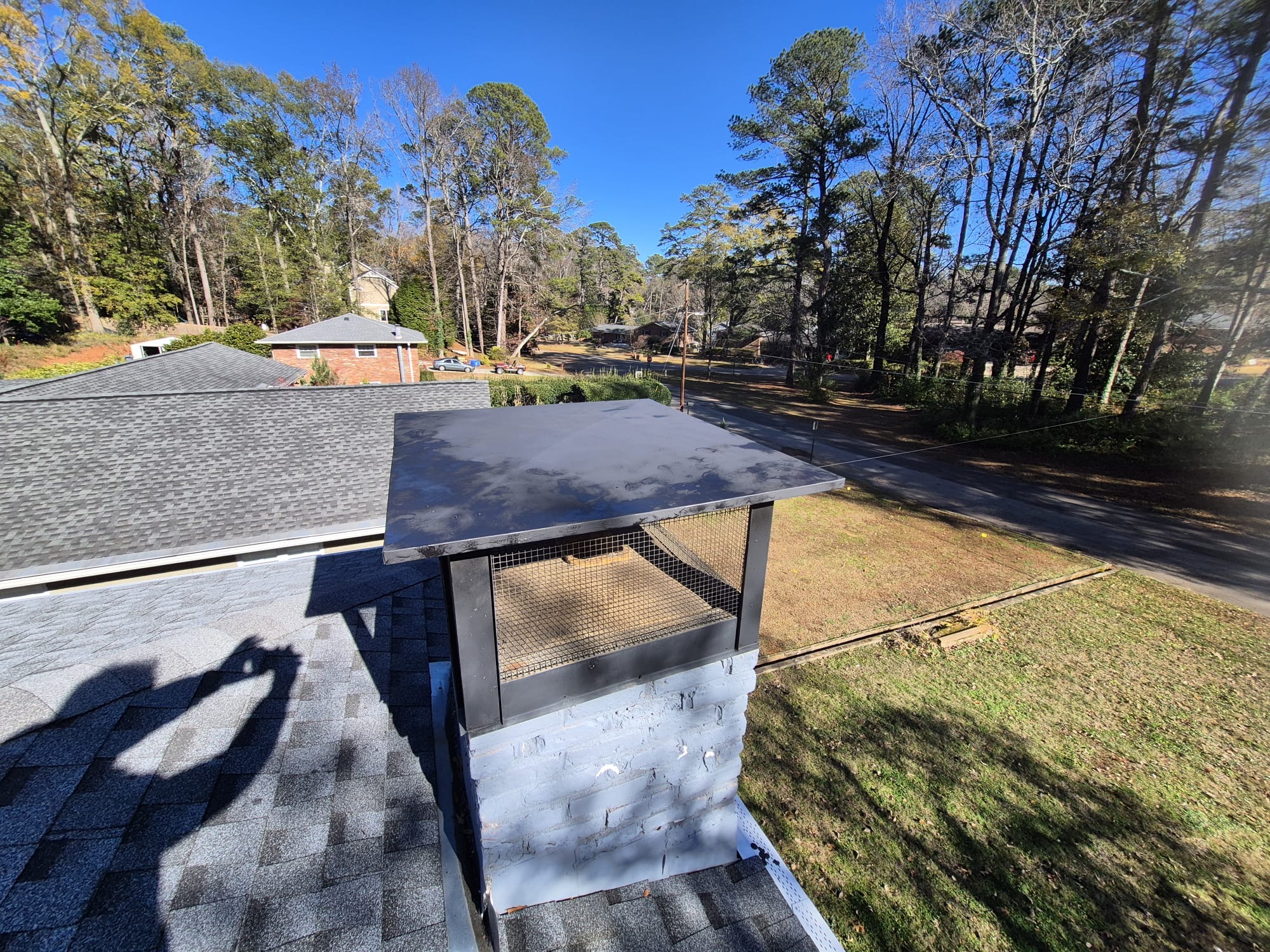
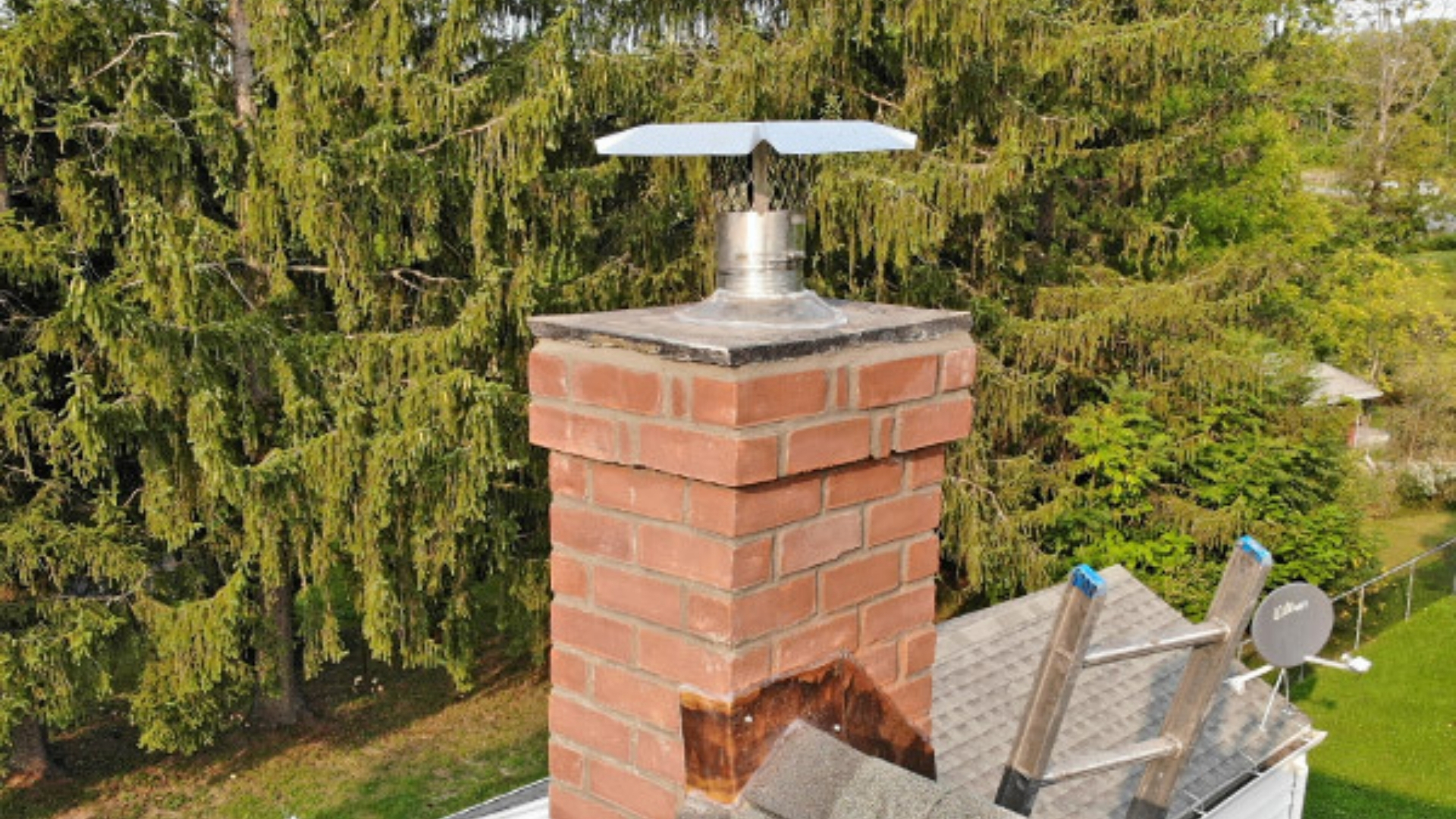
A chimney cap is the protective cover installed at the top of the flue. Its job is to block rain, animals, leaves, tree debris, downdrafts, sparks, and moisture from entering the chimney.
A proper cap usually includes a metal lid, side mesh, and secure mounting. On brick chimneys, it sits over one or more flues. On prefab chimneys, it works together with a larger metal chase cover. In simple terms, the cap is the first line of defense at the top of your chimney.
How Much Does a Chimney Cap Replacement Cost in Atlanta?
In Atlanta, chimney cap replacement usually costs between $190 and $651, with many standard replacements landing around $300 to $500. That price typically applies to a standard single-flue stainless steel cap with professional installation — though not every chimney is the same, and some jobs cost significantly more.
What Affects Chimney Cap Replacement Cost
The price moves based on a handful of factors:
Size and Number of Flues
A small single-flue cap is usually the most affordable option. A large chimney with multiple flues may need a custom multi-flue cap, which costs more because it requires more material, more measuring, and more labor.
Cap Material
For Atlanta homes, stainless steel is usually the best balance of durability and value — it resists rust better than galvanized steel and holds up better in Georgia’s humid, rainy weather. Galvanized steel is cheaper upfront but often rusts sooner. Copper looks premium and lasts a long time, but costs more.
Roof Steepness and Accessibility
Labor is a major part of the cost. If the roof is steep, high, slippery, or hard to reach, the technician may need extra safety setup, ladders, or time — and that increases the price.
Removing an Old Rusted Cap
If the old cap is rusted, bent, or stuck in place, removing failed hardware and preparing the surface properly can add labor, especially if old screws are rusted into masonry or metal.
Additional Repairs Found During Installation
A cap replacement may reveal other issues — a cracked chimney crown, a rusted chase cover, loose brick, crumbling mortar, water damage, or animal nesting. If those are present, the cap alone won’t solve the underlying leak or protection issue.
Warning Signs You Need a Chimney Cap Replacement
In Atlanta, water is the main enemy — humidity, heavy rain, summer storms, and tree coverage are rough on chimneys. A missing or damaged cap lets water in from the top, and over time that can damage masonry, rust metal parts, and let debris or animals into the system. Watch for:
- Dripping sounds in the fireplace during heavy rain
- A musty or smoky smell, often worse in hot, humid weather
- Twigs, leaves, or debris in the firebox
- Scratching, chirping, or rustling — a sign animals have gotten in
- Rust stains running down siding on a prefab chimney
- Water stains or peeling paint near the fireplace wall
- White powder on exterior brick (efflorescence), a sign water is moving through the masonry
- A cap that’s visibly missing, tilted, rusted through, or blown loose after a storm
A Real Example From a Smyrna Home
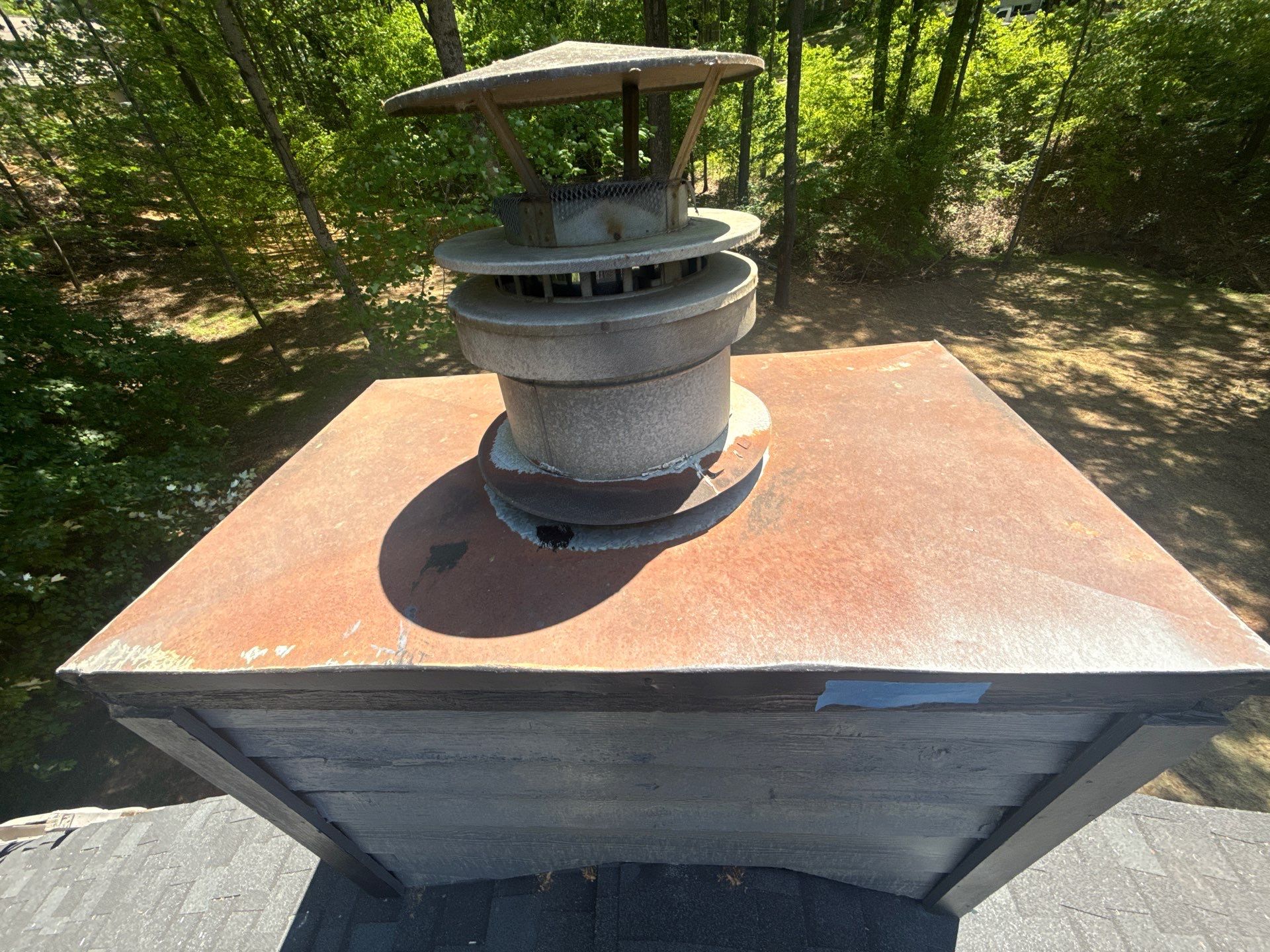
One of the more common serious cases we see is a prefab, wood-sided chimney with an old galvanized cap or chase cover. At first, the damage isn’t obvious — the cap is high up on the roof, so the homeowner doesn’t see the rust or small holes forming.
Then Atlanta storms do what they do. Rain hits the chimney again and again, entering through small cracks or rusted spots. Instead of pooling obviously in the fireplace, it travels down behind the fireplace insert and into the hidden wood framing around the chase — a space that’s dark, sealed behind drywall, and doesn’t dry properly.
In one Smyrna home, the homeowner only noticed a faint musty smell and a small paint bubble near the fireplace. Behind the wall, there was already moisture damage, rotted framing, and rusted fireplace components. What could have been a simple cap or chase cover replacement turned into drywall removal, framing repair, and a much larger restoration project. A small piece of metal at the top of the chimney protects thousands of dollars of structure below it.
Best Chimney Cap Materials for Atlanta Homes
For most Atlanta homes, stainless steel is the best practical recommendation — it holds up well against humidity, rain, rust, and storm exposure.
Stainless Steel Single-Flue Caps
The most common option. A good choice when the chimney has one flue and the crown is in decent condition — it blocks rain, animals, leaves, and debris.
Custom Stainless Steel Multi-Flue Caps
Covers more than one flue and protects a larger portion of the chimney top. Often the better option when the crown is exposed, cracked, or vulnerable to water — it can act almost like an umbrella over the chimney top.
Stainless Steel Chase Covers
Prefab chimneys often need a chase cover, not just a small cap. This is the large metal pan over a wood-framed chase — if it rusts out, water can leak straight into the chimney structure. For prefab chimneys in Atlanta, a stainless steel chase cover is usually the right long-term solution.
Copper Caps and Covers
A premium option that looks great on historic, luxury, or custom homes. It costs more than stainless steel, so it’s usually chosen for appearance as much as function.
Galvanized Steel Caps
Cheaper upfront, but usually not the best long-term choice in Atlanta — the coating wears down, the metal rusts, and the cap can fail sooner than stainless steel.
What a Proper Chimney Cap Replacement Includes
A professional replacement should include more than placing a cap on top and leaving:
- Roof access and safety setup
- Visual chimney assessment
- Checking the flue size, crown, and chase cover
- Removing old rusted hardware and prepping the surface
- Measuring the flue correctly and installing the right material
- Proper stainless hardware and weatherproofing where needed
- Checking for nearby damage
- Before-and-after photos when possible
This matters because the cap is only one part of the chimney top system — if the crown, chase cover, masonry, or flue is already damaged, you need to know before it gets worse.
Common Problems We Fix During Cap Replacement
Rusted or Pitted Chase Cover
Symptoms: rust stains on siding, water inside walls, dripping sounds, rotten wood around a prefab chimney. We remove the old galvanized chase cover and install a custom stainless steel one with proper slope and drip edges to shed rain away from the chimney and siding.
Cracked Chimney Crown
Symptoms: water soaking into brick, crumbling mortar, white powder, flaking brick. Minor cracks may be sealed with a crown coating; more severe damage may need resurfacing or a custom multi-flue cap that covers the crown and keeps direct rain off the chimney top.
Missing Cap or Open Flue
Symptoms: rain entering the flue, leaves in the fireplace, animal entry, bad odors. Solution: install a properly sized stainless steel cap with durable mesh and secure hardware.
Animal Entry
Symptoms: scratching, chirping, nest debris, bad odor, blocked flue. The chimney should be inspected and cleared safely — never try to burn out a nest. Once it’s clear, a heavy-duty mesh cap helps prevent re-entry.
Wind Downdraft
Symptoms: smoke blowing back into the room during windy weather. A wind-resistant cap may help, depending on chimney design and roofline — if this sounds familiar, our guide on why fireplaces smoke into the house covers downdraft in more depth.
Cheap or Wrong-Sized Cap
Symptoms: cap blows off, poor draft, water entry, loose hardware. The fix is measuring the flue correctly and installing the right size with proper stainless hardware — too small restricts draft, too loose can blow off in a storm.
What a New Cap Won’t Fix
A new cap solves problems at the very top of the flue opening — but it doesn’t automatically fix everything around it:
- A cracked chimney crown. The cap protects the flue, not the crown. If the crown is cracked, water can still enter through the chimney top even with a brand-new cap installed.
- A rusted chase cover. On prefab chimneys, the small cap and the large chase cover work together. Replace the cap but ignore a rusted chase cover, and water can still leak into the chimney structure.
- Animals already inside. A new cap keeps future animals out — it doesn’t remove ones that are already in the flue.
- Structural or masonry damage. Loose brick, crumbling mortar, or damaged masonry need their own repair, separate from the cap itself.
If you’re not sure whether your issue is the cap, the crown, or the chase cover, a technician should inspect the full chimney top rather than just selling you a cap.
Mistakes to Avoid When Replacing a Cap
- Buying cheap galvanized steel. It can rust faster in Atlanta’s humid climate, stain siding, and fail sooner than stainless steel.
- Replacing the cap but ignoring the chase cover. A new cap doesn’t fix a failed chase cover underneath it.
- Buying the wrong size. Off-the-shelf caps don’t always fit — too small restricts draft, too large or loose may not stay secure.
- Ignoring a cracked crown. A cap doesn’t fix a cracked concrete crown; that needs its own repair or resurfacing.
- Risky DIY installation. Steep pitches, tall ladders, and wet shingles create real risk, and the wrong screws or brackets can let a cap blow off in a storm.
When to Call a Professional
If your cap is missing, rusted, tilted, leaking, or letting debris into the fireplace, it’s time to schedule an inspection before the next heavy storm makes the damage worse.
A Quick Ground-Level Check You Can Try First
You can do a simple visual check from the ground using your smartphone camera, zoomed in on the chimney top from a few angles in the yard. Look for rust stains, a missing or tilted cap, a bent lid, animal activity, white powder on brick, or visible storm damage.
Don’t climb on the roof to check it yourself unless you’re trained and have proper safety equipment. A ground-level check can help you spot obvious red flags, but it doesn’t replace a professional chimney inspection.
How to Choose a Chimney Cap Company in Atlanta
The right company should be able to show you what’s wrong, not just tell you. Look for:
- CSIA certification — the Chimney Safety Institute of America sets the industry’s recognized training standard
- Proof of insurance — protects you if something goes wrong on your property
- BBB accreditation — a verifiable track record, not just a promise
- Clear photo documentation and transparent diagnostics — good chimney work is evidence-based
Be careful with companies that claim there’s a major issue but can’t show photos, video, or a clear explanation.
Final Answer
Most Atlanta homeowners can expect chimney cap replacement cost to run $300 to $500 for a standard single-flue stainless steel cap, professionally installed. The broader range is $190 to $651, but price can climb for custom caps, multi-flue chimneys, copper materials, chase covers, steep roofs, or hidden crown and water damage. The cheapest option isn’t always the smartest one — the goal is keeping water, animals, and debris out before they create bigger problems inside the home.
Final Advice From Our Team
This depends on the chimney — but if your cap is missing, rusted, or letting water in, do not wait for the next big storm to find out how bad it’s gotten. A quick inspection now is almost always cheaper than the repair that follows a season of unnoticed leaks. If you’re weighing a full sweep alongside a cap replacement, our chimney sweep cost guide breaks down what that typically runs in Atlanta.
Call (470) 706-6431 or contact us to schedule a chimney cap inspection in Atlanta, GA.
FAQ
How much does chimney cap replacement cost in Atlanta?
Most standard replacements cost around $300 to $500 installed. The broader range is commonly $190 to $651, depending on size, material, roof access, and chimney condition.
What is the best chimney cap material for Atlanta?
Stainless steel is usually the best practical choice because it resists rust and holds up well in Atlanta’s humid, rainy climate.
Is a galvanized chimney cap worth it?
Galvanized caps are cheaper upfront, but they can rust faster. For long-term protection, stainless steel is usually the better choice.
Do I need a chimney cap if I don’t use my fireplace?
Yes. Even if you rarely use the fireplace, an open flue can let rain, animals, leaves, and debris into the chimney.
What are signs my chimney cap is leaking?
Common signs include dripping sounds, musty odors, water stains, debris in the firebox, rust stains, peeling paint, and visible damage near the chimney top.
Can a bad chimney cap cause a fireplace smell?
Yes. Rain entering the chimney can mix with soot and creosote, creating a strong damp, smoky odor, especially in humid weather.
Can animals get in through a damaged chimney cap?
Yes. Birds, squirrels, raccoons, and other animals can enter through an open or damaged chimney top.
Do chimney caps help with rain?
Yes. A properly installed cap keeps rain from entering the flue directly. For broader chimney-top water issues, the crown or chase cover may also need attention.
What is the difference between a chimney cap and a chase cover?
A chimney cap protects the flue opening. A chase cover is the larger metal pan that covers the top of a prefab chimney chase. Many prefab chimneys need both to be in good condition.
Should I replace my chimney cap myself?
It’s safer to hire a professional. Roof access can be dangerous, and the cap must be measured, secured, and installed correctly to avoid leaks, draft problems, or storm damage.