 Skip to content


Most chimney fires start with creosote, the tar-like buildup that wood smoke leaves inside the flue. It catches fire easily and burns hot. You prevent it by burning dry wood, keeping fires hot instead of smoldering, and having the chimney swept before buildup gets thick. A sound cap and liner are important parts of a properly maintained chimney, but they do not eliminate fire hazards.
Some chimney fires roar like a freight train. Others burn so quietly that nobody notices, and the family keeps using a fireplace with a cracked liner. In Atlanta, where fireplaces sit unused through long, humid summers and then get lit on the first cold night, the prep you do in the fall matters most.
Before Your First Fire This Season
- Chimney swept and checked within the last 12 months (book a sweep)
- Cap on, with the screen intact
- Wood seasoned and checked for suitable moisture, ideally below 20% on a meter
- Damper opens and closes all the way
- Smoke and carbon monoxide alarms tested
- Nothing that can burn within 3 feet of the hearth
- Fireplace screen or doors in place
If you can’t tick every box, don’t light a “test fire” to find out. Get it checked first.
What Causes a Chimney Fire?
Creosote is the fuel. As wood smoke rises and cools, it condenses on the flue walls as powder, flakes, sticky tar or a shiny glaze. CSIA notes that restricted airflow, wet wood and a cold flue all speed it up. Once enough builds up and the flue gets hot enough, it ignites. Our guide to creosote buildup shows what each stage looks like.
What About Gas Fireplaces?
Gas fireplaces don’t build creosote, so classic chimney fires are rare. The risks are different: nests or debris blocking the vent, and carbon monoxide backing into the room. They still need a yearly check. See gas fireplace cleaning.
The 4 Habits That Actually Prevent Chimney Fires
1. Get the Chimney Inspected and Swept Every Year
Don’t assume it’s safe because it worked last winter. Between seasons, animals move in, rain damages brick, caps blow loose, and last year’s creosote just sits there. Annual inspection and cleaning when necessary are widely recommended, and CSIA points out that chimneys can become unsafe even with light use.
A proper chimney sweep visit checks the firebox, damper, smoke chamber, flue, cap, crown and brick. CSIA recommends sweeping once soot reaches about 1/8 inch, and sooner if you see glaze. Glazed creosote usually needs rotary tools or a chemical treatment, not just a brush. See how often to have your chimney swept.
2. Burn Dry, Seasoned Wood
Wet wood wastes its heat boiling off water. The result is more smoke and a cooler flue, exactly what creosote needs. The EPA recommends firewood under 20% moisture. Split a log and test the fresh inside face with a moisture meter, not the outside.
Burn seasoned oak, ash, maple, hickory or other dry, untreated wood. Skip green wood, painted or pressure-treated lumber, plastic and trash. Pine gets blamed for chimney fires, but moisture matters more than species. Dry pine is fine for kindling. The real Atlanta problem is storm-fallen trees split and burned a few months later, before they’ve actually dried.
3. Keep the Damper Fully Open
Closing the damper partway to hold in heat backfires. Slower airflow leaves smoke sitting in the flue longer, and that’s when creosote condenses. Keep the damper fully open while there’s any fire or smoking ember. If it won’t open fully, don’t light the fireplace until it’s fixed.
4. Burn Small, Hot Fires
A lazy, smoky fire is a creosote factory. Start small and hot, add dry wood gradually, and keep air moving. A top-down fire works well: big logs on the bottom, smaller wood above, kindling and a fire starter on top. Don’t pack the firebox so tight that air can’t move, and don’t build a roaring fire to heat the room faster. Extreme heat finds weak spots in a chimney that’s already coated or damaged.
Warning Signs of Dangerous Creosote
- A strong campfire smell when the fireplace is cold. It’s often worse in humid weather or when the AC runs. See why your chimney smells.
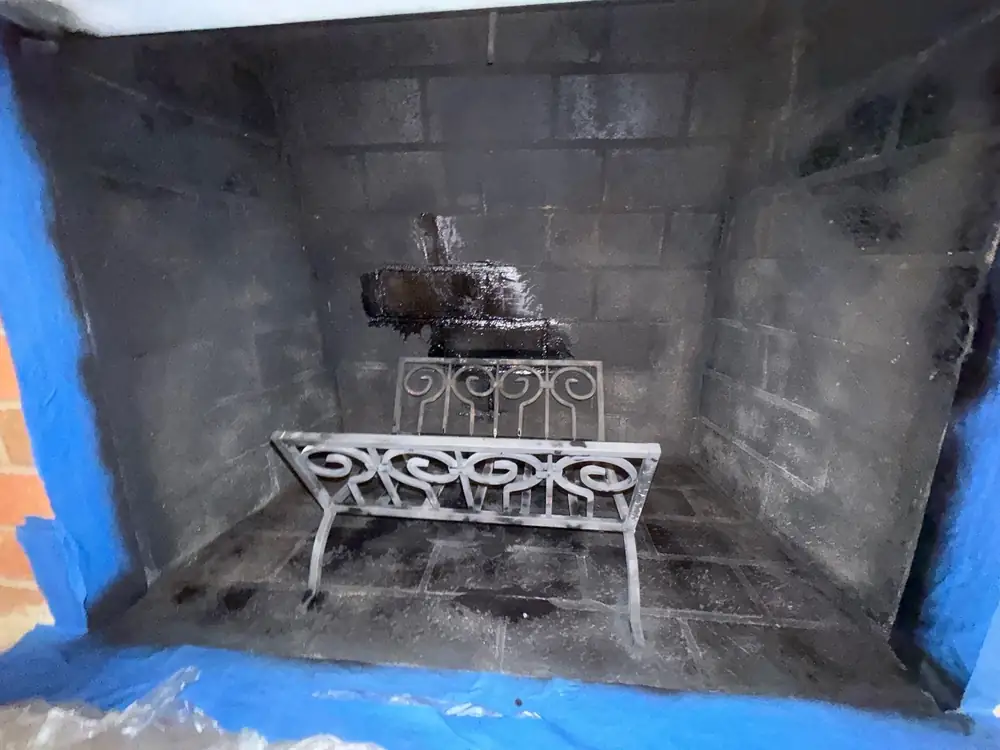
- Black flakes or shiny glaze in the firebox. Glaze looks like black ice, hardened tar or melted plastic. Stop using the fireplace, and never try to “burn it out.”
- Smoke backing into the room. It can be a blockage, a nest, heavy deposits, a damper problem or house pressure. See why your fireplace smokes into the house.
- Heavy dark smoke from the chimney top once the fire is going, which usually means wet wood or poor airflow.
Signs a Chimney Fire Is Happening Right Now
- A loud roar or rumble like a freight train or jet
- Loud cracking and popping
- Dense smoke and an intense, hot smell
- Sparks or flames shooting from the chimney top
- Smoke suddenly pouring into the house
What to Do During a Chimney Fire
Get everyone out and call 911. Don’t wait to see if it burns out, don’t climb on the roof, and don’t go back inside. Call even if it seems to have stopped, because heat may have spread into the roof or attic. Don’t throw water into a hot chimney either, since the sudden cooling can crack the masonry. Your job is getting out, not fighting the fire. See the NFPA’s home heating safety guidance.
Silent Chimney Fires: The Danger You Never Hear
CSIA warns that many chimney fires go unnoticed because they burn slowly, without enough air or fuel for flames or noise. They still get hot enough to crack clay tiles, open liner joints, warp metal and crack masonry. You may not notice the damage until the next fire, when a cracked or weakened liner may no longer contain heat and combustion gases as intended.
The Fire a Smyrna Family Never Heard
A summer storm brought down a big oak in a Smyrna backyard. The homeowners split it, stacked it, and four months later started burning it. The logs looked dry outside, but dense oak still held plenty of moisture inside. They only used the fireplace on weekends, so they skipped their annual sweep.
The fires were smoky and slow, and the smoke coated a cold flue with glazed creosote. The fireplace started smelling like a wet campfire even when it was cold. They ignored it. One cold evening, a hotter fire with dry kindling pushed the flue temperature up and the creosote lit. No roar, no flames from the roof. It burned out on its own.
Months later, our inspection found puffy, honeycombed creosote, cracked clay tiles and heat-damaged parts, the classic signs of a past chimney fire. The liner had to be repaired before anyone could light another fire. Regular inspection and cleaning can help reduce risk, though they cannot eliminate every chimney fire hazard.
If you ever find clay tile pieces, crumbling mortar or strange debris in the firebox, treat it the same way: no more fires until it’s checked.
What Happens After a Chimney Fire
CSIA says not to use a chimney after a fire until it’s been swept and evaluated. A proper check includes:
- A sweep first, so puffed-up creosote doesn’t hide damage
- A camera inspection to find hairline cracks, broken tiles, missing mortar and warped metal
- The smoke chamber and damper, for warping, cracks and heat marks
- The outside, for cracked brick, crown damage, a discolored cap or flashing problems
- The attic, basement or crawlspace, where reachable, to see whether heat reached the house framing
If the liner is damaged, it will need chimney relining before the fireplace is safe again.
What Makes Atlanta Chimneys Different
- Long off-seasons. Fireplaces sit unused seven or eight months a year. Animals move in, debris piles up, and water gets in through a damaged cap or crown (see why your chimney leaks water inside). Then the first cold snap hits and everyone lights a fire at once.
- Storm-fallen wood. Fresh branches look like free firewood. They aren’t ready to burn for months.
- Chimney swifts and wildlife. Swifts nest in chimneys and are federally protected. Never burn out a nest. Have it handled properly through animal removal, then cap the chimney.
- Older brick chimneys. Homes in older neighborhoods may have decades of worn mortar or damage from an earlier fire nobody knew about.
- Humidity. It doesn’t make creosote, but it makes the smell stronger. Don’t cover a cold campfire smell with air freshener. Get it checked.
Mistakes That Raise Your Risk
- Burning cardboard or wrapping paper. Light, burning scraps fly straight up the flue.
- Burning trash or plastic. Poor combustion and toxic fumes.
- Using gasoline, kerosene or lighter fluid. Sudden, uncontrollable flames. Use dry kindling or an approved starter.
- Relying on creosote sweeping logs. They loosen deposits that still have to be removed. See do chimney sweep logs really work?
- Thinking “I barely use it” means “it’s clean.” Light use doesn’t stop nests, leaks or liner damage.
Staying Safe All Season
- Handle ashes carefullyLet them cool, then store them in a metal can with a tight lid away from anything that burns. Embers stay hot for days.
- Watch the draftIf the fireplace suddenly draws differently, stop and find out why.
- Sweep again if you burn a lotHeavy users may need a mid-season sweep.
What Good Habits Can’t Fix
Prevention lowers the risk going forward. It doesn’t repair damage already there: a liner cracked by a past silent fire, a warped damper, existing water damage, or old masonry problems. Those need an inspection and the right repair.
Frequently Asked Questions
Creosote buildup in the flue, usually from burning wet or unseasoned wood and going too long between sweeps.
No. Even a fire you barely noticed can crack flue tiles. Have a camera inspection before the next fire.
They block drafts from an unused fireplace well. They have nothing to do with fire prevention, and they must come out before you light a fire.
A loud rumbling or roaring, popping and cracking, a strong hot smell, and thick smoke or sparks from the top of the chimney. Get everyone out and call 911.


