Skip to content
Do Chimney Sweep Logs Really Work? The answer is very simple: chimney sweep logs can help treat creosote and make some deposits more brittle or easier to remove, but they do not replace professional chimney sweeping or inspection. They cannot tell you whether the flue is blocked, the liner is damaged, or another part of the chimney needs repair.
That distinction matters for Atlanta homeowners considering a creosote-cleaning log instead of scheduling chimney service. A log can be a useful maintenance product in the right wood-burning system, but it should not be treated as a complete chimney cleaning.
Key Takeaways
- Chimney sweep logs can chemically alter some creosote deposits and make them easier to remove.
- They do not physically brush all soot, creosote, or debris out of the chimney.
- CSIA accepts certain chimney-cleaning products, but specifically states that chemical cleaners should not replace professional inspection and cleaning.
- A log cannot identify a blocked flue, damaged liner, cracked crown, missing cap, or other chimney problem.
- Use these products only in approved appliances and according to the manufacturer’s instructions. Some products specifically prohibit use in gas, electric, oil, and pellet appliances.
What Is a Chimney Sweep Log?
A chimney sweep log, sometimes called a creosote sweeping log or chimney cleaning log, is a manufactured firelog designed to help treat creosote inside a wood-burning chimney.
The exact formulation varies by product. Instead of working like a chimney brush, the log releases chemical additives while it burns. Those compounds travel with the smoke and interact with creosote deposits inside the flue.
According to the manufacturer of the Creosote Sweeping Log, its additives can make creosote more brittle over the following one to two weeks. Some deposits may then flake away, while remaining material can become easier to remove during mechanical sweeping.
That is why calling one a “chimney cleaning log” can be slightly misleading.
It can help treat creosote, but it does not perform the same job as brushes, rods, rotary cleaning equipment, or a professional chimney inspection.
Do Chimney Sweep Logs Really Work?
They can help treat creosote, but they are not a substitute for having the chimney inspected and mechanically cleaned when needed.
CSIA’s homeowner guidance takes a similarly balanced position. It does not say chemical chimney cleaners are inherently bad. Instead, CSIA explains that some chemical products can change hard or tacky creosote, making it easier to remove.
The problem comes when a homeowner assumes that burning the product means the chimney is now completely clean.
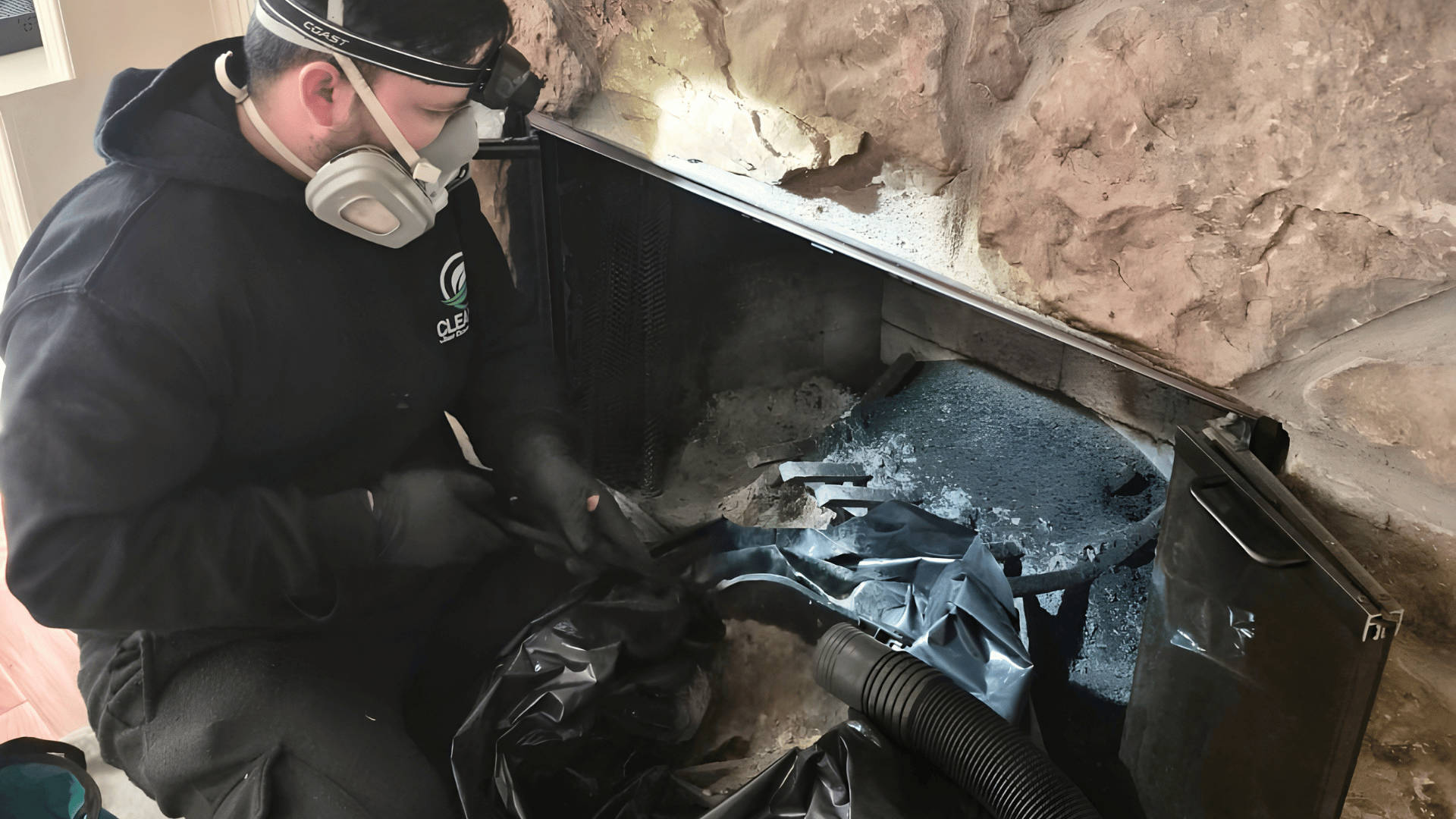
CSIA notes that mechanical sweeping physically removes loosened creosote and soot from the chimney, fireplace, smoke shelf, offsets, or other areas where debris can collect. Chemical treatment alone cannot guarantee that this material has left the system.
One widely sold Creosote Sweeping Log even carries CSIA Accepted Product status. However, both CSIA and the manufacturer still state that it does not replace chimney inspection and professional cleaning.
So the most accurate answer is not “they don’t work.”
It is:
They can help, but they do a different job from an actual chimney sweep.
What About Stage 1, Stage 2, and Stage 3 Creosote?
Chimney professionals often describe creosote buildup by degree or stage. Don’t confuse these terms with NFPA Level 1, Level 2, and Level 3 chimney inspections, which are a different system entirely.
First-degree creosote
This is generally the lighter, drier, flaky or powdery type of deposit.
It is usually the easiest form to remove mechanically. A creosote-treatment log may help reduce or loosen some of this buildup between professional services.
Second-degree creosote
This buildup is generally harder and more substantial. It may appear as thicker flakes or more tar-like deposits.
A chemical treatment may help change the characteristics of the creosote, but that does not mean the chimney is automatically clean afterward.
Mechanical removal may still be needed.
Third-degree or glazed creosote
This is the dense, hardened, shiny type of buildup that can be particularly difficult to remove.
CSIA explains that professional-grade chemicals may sometimes be used to alter hard or tacky creosote so it can then be removed with appropriate equipment. In other words, even when chemical treatment helps with difficult deposits, treatment and removal are separate steps.
If you can see thick, shiny, tar-like buildup inside the fireplace or flue, a consumer chimney log should not be your only response.
Chimney Sweep Log vs. Professional Chimney Sweep
| Chimney Sweep Log | Professional Chimney Sweep | |
| What it does | Chemically treats some creosote deposits | Mechanically removes soot, creosote, and accessible debris |
| Creosote treatment | May make deposits more brittle or easier to remove | Physically removes deposits using brushes, rods, rotary equipment, or other methods |
| Blockages | Cannot remove or evaluate many nests or obstructions | Can identify and remove accessible blockages as appropriate |
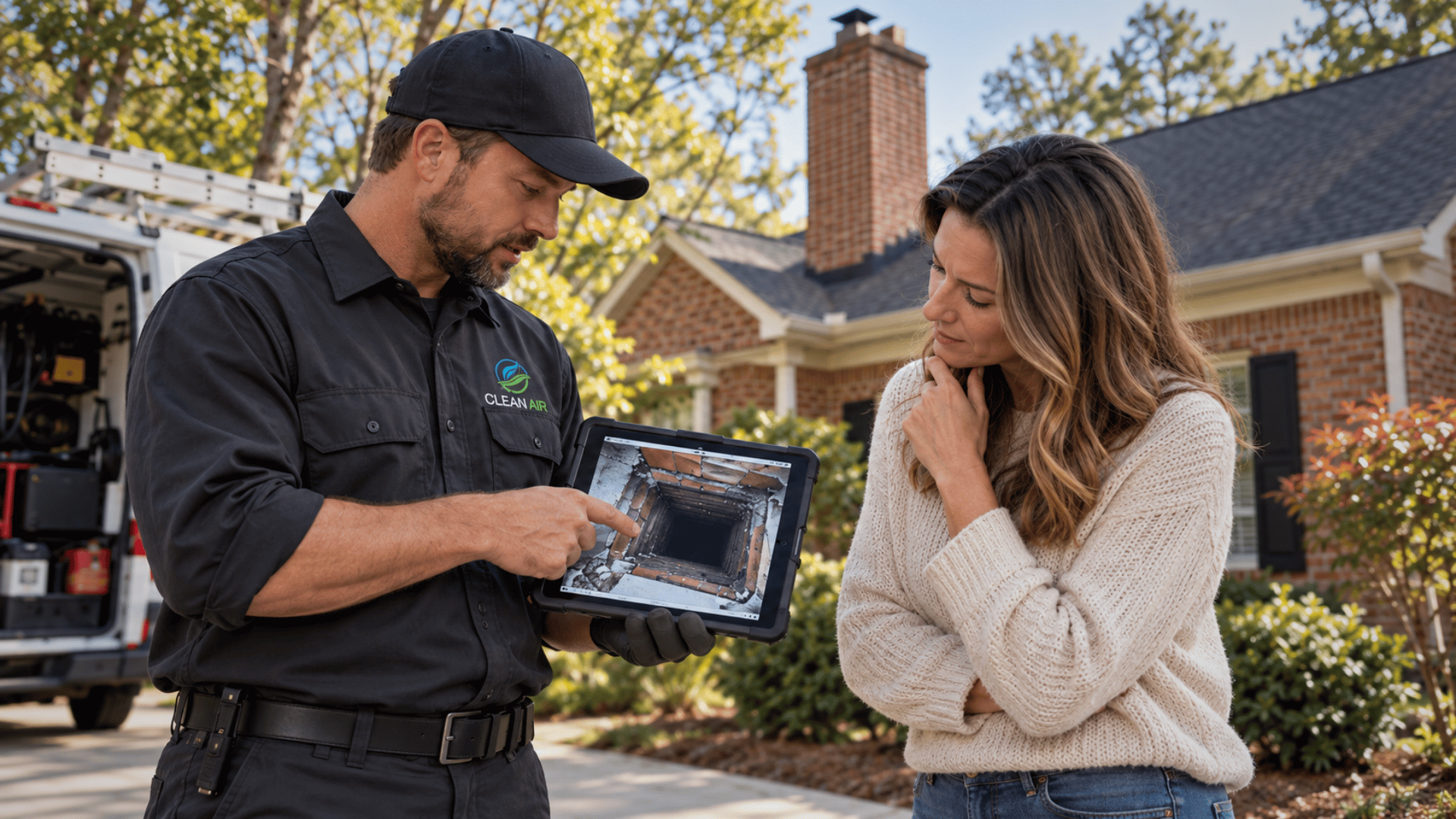
| Inspection | None | Can be paired with an inspection of accessible chimney components |
| Structural problems | Cannot identify them | Inspection may reveal liner, cap, crown, masonry, or other problems |
| Typical cost | Roughly $15 to $30 for many common retail products | About $150 to $350 for a standard sweep and basic inspection in Atlanta |
| Best use | Supplemental maintenance when appropriate | Cleaning, evaluation, and removal of deposits when needed |
Current retail listings put common creosote-treatment firelogs around the $18 to $26 range, although prices vary by brand and retailer.
Clean Air Duct Cleaning & Chimney’s current Atlanta pricing guide lists a standard chimney sweep and basic inspection at about $150 to $350, with the final price depending on the chimney and the amount of work required.
The two services are obviously very different in price, but they are also doing very different jobs.
A $20 log is not a $20 version of a professional chimney sweep.
What Can’t a Chimney Sweep Log Do?
The biggest limitation has little to do with chemistry.
A log cannot inspect your chimney.
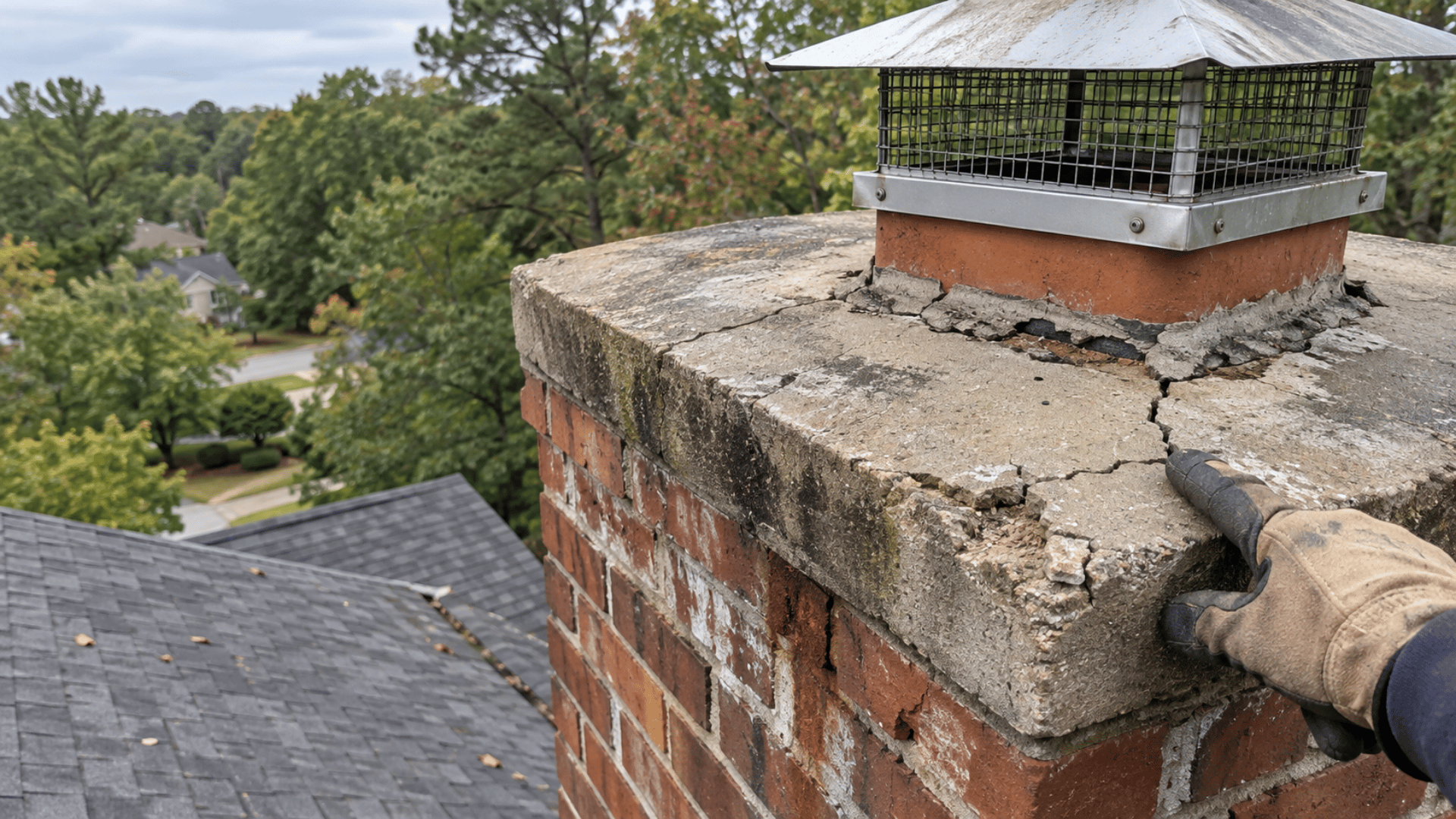
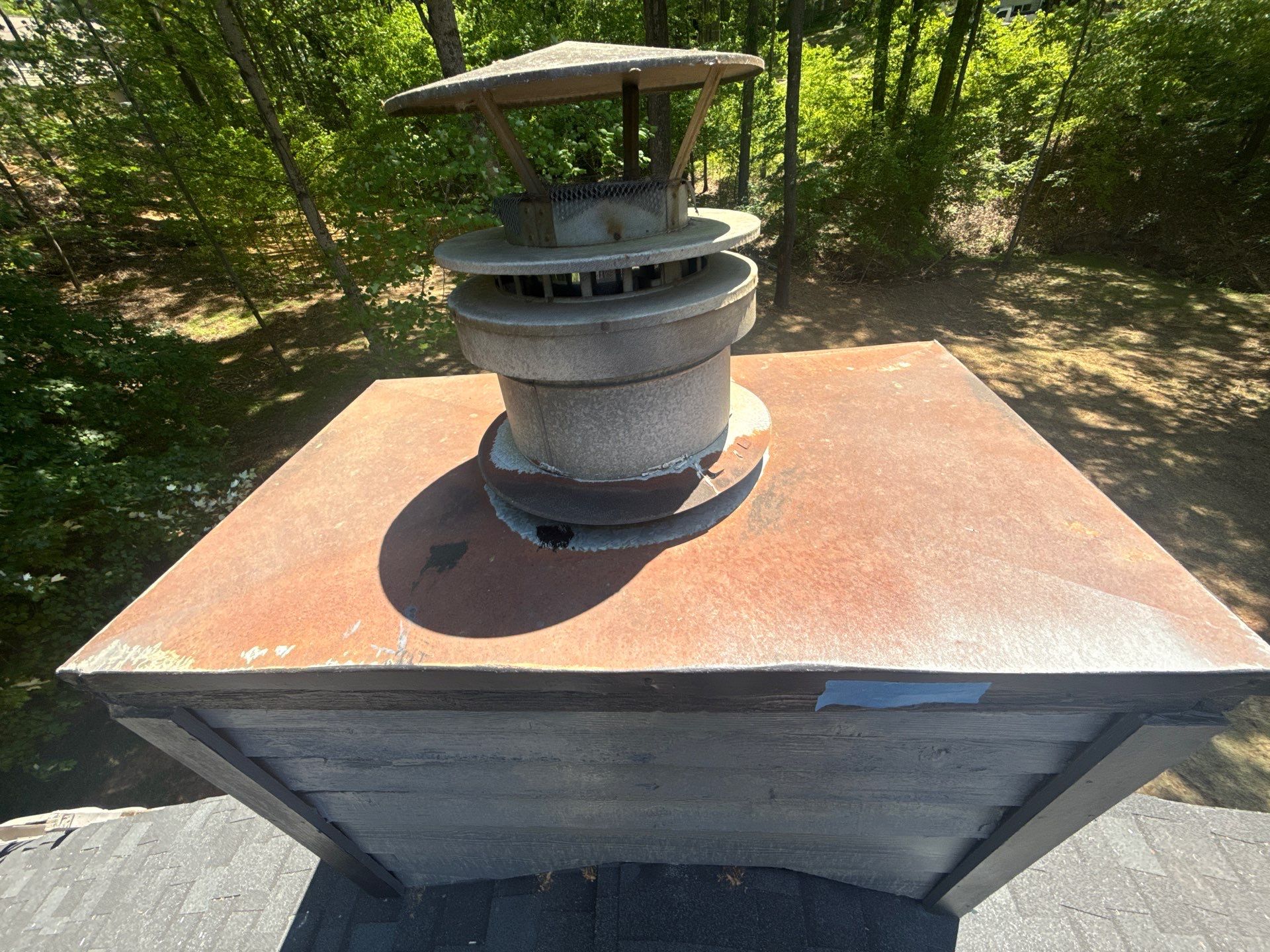
It cannot tell you whether an animal has built a nest farther up the flue. It cannot show you a cracked flue liner. It cannot identify a loose chimney cap, deteriorated crown, failing flashing, damaged masonry, or another condition that could affect the chimney.
CSIA specifically warns that chimney-cleaning products cannot tell homeowners whether the chimney is blocked or structurally damaged.
This matters in Atlanta because a chimney can develop problems even when the fireplace is rarely used.
CSIA’s annual inspection guidance specifically accounts for problems such as animals nesting in a chimney during periods of limited use. Atlanta’s warm off-season also means a fireplace may sit unused for months before a homeowner thinks about it again.
Humidity is relevant too, but not because it directly creates creosote.
CSIA notes that creosote odors can become more noticeable during humid summer weather. Moisture exposure can also contribute to deterioration elsewhere in the chimney system.
A cleaning log will not solve those issues.
When Is a Chimney Sweep Log Actually Worth Using?
A chimney sweep log can make sense as supplemental maintenance in a suitable wood-burning fireplace or stove, particularly when the chimney is already part of a regular inspection and cleaning routine.
Think of it as something that may make later creosote removal easier, not something that certifies the chimney as clean.
CSIA’s current homeowner guidance says homeowners who choose to use chemical cleaning products should still schedule an annual chimney inspection and have the chimney professionally cleaned when necessary.
That is a much more practical approach than either extreme.
You do not need to assume every chimney log is useless. You also should not assume that burning one means you can skip chimney maintenance.
If the chimney already has heavy deposits, drafting problems, visible damage, or an unknown maintenance history, getting the system evaluated first is the better approach.
How Often Should You Use a Creosote Sweeping Log?
No universal schedule applies to every chimney-cleaning product.
Frequency depends on the specific product, fireplace or stove, how often you burn wood, and the manufacturer’s instructions.
For example, the manufacturer of one CSIA-accepted Creosote Sweeping Log recommends different use patterns depending on fireplace size and frequency of use. Its instructions also state that creosote buildup varies according to appliance type, fuel, use, and other conditions.
For that reason, I would not follow a generic rule such as “burn one every month” unless the instructions for your exact product say to.
More is not automatically better.
Use the product exactly as directed, and have a professional inspect it on its own schedule.
NFPA 211 guidance cited by CSIA calls for chimneys, fireplaces, and vents to be inspected at least annually, with cleaning, maintenance, and repairs as needed.
Are Chimney Sweep Logs Safe?
They can be safe when you use a product approved for your type of appliance and follow its instructions.
But not every chimney-cleaning log is suitable for every fireplace.
For example, the current instructions for the Creosote Sweeping Log allow use in several wood-burning systems but specifically say not to use it with gas logs, electrical appliances, oil stoves, pellet stoves, or BBQs.
That is why “chimney sweep logs are safe for fireplaces” is too broad a statement.
Check the manufacturer’s instructions for your exact product and appliance.
The same manufacturer also advises users to visually check the chimney for debris, bird nests, or other obstructions before using the log, leave the damper fully open as directed, and never leave the fire unattended.
If you have a gas fireplace, pellet stove, fireplace insert, catalytic appliance, or another specialized system, check the appliance manual before putting any chemical cleaning product in the firebox.
When Do You Need a Real Chimney Sweep Instead?
Skip the DIY shortcut and schedule an inspection or sweep when you notice smoke entering the room, poor draft, visible heavy or shiny creosote, black flakes falling into the firebox, animal sounds, nesting material, debris, strong persistent fireplace odors, or an unknown chimney maintenance history.
The same applies if the chimney has not had its annual inspection.
CSIA recommends sweeping masonry fireplaces once soot buildup reaches about 1/8 inch, and sooner if glazed creosote is present.
If the problem is a missing cap, water entry, damaged masonry, or a cracked chimney component, a sweep log will have no effect on the cause.
Those conditions require inspection and, where appropriate, services such as chimney cap replacement, chimney crown repair, leak repair, or other chimney work. Clean Air Duct Cleaning & Chimney provides these services throughout Atlanta and nearby communities.

Frequently Asked Questions
Do chimney sweep logs really work?
Yes, they can chemically alter some creosote deposits and make them more brittle or easier to remove. They do not physically inspect or fully sweep the chimney, so treat them as a maintenance aid rather than a substitute for professional service.
Do chimney sweep logs work on heavy creosote?
Chemical treatments can sometimes help change hard or tacky creosote so it is easier to remove, but heavy or glazed deposits may still require professional treatment and mechanical removal. A consumer log should not be considered a complete solution for significant buildup.
Can I use a chimney cleaning log instead of hiring a chimney sweep?
No. CSIA specifically states that chemical chimney-cleaning products should not replace professional inspection and mechanical cleaning when cleaning is needed.
How often should I use a chimney sweep log?
Follow the instructions for the exact product you purchase. Recommended frequency varies by product, appliance, fireplace size, and frequency of use.
Can I use a chimney sweep log in a gas fireplace?
Do not assume so. For example, the Creosote Sweeping Log specifically says not to use the product with gas logs or electric fireplaces. Always follow the instructions for the exact product and appliance.
Can I use one in a pellet stove?
Not unless the product specifically says it is approved for pellet appliances. The current Creosote Sweeping Log instructions specifically list pellet stoves among appliances where that product should not be used.
So, Are Chimney Sweeping Logs Worth It?
They can be.
A chimney sweep log may help treat creosote between professional services and may make some deposits easier to remove later. That makes it a reasonable maintenance product for the right wood-burning system.
What it cannot do is tell you what is happening throughout the chimney.
It cannot confirm that the flue is unobstructed, identify hidden deterioration, check the liner, inspect the chimney cap and crown, or physically remove all loosened material.
For Atlanta homeowners, the safest way to think about these products is simple:
Use a chimney sweep log as a supplement when appropriate, not as proof that your chimney no longer needs inspection or sweeping.
If you are unsure how much creosote is inside the chimney or whether a cleaning log is appropriate for your fireplace, Clean Air Duct Cleaning & Chimney can inspect the system and recommend cleaning based on its actual condition.
Our chimney team includes a CSIA Certified Chimney Sweep®, and we provide chimney sweeping, inspection, creosote removal, cap service, masonry repair, crown repair, and related chimney services across Atlanta and nearby communities.
Call Clean Air Duct Cleaning & Chimney at (470) 706-6431 to schedule chimney service in Atlanta.