Skip to content

A chimney can look perfectly normal from the ground while slowly absorbing water every time it rains. That matters in Atlanta — the National Weather Service lists roughly 50 inches as the city’s normal annual precipitation, and exposed masonry has to deal with repeated rain, summer storms, humidity, and occasional winter freezing year after year.
Brick and mortar aren’t naturally waterproof. They’re porous, and once enough water moves through that masonry, homeowners can start seeing efflorescence, deteriorating mortar, spalling brick, rusted fireplace components, interior stains, and eventually more expensive structural problems. The Brick Industry Association specifically identifies excessive water exposure as a contributor to efflorescence, cracking, spalling, corrosion, and conditions favorable to mold growth.
But here’s the distinction that matters most: chimney waterproofing is not the same thing as repairing a chimney leak. If your chimney has a fractured crown, open mortar joints, damaged flashing, or a missing cap, spraying waterproofing over the bricks won’t fix those problems.
For homeowners across Atlanta, Sandy Springs, Roswell, Marietta, Alpharetta, Dunwoody, Brookhaven, Decatur, and Smyrna, here are the 7 signs we look for, when waterproofing actually makes sense, when it doesn’t, and what a proper professional service should involve.
What Does Chimney Waterproofing Actually Do?
When chimney professionals talk about “waterproofing,” a better technical description is usually masonry water repellency. The goal isn’t to wrap the chimney in an impermeable plastic shell — a quality penetrating masonry treatment enters the pores of compatible brick and mortar and makes them more resistant to liquid water, while still allowing water vapor to migrate outward.
That breathability matters. CSIA specifically recommends vapor-permeable waterproofing for masonry chimneys and warns against paint or non-vapor-permeable sealers, since trapped moisture can actually accelerate deterioration.
Think of it this way: proper chimney waterproofing is closer to Gore-Tex — rain has difficulty penetrating from the outside, but moisture vapor can still escape. The wrong coating is more like wrapping the chimney in a plastic bag: water may struggle to get in through the coated surface, but moisture that’s already behind it struggles just as much to get back out. That’s why simply buying a bucket labeled “waterproof sealer” isn’t enough.
7 Signs Your Atlanta Chimney May Need Waterproofing
1. White Powdery Stains on the Brick
That chalky white material on chimney brick is called efflorescence. It forms when moisture moves through masonry, dissolves soluble salts, and carries them to the surface — when the moisture evaporates, the salts stay behind. A small amount doesn’t automatically mean the chimney needs reconstruction, but it’s a clear sign that water is moving through the masonry. If we see recurring or widespread efflorescence, we want to know where the water is entering, whether the crown is intact, whether mortar joints are open, and whether the masonry itself is simply absorbing too much rain. Removing the white stains without addressing the moisture source only treats the appearance.
2. Spalling or Flaking Bricks
Spalling happens when the outer surface of a brick starts peeling, chipping, flaking, or breaking away — and water is almost always involved. Once masonry becomes saturated, repeated temperature changes make the damage worse. The Brick Industry Association specifically notes that disproportionate water exposure can contribute to cracking, spalling, and disintegration during freeze-thaw cycling. Atlanta isn’t Minnesota, but temperatures do drop below freezing in winter, and a chimney that repeatedly absorbs rain then freezes has far more opportunity for damage than masonry that stays relatively dry. Early spalling is a warning, not something to cover with sealer — the damaged bricks need to be evaluated first to see whether they’re still serviceable or need replacement.
3. Cracked or Crumbling Mortar Joints
Sometimes the brick isn’t the weakest point — it’s the mortar between the bricks. Look for gaps between bricks, recessed joints, visible cracking, or mortar that’s turned sandy or gone missing entirely. This matters because waterproofing cannot fill a missing mortar joint. Penetrating water repellents reduce absorption through masonry pores — they’re not a substitute for tuckpointing. If rain can physically enter through a gap, the gap needs to be repaired first. CSIA similarly identifies defective mortar joints as a condition that can significantly increase water movement into a masonry chimney.
4. Musty or Unusually Damp Odors From the Fireplace
Another clue can show up before you ever see water: a fireplace that smells damp, earthy, musty, or strongly smoky when it rains or during humid weather. Moisture can intensify odors from soot and creosote already inside the chimney, and persistent moisture can create conditions favorable to biological growth nearby. A musty fireplace doesn’t automatically mean “waterproof the chimney,” though — the odor is a diagnostic clue, not a diagnosis. The moisture could be coming from porous masonry, a failing crown, a missing cap, flashing problems, condensation, or another part of the building envelope entirely.
5. A Rusted Damper or Other Corroded Fireplace Components
Metal and repeated moisture exposure don’t mix well. Look for orange or reddish rust, corrosion around the damper, pitting, or a damper that’s hard to open or close. CSIA lists rust as an important warning sign of water intrusion and notes that by the time it becomes visible around the fireplace, water may already have affected components higher up in the chimney. Don’t automatically blame porous brick, though — water could also be entering directly through a missing cap, a cracked crown, a failed chase cover, or flashing. The source needs to be identified before choosing the repair.
6. Water Stains Near the Fireplace, Wall, or Ceiling
Tan rings, bubbling paint, peeling wallpaper, soft drywall, discoloration near the chimney chase — these are all signs we take seriously. The tricky part is that the place where water appears isn’t necessarily where it entered. Water can travel along rafters, roof decking, framing, masonry, or flashing before becoming visible inside the home. Staining beside the chimney after heavy rain could be masonry absorption, or it could be failed roof flashing — CSIA describes flashing as the barrier at the roof-chimney intersection that keeps roof runoff from reaching living spaces and structural wood. That’s why diagnosing a leak from the stain alone can be misleading.
7. A Cracked or Deteriorating Chimney Crown
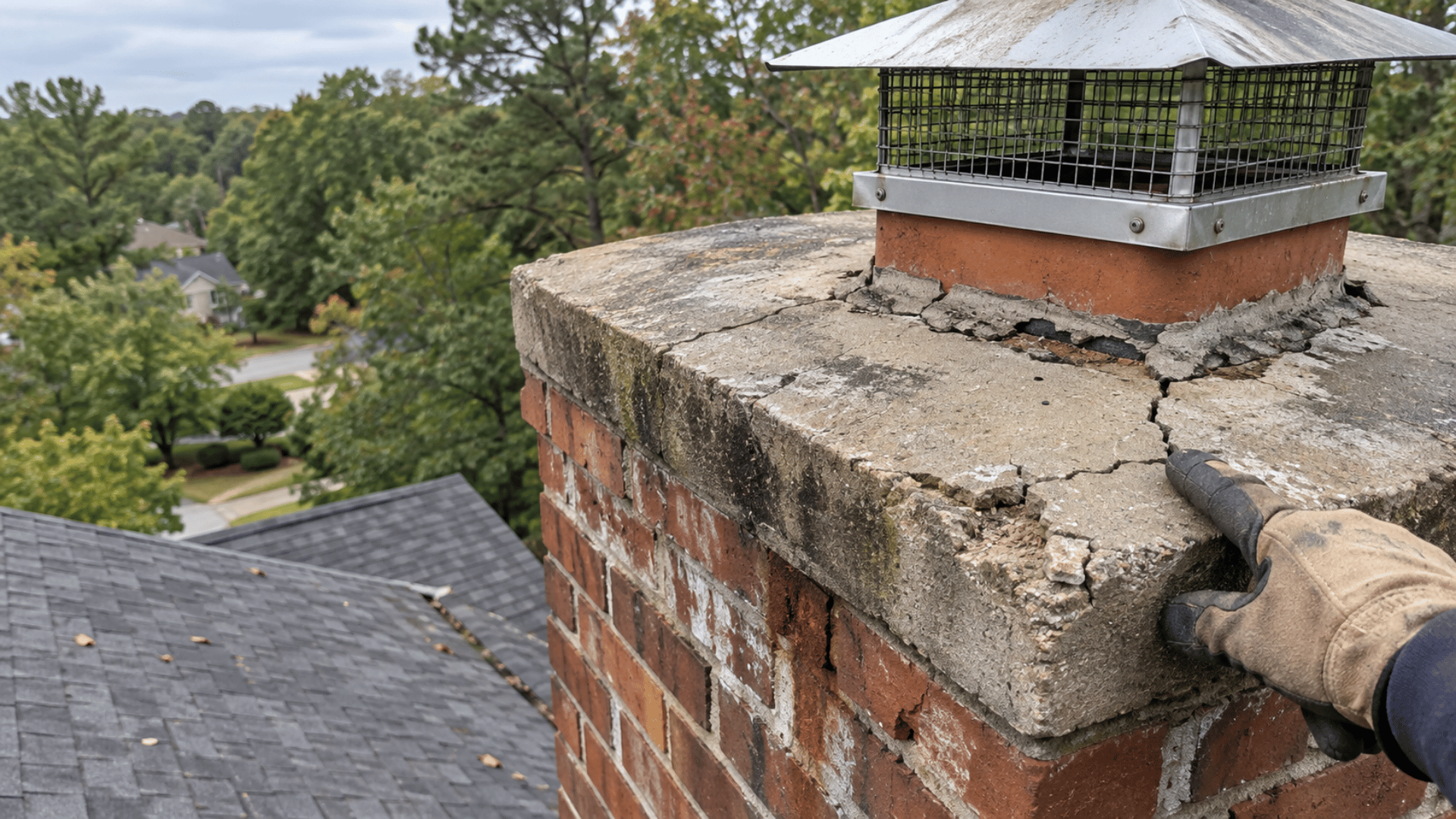
The crown is the concrete surface at the very top of a masonry chimney, and its job is to direct rainwater away from the structure below. Watch for hairline cracking, large fractures, missing chunks, flat areas that hold water, or a thin mortar wash instead of a substantial crown. CSIA recommends repairing damaged crowns as part of preventing chimney water damage. Here’s the key point: waterproofing the vertical bricks won’t fix a crown with an open structural crack. The crown needs to be repaired first.
Why Atlanta Chimneys Have So Many Moisture Problems
Atlanta’s normal annual precipitation runs close to 50 inches, according to National Weather Service climate data. Combine that rainfall with exposed chimney masonry and a few things happen at once.
Brick Absorbs Moisture
Brick and mortar contain interconnected pores. With enough exposure, rain moves into those pores rather than simply running off the surface.
Wind-Driven Rain Finds Weak Spots
Chimneys project above the roofline, leaving them highly exposed — and water doesn’t always fall straight down. Wind can push rain sideways into small openings at mortar joints, flashing transitions, and crown edges.
Wet Masonry Dries Slowly
Atlanta’s humid stretches slow down how quickly already-wet masonry can dry out. The longer moisture stays in the assembly, the more opportunity it has to contribute to corrosion, staining, and deterioration.
Winter Temperatures Compound Existing Damage
Water-related masonry damage matters most wherever freeze-thaw cycles occur. When masonry is already heavily saturated, freezing conditions can push existing damage into full spalling. None of this means every Atlanta chimney needs to be sprayed every few years regardless of condition — it means water management belongs in regular chimney maintenance, not something you wait to think about until water reaches the living room.
Proper Chimney Waterproofing vs. the Wrong Coating
This is one of the biggest mistakes we see homeowners make.
Proper Penetrating Water Repellent
A chimney-specific penetrating product should reduce liquid-water penetration, remain vapor permeable, and penetrate into the masonry rather than sitting on top as a thick film. One widely used penetrating product, ChimneySaver WB, is marketed as 100% vapor permeable rather than a surface coating — silane/siloxane chemistry like this is common for this kind of masonry protection.
What We Don’t Want
Be cautious about putting exterior paint, thick acrylic clear coats, film-forming waterproofing membranes, general-purpose sealers meant for unrelated surfaces, or silicone smeared across entire masonry surfaces onto chimney brick without understanding their permeability. There are legitimate uses for some of these products elsewhere on a building — the problem is applying the wrong material to porous chimney masonry and preventing the wall from drying properly. The Brick Industry Association similarly recommends weighing vapor permeability whenever exterior brick treatments will face moisture and freezing conditions.
A Real Example From a Dunwoody Home
A homeowner in Dunwoody saw a water stain forming on the ceiling near the fireplace after a round of Atlanta storms. Their assumption was understandable: the brick must be absorbing water, so just spray waterproofing on it.
But once we got above the roofline, we found two completely different problems.
Open Mortar Joints
The mortar had deteriorated enough that there were physical gaps between bricks.
A Fractured Chimney Crown
Large cracks ran through the top surface of the chimney.
At that point, applying water repellent would have been the wrong first repair. A penetrating product can reduce absorption through microscopic pores — it can’t bridge an open hole. Rain could still travel directly through the cracked crown and missing mortar no matter how much product went on the brick.
The correct sequence was:
- Repair the mortar. Remove badly deteriorated material and properly repoint the affected joints.
- Repair or reconstruct the crown as necessary. Minor cracking may be repairable; severe deterioration may require rebuilding.
- Allow the new masonry materials to cure. ChimneySaver WB, for example, specifies 72 hours after repairing loose or missing mortar joints, and at least 28 days for new masonry and concrete — a more accurate rule than applying one universal “wait 30 days” to every repair.
- Prepare and waterproof the sound masonry. Waterproofing should protect the repaired chimney — not hide unrepaired damage.
What Chimney Waterproofing Won’t Fix
This distinction can save homeowners thousands of dollars in repeated service calls. Chimney waterproofing will not fix:
- Water pouring straight into the firebox. If you hear dripping almost as soon as rain begins, especially directly down the flue, that points to the cap or crown, not porous brick. Porous masonry absorbs water progressively; direct entry suggests a more obvious opening.
- A crown with major open cracks. Water repellent can’t span a large fracture — the crown needs repair first.
- Missing mortar. If you can see deep gaps between bricks, tuckpointing comes before anything else.
- Failed flashing. If water is traveling between the chimney and the roof system, treating the brick surface may have no effect whatsoever — the flashing has to be repaired correctly.
- A chimney that’s already painted. Old paint or another incompatible coating can block a penetrating treatment from ever reaching the brick — that existing layer needs to be evaluated first.
- Water falling straight down an open flue. No exterior brick treatment stops rain from falling through an uncapped opening. Check the cap.
The short version: if you already see open crown fractures, missing mortar, loose bricks, severe spalling, or failed flashing, stop thinking about waterproofing as the first repair. Get those problems corrected, then protect the repaired masonry. Spraying a premium product on a structurally failing chimney is still money wasted.
What a Proper Chimney Waterproofing Service Includes
A professional service should involve considerably more than someone arriving with a pump sprayer.
Inspect Before Spraying
We first want to understand the condition of the brick, mortar joints, crown, cap, flashing, and fireplace components together. If there’s reason to suspect deeper damage, the inspection scope may need to expand — a basic Level 1 inspection fits an unchanged system under continued normal use, while a Level 2 with internal video scanning is appropriate after certain events, or wherever a Level 1 isn’t enough to confirm serviceability. An active leak doesn’t automatically mean every homeowner needs the same inspection level — it should match what’s actually happening with the chimney.
Clean and Prepare the Masonry
Water repellent needs real access to the masonry, which means removing loose debris, dirt, moss, efflorescence, failed caulk, and incompatible coatings where practical. Manufacturer guidance for products like ChimneySaver WB specifies surfaces free of dirt, dust, stains, efflorescence, and coatings that could interfere with penetration — and the masonry needs appropriate drying conditions before application, following the specific product’s requirements rather than a universal rule.
Repair Physical Damage First
Before any waterproofing: repoint open mortar joints, replace badly damaged brick, address crown problems, repair flashing where needed, and correct cap or chase-cover issues. Water repellent protects intact masonry. It doesn’t rebuild it.
Protect the Home and Apply Correctly
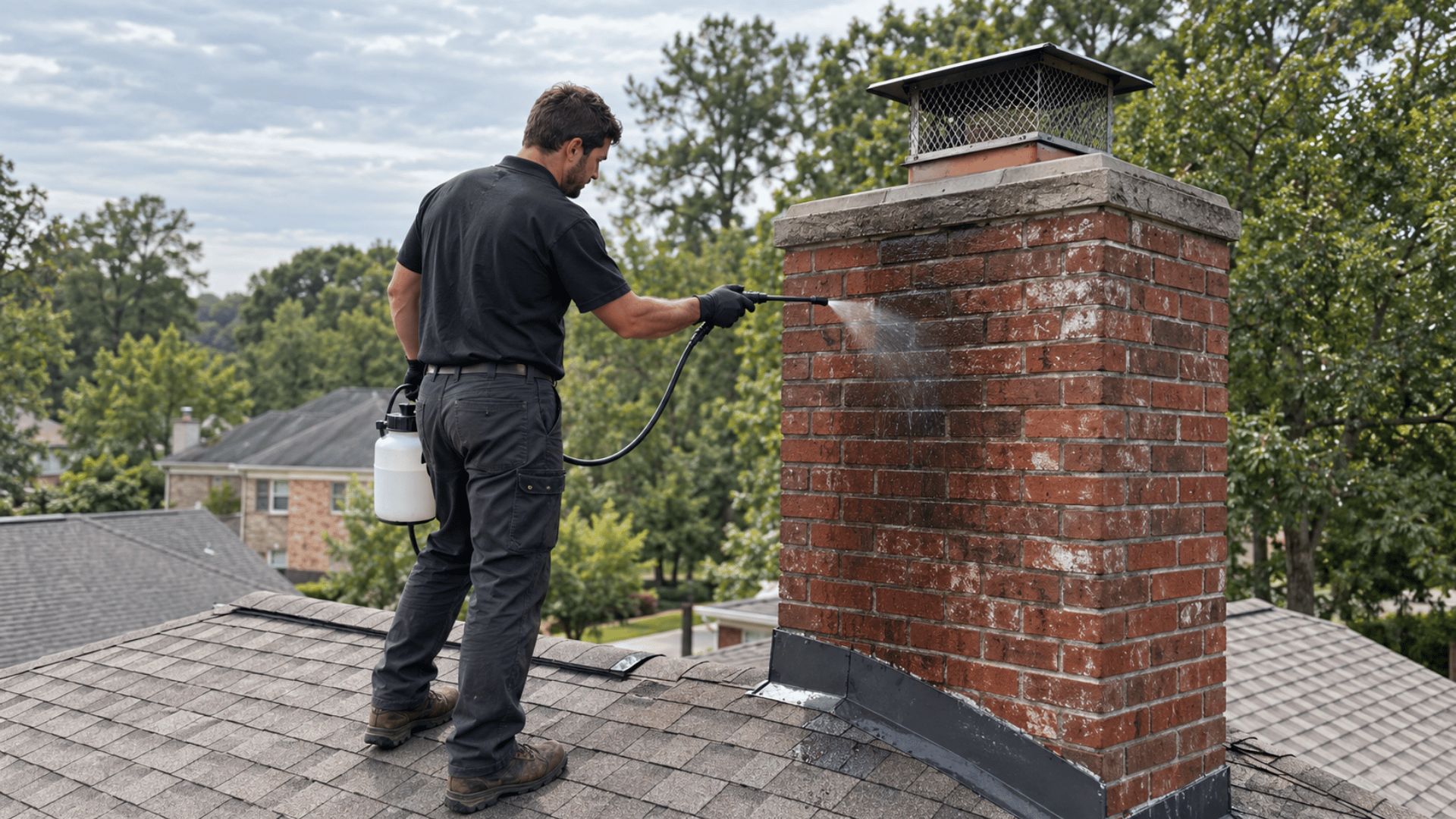
Nearby shingles, metal surfaces, windows, siding, painted trim, and landscaping should be protected from overspray before anyone starts spraying — a stained new roof or window from chemical overspray turns a routine job into an apology. Application itself follows the manufacturer’s instructions exactly: for ChimneySaver WB, that means a low-pressure sprayer working from the bottom up, flooding the surface until material runs 6–8 inches below the spray pattern, often with a second wet-on-wet application within minutes. That’s very different from lightly misting a chimney like you’re spray painting it, and it’s exactly why we don’t recommend copying a YouTube technique with an unknown product.
Document the Work
A professional job should end with cleanup, removal of protective coverings, before-and-after photos where practical, and clear documentation of the product used and any warranty information. If you’re paying someone to chemically treat your masonry, you should know exactly what they put on your house.
Common Application Mistakes to Avoid
- Using the wrong product. “Waterproof” and “appropriate for chimney masonry” aren’t the same thing — vapor permeability matters more than the word on the label.
- Applying to wet or contaminated masonry. Water, dirt, efflorescence, and old coatings can all interfere with proper penetration.
- Ignoring cure time. Don’t repair masonry in the morning and waterproof it that same afternoon — follow the cure time specified for the actual repair materials and product used.
- Misting instead of properly saturating. Some penetrating products require a much heavier application than a light spray — too little material means inadequate penetration and protection.
- Ignoring the roof. A chimney doesn’t exist separately from the roofing system around it — flashing and the roof transition matter just as much as the bricks themselves.
How Much Does Chimney Waterproofing Cost in Atlanta?
| Tier | Price Range | What’s Included |
|---|---|---|
| Waterproofing Application Only | $250 – $650 | A relatively accessible, structurally sound chimney needing just the water-repellent application |
| Full Project With Additional Prep | $500 – $2,000+ | More cleaning, setup, access work, or surface preparation, before any structural repairs |
Pricing varies substantially because two homes asking for “chimney waterproofing” can need completely different amounts of work. Related repairs that often come first have their own starting ranges — crown repair around $200, flashing repair, tuckpointing around $500, and a chimney cap around $190 — with complex masonry reconstruction going considerably higher. These are starting ranges, not fixed quotes: chimney height, roof pitch, access, masonry porosity, and hidden water damage can all move the final number. We’d rather diagnose the chimney first than advertise one low “waterproofing price” that doesn’t reflect what your chimney actually needs.
When Should a Chimney Be Waterproofed?
After New Construction or Repair
Often, yes — once the masonry is appropriate for treatment and adequately cured. Preventive waterproofing makes the most sense before serious deterioration has occurred, so it’s worth considering after new chimney construction, major tuckpointing, brick replacement, crown reconstruction, or restoration of older, more porous masonry. Follow the product’s specific cure requirements — for ChimneySaver WB, new masonry and concrete should cure at least 28 days before treatment.
How Often to Re-Evaluate
There isn’t one universal schedule for every chimney — product, exposure, masonry type, application quality, and weather all play a role. Some professional products carry long warranties; certain ChimneySaver formulations currently advertise a 10-year warranty. As a practical rule, we like homeowners to re-evaluate the chimney roughly every 5 to 7 years, especially if they don’t know when it was last treated. That doesn’t mean automatically recoating it on a schedule — it means checking whether water is still beading properly, whether efflorescence is appearing again, whether mortar has started deteriorating, or whether the roof or flashing has changed since the last treatment. Condition should decide the next step, not the calendar.
Can You Check Your Own Chimney Before Calling a Pro?
You can make a few simple observations without climbing onto the roof.
Look From the Ground
Use binoculars or your phone’s zoom and check for white stains, spalling brick, missing mortar, crown cracks, rust, or a missing chimney cap.
Look Inside the Fireplace
Check for rust, water stains, dripping, damp odors, or loose masonry debris on the hearth.
Watch What Happens During Rain
Notice whether moisture appears immediately, only after hours of steady rain, during wind-driven storms specifically, directly inside the firebox, or beside the chimney on the ceiling. That timing can be surprisingly useful during diagnosis.
The Garden-Hose Test (Proceed With Caution)
A controlled water test can sometimes help identify masonry absorption or isolate a leak source, but don’t climb onto a roof just to run one yourself. And don’t treat “the brick got darker” as proof that waterproofing is the only repair needed — professional leak diagnosis often means testing specific sections separately to determine whether water is entering through masonry, the crown, flashing, or something else entirely.
How to Choose the Right Chimney Company
Before approving any waterproofing work, ask what specific product will be used and why, whether the masonry has been inspected for damage first, and whether they’ll document the work with before-and-after photos. Beyond the right questions, look for the same baseline credentials that matter for any chimney work:
- CSIA certification — the Chimney Safety Institute of America sets the industry’s recognized training standard
- Proof of insurance — protects you if something goes wrong on your property
- BBB accreditation — a verifiable track record, not just a promise
Be cautious of anyone offering one flat “waterproofing price” over the phone without ever looking at the chimney first.
Final Answer
Chimney waterproofing is excellent preventive maintenance for masonry that’s structurally sound but absorbing more rain than it should. It is not a fix for physical openings — a cracked crown, missing mortar, failed flashing, or a missing cap all need repair first, before any product goes on the brick. Watch for the early signs: white staining, crumbling mortar, spalling brick, rust, musty odors, crown cracks, and water staining. The chimney is a system, and the crown, cap, flashing, brick, mortar, and roof intersection all have to work together before waterproofing makes sense as the next step.
Final Advice From Our Team
This depends on the chimney — but don’t wait until water is dripping into the fireplace to think about moisture, and don’t assume every leak needs the same fix. If the masonry is sound but absorbing rain, waterproofing is genuinely excellent preventive maintenance. If there are physical openings or failed components, those need to be corrected first — then the chimney gets protected.
Call (470) 706-6431 or contact us to schedule a chimney inspection in Atlanta, GA before a small moisture problem turns into a larger masonry repair.
FAQ
Is chimney waterproofing worth it?
For structurally sound masonry exposed to significant rainwater, a proper vapor-permeable water repellent can be valuable preventive maintenance. CSIA specifically includes vapor-permeable waterproofing among its measures for preventing masonry chimney water damage.
Will waterproofing stop every chimney leak?
No. It won’t fix a missing cap, open crown cracks, failed flashing, missing mortar, structural brick damage, or a damaged chase cover. The actual entry point has to be diagnosed first.
Can I paint my chimney to waterproof it?
Painting brick changes how moisture moves through it and can reduce vapor permeability. We generally prefer a compatible penetrating, vapor-permeable masonry treatment instead — and any existing paint should be evaluated before additional products go on.
What is the best waterproofing material for a brick chimney?
Look for penetrating, vapor-permeable masonry water repellents designed specifically for vertical masonry exposure. Silane/siloxane-based systems are commonly used. Always verify compatibility with your masonry and follow the manufacturer’s instructions exactly.
Should chimney cracks be sealed before waterproofing?
Yes, but the repair method depends on the crack. A penetrating water repellent isn’t designed to replace missing mortar or reconstruct a fractured crown. Repair first. Protect second.
How long after tuckpointing should I waterproof?
It depends on the product and scope of repair. As one example, ChimneySaver WB specifies at least 72 hours after repairing loose or missing mortar joints, while new masonry and concrete need at least 28 days of curing. Follow the specifications for the actual materials used on your chimney.
Does efflorescence mean my chimney is leaking?
It means moisture has moved through the masonry and deposited salts at the surface. It doesn’t tell you the exact entry point — the moisture source still needs to be investigated.
Can waterproofing stop spalling?
It may help prevent additional moisture absorption when used on suitable, already-repaired masonry. But it can’t restore brick whose face has already broken away — badly damaged bricks may need replacement instead.