


Chimney Sweeping
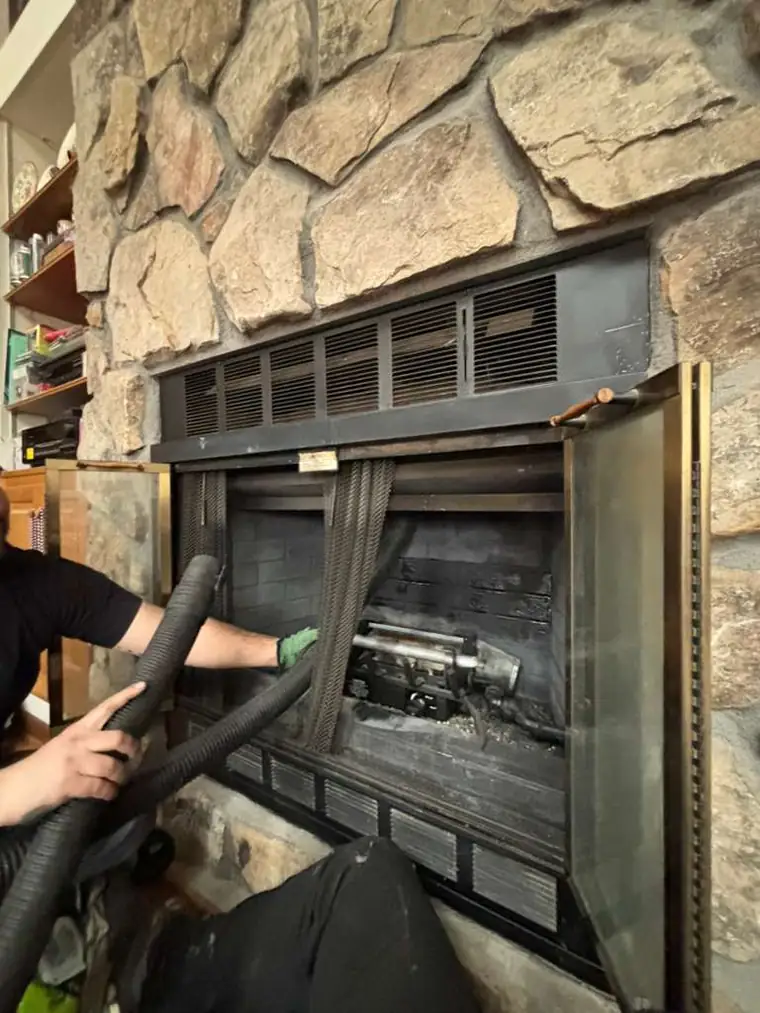
Sweeping removes soot, creosote and debris from the flue so the fireplace vents properly.
 Skip to content

Tap any badge to check it for yourself.
Clean Air Duct Cleaning & Chimney inspects, sweeps and repairs chimneys in Decatur, GA. A chimney can look fine from the ground while problems build inside the flue or in the masonry above the roof. Creosote, damaged mortar, worn flashing, leaks and old components all change the condition of the system over time.
Our team inspects the chimney, finds the problem and recommends the service that fits.
CSIA Certified Chimney Sweep® on our team

A painted brick surround with an insert, a linear fireplace in stacked stone and a stone surround with glass doors.


Water can damage a masonry chimney even when there’s no obvious leak inside. Crown cracks let moisture into the upper masonry. Worn mortar joints absorb water. Damaged flashing lets rain in where the chimney meets the roof. A missing cap leaves the flue exposed.
Repair the source before the damaged surfaces are patched or covered. Depending on the cause, that’s flashing, crown, repointing or waterproofing work.
Answers to common questions. Need something else? Call (470) 706-6431 and we’ll help.
Call us and we’ll talk through your chimney and the right service.
Call (470) 706-6431Do older homes in Decatur need more chimney attention?
Not automatically. Older masonry chimneys may have aging mortar, earlier repairs, worn flashing or older flue parts that deserve a closer look. If the maintenance history is unknown, an inspection shows the current condition before regular use.
Can mature trees around Decatur homes cause chimney problems?
Nearby trees drop leaves and twigs around the chimney top. A missing or damaged cap also makes it easier for animals or nesting material to get into the flue. If debris keeps showing up in the fireplace, have the chimney opening checked.
What should I do if pieces of clay tile fall into my fireplace?
They may be coming from a deteriorating flue liner. The liner is part of the venting system, so have the fireplace inspected before you use it again to find the source and the extent of the damage.
Does a gas fireplace chimney still need to be inspected?
Yes. Gas appliances that vent through a chimney still need a clear, suitable venting path. Have the chimney, liner and connected parts checked for deterioration, blockage or other conditions that could affect venting.
My chimney smells in summer. Is that a problem?
Usually it’s creosote and moisture, made worse by humidity. It’s worth checking for water getting in. See chimney smell causes.


