Why Your Home Airflow Drops When Dust Builds Up in Ducts
Your home airflow drops when dust builds up in ducts because that dust acts like…
Chimney Flashing Repair & Replacement In Atlanta by Clean Air Duct Cleaning & Chimney. Stop leaks fast with expert repair or full replacement. Call today!

Chimney Flashing Repair & Replacement in Atlanta stops water leaks where your chimney meets the roof. Clean Air Duct Cleaning & Chimney finds the leak path, repairs loose or rusted flashing, and replaces failing sections when needed. We work on Atlanta, GA homes to protect framing, drywall, and masonry before small drips turn into big repairs.
Chimney flashing repair fixes the roof to chimney joint before water spreads. Flashing is the metal and seal system that bridges the gap between chimney masonry and roofing. It is supposed to direct rain down the roof, not into your attic. When it fails, water takes the easiest route, and that route is usually inside your home.
A good flashing system is not just a strip of metal with some sealant on top. It uses layers that work together, so water gets pushed out and down. If any layer lifts, cracks, or rusts through, leaks can start even if the shingles look fine.
If you have ever thought, Why is the stain always near the chimney, the flashing is a prime suspect. Want to stop guessing and get a clear answer. Call (470) 706-6431 or visit our homepage.
Need Help? Call Clean Air Duct Cleaning & Chimney Near You
Chimney flashing problems often show up as stains, smells, and peeling paint. Leaks rarely announce themselves politely. They show up as little clues that seem unrelated until you connect the dots. Catching them early saves a lot of cleanup.
Water stains near the chimney often mean flashing is letting water past the roof line. Look for yellow or brown rings on ceilings or walls near the chimney chase. Check the attic too, especially after a hard rain. Wet insulation, dark wood, or shiny nail tips can point to active moisture.
If the staining seems tied to a specific storm cycle, a chimney inspection can help confirm what is failing.

Musty odors after rain can mean water is trapped where you cannot see it. A damp smell that flares up after storms can come from wet wood, wet insulation, or damp drywall. Chimney areas are common trouble spots because they have multiple materials meeting in one place.
When odors follow moisture, pairing the visit with camera inspection notes can help document hidden damp areas.
Roofline drips and brick staining can signal water running behind the flashing. Sometimes the leak does not show up inside first. You may see water streaks on brick, white mineral deposits, or discoloration around the chimney base. That is your house saying, Something is not draining right.
If you are tracking multiple water entry points, chimney leaks troubleshooting can help narrow the source.
Interior paint bubbles can be a soft warning before bigger damage. Paint and drywall do not like moisture. Bubbling, peeling, or soft spots around the chimney wall can mean slow leaks. Slow leaks are sneaky. They can rot wood without ever making a dramatic puddle.
When moisture has been present for a while, related masonry issues may need masonry repair in addition to flashing work.
Flashing failures are usually caused by movement, weather, and past patch work. Atlanta weather can be hard on roof details. Hot summers, heavy rain, and storm cycles stress joints that need to stay watertight. Flashing sits at one of the most stressed areas on the roof.
Roof and chimney movement can pull flashing out of place over time. Your roof deck and chimney expand and contract at different rates. That tiny movement can loosen fasteners, crack seal lines, and open gaps. You might not see it from the ground, but water will find it.
If movement has also stressed the chimney structure, a broader chimney repair plan may be needed.
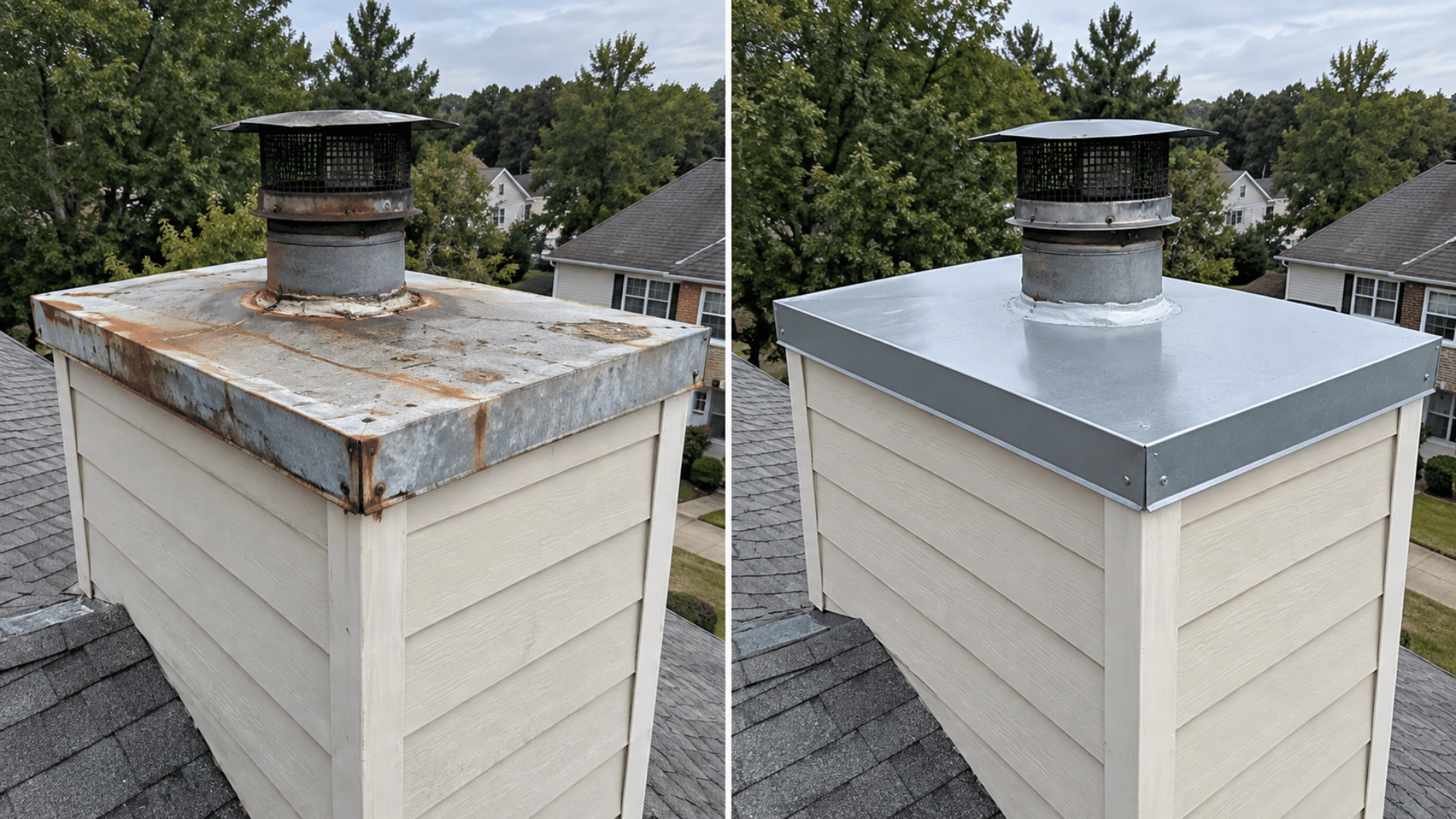
Rust and corrosion can eat through metal flashing piece by piece. Older galvanized flashing can rust, especially where water sits. Once rust starts, pinholes and thin spots develop. That turns mostly fine flashing into leaking every time it rains flashing.
When rust has spread into other components, chimney replacement evaluation can help decide what is worth rebuilding.
Cracked sealant can fail fast once the first split appears. Sealant is not meant to be the main waterproofing system. It is a helper. When flashing relies on thick smears of sealant, it tends to crack, pull away, and create channels for water.
Poor past repairs can trap water and make the leak worse. We often see flashing repairs that look like a caulk sculpture. It might stop water for a short time, but it can also trap moisture and speed up rot. If your chimney has layers of old patching, the best move is usually a clean, correct rebuild.
Have you noticed repeated leaks in the same spot even after someone sealed it. That is a common sign the system needs more than another bead of goop, and flashing replacement may be the better path.
Our visit focuses on finding the true leak path, not just the wet spot. Water can enter at one place and show up somewhere else. That is why we inspect the roof to chimney joint from multiple angles. The goal is to confirm what failed and what still has life left.
We inspect the chimney base, roof surface, and counter flashing tie in. We check for lifted edges, rusted sections, loose fasteners, and missing pieces. We also check how the flashing connects to the chimney itself. Counter flashing should be secured properly into the masonry or chase system, not just pressed against it.
If we see signs that soot and moisture issues are overlapping, a chimney sweep can be a helpful next step for overall chimney performance.
We look for related issues that can mimic flashing leaks, or happen alongside it.
You get clear notes on what we see and what it means for your home. No mystery language. No shrugging.
Water can travel along framing and show up far from where it enters, so we focus on the path, not just the stain.
Need Help? Call Us For Air Duct Services!
We confirm if repair is enough or if replacement is the smarter choice. Some flashing can be reset and resealed correctly. Other flashing is too far gone. If metal is rusted through, badly bent, or missing key pieces, replacement is often the cleaner and longer lasting route.
Chimney flashing repair and replacement depends on condition, layout, and leak history. You do not always need a full redo. You also do not want to spend time on a patch that will fail next storm. We help you pick the option that fits what your roof and chimney actually need.
Chimney flashing repair is best when the metal is sound and the failure is localized. A repair may include re securing edges, correcting overlaps, replacing small damaged sections, and applying sealant only where it belongs. Repair also makes sense when the leak started recently and there is no widespread rust.
Small lifted edges, minor overlap problems, and limited damage can sometimes be addressed without rebuilding the full system.
Chimney flashing replacement is best when the system is worn, incorrect, or repeatedly leaking. Replacement means removing failing pieces and rebuilding the flashing layers so water sheds properly. This is common on older homes, chimneys with past patching, and roofs where flashing was never installed right.
Here is a quick way to think about it.
| Situation you see | What it often points to |
|---|---|
| Light gap at one edge, metal still solid | Targeted repair may work |
| Rust holes, missing sections, bent metal | Replacement is often needed |
| Repeated leaks after sealing | System rebuild is often needed |
| Stains grow after every storm | Active leak needs prompt service |
If you are dealing with Chimney Flashing Repair & Replacement and want a straight answer, we can walk the roof line and show you what is happening.
Chimney flashing systems work best when the layers are built correctly. Flashing is not one piece. It is a set of parts that redirect water. If any part is missing, water can slip behind the system.
Step flashing helps water shed down the roof in small sections. Step flashing is installed in pieces along the sides of the chimney, layered with shingles. It creates a stair step path that pushes water down the roof. If step flashing is missing or installed wrong, water can run behind it.
When roofing details around the chimney are questionable, pairing repairs with roof to chimney joint repairs helps stop repeat leaks.
Counter flashing blocks water from getting behind the step flashing. Counter flashing covers the top edges of step flashing and ties into the chimney. It keeps water from getting into the seam where metal meets masonry. This detail matters a lot during heavy rain.
A chimney cricket can be needed on larger chimneys to divert water. If your chimney is wide, water can pile up behind it. A cricket is a small roof structure that splits water around the chimney. Without it, you can get pooling, debris buildup, and faster flashing wear.
If the saddle area shows rot, wood frame repair and replacement may be part of the solution.
Smart sealing supports the system but should not be the whole plan. Sealant can help at specific joints, but it cannot replace missing metal layers. If a past repair looks like someone iced a cake, it may be time for a better fix. Rainwater is not impressed by messy frosting.
For general background on flashing design, see flashing in weatherproofing.
The job usually moves fast once access and materials are clear. Most flashing work is completed without dragging on for days. The exact timeline depends on roof pitch, chimney size, material condition, and weather.
Many repairs can be completed in a single visit when conditions cooperate. If the issue is localized and access is safe, repairs can often be handled efficiently. We still take the time to prep surfaces and secure edges properly because rushed flashing work tends to fail.
If we find buildup inside the chimney system during the visit, we may recommend creosote removal separately to keep the system safer overall.
Full replacement can take longer when old material must be removed carefully. Removing old flashing and patch layers can take time. We do it carefully to avoid damage to shingles, roof decking, and chimney surfaces. If wood rot is found, that can add steps.
When deterioration is extensive, chimney rebuilding may be discussed as part of a longer term plan.

Weather can slow things down because flashing is a water control detail. Working with wet surfaces is a bad plan. If rain is in the forecast, we plan the work around safe, dry conditions. That protects your roof and helps materials bond correctly.
If moisture has affected indoor air quality areas, supportive cleanup like sanitization and disinfection can be considered after the leak is stopped.
Safety comes first because roof work is not the place for guesswork. Roof edges, steep pitches, and loose shingles are real hazards. It is easy to slip, and it is easy to cause damage without meaning to.
Stop and call a pro if you see active leaking in the attic near electrical lines. Water and wiring should never mix. If you see wet electrical cables, junction boxes, or ceiling fixtures, avoid touching anything and call for help. You can also place a bucket to catch drips, but stay clear of electrical areas.
Avoid climbing on the roof if you are not set up for it. A ladder at the wrong angle can ruin your whole afternoon. If you do go into the attic, stick to joists and use a light. Stepping through drywall is a classic move, and not the fun kind of classic.
Temporary steps can limit damage while you wait for service. If a leak is active, you can.
Then call (470) 706-6431 to schedule a visit, and consider a follow up chimney inspection if the leak has been ongoing.
Preparing your home helps us work faster and keep things clean. A little prep makes the inspection smoother. It also helps us locate the problem quicker, especially if the leak is intermittent.
Clear a small path to the attic access if you have one. If we need to check the attic, moving boxes or stored items helps a lot. Attic access is often in a closet or hallway, so a clear route matters.
If attic conditions show damp insulation or airflow issues, attic insulation updates may be worth discussing after the leak is fixed.
Share details about when the leak occurs. Does it leak only during heavy rain. Only with wind from a certain direction. Only after long storms. That information helps pinpoint the entry path. Water can behave like it has a plan, and the wind often writes that plan.
Point out past repairs you know about. If someone previously sealed around the chimney, replaced shingles nearby, or repaired the chimney crown, let us know. Old repairs can hide fasteners, seams, and problem spots.
If you suspect the chimney interior has also been affected, chimney sanitation may be a later step once water entry is controlled.
After the work, a few habits help you avoid repeat leaks. Flashing lasts longer when water can drain and materials are not forced to hold standing moisture. You do not need to obsess over your roof, but you should keep an eye on a few things.
Check the chimney area after the next heavy storm. Look for new staining, new odors, or damp insulation in the attic. If everything stays dry, that is what you want. If you notice anything suspicious, write down the date and what you saw.
If you are maintaining the full chimney system, periodic chimney sweeping can support safer operation.
Keep gutters and roof valleys clear so water does not back up. Overflowing gutters can push water where it should not go. Debris near the chimney can hold moisture against flashing edges. A clean roof drains better, plain and simple.
Watch for masonry issues that can feed flashing problems. Flashing is one part of a water control system. If mortar joints are crumbling or the crown is cracked, water can still enter the chimney structure. That can look like a roof leak even if flashing is solid.
When moisture is affecting brickwork, chimney brick repair can help prevent further damage.
Atlanta conditions can stress chimney flashing in predictable ways. Georgia storms can bring wind driven rain that attacks roof joints from the side. Summer heat can also age sealants faster and expand materials more aggressively.
Heavy rain and sudden storms can expose small gaps quickly. A tiny opening that stays quiet in light rain can leak during a downpour. If you only see problems during strong storms, that does not mean the issue is minor. It often means the leak path needs volume and pressure to show itself.
For longer term protection in GA and across the state of Georgia, chimney waterproofing can help reduce water absorption after the flashing is corrected.
Tree cover can add moisture and debris around the chimney. Many Atlanta neighborhoods have mature trees. Leaves and small branches can collect behind chimneys and around crickets. That debris holds water and speeds up wear.
Mixed roof materials and older homes can have unusual flashing details. We see a range of roof types across Atlanta, GA. Some homes have older chimney builds, different masonry styles, and past repairs stacked on top of each other. We adapt the plan to what is actually on your roof, not what should be there on paper.
If the chimney structure needs a bigger reset, rebuilding options can be discussed in plain language.
Homeowners call us because they want clear answers and careful roof work. We focus on practical repairs that stop leaks and protect your home. We also keep communication simple so you know what we found and what we did about it.
We respect your home by keeping the work area organized. Roof and chimney work can get messy if someone tosses debris around. We aim to keep materials controlled and cleanup straightforward.
If you want to learn more about our company, visit About Us.
We work with chimney and venting systems every day. As Clean Air Duct Cleaning & Chimney, we spend our time around airflow, venting, and the places where homes leak air and water. Chimney areas are a common crossover point, so we know what to look for.
If you are also improving home airflow systems, air duct cleaning can support a cleaner ventilation path.
We explain what failed so you can spot issues earlier next time. You should not need a dictionary to understand your own home. We point out the failure points in plain language and share what to watch after storms.
If you are comparing Chimney Flashing Repair & Replacement options, ask yourself one question. Do you want another quick patch, or do you want the leak path solved.
Schedule service today to stop chimney leaks at the source. Chimney leaks do not fix themselves, and water damage tends to spread while you are busy doing normal life. If you need Chimney Flashing Repair & Replacement in Atlanta, we are ready to inspect the flashing, confirm the cause, and repair or replace what is failing.
Call (470) 706-6431 or use our Contact Us page to get started with Chimney Flashing Repair & Replacement in Atlanta.
Your home airflow drops when dust builds up in ducts because that dust acts like…
A clean chimney lets smoke move out of your home, not back into your face.…
Your air ducts may need cleaning before a seasonal change if you notice more dust,…
Creosote forms when wood smoke cools inside your chimney and turns into a sticky, dark…
Lint buildup in a dryer vent raises fire risk because it blocks airflow. When hot…
An annual chimney inspection helps you catch hidden trouble before it grows. A pro can…