
Why Your Home Airflow Drops When Dust Builds Up in Ducts
Your home airflow drops when dust builds up in ducts because that dust acts like…
Need Firebox Replacement In Atlanta? Clean Air Duct Cleaning & Chimney offers expert firebox replacement and repair for safer fires. Book an inspection today
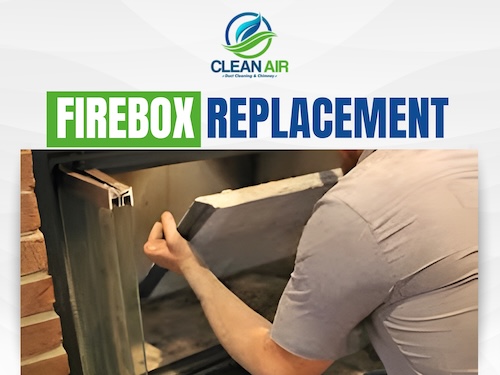
Firebox Replacement in Atlanta keeps your fireplace safer by removing damaged firebrick and refractory panels and rebuilding the firebox so it can handle heat again.
Clean Air Duct Cleaning & Chimney inspects the firebox, explains what failed, and completes the work with clean habits and clear next steps for your home in Atlanta, GA.
Need Help? Call Clean Air Duct Cleaning & Chimney Near You
A firebox is the burn chamber inside your fireplace where flames and logs sit. It is built with firebrick and high heat mortar, or with refractory panels in some units. Over time, those materials crack, shift, and wear out. If related issues show up elsewhere, we may recommend a chimney inspection to understand the full picture.
Firebox replacement replaces failing materials so the firebox can contain heat properly. That matters because the firebox is not decorative. It is a safety layer that protects the smoke chamber, surrounding masonry, and nearby framing from extreme temperatures.
If you are in Atlanta, Georgia and your fireplace is used even a few times each winter, normal wear adds up. A solid firebox helps your fireplace draft better, burn cleaner, and stay more predictable. Many homeowners also pair this with a fireplace safety inspection before the season starts.

You do not need to guess. The firebox usually tells you when it is tired. Some signs are obvious, and some are easy to miss until you look closely with the damper open and a flashlight.
Do you see cracks that run through the brick not just the mortar line. Do you notice pieces flaking off after each fire. Those are strong reasons to schedule an inspection before using the fireplace again and may lead to firebox repair or full replacement depending on what we find.
Fireplaces expand and contract every time you burn. That constant heat cycling breaks down mortar joints. In Atlanta humid seasons, moisture can also work its way into masonry and speed up deterioration. If moisture is suspected, we often look for sources tied to chimney leaks.
A little professional honesty here. Surface patch products from big box stores can look fine at first. Many are not meant for the repeated heat a working fireplace produces. If a patch fails, it can leave hidden gaps behind it.
A proper plan starts with looking at the full firebox area, not just the visible cracks. We check the firebox walls, floor, joints, and the transition areas where heat and smoke move upward. When appropriate, we can add a camera inspection for a closer look.
You will get clear explanations in plain language. If something is beyond the firebox itself, we will tell you what we see and what it can affect, including whether follow up work like chimney repair is needed.
The right fix depends on how much material has failed and what type of firebox you have. Some fireplaces are traditional masonry. Others use refractory panels designed for specific firebox boxes. If the surrounding system has issues, we may recommend services like chimney relining when venting components need attention.
Not sure which one you have. If your brick looks like large flat slabs with seams, you may have refractory panels. If it is individual bricks with mortar joints, it is likely firebrick.
Need Help? Call Us For Air Duct Services!
Firebox work is dirty by nature, but it should not make your home feel like a jobsite for days. We use practical containment steps and keep the work area organized. Many homeowners schedule a chimney sweep around the same time so the full fireplace system starts the season cleaner.
We also keep an eye on what people forget. Ash buildup and old debris can hide cracks. A clean firebox lets you spot issues early, and if your fireplace needs a refresh after repairs we can discuss a fireplace tune up.
A firebox needs materials that handle repeated high heat without breaking down. Regular masonry mortar is not designed for direct flame exposure. That is why the right refractory mortar and correct firebrick or panels matter. If the chimney structure is also aging, we may review whether chimney repointing is affecting performance and moisture entry.
| Firebox Component | Common Material | What Failure Looks Like | Typical Fix |
|---|---|---|---|
| Firebox walls | Firebrick or refractory panels | Cracks gaps loose sections | Replace damaged areas |
| Mortar joints | Refractory mortar | Crumbling missing joints | Remove and repoint |
| Firebox floor | Firebrick or refractory floor | Settling broken brick | Rebuild floor section |
If a past repair used the wrong mortar, it may crumble quickly. That can make the firebox look worse each season, even if you only burn a few times.
The hands on work is often completed in one scheduled service window. What changes the timeline is the amount of demolition needed, the extent of rebuilding, and how much curing the materials require before you burn again. If we see related venting concerns, we may recommend chimney flue repair to keep the system working as intended.
Even when the masonry work is done, you still need to respect cure time. Lighting a roaring fire too soon can weaken fresh mortar. We will tell you how long to wait based on the materials used and the conditions in your home.
If you are seeing certain damage patterns, it is safer to pause fireplace use until it is inspected. Fireboxes are meant to contain heat. Gaps and broken materials can let heat reach areas that were never meant to get that hot. If you need a safety focused review, schedule a fireplace safety inspection.
A fireplace should be cozy, not stressful. If you are nervous every time you light it, that is your sign to get it checked.
Most homeowners can get ready in about 15 minutes. A little prep helps us focus on the work and protects your furnishings. If the fireplace has not been serviced in a while, a chimney inspection can also help confirm safe operation before regular use.
Do you use the fireplace often, or only during cold snaps. Do you burn real wood or manufactured logs. Those answers help us plan materials and approach.
Fireboxes wear out faster when fires burn too hot or too wet. Good burning practices keep stress off the masonry and help reduce creosote in the flue. If you have ongoing soot or odor concerns, pairing seasonal maintenance with chimney flue cleaning can help keep performance steadier.
Also keep an eye on moisture. If you see damp ash rusted metal parts or musty odor after rain, you may have a chimney cap or crown issue feeding water into the system. Repairs like chimney crown repair can prevent repeat damage.
Atlanta, GA weather can shift quickly, with humid summers and heavy rain events. Moisture and masonry do not get along for long. Water can soak into brick and mortar, then weaken joints over time. Preventive steps such as chimney waterproofing can be part of a longer term plan when moisture is a factor.
If your fireplace smells musty in spring or summer, that is not just old house smell. It can be a clue that moisture is finding its way in.
A damaged firebox can lead to draft problems and smoky starts. It can also allow heat to move into the wrong spaces. At the same time, chimney issues can create conditions that damage the firebox faster. When needed, we look beyond the firebox and discuss services like chimney repair.
Since our business also focuses on air quality services, we think about how smoke and soot behave in a living space. Nobody wants that smell stuck in curtains and carpets. If you are addressing home air quality in parallel, you may also consider air duct cleaning.
You should not have to chase a contractor for basic answers. We keep communication simple and direct. We explain what we found, what needs to happen next, and how to use the fireplace safely after the work. If the firebox is part of a larger refresh, we can also discuss options like fireplace restoration.
And yes, we respect your home. The goal is a safer fireplace, not a living room covered in grit. Nobody wants to find masonry dust in their coffee the next morning.
If your firebox is cracked loose or crumbling, do not wait for it to get worse. Firebox replacement is a straightforward way to restore the part of the fireplace that takes the most heat. Many homeowners start with fireplace repair questions and we help confirm whether repair or full replacement is the safer route.
For Firebox Replacement in Atlanta, call (470) 706-6431 or use the Contact Us page to schedule a visit.

Your home airflow drops when dust builds up in ducts because that dust acts like…

A clean chimney lets smoke move out of your home, not back into your face.…

Your air ducts may need cleaning before a seasonal change if you notice more dust,…

Creosote forms when wood smoke cools inside your chimney and turns into a sticky, dark…

Lint buildup in a dryer vent raises fire risk because it blocks airflow. When hot…

An annual chimney inspection helps you catch hidden trouble before it grows. A pro can…