 Skip to content


Look past the lowest price. Pick a company with chimney-specific certification you can verify, proof of insurance, clear pricing, a defined inspection process, solid local reviews, and technicians who explain what they find in plain language.
Be careful with unusually cheap offers, vague estimates or pressure to approve expensive repairs on the spot. A trustworthy company shows you the problem, puts recommendations in writing, and gives you time to think about anything that isn’t an emergency.
Why It Matters Who You Hire
Your chimney carries smoke and combustion gases out of the house. A sweep works with creosote, flue liners, masonry, venting and roof access, and a missed problem can mean a chimney fire or carbon monoxide in the house.
It also matters when repairs come up. Most homeowners can’t judge a chimney problem from the ground or decide on the spot. Georgia’s Attorney General advises getting written estimates, checking references and insurance, and watching for high-pressure sales tactics or large upfront payments.
1. Look for Chimney-Specific Certification
The Chimney Safety Institute of America (CSIA) offers the CSIA Certified Chimney Sweep® credential, which covers chimney and venting systems, codes, inspection and safety.
Verify it yourself. CSIA keeps a public directory where you can search by ZIP code, city, company or technician. Don’t rely on a badge in an ad.
Ask: “Who will be working on my chimney, and is that person currently CSIA certified?” Then look the name up.
Guild memberships are a good sign of industry involvement, but membership isn’t the same as an individual technician’s certification.
You can ask our team about technician qualifications and relevant training when you book.
2. Check Experience, Reviews and Complaints
Certification helps, but look at how long the company has been in business, whether it works on chimneys like yours, and what local customers say. The most useful reviews mention specifics:
- Did the technician arrive on time?
- Was the soot contained?
- Were the findings explained clearly?
- Did the final bill match the quote?
- Did the homeowner feel pressured into extra repairs?
- How did the company handle a problem?
Also check the company’s BBB profile for unresolved complaints, not just the letter grade. How a company responds to complaints tells you a lot.
Clean Air Duct Cleaning & Chimney has served Metro Atlanta since 2019 and is BBB Accredited with an A+ rating.
3. Ask for Proof of Insurance
Chimney work means ladders, roof access and equipment inside your house. Ask for proof of liability insurance. The Georgia Attorney General recommends asking home-service contractors for proof of liability, workers’ compensation and property-damage coverage where it applies.
Certification shows the technician knows chimneys. Insurance protects you if something goes wrong. A reputable company won’t be offended that you asked.
Do Chimney Sweeps Need a License in Georgia?
Georgia doesn’t issue a separate statewide license for chimney sweeping. The state licenses trades like general contracting, electrical, plumbing and conditioned air, but not chimney sweeping.
That doesn’t mean every chimney job is unregulated. A cleaning is different from structural repairs, a rebuild, gas line work or electrical work, which may need the right contractor license and local permits. So don’t make “licensed?” your only question. Ask about certification, insurance, experience and qualifications for the specific work.
4. Make Sure You’re Getting a Real Inspection
A sweep and an inspection aren’t the same thing. Someone can brush out soot without really checking the chimney’s condition. Ask: “What level of inspection is included?”
A Level 1 inspection is the routine yearly check. A Level 2 adds a camera scan of the flue and is the right choice when you’re buying or selling a home, after a chimney fire, or after changing an appliance. See chimney inspection levels explained and chimney cleaning vs. inspection.
If any of those situations apply, say so when you book.
5. Ask What You’ll Get Afterward
A good sweep leaves you with more than a clean flue. Ask whether you’ll get:
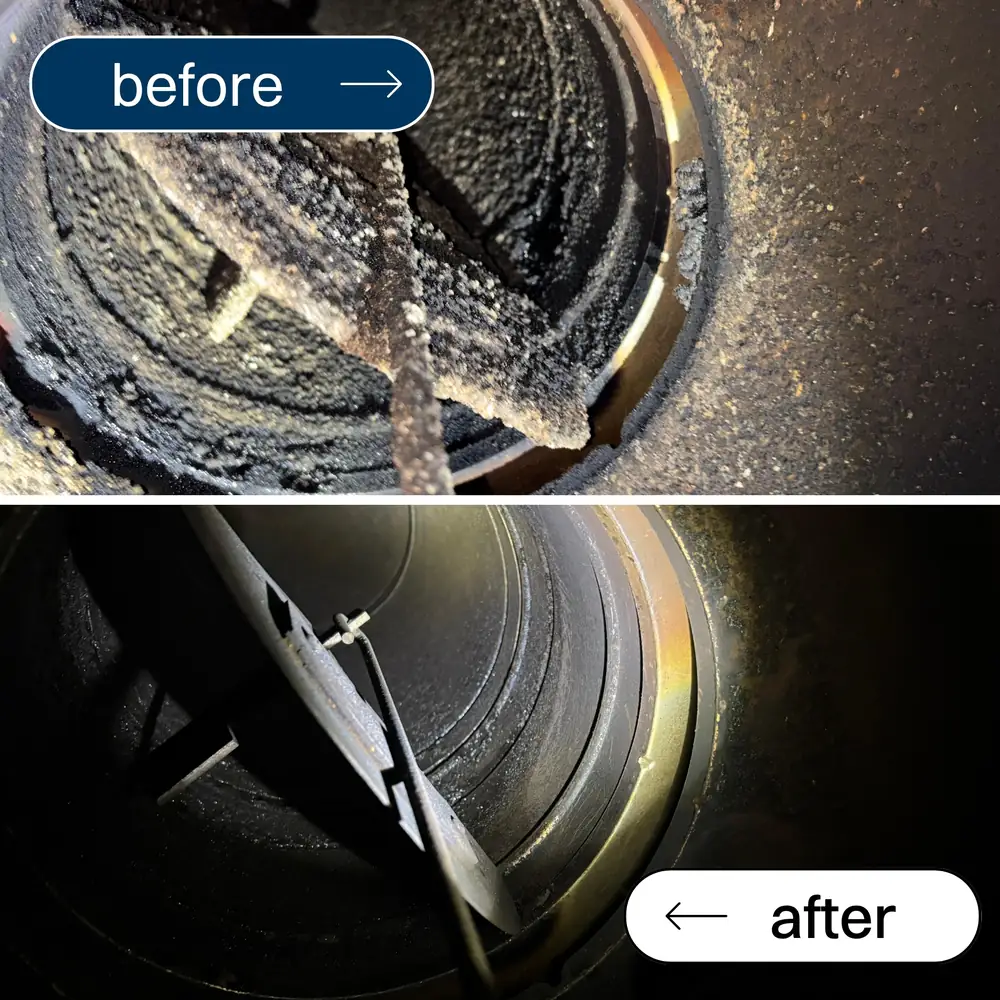
- Before-and-after photos of the flue and smoke chamber
- A written note on the damper, liner, crown, cap and firebox
- A clear answer to “is it safe to use?”
- Written prices for any recommended repairs before work starts
If a company won’t put findings in writing, that’s worth noticing. See what a chimney sweep does for what a full visit covers.
6. Get Clear Pricing Before Work Starts
Ask whether the quoted price covers:
- Sweeping the full flue
- Cleaning the smoke chamber and firebox when needed
- A Level 1 inspection
- Roof access
- A camera inspection
- Creosote treatment
- Nest or animal removal
- Extra flues
- Cleanup
- Travel or service fees
A standard sweep in Atlanta typically runs $199 to $399. Heavy creosote, hard roof access, extra inspection work or repairs raise the total. See chimney sweep cost in Atlanta for the full breakdown.
A low introductory price isn’t automatically a problem. The company just needs to explain exactly what it includes and get your OK before adding anything.
7. Know the Red Flags Before Anyone Is in Your Home
Not every unexpected repair recommendation is a scam. Chimney problems hide, and real inspections sometimes find repairs you didn’t expect. What matters is how they’re presented.
Be cautious when someone says your home is in immediate danger but won’t show you the problem, won’t put it in writing, pushes you to approve thousands of dollars of work before they leave, or wants a large payment right away. Georgia’s Consumer Protection Division flags pressure to decide immediately, scare tactics, cash demands and aggressive selling as warning signs.
Ask: “Can you show me exactly what you found?” For a major repair, ask for photos or video and get a second opinion, unless there’s a genuine hazard that means the fireplace shouldn’t be used in the meantime.
8. Pick a Company That Knows Atlanta Chimneys
Atlanta’s humidity doesn’t cause creosote. That comes from how wood burns. But our rain and humidity do matter for leaks, crumbling masonry, rusted caps, cracked crowns, failed flashing and musty smells. Long off-seasons also give birds and squirrels time to move into uncapped chimneys.
A local company should handle both cleaning and those exterior problems, not treat every call as a creosote job.
10 Questions to Ask Before You Hire
- Is the technician working on my chimney CSIA certified?
- Can I verify that certification myself?
- Do you carry liability insurance, and can you show proof?
- What exactly does the quoted price include?
- Does the visit include a Level 1 inspection?
- Would my situation call for a Level 2 inspection?
- Will you show me any problems before recommending repairs?
- Will I get written pricing for extra work before it starts?
- How do you keep soot out of the room?
- What will I get in writing after the visit?
A good company answers these without turning it into a sales pitch.
Green Flags vs. Red Flags
| Green Flag | Red Flag |
|---|---|
| Certification you can verify | Certification claimed but can’t be verified |
| Proof of insurance on request | Dodges insurance questions |
| Clear list of what the service includes | Vague “complete chimney service” |
| Price explained before work starts | Very low teaser price, then surprise add-ons |
| Findings shown with photos or video | Expensive repairs with no evidence |
| Written pricing for extra work | Pressure to approve big work today |
| Knows the difference between Level 1 and Level 2 | Calls every glance a “full inspection” |
| Local reviews, business history and resolved complaints | Hard to verify who they are |
| Gives you time on non-emergency repairs | Fear, urgency or “today only” pricing |
How Often Should You Book a Chimney Professional?
NFPA 211 calls for a yearly inspection, with cleaning and repairs as needed. Booking before fall helps you avoid the busiest weeks. See how often to have your chimney swept.
Frequently Asked Questions
Search CSIA’s public directory for the company or technician. It confirms whether they hold a current credential.
No separate statewide license exists for chimney sweeping. Other licenses and permits may apply to structural repairs, rebuilding, gas lines or electrical work.
Verify credentials and insurance before booking, ask what the price covers, and get repair recommendations in writing. If someone recommends expensive work, ask to see photos or video. Don’t let pressure rush you into non-emergency repairs.
For major repairs, yes, unless there’s an immediate hazard. A reputable company won’t object to you checking.


