 Skip to content


A chimney sweep cleans the inside of your chimney and fireplace. That means brushing creosote and soot off the flue walls, clearing nests and debris, and vacuuming the smoke shelf and firebox. A good sweep also checks the damper, liner, crown and cap while they’re up there, and tells you what they found. A standard visit may take around an hour, depending on the chimney, and routine sweeping typically costs $199 to $399 in Atlanta.
Even if you only light a fire a few times a winter, the chimney still needs attention. Creosote stays in the flue between seasons, and rain, leaves and animals keep working on it all year.
What a Chimney Sweep Actually Does
Removes Soot and Creosote
Wood smoke cools as it rises and leaves soot and creosote on the flue walls. Creosote can be flaky, sticky, tar-like or a hard, shiny glaze. Every form of it can burn.
Light buildup comes off with brushes and rods. Thick or glazed creosote takes longer and may need a chemical treatment and rotary tools. Buildup grows fastest when you burn wet wood, let fires smolder, or have poor airflow.
Clears Blockages
Creosote isn’t the only thing that blocks a flue. Leaves, bird nests, squirrels and loose masonry can all restrict the draft and push smoke back into the room. A cap keeps most of it out, but not everything.
Spots Damage
While cleaning, a sweep often finds cracked masonry, worn mortar, rust, water stains or a damaged cap. Not every finding means a big repair. It does mean you should know about it before your next fire. Water is the one to watch most closely, because it slowly damages mortar, brick, liners, crowns and flashing.
What Happens During a Chimney Sweep Visit
- We review the system and ask how often you burn, what fuel you use, and whether you’ve noticed smoke, smells, leaks, animals or draft problems.
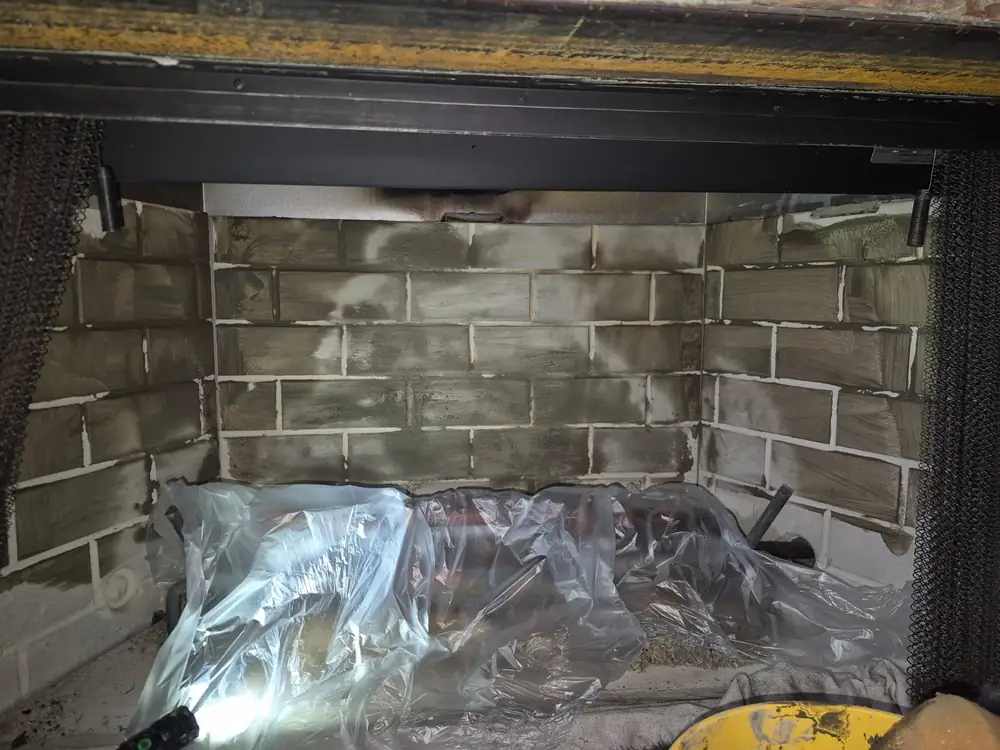
- The room is protected. Drop cloths go down, the fireplace opening is sealed, and a HEPA vacuum runs to keep soot inside the chimney.
- The flue is swept. Brushes, rods or rotary tools loosen buildup from top to bottom. The method depends on the liner and the type of creosote.
- Soot and debris come out. The loosened material is vacuumed from the smoke shelf and firebox. If the sweep finds glazed creosote, a blockage or liner damage, they should stop and explain it rather than treat it as a routine clean.
- We review accessible parts. Firebox, damper, smoke chamber, flue, cap, crown and masonry.
- We explain the findings. Photos or video help when the problem is inside the flue or up on the roof.
Most standard sweeps take about an hour. Heavy buildup, more than one flue or a camera scan adds time. See how long a chimney sweep takes for what affects it.
What You Should Get After the Visit
Much of the flue is out of view. Ask what documentation is included:
- Photos of relevant accessible conditions when offered
- A description of the components evaluated
- An explanation of any identified limitations or safety concerns
- Written prices for any repair they recommend, before the work starts
We explain our findings and any additional work we recommend before you approve repairs.
Sweeping vs. Inspection
A sweep removes buildup. An inspection checks the condition of the whole system. A chimney you barely use may have little creosote and still have a nest, a cracked cap or a leak. Most visits include a basic visual check, and NFPA 211 calls for an inspection every year.
If you’re buying or selling a home, changing appliances or recovering from a chimney fire, you’ll likely need a Level 2 chimney inspection with a camera. See chimney inspection levels explained and chimney cleaning vs. inspection for the details.
What a Chimney Sweep Doesn’t Do
A sweep cleans and inspects. Some jobs need a different visit or a different trade:
- Rebuilding brick or a crownthat’s masonry work. See chimney repair.
- Fixing roof leaks around the chimneythat’s flashing work.
- Removing glazed (stage 3) creosotea separate removal job. See soot and creosote removal.
- Fixing gas valves or pilotsthat needs a gas fireplace technician.
How Often Should You Have Your Chimney Swept?
Get it inspected every year, and swept when the inspection finds buildup. Not every chimney requires cleaning every year.
| How You Use It | What to Do |
|---|---|
| Wood fireplace, used often | Annual inspection, sweep whenever buildup calls for it (usually yearly) |
| Wood fireplace, used occasionally | Annual inspection, sweep only when needed |
| Wood stove | Annual inspection, sweep based on deposits and the manufacturer’s guidance |
| Pellet stove | Vent cleaning per the manufacturer, plus a venting check |
| Gas fireplace | Annual check of the vent or chimney, even with no creosote |
For the full schedule, see how often to have your chimney swept.
Signs You Need a Chimney Sweep
- Smoke coming into the room or a fire that won’t draw
- Heavy soot around the fireplace or damper
- A strong smoky or tar-like smell
- Black flakes or debris falling into the firebox
- Animal sounds, leaves or nesting material
- Water stains, rust or cracked masonry
- No inspection in the past year
Smoke in the room isn’t normal. Wet wood can cause it, but so can a blockage or a draft problem.
Do Chimney Sweeps Work on Gas Fireplaces?
Yes, but the job is different. Gas doesn’t make creosote, but the vent can still collect nests and debris, corrode, or develop liner damage. Some gas fireplaces vent straight through the wall instead of up a chimney. Follow the manufacturer’s maintenance schedule and have the vent checked. Our gas fireplace cleaning service covers it.
Pellet stoves also need regular vent cleaning. They make ash and fine deposits that build up in the exhaust. Follow the appliance manual.
Can You Sweep Your Own Chimney?
You can scoop out cold ashes and keep an eye on the firebox. A full sweep is different. Professional rods reach the whole flue, the vacuum keeps soot out of the house, and nobody has to balance on a steep roof. A DIY brush also can’t tell you whether the liner is cracked or the cap is damaged.
Creosote sweeping logs don’t replace a sweep either. See do chimney sweep logs really work?
Tools a Professional Sweep Uses
- Brushes and flexible rods
- Rotary sweeping heads and whips for tougher buildup
- A HEPA vacuum
- Drop cloths and fireplace covers
- Inspection lights and a flue camera
What Does a Chimney Sweep Cost in Atlanta?
Most Atlanta sweeps cost $199 to $399. The price depends on how much buildup there is, how many flues you have, and how easy the roof is to reach. Heavy or glazed creosote costs more because it takes extra tools and time.
Before you book, ask what’s included: cleaning only, a Level 1 inspection, or a Level 2 camera scan. For the full breakdown, see chimney sweep cost in Atlanta. Choosing between companies? Read how to choose a chimney sweep in Atlanta.
Frequently Asked Questions
Buildup approaching about 1/8 inch is a common indicator that sweeping may be needed, but avoid reaching into the flue to measure it. Other signs are a campfire smell in the room, black flakes in the firebox, and fires that are hard to start.
It shouldn’t be. A sweep lays drop cloths, seals the fireplace opening and runs a HEPA vacuum to keep soot in the chimney and out of the room.
It helps to be home at the start, so the sweep can get into the fireplace and ask about any problems. You can step away during the cleaning.
Yes. Many chimneys can be swept from the firebox with rotary rods. The sweep still checks the cap and crown from the roof when it’s safe to go up.


