 Skip to content


Your fireplace hasn’t seen a fire since February, yet the living room smells like an old campfire every July afternoon. That is one of the most common calls we get in Atlanta, and the answer is rarely just “it’s dirty.”
A bad chimney smell usually comes from one of seven sources: creosote, water, wildlife, rotting debris, negative air pressure, a venting problem, or a missing cap. Often two or three of them work together. The odor itself tells you where to start looking, and the timing (after rain, when the AC runs, in summer heat) narrows it down further.
The Quick Answer
Most chimney odors trace back to these seven causes:
- Creosote and sootsmoky, tar-like or burnt-barbecue smell.
- Water getting indamp, musty or sour smell.
- Birds, squirrels or other animalsdroppings, urine or a decaying smell.
- Leaves and organic debrisearthy, compost-like smell.
- Negative air pressureodor pulled into the room when fans or HVAC equipment run.
- Liner or venting problemssmoke or combustion odors during use.
- Missing or damaged caplets rain, animals and leaves in over and over.
Atlanta’s humidity, heavy rain and summer heat make every one of these worse.
What Does Your Chimney Smell Like?
Pay attention to the odor and when it shows up. Both point to the source.
| Odor | Possible cause | Often noticed |
|---|---|---|
| Smoky or campfire | Soot or creosote | Hot, humid periods |
| Musty | Moisture | During or after rain |
| Rotting | Wildlife or debris | Warm weather |
| Earthy | Wet leaves | After rain or inactivity |
| Stale chimney air | Downdraft | When exhaust fans run |
| Combustion fumes | Venting issue | During appliance operation |
| Rotten eggs | Possible gas leak | Treat as urgent |
If you smell rotten eggs near a gas appliance, leave the building immediately. Avoid switches or other potential ignition sources and contact emergency services or your gas utility from outside. See Atlanta Gas Light’s gas safety page. Carbon monoxide has no smell at all, so a working CO alarm is the only way to know it’s there.
The 7 Causes of a Bad Chimney Smell
1. Creosote and Soot: Why Your Chimney Smells Like a Campfire
“It smells like someone burned wood yesterday, but we haven’t used it since winter.” We hear that every summer.
Burning wood sends smoke, gases and unburned particles up the flue. Some of it sticks to the walls as soot and creosote. Heat and humidity release the odor from those deposits, and if air moves down the chimney instead of up, it lands in your living room. CSIA names creosote, summer humidity and house-pressure problems as the main drivers of lingering chimney odors.
Signs creosote is the source: the fireplace smells smoky when cold, the odor peaks in July and August, you see dark soot around the damper, or the chimney hasn’t been swept in a year or more.
The fix: a sweep removes loose soot and creosote. Glazed, tar-like creosote needs chemical or rotary removal. Our chimney soot removal service covers both. Porous brick can hold some odor after cleaning, so if the smell keeps coming back each summer, check whether air is being pulled down the flue too.
2. Water Getting In: Why Your Chimney Smells Musty After Rain
Water enters through cracked crowns, failed flashing, open mortar joints, missing caps and rusted chase covers. Once it reaches soot, ash or debris, the musty smell follows. Repeated wetting can also grow mildew on the materials inside.
The biggest clue is timing. If the fireplace smells worse during or right after rain, look for a leak.
Other signs: rust on the damper, water stains near the fireplace, white powder on the brick, crumbling mortar, or water dripping into the firebox.
The fix: repair where the water gets in. That may mean a new cap, crown sealing or rebuild, flashing repair, or tuckpointing. Sound but thirsty brick may benefit from a vapor-permeable water repellent, but sealant can’t close an open crack or replace failed flashing. Related reading: Does Your Chimney Need Waterproofing? and Why Is My Chimney Leaking Water Inside?
3. Birds, Squirrels and Other Animals
Atlanta’s tree canopy brings plenty of wildlife, and an open flue looks like a good place to nest. The odor comes from droppings, urine, old nesting material, insects, or an animal that got trapped and died.
An animal smell is sharper than creosote. People often describe it as “something died in my fireplace.” Watch for scratching or chirping, twigs in the firebox, feathers near the damper, or flies around the fireplace.
What to do: don’t light a fire to smoke animals out. A nest can block the flue and cause a smoke or fire hazard. Chimney swifts are federally protected, so active nests, eggs and birds can’t be removed until the birds leave for the season. Our animal removal team handles the removal and cleanup, then fits a cap to keep them out. Taking out the nest alone often doesn’t kill the smell. Droppings left on the smoke shelf need cleaning and sanitizing too.
4. Rotting Leaves and Organic Debris
Not every rotten smell is an animal. Oak and pine leaves blow into uncapped flues, pile up on the smoke shelf, get wet and start to decompose.
Signs: an earthy or sour odor after rain, leaves or twigs in the firebox, or a chimney that sat unused for months.
The fix: clear the smoke shelf and damper area, sanitize if the odor stays, and install or repair the cap so it doesn’t happen again.
5. Negative Air Pressure: Why the Fireplace Smells When the AC Runs
“It’s fine until the air conditioning kicks on. Then the room smells like soot.” This one confuses a lot of homeowners.
Your chimney is an open path between the house and the outdoors. When pressure inside drops below pressure outside, air flows in through the chimney and brings the soot smell with it. The usual culprits are range hoods, bath fans, dryers, leaky return ducts and unbalanced HVAC airflow. The AC itself isn’t the cause, but it can be part of the imbalance.
A simple test: if the smell shows up when exhaust fans run and fades when they stop, airflow is part of the problem. Cracking a nearby window and noticing the smell drop is another clue, though it doesn’t prove the cause.
The fix: balance the HVAC, seal duct leaks, add makeup air where needed, or fit a top-sealing damper on a suitable wood-burning fireplace. A top-sealing damper closes tighter than a throat damper, but you have to open it before every fire, and it can’t go on a flue that also vents a gas appliance. It also won’t remove creosote already inside. See our guide to chimney damper repair and replacement.
6. Damaged Liners or Venting Problems
Some odors point to a chimney that isn’t venting safely. Blocked flues, cracked tiles, collapsed liner sections and bad appliance connections can all let combustion gases into the room. A damaged liner doesn’t have its own smell. The concern is whether smoke and gases still go up and out.
Warning signs: smoke in the room, soot where it shouldn’t be, strong fumes during use, or signs of a past chimney fire.
What to do: stop using the fireplace or appliance and book an inspection. A Level 2 camera inspection is often the right call when hidden damage is suspected (chimney inspection levels explained). Some cracks can be repaired, others need relining. Our chimney liner damage guide explains how that decision gets made. Nobody should sell you a $5,000 liner based on an odor alone. Ask for the camera footage.
7. Missing or Damaged Chimney Cap
The cap keeps out rain, animals and leaves, which covers four of the causes above. When it’s missing, bent or rusted through, the smell keeps coming back no matter how often you clean.
Signs: you can see an open flue from the ground, water drips into the firebox in storms, animals keep getting in, or the mesh is broken.
Factory-built fireplaces have both a flue cap and a metal chase cover. A rusted chase cover can let water in even when the cap looks fine. See chimney cap replacement for options and pricing.
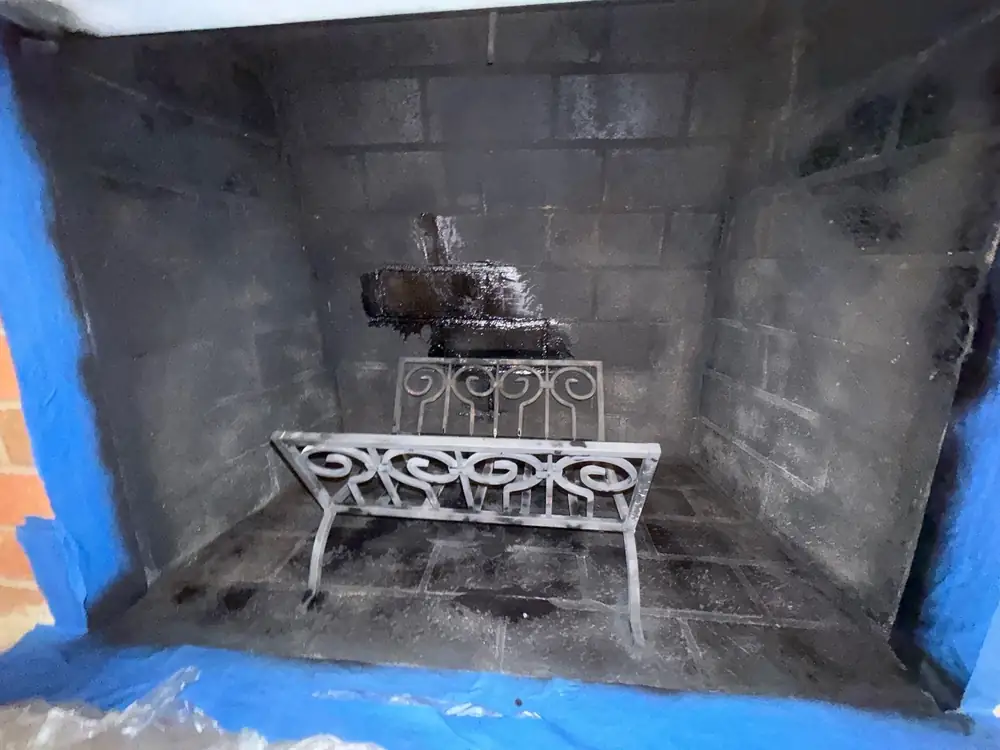
The Midtown Smell That Turned Out to Be Three Problems
A Midtown homeowner called about a sour, rotting smell that took over the living room every afternoon. It got worse in summer and peaked when the central air ran. They hadn’t used the fireplace in months.
During the visit described here, our technician Trell examined the flue and identified several contributing conditions:
- A nest above the damperA bird had moved into the uncapped chimney, and the debris was rotting.
- Wet soot and creosoteWith no cap, rain had soaked the deposits for months.
- Negative pressureWhen the cooling system ran, the house pulled air down the chimney and into the room.
No air freshener was going to fix that. The reported work involved removing nesting material, cleaning the affected chimney and fitting a cap. The homeowner reported that the smell improved. One smell, three causes, which is why we diagnose before we quote.
Why Chimney Smells Get Worse in Atlanta Summers
- Heat releases odorWarm deposits give off more smell, so a fireplace that’s fine in January can reek in July.
- Humidity soaks into soot and brickDamp surfaces make stale smoke and musty odors stronger.
- Summer air pressure can reverse the draftIn many homes, cool indoor air and exhaust fans pull outdoor air down an unused chimney.
- Decay speeds upTrapped nests, droppings and leaves rot faster in the heat.
A fireplace can look clean and still smell bad if water, debris or pressure problems go unfixed.
How We Track Down a Chimney Smell
- We ask about the smell and its timingWhat it smells like, when it started, and whether rain, the AC or exhaust fans change it.
- We check the firebox, damper and smoke shelfDebris often hides on the smoke shelf even when the firebox looks spotless.
- We run a camera up the flue when neededIt shows creosote, nests, water stains and cracked tiles you can’t see from below.
- We check the outsideCap, crown, brick, mortar, flashing and chase cover.
- We look at draft and house pressureIf fans or HVAC trigger the smell, we separate what’s producing the odor from what’s pulling it inside.
For the difference between a cleaning visit and a diagnostic one, see Chimney Cleaning vs. Chimney Inspection.
How to Get Rid of a Chimney Smell for Good
| Condition | Possible response |
|---|---|
| Soot or creosote | Cleaning or specialized removal |
| Animal waste or rotting debris | Appropriate removal and cleaning |
| Animal entry | Assess opening and suitable cap |
| Water entering masonry | Repair the entry point |
| Downdraft | Assess airflow and pressure |
| Flue or vent damage | Evaluate repair or relining |
The rule is simple. Remove what’s producing the smell, fix what let it happen, and stop the airflow carrying it inside. Sanitizing sprays help after debris removal, but they don’t replace it.
What It Costs to Fix a Chimney Smell in Atlanta (2026)
The final cost depends on the chimney and the work required. Roof height, access, chimney type and how much contamination there is all affect the final price.
| Possible service | General estimate |
|---|---|
| Standard chimney sweep | $199 to $399 |
| Debris removal or sanitation | Quote based on scope |
| Chimney cap replacement | $300 to $500 |
| Level 1 inspection | $160 to $300 |
| Level 2 inspection | $260 to $460 |
| Top-sealing damper | $500 to $1,000+ |
| Crown or water-related masonry work | Quote based on repairs |
| Relining or structural work | Quote based on damage |
Many smell problems get fixed for a few hundred dollars when the cause is soot, debris or a missing cap. Costs climb with glazed creosote, hidden water damage, liner failure or ventilation work. Get the cause confirmed before paying for an expensive fix.
Why Does My Chimney Still Smell After Cleaning?
You paid for a sweep, and two days later the room still smells like a campfire. That doesn’t always mean the sweep was done badly. A sweep removes deposits. It doesn’t fix the other causes.
- Brick holds odorPorous masonry keeps some smell even after the deposits are gone.
- The house still pulls air downNegative pressure carries whatever odor remains.
- Water still gets inA cracked crown or missing cap keeps re-wetting the flue.
- Debris remains on the smoke shelfA basic sweep doesn’t always reach it.
- Animal waste wasn’t fully cleanedDroppings in mortar joints need sanitizing, not just brushing.
If the smell comes back, ask for a diagnostic inspection instead of a second sweep. Tell the technician when it returns and whether rain or fans change it.
DIY Fixes That Don’t Work
- Candles and air fresheners mask the smell for an hour. The source is still there.
- Baking soda or charcoal in the firebox may soak up a mild odor but won’t stop a leak or a downdraft.
- Closing the damper helps a little, but most throat dampers don’t seal tight. Never close it while a fire or a gas appliance is running.
- Burning a hot fire to “burn it out” can ignite creosote or a nest and start a chimney fire. Don’t.
- Waterproofing over a leak won’t close a crown crack or fix flashing. Repair the entry point first.
When Is a Chimney Smell Dangerous?
Most odors can wait for a normal appointment. These can’t:
- Rotten eggs near a gas fireplace. Leave, then call 911 or the gas company from outside.
- Smoke filling the room from a burning fire. Put it out safely and stop using the fireplace. If there’s heavy smoke or heat in the walls, get out and call 911.
- A CO alarm or symptoms like headache, dizziness, nausea or confusion. Get everyone into fresh air and call for help. The CDC warns that CO exposure can be fatal.
- A sharp burning or hot-plastic smell. It may not be the chimney at all. Stop using the equipment and get it checked.
- A blocked flue. Don’t light a fire until a nest, debris or collapsed masonry is cleared.
A mild smoky or musty odor in humid weather with none of those signs isn’t an emergency, but it still deserves an inspection before the next burning season.
How to Keep the Smell From Coming Back
- Sweep in spring when neededRemoving soot after the burning season heads off summer odors.
- Keep a good cap onCheck it from the ground after big storms.
- Control humidity and airflowKeep indoor humidity around 30 to 50%, but know a dehumidifier won’t fix a leak or a downdraft.
- Burn dry woodThe EPA recommends firewood under 20% moisture. Wet wood makes more creosote.
| When | What to do |
|---|---|
| During fireplace use | Burn suitable, seasoned wood |
| Every year | Arrange a chimney inspection |
| After burning season | Sweep when deposits require removal |
| Before summer | Check for odors and leaks |
| After significant storms | Check visible cap condition from ground |
Frequently Asked Questions
Heat and humidity release odor from soot and damp materials, and summer air pressure inside many homes pulls chimney air down into the room.
Old creosote is the usual cause, often pulled in by negative pressure. Fresh smoke or smoke entering the room is a different matter and needs a prompt inspection.
Water is getting in through the cap, crown, flashing or brick. Finding and repairing the entry point stops the smell.
A trapped animal, droppings or rotting nest material on the smoke shelf. An inspection confirms which, and removal plus sanitizing clears it.
The timing points to a pressure imbalance. Leaky return ducts, exhaust fans and unbalanced airflow can pull air down the flue while the system runs.
A strong, acrid smell like hot tar or burning asphalt, often with a loud roaring or popping sound and dense smoke. If you suspect a chimney fire, get everyone out and call 911. Have the chimney inspected before using it again.
Some can. Rotten eggs, smoke in the room, a blocked flue or a CO alarm all need immediate action. Carbon monoxide is odorless, so keep working CO alarms on every floor.


