 Skip to content

The short version
- Gas fireplace cleaning in Atlanta typically costs $150 to $250 for basic maintenance or $250 to $350 for a comprehensive service. These are typical Atlanta price ranges, not Clean Air quotes.
- A gas fireplace can develop problems even when you haven’t used it in months. Dust, pet hair, pollen, insects and moisture build up over Georgia’s long, humid summers.
- A fireplace that needs cleaning and a fireplace that needs repair can show nearly identical symptoms, so good gas fireplace cleaning starts with a diagnosis.
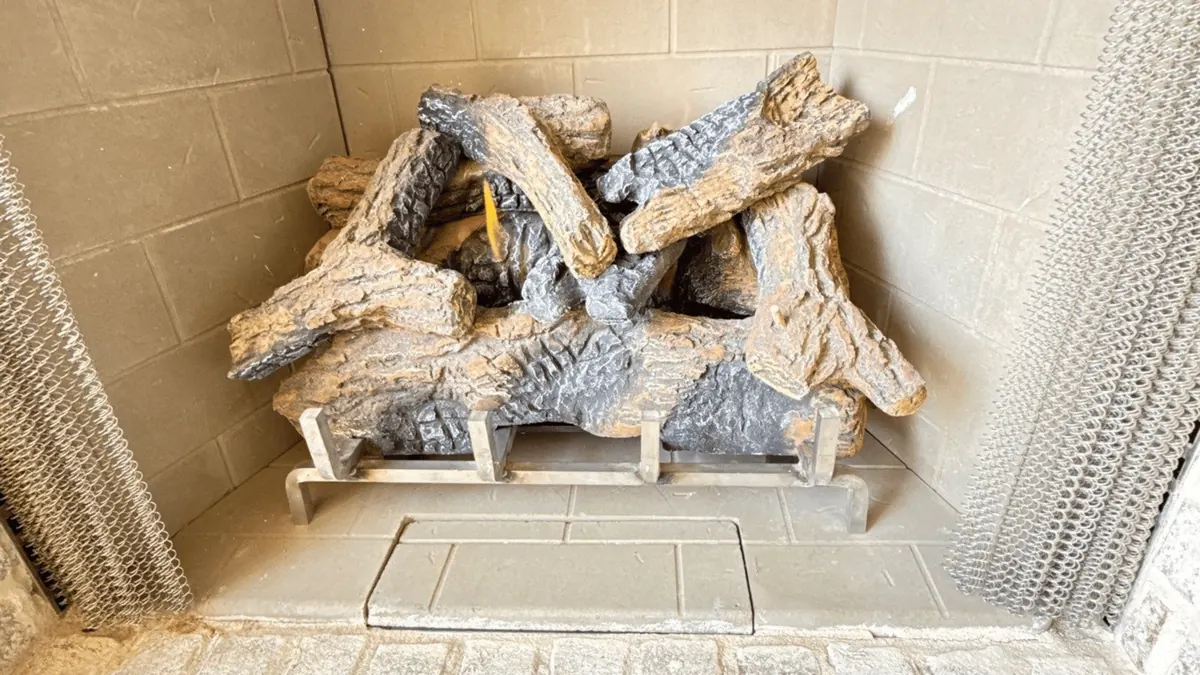
Gas fireplace cleaning in Atlanta typically costs $150 to $250 for basic maintenance or $250 to $350 for a comprehensive service (typical Atlanta price ranges, not Clean Air quotes). But if your fireplace won’t ignite, keeps shutting off, produces soot, or smells unusual, professional diagnostics may matter more than cleaning alone.
Here’s what many Atlanta homeowners don’t realize: your gas fireplace can develop problems even when you haven’t used it in months. During Georgia’s long, humid summers, dust, pet hair, pollen, insects, and moisture can build up inside an idle fireplace. By the time temperatures drop in October or November, a fireplace that worked perfectly last winter may struggle to ignite or shut down unexpectedly.
At Clean Air Duct Cleaning & Chimney, we’ve handled everything from dusty burner assemblies and failing remote receivers to obstructed vent terminations, for homeowners across Atlanta, Sandy Springs, Roswell, Marietta, Alpharetta, Dunwoody, Brookhaven, Decatur, and Smyrna. In one Buckhead call, a homeowner was weighing a multi-thousand-dollar replacement for a fireplace that needed only a relatively minor electrical repair and maintenance. In an Inman Park call, a gas fireplace kept shutting down after a few minutes, and the problem wasn’t the pilot assembly at all. It was an obstructed exterior vent.
Those calls show an important principle: a fireplace that needs cleaning and a fireplace that needs repair can show nearly identical symptoms. That’s why good gas fireplace cleaning starts with a diagnosis.
In this guide, we’ll cover seven warning signs your gas fireplace needs professional attention, what happens during a gas fireplace cleaning visit, realistic 2026 Atlanta cleaning and repair costs, and how to avoid paying for parts you don’t need.
Quick Answer: 7 Signs Your Gas Fireplace Needs Service
| Warning Sign | Possible Cause | What to Do |
|---|---|---|
| Rotten-egg or sulfur odor | Potential gas leak | Evacuate immediately |
| Excessive black soot | Combustion or log-placement problem | Stop use and schedule an evaluation |
| Cloudy or hazy glass | Normal deposits, aging residue, or a maintenance need | Schedule appropriate cleaning |
| Unusual flame appearance | Blocked ports, incorrect settings, venting issue | Stop use if abnormal or worsening |
| Pilot light or ignition failures | Dirty pilot, batteries, sensor or control fault | Stop repeated attempts; arrange service |
| Hissing, banging, or unusual noises | Gas leak, delayed ignition, blower or component issue | Evaluate severity; stop use when suspicious |
| Reduced heat or repeated shutdowns | Blower, controls, venting, or burner problem | Schedule professional diagnosis |
7 Signs You Need Gas Fireplace Cleaning or Professional Service
Tick the ones you have noticed at home and we will tell you what we suggest doing next. Each sign is explained below.
What Each Warning Sign Means
1. Rotten-Egg or Sulfur Odor: A Possible Gas Leak
The most urgent gas fireplace warning sign is the rotten-egg smell associated with natural gas. Suppliers add an odorant so people can recognize potential leaks, so if you notice it near your fireplace, don’t assume it’s dust burning off after the summer. Possible causes include a leaking supply connection, damaged or deteriorating fittings, a malfunctioning valve, or a disconnected or damaged gas line.
If you suspect a gas leak:
- Leave the building immediately.
- Avoid switches, electronics, flames, and other ignition sources while you’re inside.
- From a safe distance outside, call 911 and Atlanta Gas Light at 877-427-4321.
- Don’t go back in until emergency personnel say it’s safe.
A gas leak is not something to handle by scheduling routine gas fireplace cleaning. Atlanta Gas Light’s gas safety page explains what to do when a leak is suspected.
What about a burning-dust smell? A mild dusty odor can happen when a gas fireplace is first used after months of inactivity, and new appliances can give off temporary odors as manufacturing residues cure. But persistent, worsening, or unfamiliar chemical odors deserve evaluation, especially alongside soot, abnormal flames, or symptoms of poor indoor air quality. Never use smell alone to decide whether a gas fireplace is safe, because carbon monoxide is odorless.
2. Excessive Black Soot on the Glass or Ceramic Logs
Gas fireplaces don’t produce the ash and creosote that wood-burning fireplaces do, but gas combustion can still produce soot under certain conditions. You might notice black stains on the ceramic logs, dark marks on the interior walls, black residue building up on the glass, soot around the opening, or a sudden increase in staining compared with previous use.
Common causes include incorrect ceramic log placement (when the flame strikes the wrong surface, called flame impingement, soot can form), dirty or obstructed burner components, incorrect gas pressure or combustion settings, and venting problems.
Is a little soot normal? It depends on the appliance. Some vented decorative gas-log systems produce some soot in normal operation, while sealed direct-vent fireplaces generally shouldn’t develop excessive black deposits. The question is whether it matches the manufacturer’s expectations for your model. If soot suddenly increases or shows up in unusual places, stop using the fireplace until the cause is assessed. Wiping soot away without fixing the underlying combustion problem lets it come back.
3. Cloudy, Hazy, or Discolored Fireplace Glass
One of the most common reasons homeowners request gas fireplace cleaning in Atlanta is a cloudy glass front. The fireplace still turns on and the flames look relatively normal, but the glass is covered with a white, gray, or hazy film. Depending on the appliance, that film can come from residue released while manufacturing materials cure, normal combustion byproducts, deposits from interior materials, moisture and temperature changes, or residue built up over years of use. It’s especially noticeable on some direct-vent fireplaces.
A thin film is often a maintenance issue rather than evidence of dangerous combustion, but glass that’s severely stained, deteriorated, cracked, or paired with unusual soot deserves a closer look. Professional cleaning can often restore it: a technician uses a nonabrasive product approved for the fireplace glass and follows the manufacturer’s procedure, though some deposits can become difficult or impossible to remove completely.
4. Unusual Flame Colors, Lazy Flames, or Flickering
Gas fireplaces are designed to produce a particular flame appearance. Depending on the model, flames may include blue, yellow, or orange tones, and some change as the appliance warms up, so a yellow flame isn’t automatically a problem.
Be concerned when flames suddenly become unusually tall or unstable, lift or separate from the burner, behave differently from previous seasons, come with a sudden increase in soot, repeatedly disappear before a shutdown, ignite unevenly, or ignite late or unusually forcefully. Possible causes include debris in the burner components, incorrect log placement, venting restrictions, combustion-air problems, gas-pressure issues, or damaged or incorrectly installed parts.
Flame appearance gives clues, but it can’t identify the cause on its own. A technician may need to inspect the venting, review the manufacturer’s specifications, and run appliance-specific tests. If your gas fireplace’s flames begin behaving abnormally, stop using it until the condition is diagnosed.
5. Pilot Light Problems or Repeated Ignition Failures
A pilot that won’t light or stay lit may have a dirty pilot assembly, insufficient flame contact, a faulty thermocouple or thermopile, or another ignition problem.
Cleaning can resolve some buildup-related issues, but defective components require diagnosis and repair. If the pilot repeatedly goes out, stop trying to relight it and arrange professional service.
For pilot-specific troubleshooting and repairs, see our pilot system repair service.
6. Strange Noises: Hissing, Popping, Rattling, or Banging
Gas fireplaces make some normal operating sounds: metal parts can click or tick as they expand and contract with heating and cooling, and blower fans produce a steady hum. But not every noise should be dismissed.
A persistent or unfamiliar hiss may involve gas flow or a leak. If you suspect escaping gas, evacuate immediately.
A forceful, unexpected ignition can signal delayed ignition or another operating problem. Stop using the fireplace until it’s evaluated.
Loose components, fans, or mounting hardware are likely.
Fan bearings or other mechanical parts may need attention.
That points to a problem in the ignition sequence or control system.
What can gas fireplace cleaning fix here? Dust removal can help when debris is interfering with accessible fan components or approved burner areas, but failing motors, damaged ignition components, or loose mechanical parts may need repair or replacement. The key distinction: normal thermal-expansion noise is different from sudden, unfamiliar, or forceful operating noises.
7. Reduced Heat Output or a Fireplace That Keeps Shutting Off
A gas fireplace that produces less heat than usual may need maintenance or a mechanical repair. It can show up as a blower that doesn’t run correctly, a burner that shuts down unexpectedly, a remote that responds intermittently, a fireplace that runs only briefly, or a unit that never reaches its expected operating level. Potential causes include dirty airflow passages, blower problems, gas-control faults, thermostat or remote issues, burner problems, venting restrictions, and safety-system shutdowns.
Should you replace the fireplace? Not before finding out what’s wrong. A malfunctioning receiver, sensor, blower, or other replaceable component can cost far less than a new appliance, which is exactly where a professional diagnostic visit pays for itself.
If your fireplace keeps shutting off after cleaning, the problem may involve ignition components, controls, or venting rather than ordinary buildup. Our gas fireplace repair service addresses these operating problems.
Two Real Atlanta Examples: Inman Park and Buckhead
Pick a call to see what the homeowner noticed, what we found and what it taught us.
A homeowner in Inman Park contacted us in late October because their direct-vent gas fireplace was behaving strangely. It had sat idle all summer, and when they tried to use it, it would ignite but shut down after roughly three or four minutes. They suspected a dirty pilot assembly or insects blocking a small opening.
There was heavy pet hair and dust buildup, consistent with a home where two golden retrievers lived, and a thick cloudy film on the glass. Both could be handled in routine gas fireplace cleaning. But during operational diagnosis, our technician noticed an unusual flame pattern tied to the shutdown. Instead of immediately replacing the thermopile, he widened the investigation to the venting system.
Inspecting the exterior vent termination revealed bird nesting material obstructing the venting area. That changed the scope of the job, because the obstruction had to be addressed before the fireplace could go back into service. The work included removing dust and pet dander, cleaning appropriate burner and interior components, cleaning the glass, addressing the obstructed termination, installing a suitable replacement termination component, and checking operation afterward.
A gas fireplace that shuts off after a few minutes doesn’t necessarily have a failed thermopile or gas valve. Sometimes the problem is elsewhere in the combustion or venting system, and the correct diagnosis matters more than replacing the first suspicious part.
Bird-related work has to be handled lawfully. Active nests and protected migratory birds, including chimney swifts, can’t simply be disturbed or removed, and any replacement vent cap has to be approved for that fireplace system. (Our blocked chimney guide covers the same nesting problem on masonry chimneys.)
A homeowner in Buckhead had a gas fireplace that no longer responded properly, and after receiving an estimate in the range of $3,500 to $6,000, they were considering a complete replacement. Understandably, they assumed a major internal component had failed.
After investigating the system, our technician determined that neither the fireplace structure nor the main gas valve was the source of the complaint. The issues were a failed low-voltage receiver, an oxidized thermopile sensor, and general cleaning and maintenance needs. He addressed the receiver, serviced the sensor and controls, replaced batteries, and performed cleaning and operational checks. The total work cost less than $350.
The point isn’t that every gas fireplace can be fixed for $350. It’s that a completely unresponsive fireplace can sometimes have a relatively minor electrical or control-system problem. Before approving a full replacement, ask the contractor which specific component failed, what evidence supports that diagnosis, and why it can’t be repaired with an approved replacement part.
Vented, Vent-Free, and Direct-Vent Gas Fireplaces: What’s the Difference?
Not every gas fireplace works the same way, and that matters because inspection, cleaning methods, ventilation requirements, and likely problems all depend on the appliance type.
Uses a chimney or approved vent system.
Soot, log positioning, damper requirements, chimney obstructions.
Vented gas logs usually sit inside a fireplace with a chimney, and their venting and damper arrangements have to follow the installation instructions. They can produce soot, and the chimney itself needs regular attention. See our guide to the three chimney inspection levels. If the fireplace they sit in has a damaged firebox, that’s a separate firebox repair.
Releases combustion products into the room.
Burner cleanliness, oxygen-depletion safety controls, indoor-air considerations.
Vent-free gas logs operate without a traditional chimney exhaust. Because combustion products enter the occupied space, correct installation, maintenance, ventilation requirements, and safety-system operation matter even more, and these appliances have model-specific restrictions and local-code considerations.
Sealed combustion system with dedicated intake and exhaust pathways.
Glass deposits, door seals, vent terminations, ignition controls.
Direct-vent fireplaces draw combustion air from outside and send exhaust outdoors through a sealed system, so the glass assembly, venting, seals, and termination are all essential parts. A direct-vent fireplace should never be run with cracked glass, a defective required seal, or an improperly installed glass assembly.
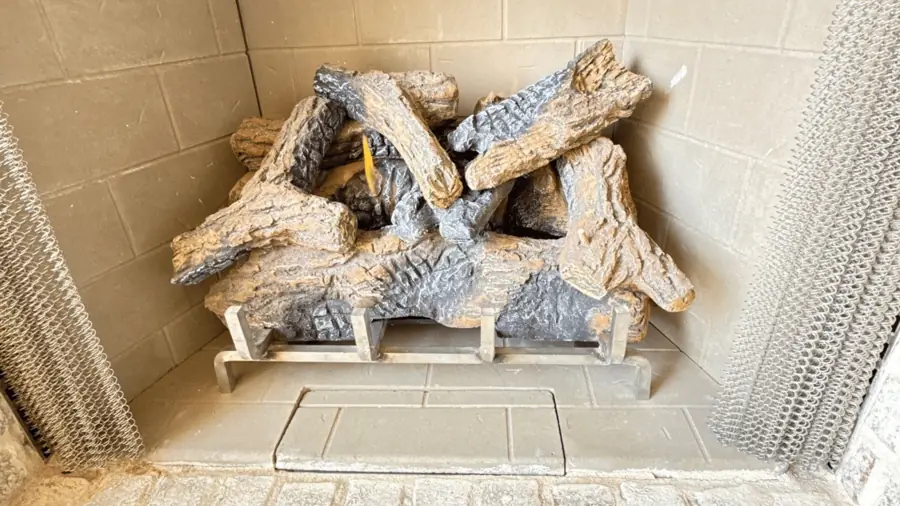
Why does the type affect gas fireplace cleaning? The cleaning method and the components that can be serviced aren’t interchangeable, so a technician should identify the manufacturer and model before disassembling or adjusting anything.
What Happens During Professional Gas Fireplace Cleaning
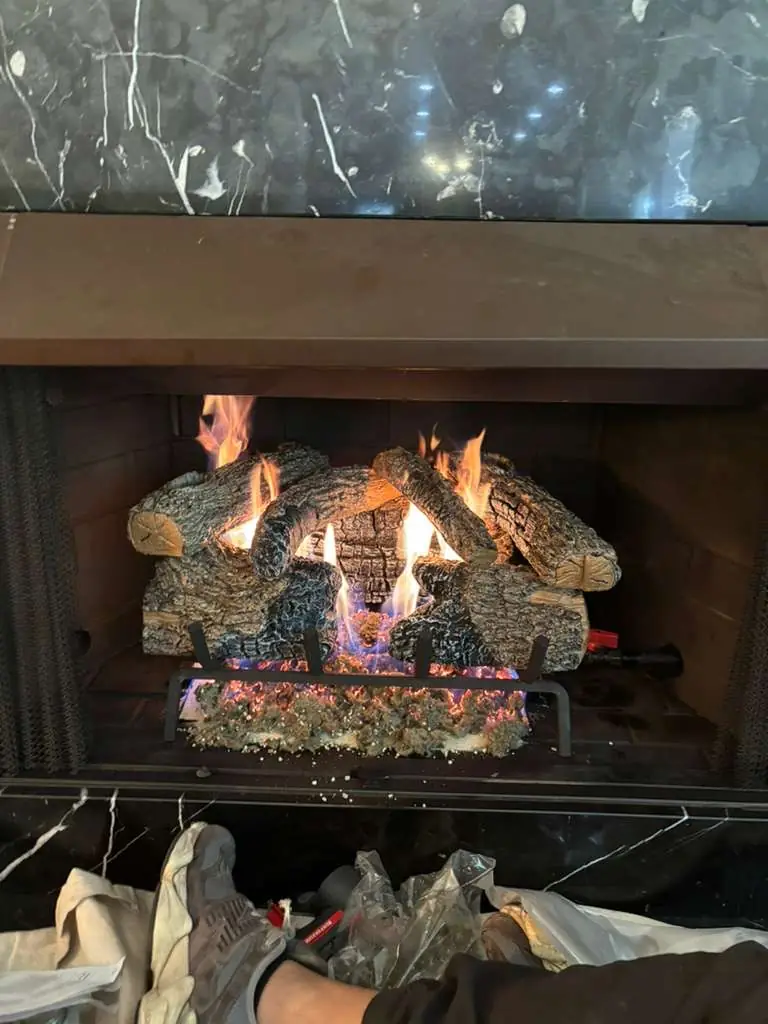
At Clean Air Duct Cleaning & Chimney, gas fireplace cleaning goes beyond polishing the glass. The purpose is to evaluate the appliance’s condition, clean appropriate components, identify performance problems, and explain any repairs that may be needed. The exact procedure depends on the fireplace model.
- Initial inspection and diagnosticsThe technician starts by assessing the appliance and its surroundings: visible gas connections, signs of corrosion, firebox condition, accessible vent components, glass and gasket condition, ignition operation, visible damage, and the manufacturer and model. Where appropriate, an electronic combustible-gas detector can help identify potential leaks, and any suspected gas leakage calls for appropriate safety procedures.
- Glass and interior cleaningOnce the appliance is cool and safely prepared, the technician cleans accessible areas with appropriate products and tools, removing dust, pet hair, pollen, loose debris, glass deposits, and dirt in accessible control compartments, taking care not to damage sensitive controls, wiring, or glass surfaces.
- Burner and ignition-system inspectionDepending on the model, the technician evaluates the pilot assembly, igniter, thermocouple, thermopile, electronic ignition module, wiring and switches, and burner condition. Cleaning and adjustment follow the manufacturer’s instructions, and if a component is defective, cleaning alone may not fix it.
- Logs, venting, and combustion evaluationCeramic logs and decorative media are checked for incorrect positioning, damage, excessive soot, and missing components, and repositioned only according to the manufacturer’s layout instructions, never for appearance alone. Depending on the installation and symptoms, the technician may also inspect the exterior vent termination, visible venting connections, airflow openings, flame behavior, relevant gas-pressure readings, and combustion conditions. A blocked vent, damaged seal, or other operating defect calls for more extensive investigation.
- Final testing and explanationAfter the work, the technician evaluates the fireplace’s operation and documents the findings, which may include gas leak checks, ignition performance, manufacturer-specified measurements, and carbon monoxide monitoring where appropriate. A single ambient carbon monoxide reading, even one showing 0 ppm, can’t guarantee that every aspect of a fireplace is safe. The complete assessment depends on the appliance, the venting condition, operating tests, and the applicable instructions.
- Focuses on visible dust and glass deposits
- May clean accessible interior surfaces
- Improves appearance
- Limited mechanical evaluation
- Doesn’t necessarily assess venting
- Includes inspection and appropriate diagnostics
- Evaluates ignition and relevant controls
- Investigates operating complaints
- May include gas-pressure and electrical testing when indicated
- Evaluates accessible venting and related concerns
The cleaning process differs between direct-vent fireplaces, vented gas logs, and vent-free systems. For maintenance inclusions and annual tune-ups, visit our gas fireplace cleaning service page.
The goal isn’t to replace as many components as possible. It’s to find out what the fireplace actually needs.
Gas Fireplace Cleaning Cost in Atlanta: 2026 Price Guide
What should Metro Atlanta homeowners expect to pay for gas fireplace cleaning or repair? It depends on whether the appliance needs routine maintenance, troubleshooting, replacement parts, or venting work.
| Service | Typical Atlanta range |
|---|---|
| Standard gas fireplace cleaning | $150 to $250 |
| Comprehensive annual service | $250 to $350 |
| Pilot assembly cleaning or repair | $200 to $475 |
| Thermocouple or thermopile replacement | $150 to $325 |
| Blower motor or fan replacement | $300 to $650+ |
| Gas valve or ignition module replacement | $450 to $1,050+ |
| Venting or termination repairs | $300 to $1,200+ |
At Clean Air Duct Cleaning & Chimney, the initial service call and diagnostic inspection fee is $65, and that $65 is fully credited toward a cleaning package or mechanical repair you approve during the visit. If you approve a $250 cleaning package, for example, the $65 is credited toward it, not added on top. If you choose not to proceed with the recommended cleaning or repair, the diagnostic fee remains $65.
Gas fireplace repair in Atlanta costs more when a proprietary gas valve has to be replaced, the fireplace needs an expensive electronic control module, manufacturer-approved parts are hard to get, the blower assembly needs replacing, a damaged direct-vent glass assembly needs replacing, venting components are obstructed or deteriorated, or the appliance has several unrelated problems at once.
When to Get a Second Opinion
Consider one before approving major work if a contractor recommends replacing the whole fireplace without a clear diagnosis, proposes an expensive gas valve replacement without meaningful testing, can’t explain which components are defective, gives an estimate that seems out of proportion to the identified problem, or hasn’t considered a compatible repair option. A $1,000 repair isn’t automatically unreasonable, but it should come with a clear explanation of the work and the component costs. For related costs, see our 2026 chimney repair cost guide for Atlanta.
Ready to schedule service? Book gas fireplace cleaning for routine maintenance, or gas fireplace repair if the unit is not operating properly.
What Gas Fireplace Cleaning Won’t Fix
Cleaning removes dust, pet hair, and deposits. It doesn’t repair what’s failing. Gas fireplace cleaning on its own won’t fix:
- A gas leak. A leak is a safety emergency that calls for evacuation and a qualified gas technician, not a cleaning appointment.
- Failed controls or sensors. A dead receiver, an oxidized thermopile or thermocouple, or a faulty ignition module needs diagnosis and replacement. The Buckhead call shows how small those fixes can be.
- An obstructed or damaged vent termination. If nesting material or damage is blocking the vent, cleaning the inside of the fireplace won’t stop the shutdowns, as in the Inman Park example.
- Soot caused by combustion or log-placement problems. Wiping soot away without correcting flame impingement, gas pressure, or airflow means it comes back.
- Cracked or damaged glass. On a direct-vent fireplace, cracked glass has to be replaced per the manufacturer’s instructions, and the fireplace shouldn’t be run in the meantime.
- Problems in the chimney behind a vented gas log set. Debris, a damaged damper, or a failing flue needs its own chimney inspection and repair.
Since a fireplace that needs cleaning and one that needs repair can look identical, the diagnosis always comes first.
When to Stop Using Your Gas Fireplace
Not every dirty fireplace needs an urgent visit, but some symptoms mean continued operation may be unsafe.
- Rotten-egg gas odor: Evacuate immediately and contact emergency services
- Carbon monoxide alarm sounding: Leave for fresh air and seek emergency assistance
- Cracked sealed glass: Stop using the appliance
- Significant soot or new abnormal flames: Stop use until professionally evaluated
- Loud bang during ignition: Stop use until diagnosed
- Repeated shutdowns: Stop attempting ignition and arrange service
- Ordinary light glass film: Schedule maintenance
- Dusty louvers: Clean exterior surfaces when cool, per the manual
- Remote batteries running low: Replace user-serviceable batteries per the instructions
How Often to Schedule Gas Fireplace Cleaning in Atlanta
We recommend a professional inspection and appropriate maintenance once a year, preferably before the heating season. In Metro Atlanta, August through October is a practical window. It gives you time to catch problems before the first real cold snap.
Why an Unused Fireplace Still Needs Maintenance
Even when it’s switched off, a gas fireplace can be affected by indoor dust, pet hair, insect activity, moisture, aging seals, battery deterioration, corrosion, and electrical contact problems. That’s why a fireplace that worked last winter may not operate correctly this fall, even if you barely used it.
| Season | Recommended Action |
|---|---|
| Spring | Check for visible deposits, moisture, or unusual odors after winter use |
| Summer | Keep the exterior clean and visually check accessible outdoor vent openings |
| August to October | Schedule the annual inspection and professional servicing |
| November to February | Watch for abnormal ignition, flame changes, soot, and shutdowns |
| After any malfunction | Stop use when appropriate and request a diagnosis before restarting |
What You Can Safely Do Yourself
- Dusting exterior surfaces when cool
- Cleaning accessible exterior louvers
- Replacing remote-control batteries
- Visually checking whether exterior vent areas are obstructed
- Monitoring for unusual operating changes
- Disassembling gas lines
- Adjusting regulators
- Modifying burner openings
- Bypassing safety devices
- Rearranging gas logs outside the manufacturer’s instructions
- Installing an aftermarket screen, cover, or pest guard on a vent termination unless it’s approved for that appliance
Should the Pilot Light Stay On All Summer?
There’s no universal rule. Some standing-pilot systems can stay on according to the manufacturer’s instructions, but keeping a pilot burning uses fuel, and the pros and cons depend on the appliance. Other units use electronic ignition and have no continuously burning pilot. Follow your model’s instructions instead of a blanket rule.
How to Choose the Right Gas Fireplace Cleaning Company in Atlanta
Before hiring anyone, look beyond the advertised price. A cheap cleaning and a comprehensive technical inspection can be entirely different services, so the important question is what’s actually included.
- Relevant qualifications. Gas fireplaces are specialized appliances. Depending on the work, manufacturer training, gas-appliance qualifications, licensing, and insurance may matter. The National Fireplace Institute (NFI) offers a Gas Specialist certification focused on gas hearth systems, while CSIA certification covers chimney and venting knowledge. Different credentials cover different skills, and no single one substitutes for all the required qualifications, so ask what the technician working on your gas controls actually holds.
- Diagnostic testing. Depending on your complaint, that might include gas leak evaluation, electrical or millivolt measurements, manufacturer-specified pressure checks, vent termination inspection, ignition testing, and visual examination of the burner and components. Not every service needs every test, but an expensive component replacement should have a reasonable diagnostic basis.
- An itemized estimate. It should describe the reported problem, the inspection findings, the recommended repair, replacement components, labor, any venting work, warranty or follow-up terms, and the total price.
3 Questions to Ask Before Any Major Repair
- What test or inspection finding shows this component needs replacing?A trustworthy technician should explain the evidence and how it relates to the manufacturer’s specifications.
- Is the replacement part approved for my fireplace model?Gas-control components, glass assemblies, and venting parts have to be compatible with the appliance.
- Does this repair address the root cause or only one symptom?A new sensor may not fix a venting obstruction, and a new blower may not solve an electrical supply problem.
Beyond those questions, look for the same baseline credentials that matter for any fireplace or chimney work:
- CSIA certification. The Chimney Safety Institute of America sets the industry’s recognized training standard for chimney and venting work.
- Proof of insurance. It protects you if something goes wrong on your property.
- BBB accreditation. A track record you can check, not just a promise.
- Willingness to show evidence. Photos and an explanation of what was found, not just a parts list.
At Clean Air Duct Cleaning & Chimney, we believe homeowners should understand what’s wrong before paying to fix it. That means diagnosis before replacement, clear explanations with supporting photos where appropriate, careful handling of your home, and a $65 diagnostic fee that’s credited toward approved work.
Final Answer
Gas fireplace cleaning solves a lot: cloudy glass, dust and pet hair, a dirty pilot. But it isn’t a cure for every symptom. A fireplace that won’t ignite, keeps shutting off, makes new noises, or throws soot may need a part, a vent fix, or a log adjustment instead. Some of those fixes are small (a receiver, a thermopile) and others aren’t (a valve, a blower). The way to avoid overpaying is to diagnose first. And a gas smell is never a cleaning appointment. Leave the house and call from outside.
Final Advice From Our Team
This depends on the fireplace, but don’t wait for the first cold night to find out. A gas fireplace that worked perfectly last winter can develop problems while it sits unused through the summer, as dust, moisture, aging parts, and insects build up unnoticed. And a gas fireplace that isn’t working doesn’t always need expensive parts. It needs an accurate diagnosis. In Inman Park, a shutdown complaint turned out to be an obstructed vent. In Buckhead, a multi-thousand-dollar replacement quote turned out to be a much smaller repair. Different problems, different fixes, and in both cases understanding the system came before approving the work.
We serve homeowners throughout Atlanta, Marietta, Sandy Springs, Roswell, Alpharetta, Brookhaven, Dunwoody, Smyrna, and Decatur. Our initial service call and diagnostic inspection is $65, fully credited toward any cleaning package or mechanical repair you approve during the visit.
Call (470) 706-6431 or contact us to schedule gas fireplace cleaning in Atlanta, GA. Don’t replace your fireplace before you know what’s actually wrong.
Not Sure Whether Your Gas Fireplace Needs Cleaning or Repair?
A fireplace that will not ignite, keeps shutting off, or has unusual flame behavior needs the right assessment before replacing parts.
Clean Air Duct Cleaning & Chimney offers a $65 diagnostic fee, credited toward approved cleaning or repair work during the visit.
Gas Fireplace Cleaning FAQ
Standard gas fireplace cleaning typically costs $150 to $250, and a comprehensive service $250 to $350. These are typical Atlanta ranges, not Clean Air quotes. Repairs and replacement parts increase the total.
Yes. Our initial on-site service call and diagnostic inspection is $65, fully credited toward a cleaning or mechanical repair you approve during the same visit.
An annual inspection and appropriate servicing make sense for most gas fireplaces. The manufacturer’s instructions and the appliance’s condition determine which cleaning tasks are needed.
Some manufacturers provide homeowner-approved glass-cleaning instructions. Never clean hot glass, use unapproved products, or remove and reinstall a sealed glass assembly improperly.
Dead batteries, ignition-control problems, dirty pilot components, or wiring faults are common causes. Don’t repeatedly force ignition if the fireplace is behaving abnormally.
Some deposits and temporary condensation are normal on certain models. Persistent residue may need approved glass cleaning, while abnormal soot or damaged glass warrants evaluation.
Fuel-burning appliances can produce carbon monoxide when combustion or venting is inadequate. Cleaning alone doesn’t guarantee safety. The system has to be maintained and evaluated.
Gas fireplaces that use a chimney or vent system still need inspection and maintenance. The procedure depends on whether the installation is vented, vent-free, or direct-vent.
Yes. Routine maintenance often means cleaning and inspection with no replacements, though defective controls, sensors, blowers, or seals may need repair or replacement.
Possible causes include ignition-control problems, safety-system activation, electrical issues, or venting restrictions. Testing is needed to find the actual cause.
Leave the building immediately. Avoid switches and ignition sources, and from a safe distance call 911 and your gas utility. Don’t try to clean or relight anything.
Don’t operate a direct-vent fireplace with cracked or broken required glass. Have the glass assembly replaced according to the manufacturer’s instructions.
Yes, it can still benefit from inspection. Dust, moisture, insects, and component deterioration don’t depend on how often the fireplace burns.
August, September, and October are practical times to schedule maintenance before the colder months.
It depends on the unit’s condition, the availability of approved parts, repair costs, and overall safety. A nonworking fireplace doesn’t automatically need replacement.


