Skip to content

A blocked chimney can look completely clear from the fireplace while a serious obstruction hides several feet above it. So how do you know if your chimney is blocked? The most common warning signs are smoke entering your living room, a weak draft, unusual chimney odors, excessive creosote buildup, falling masonry debris, a rusted damper, and evidence of animal nests inside the flue.
That surprises a lot of Atlanta homeowners. In older neighborhoods like Virginia-Highland, Grant Park, and Inman Park, deteriorating brickwork and damaged clay flue liners can create hidden restrictions. In newer homes around Alpharetta, Marietta, and Sandy Springs, animal nests, chimney cap obstructions, and ventilation problems can produce similar symptoms — so a blocked chimney isn’t just an old-house problem.
At Clean Air Duct Cleaning & Chimney, we’ve seen both across Metro Atlanta, including homes in Roswell, Dunwoody, Brookhaven, Decatur, and Smyrna. One especially concerning service call involved a historic Virginia-Highland home where the homeowner complained about a damp fireplace smell and poor draft. What looked like routine maintenance turned out to be masonry debris blocking an estimated 85% of the chimney’s exhaust passage.
In this guide, we’ll cover the 7 warning signs of a blocked chimney, what causes obstructions in Atlanta, how professionals find hidden problems, what blockage removal costs in 2026, and how to protect your home before you light your first winter fire.
Table of Contents
- How Do You Know If Your Chimney Is Blocked? The Quick Answer
- 7 Signs of a Blocked Chimney
- A Real Example From a Virginia-Highland Home
- What Causes a Blocked Chimney in Atlanta?
- How Professionals Confirm a Blocked Chimney
- How to Clear a Blocked Chimney Safely
- What Clearing a Blocked Chimney Won’t Fix
- Dangerous DIY Ways to Clear a Blocked Chimney
- When to Stop Using Your Fireplace Immediately
- What to Do If You Think Your Chimney Is Blocked
- How Much Does Chimney Blockage Removal Cost in Atlanta in 2026?
- How to Prevent a Blocked Chimney in Atlanta
- How to Choose the Right Chimney Company
- Final Answer
- Final Advice From Our Team
- FAQ
How Do You Know If Your Chimney Is Blocked? The Quick Answer
Watch for these seven signs of a blocked chimney:
- Smoke backing up into your living room instead of going up the chimney.
- Strong, unusual, or persistent chimney odors, including smoky, damp, or rotting smells.
- Excessive soot or creosote buildup, especially thick glazed deposits or unusual puffy residue.
- Broken brick, mortar, or clay flue tiles falling into the fireplace.
- A weak draft or fires that struggle to stay lit.
- Rusted, corroded, or stuck fireplace dampers.
- Birds, squirrels, nests, leaves, or debris inside the chimney.
Not every one of these proves your flue is blocked — some point to moisture damage, a draft imbalance, or another defect. But any of them is a reason to get the chimney inspected before you use the fireplace again.
If smoke is actively filling your home, a carbon monoxide alarm sounds, or you suspect a chimney fire, leave the building and call 911.
7 Signs of a Blocked Chimney
Here’s how each of these chimney blockage symptoms shows up in an Atlanta home, and what it does — and doesn’t — tell you.
1. Chimney Smoke Backing Up Into the Living Room
One of the clearest warning signs of a blocked chimney is smoke entering your home instead of leaving through the chimney. When a fireplace works properly, hot gases travel up the flue and out. A physical obstruction can restrict that path, and depending on the chimney and appliance, smoke may spill out through the fireplace opening instead.
What Atlanta homeowners usually notice: smoke rolling into the living room when a fire is lit, smoke collecting near the opening, a hazy room, a strong burning smell spreading through the house, or a fireplace that drafts poorly even with the damper open.
What could be blocking the chimney: bird nests, accumulated leaves and pine straw, thick creosote deposits, collapsed clay flue tiles, fallen masonry, a partially closed or damaged damper, or a clogged chimney cap screen.
Does smoke backup always mean a blocked chimney? No. Poor draft can also come from a cold flue, negative air pressure, wind, or an improperly configured fireplace. A tightly sealed home with a powerful kitchen exhaust hood can pull air down an otherwise clear chimney, which is why diagnosis matters — our guide on why fireplaces smoke into the house covers those other causes. If smoke enters your living space, stop using the fireplace and have the venting system evaluated rather than trying to light another fire.
2. Strong, Smoky, Musty, or Rotten Chimney Odors
A chimney doesn’t have to be burning to give you a warning. Sometimes the earliest sign of a blocked chimney is a persistent, unpleasant smell from the hearth — homeowners describe an old campfire, damp ashes, wet basement air, burning tar, decomposing leaves, or a dead animal. Georgia’s humid summers and frequent rain make existing soot, creosote, moisture, and organic debris smell stronger, a restricted chimney can hold damp nesting material or rotting leaves above the damper, and household pressure differences can pull that chimney air down into the room.
| Chimney Odor | Possible Cause |
|---|---|
| Heavy campfire smell | Soot or creosote deposits |
| Rotten or decaying smell | Wildlife or organic debris |
| Damp, musty odor | Water intrusion or damp materials |
| Sour odor after heavy rain | Moisture mixing with soot or debris |
| Smoke smell when exhaust fans operate | Possible downdraft or pressure imbalance |
The odor alone can’t confirm an obstruction. But a new or persistent odor combined with smoke backup, falling debris, or poor draft deserves professional attention — and if the smell is your main complaint, our guide on why a chimney smells bad covers the other causes. One important exception: a rotten-egg or sulfur odor near a gas appliance may mean a gas leak. If you suspect escaping gas, leave the building immediately and contact emergency services or your gas utility from outside.
3. Excessive Soot, Creosote, or Puffy Black Deposits
Creosote is a combustible residue created when wood smoke cools and deposits material inside the chimney. Over time, enough of it can narrow the flue passage and lead to a blocked chimney — and it can feed a chimney fire. Deposits may look like dark powdery soot, crunchy black or brown flakes, thick crusted layers, sticky tar-like residue, or shiny, hardened glaze.
A particularly important warning sign is puffy or honeycomb-textured creosote. According to the Chimney Safety Institute of America, that texture can be evidence of a previous chimney fire. Some chimney fires are quiet and go unnoticed, so a homeowner can keep using the fireplace without realizing the chimney was damaged. Puffy creosote doesn’t prove your chimney is blocked right now, but it warrants a professional evaluation for possible fire damage.
Don’t try to burn creosote away with an unusually hot fire. If you see thick glazed residue or signs of a past chimney fire, stop using the fireplace until it’s been assessed. A professional may recommend specialized creosote removal and a more detailed inspection — our guide to what creosote buildup looks like shows the stages.
4. Brick, Mortar, or Clay Flue Tile Falling Into the Fireplace
This is one of the most overlooked warning signs of a blocked chimney in older Atlanta homes. A homeowner cleans out the fireplace and finds small red brick fragments, sandy mortar, hard pieces of clay tile, or unusual chunks of masonry — and assumes it’s ordinary fireplace debris. But those materials can indicate deterioration inside the chimney.
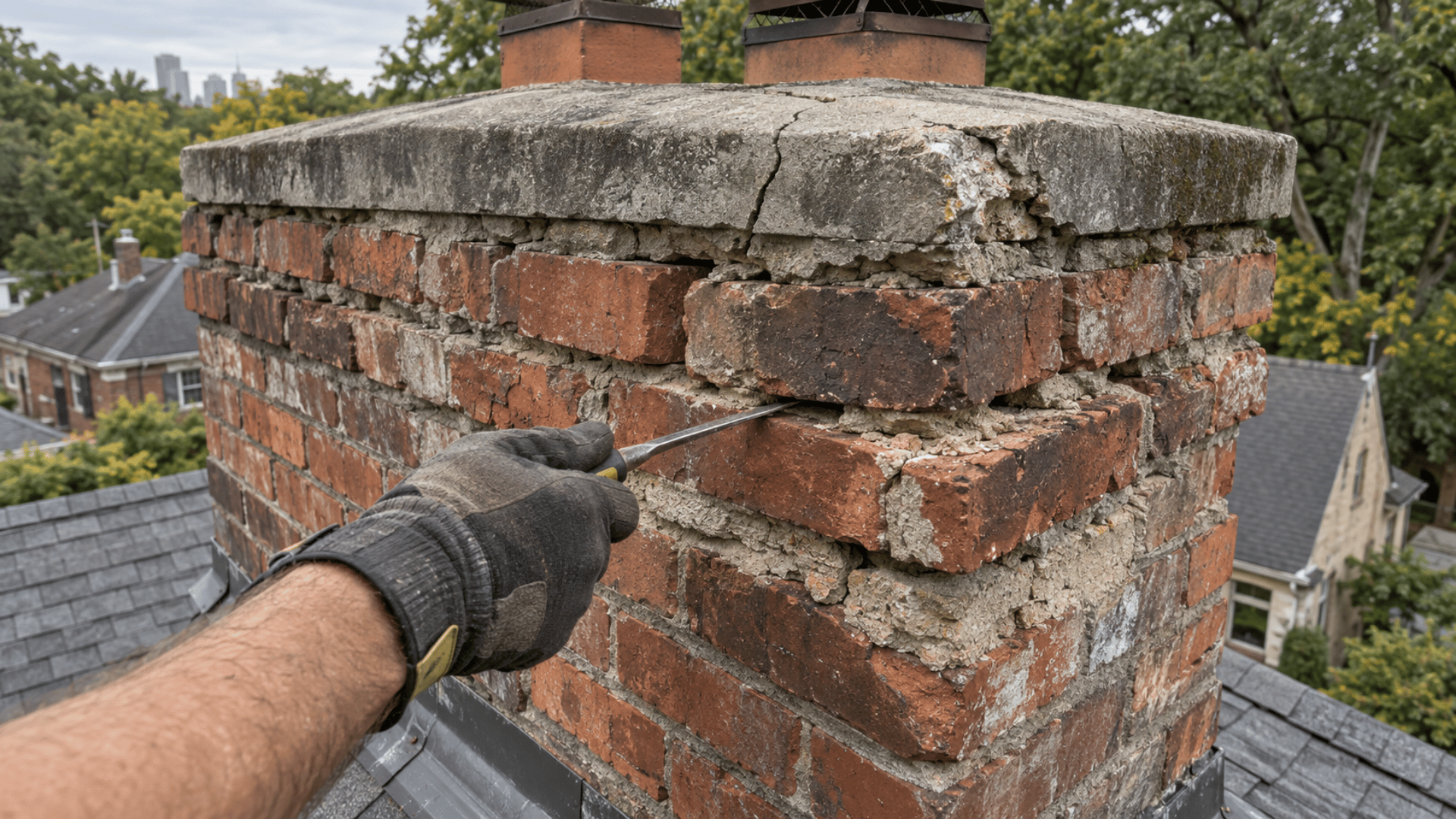
Masonry ends up in a flue because of moisture intrusion, repeated temperature changes, aging mortar, previous chimney fires, structural movement, or damaged and displaced liners. In older homes in Virginia-Highland, Grant Park, and Inman Park, some chimneys have decades of moisture and weathering behind them, and loose fragments can collect on the smoke shelf or lodge in a narrower section of the flue.
Why it’s dangerous: fallen masonry can partially restrict the exhaust passage, keep the damper from operating, catch additional debris, and point to underlying structural damage. Broken flue tiles may also mean the liner can no longer do its job — see our guide to chimney liner damage. If you find broken tile, brick, or unexplained masonry fragments in your fireplace, don’t dismiss them as ash, and avoid using the chimney until a professional identifies where they came from.
5. A Weak Draft or a Fire That Keeps Dying
If you light the fireplace and the flames struggle, the fire burns weakly and smokily, or you never get a steady upward draft, the flue may have restricted airflow — a classic sign of a chimney not drafting properly. A chimney relies on temperature differences, chimney height, flue dimensions, available combustion air, building pressure, wind, and appliance configuration to move gases outdoors. A blockage can interfere with all of that, but weak draft isn’t always caused by debris.
The cold-flue problem: when a fireplace has been unused for a long time, cold air can settle inside the chimney and resist upward draft at startup — homeowners sometimes call it a cold-air plug. It can mimic a partially blocked chimney. You can’t reliably tell a cold flue, negative pressure, an obstructed cap, and a collapsed liner apart just by watching a fire, so professional examination may be needed. And if you suspect a blockage, don’t light a test fire — more on that in the self-check steps below.
6. Rusted, Corroded, or Stuck Chimney Dampers
The damper controls the opening between the fireplace and the flue — in many traditional masonry fireplaces it sits near the throat, just above the firebox. A damper that can’t open fully restricts the exhaust path much like a blockage would.
Warning signs: a damper that won’t open completely, a handle that’s hard to move, rust flakes falling into the fireplace, a warped plate, debris on or around the damper, or water stains around the metal parts. Heavy seasonal rain and humidity contribute to corrosion when moisture gets into the chimney, and a missing cap, cracked crown, or another water-entry problem can keep conditions damp.
Rust alone is mainly evidence of moisture exposure, not a blocked chimney — but a damaged damper can coexist with debris or deterioration farther up the flue. Depending on the condition, a technician may clean it, remove accessible debris, adjust a serviceable mechanism, repair parts, or replace a badly corroded or warped damper, and the water source should be investigated too. See our guide to chimney damper repair in Atlanta for the details.
7. Birds, Squirrels, Animal Nests, or Falling Debris
Atlanta’s mature trees and wildlife create another common problem: unwanted material entering an unprotected flue. When the chimney cap is missing, damaged, or poorly fitted, animals and debris can get in, and a nest is one of the most frequent causes of a blocked chimney in newer suburban homes.
Common signs of wildlife activity: chirping or scratching inside the chimney, twigs or leaves in the fireplace, feathers around the damper, unusual movement or rustling, nesting material visible at the chimney opening, or repeated animal activity around the chimney top. Leaves and pine straw can also collect in a chimney with no animal involved.
How nests block a chimney: nesting material can pile up in a narrow part of the flue, on the smoke shelf, or around the opening, reducing the exhaust passage. If a homeowner then lights a fire, the obstruction can keep smoke from leaving the house — or catch fire.
Special consideration — chimney swifts: these migratory birds nest in suitable masonry chimneys and are protected under the Migratory Bird Treaty Act. Active nests, eggs, and birds can’t be disturbed or removed unlawfully. If swifts are nesting in your fireplace system, stop using it and seek professional guidance. A suitable cap can help prevent future nesting, but it should be installed when that’s lawful and appropriate — see our guide to chimney cap replacement cost. The U.S. Fish & Wildlife Service publishes more on these protections. And never light a fire to chase animals away or burn out a nest.
A Real Example From a Virginia-Highland Home: The Hidden Blocked Chimney
One of the most memorable blockage calls our team has handled involved a 1920s Craftsman bungalow in Virginia-Highland. The homeowner contacted us because the fireplace wasn’t drafting properly and there was a persistent damp, smoky smell in the living room — one that got stronger in Atlanta’s humid summers even though the fireplace hadn’t been used recently.
The homeowner assumed the smell came with an older house, suspected a dead mouse or old fireplace residue, and blamed the poor draft on a cold chimney or wet firewood. They didn’t expect a major obstruction.
What Our Inspection Revealed
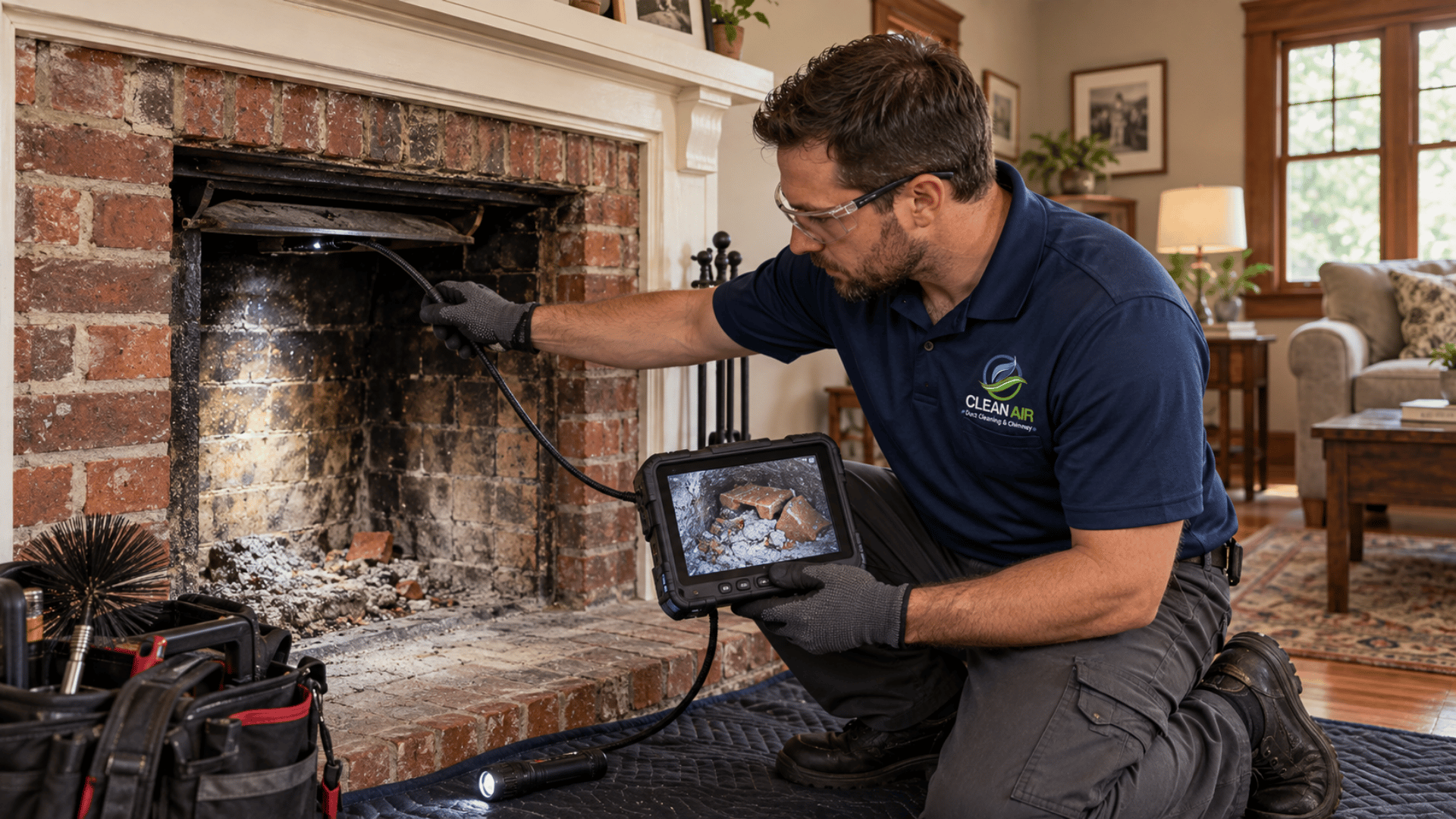
Our technician used a chimney inspection camera and found a substantial accumulation of structural masonry debris directly above the throat damper, around the smoke shelf. Sections of aging brickwork and mortar had deteriorated and fallen into the chimney: broken historic brick, crumbled mortar, loose masonry fragments, and damp soot and residue. Based on the inspection, the material was estimated to restrict about 85% of the available exhaust passage — the chimney was far more obstructed than the homeowner realized.
The blockage wasn’t the only problem. The masonry those fragments fell from was still deteriorating, and sweeping alone wouldn’t restore the damaged interior structure, so a more comprehensive repair was needed before the fireplace could go back into service.
How Our Team Addressed It
We carefully removed the obstructing masonry debris using appropriate access and extraction tools. Because the interior condition needed more than cleaning, the restoration included a properly selected stainless steel relining system to establish a suitable venting passage, plus moisture-protection work to help reduce future exterior masonry deterioration. A liner isn’t a substitute for stabilizing a structurally damaged chimney, so any remaining unstable masonry also had to be evaluated and repaired. After the completed restoration and appropriate verification, the homeowner reported that the draft problem and the damp odor were resolved.
The most important lesson: a blocked chimney doesn’t always look blocked from the fireplace. In this home, the visible firebox gave almost no hint of how much debris was sitting above the damper. The homeowner thought they had an odor problem; the inspection found a serious obstruction and deteriorating chimney materials. That’s why unexplained masonry fragments, a persistent weak draft, and unusual chimney odors should never be ignored.
What Causes a Blocked Chimney in Atlanta? Older vs. Newer Homes
Atlanta has an unusually diverse mix of chimney systems — a historic masonry fireplace in Grant Park can face very different problems than a factory-built fireplace in a newer suburban home.
Older Homes: Virginia-Highland, Grant Park, and Inman Park
Older masonry chimneys may have aging brickwork, deteriorated mortar, older clay tile liners, previous repairs, moisture damage, or complex and modified flue arrangements. When material deteriorates inside the chimney, loose brick, mortar, or tile can restrict the flue, and a dense tree canopy adds falling leaves and branches.
Newer Homes: Alpharetta, Marietta, and Sandy Springs
Many newer homes have factory-built fireplaces and metal chimneys inside framed chases. Typical concerns include damaged chimney caps, nesting material, debris around flue terminations, corroded metal components, poorly balanced ventilation, negative air pressure, and improperly configured fireplace systems.
| Factor | Older Masonry Homes | Newer Suburban Homes |
|---|---|---|
| Common construction | Brick masonry with clay tile or older flue arrangements | Factory-built metal systems or newer lined masonry |
| Potential obstructions | Masonry fragments, damaged tiles, leaves, creosote | Nests, debris, cap restrictions, soot |
| Moisture concerns | Deteriorated brick and mortar | Corroded caps, terminations, chase covers |
| Draft problems | Existing chimney design, temperature, pressure | Building pressure, exhaust fans, system configuration |
| Inspection focus | Internal structure and flue condition | Cap, venting configuration, debris, airflow |
These are tendencies, not rules — both older and newer homes can have creosote buildup, wildlife intrusion, structural defects, and draft problems. The takeaway: diagnosing a blocked chimney should reflect the type, age, and condition of the chimney, not just the neighborhood.
How Professionals Confirm a Blocked Chimney
A homeowner standing at the fireplace can’t see every part of a chimney — the smoke shelf, bends, height, and internal construction can all hide defects. At Clean Air Duct Cleaning & Chimney, finding a blockage starts with working out where the restriction might be.
Step 1: Review Your Symptoms
We start by asking when the problem began, whether smoke enters the room, whether the fireplace has sat unused for several seasons, whether you’ve heard animals, whether debris has fallen into the firebox, whether there’s a history of chimney fires, and whether exhaust fans or HVAC operation affect the draft.
Step 2: Examine the Firebox, Damper, and Smoke Chamber
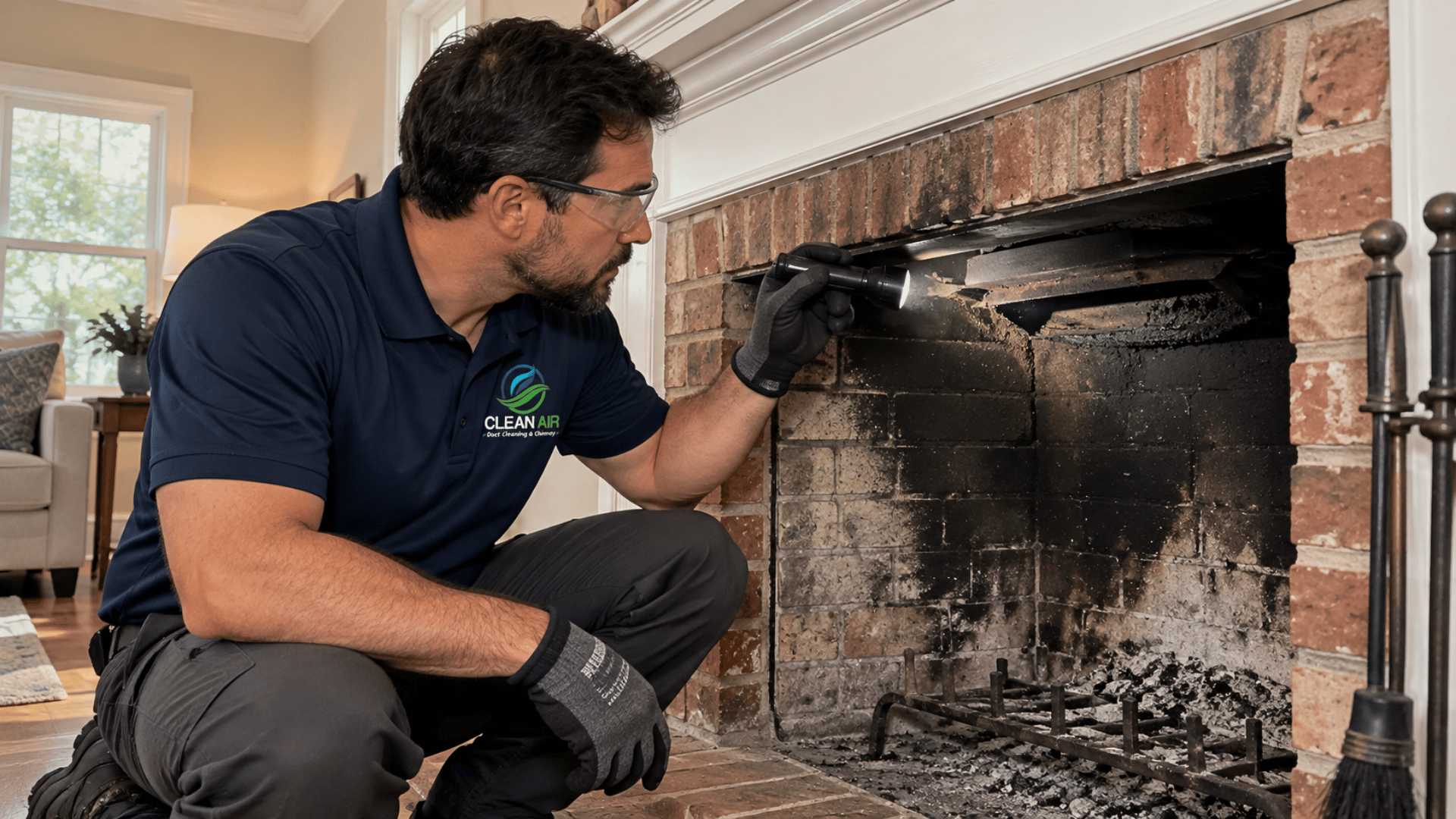
The technician checks accessible areas for visible soot or creosote, damper operation, fallen masonry, nesting material, moisture damage, and obstructions around the smoke shelf. Some blockages can be identified here without extensive equipment.
Step 3: Use an Internal Camera Inspection When Appropriate
A specialized chimney camera shows sections of the flue you can’t see from below — animal nests, heavy creosote, damaged liner tiles, displaced masonry, restrictions around offsets, obstructed flue openings, and other internal damage. A Level 2 inspection includes examining the flue with video scanning or a comparable method. Not every routine inspection needs one, but a suspected hidden blocked chimney or unexplained structural damage can justify it — see our guide to the three chimney inspection levels.
Step 4: Inspect the Chimney Top
When it’s safe to get up there, the technician checks the exterior termination for a damaged cap, debris trapped around the mesh, a blocked flue opening, corroded metal, nesting material, crown damage, and other deterioration.
Step 5: Evaluate Draft and Pressure
If no physical obstruction turns up, attention shifts to other causes of poor draft. Draft and pressure testing can help reveal building depressurization or venting problems — but a weak draft reading by itself doesn’t prove a physical blockage. It has to be interpreted alongside the chimney configuration, appliance operation, weather, and inspection findings.
This matters because it separates three very different situations: a dirty chimney that needs cleaning, an obstructed chimney that needs debris removal, and a damaged chimney that needs repair. They can look identical from the living room, but the solutions and costs are very different.
How to Clear a Blocked Chimney Safely: What Professionals Do
Once the obstruction is identified, the removal method depends on what’s blocking the flue and whether the chimney is structurally sound. Our chimney obstruction removal in Atlanta follows the same sequence:
- Contain soot and debris. Professional cleaning starts with protecting the fireplace area, using containment materials, and setting up soot-rated vacuum equipment with suitable filtration to keep soot, ash, and disturbed debris out of the living space. Animal waste or other contaminated material calls for additional protective measures.
- Use the right tool for the flue. Technicians may use chimney rods, brushes, retrieval tools, or other equipment suited to the chimney’s construction. A fragile clay liner or a factory-built metal chimney can’t necessarily tolerate the same tools or force as a sturdy masonry flue.
- Remove the obstruction without causing more damage. Leaves, loose debris, and some nests may come out without major work, and heavy creosote can require specialized treatment. Structural debris needs careful extraction — if masonry or liner components are actively collapsing, aggressively breaking material apart can make things worse.
- Reinspect before the fireplace goes back into service. After clearing a significant blockage, the chimney should be assessed to confirm the flue passage and related components are suitable for continued use. A chimney isn’t automatically safe just because the visible debris is gone.
What Clearing a Blocked Chimney Won’t Fix
Clearing the obstruction restores the passage — it doesn’t repair whatever caused it. Removing a blockage on its own won’t fix:
- A cracked or collapsed liner. Debris removal doesn’t restore damaged flue tiles — that’s a separate relining or repair decision.
- Failing mortar or unstable masonry. If the debris came from deteriorating brickwork, the source is still there and still shedding.
- A broken or corroded damper. It needs its own repair or replacement.
- A damaged or missing chimney cap. Without a proper cap, animals and debris can simply return.
- Improper venting geometry. A fireplace or appliance configuration problem keeps causing draft trouble no matter how clean the flue is.
Why a $250 sweep may not be enough: a standard sweep removes deposits and debris, but it doesn’t rebuild failed mortar joints, restore fractured tiles, or stabilize a deteriorating chimney. The Virginia-Highland case shows it — even after the obstruction came out, the damaged structure still needed attention. For a broader price picture, see our 2026 chimney repair cost guide for Atlanta.
Dangerous DIY Ways to Clear a Blocked Chimney
Trying to save money by clearing a blocked chimney yourself can create new hazards. Avoid these four mistakes:
- Dropping bricks, logs, or heavy objects down the flue. This can crack clay tiles, damage metal liners, compact nesting material, create new lodged debris, and injure someone with falling objects. A manageable obstruction becomes a much more expensive repair.
- Trying to burn away the blockage. Never burn out a suspected nest, debris pile, or heavy creosote. A fire can ignite combustible deposits or blocked material instead of clearing it, and if the chimney can’t vent, combustion gases can enter the home.
- Relying on chimney-cleaning logs. Chemical products may modify creosote deposits, but they don’t substitute for inspection or mechanical removal, and they can’t repair a broken liner or remove masonry. If you suspect an obstruction, don’t light any fire — including a cleaning log.
- Using improvised brushes or household vacuums. Improper brushes, rigid tools, or aggressive equipment can damage chimney parts, household vacuums can release fine soot or get ruined by it, and cleaning contaminated nesting material without precautions can create exposure concerns.
If you suspect a blocked chimney, avoid experimenting with tools, flames, or chemicals. Identify the actual obstruction first.
When to Stop Using Your Fireplace Immediately
Some chimney problems can wait for a scheduled inspection. These five can’t:
- Heavy smoke filling the room. A severe venting failure can let harmful smoke and combustion gases into occupied spaces. Leave the building and contact emergency services.
- Roaring or loud cracking sounds inside the chimney. A freight-train-like roar can signal a chimney fire, though chimney fires can also happen without dramatic noise. The Chimney Safety Institute of America explains that chimney fires can damage liners, mortar, metal components, and surrounding structures.
- Sparks, flames, or dense smoke from the chimney top. This can mean an active chimney fire. Evacuate and call 911.
- Unusual heat, scorching, or burning around the fireplace walls. These aren’t proof of a blockage, but they can point to overheating, a concealed fire, or another serious problem.
- A carbon monoxide alarm or concerning symptoms. CO is colorless and odorless. According to the CDC, symptoms include headache, dizziness, weakness, nausea, chest pain, and confusion. If an alarm sounds or poisoning is suspected, move everyone into fresh air and get emergency help. The CDC also warns that blocked chimneys can cause carbon monoxide to build up indoors.
What to do during a suspected chimney fire: evacuate immediately and call 911. Don’t climb onto the roof, pour water into the chimney, try to remove the obstruction, or fight the fire yourself, and don’t use the fireplace again until the fire department has handled the emergency and the chimney has been professionally evaluated. The NFPA’s home heating safety guidance covers this in more depth, and our guide to chimney fire prevention covers how to avoid it.
What to Do If You Think Your Chimney Is Blocked
If you suspect a blocked chimney but there’s no active emergency, you can make a few basic observations without climbing onto the roof or lighting a fire.
- Keep the fireplace off. Don’t test the flue by lighting paper, matches, or logs. A small flame or a brief upward draw of smoke can’t confirm the chimney is clear and safe — a partial obstruction can still be there.
- Look inside the cold firebox. With a flashlight, look for falling mortar, broken tile, leaves or twigs, heavy soot, visible nesting material, or a damaged damper. Don’t reach into concealed areas or force a stuck damper.
- Listen for wildlife. If you hear chirping, scratching, or movement, don’t disturb the animal or nest, and don’t operate the fireplace until it’s been evaluated.
- Inspect the chimney from the ground. Look for a missing cap, a visibly damaged termination, large nesting material poking out of the opening, or loose or badly deteriorated exterior masonry. Never climb a steep roof to investigate.
- Schedule an inspection. Explain your symptoms when you book — mention any falling masonry, smoke backup, past chimney fires, or suspected wildlife — so the company can choose the right inspection scope.
If your chimney also vents a gas appliance, be especially careful. Don’t assume closing the damper makes the system safe — some appliance venting requires a permanently open exhaust path. If a shared or appliance-connected vent might be blocked, stop using the affected equipment and get qualified help promptly.
How Much Does Chimney Blockage Removal Cost in Atlanta in 2026?
For many straightforward blocked chimney problems, the work costs a few hundred dollars. Structural damage can make it substantially more. These are approximate 2026 Atlanta planning ranges:
| Type of Service | Estimated Starting or Planning Range |
|---|---|
| Standard chimney sweep and straightforward debris removal | $150 – $350 |
| Nest or animal debris removal | $100 – $400 |
| Heavy or glazed creosote removal (in addition to the sweep) | $150 – $600+ |
| Level 1 routine inspection | $160 – $300 |
| Level 2 inspection with camera evaluation | $260 – $460 |
| Complex blockage removal (collapsed tile, unstable masonry) | Priced after a camera inspection |
| Major liner or structural restoration | $2,500 – $5,500+ for relining; rebuilding costs more |
These are approximate planning ranges, not guaranteed quotes, and some services are bundled or charged separately. The actual price depends on chimney height, access, inspection scope, obstruction type, and necessary repairs.
When Can a Blocked Chimney Be Fixed for $150–$400?
More affordable situations include routine soot accumulation, loose leaves, accessible debris, a straightforward sweep, or minor removable restrictions.
When Does the Cost Increase?
Costs rise with extensive glazed creosote, difficult roof access, significant animal contamination, collapsed clay tile sections, damaged metal chimney components, unstable masonry, or complete relining or reconstruction. Chimney blockage removal cost is really a question of what’s causing the blockage — which is why a camera inspection comes first.
How to Prevent a Blocked Chimney in Atlanta
Preventive maintenance matters most before the first fire of the fall or winter.
1. Install and Maintain a Proper Chimney Cap
A suitable cap can help reduce wildlife entry and debris buildup, and for many systems stainless steel is a practical, corrosion-resistant choice. The cap and screening have to be appropriate for your chimney or appliance, and mesh screens can themselves get clogged with soot or debris, so they need periodic checks. If protected chimney swifts are actively nesting, don’t disturb them or install exclusion measures without guidance.
2. Schedule an Annual Chimney Inspection
CSIA guidance says chimneys and connected venting systems should be inspected annually and cleaned or repaired as needed. In Atlanta, scheduling before cold weather gives you time to catch creosote deposits, nests, damper problems, damaged liners, corrosion, and structural deterioration. A Level 1 inspection fits an unchanged system under normal conditions; symptoms or damage call for a more detailed look.
3. Burn Dry, Properly Seasoned Wood
Wet firewood burns cooler and smokier and builds more creosote. The U.S. Environmental Protection Agency recommends firewood below 20% moisture content, so use a moisture meter rather than guessing from how long the wood has been stored. Never burn trash, treated lumber, or other inappropriate materials.
4. Investigate Draft Problems Before the First Fire
If the fireplace hasn’t been used in months, confirm that maintenance is current and that no obstruction or damage is suspected. A cold chimney or a pressure imbalance can cause poor draft, but so can a physical obstruction — if the draft is questionable, have the cause evaluated before you use it.
5. Keep the Firebox and Hearth Maintained
After ashes have cooled completely, remove excess ash into a metal container and keep it away from combustible materials. A clean firebox also makes it easier to notice unusual material, like fallen tile or mortar — though it doesn’t replace inspecting the hidden flue and chimney top.
| When | What to Check |
|---|---|
| Before fireplace season | Schedule the annual inspection |
| After a major storm | Look for visible cap or exterior chimney damage from the ground |
| Before using stored firewood | Check wood moisture |
| During fireplace season | Watch for smoke backup, unusual sounds, or draft changes |
| When cleaning the cold firebox | Look for unfamiliar masonry fragments |
| Whenever wildlife is suspected | Stop fireplace use and seek appropriate professional guidance |
How to Choose the Right Chimney Company
Some chimneys need a straightforward sweep. Others hide nests, obstructed caps, damaged liners, or deteriorating masonry — so when you have a blocked chimney, look for a company that identifies the actual condition before recommending work. Beyond that, look for the same baseline credentials that matter for any chimney work:
- CSIA certification — the Chimney Safety Institute of America sets the industry’s recognized training standard
- Proof of insurance — protects you if something goes wrong on your property
- BBB accreditation — a verifiable track record, not just a promise
- Physical evidence, not guesses — camera footage and photos of what’s actually in the flue
At Clean Air Duct Cleaning & Chimney, we evaluate accessible fireplace and chimney components and use internal camera inspection when the condition calls for a closer look. Our team works with older brick chimneys, modern prefabricated fireplaces, and systems modified over time across Metro Atlanta, and depending on what the inspection reveals, our services include chimney sweeping, debris removal, chimney cap replacement, masonry work, and appropriate flue repairs or relining. We focus on explaining what appears to be causing the problem, whether the chimney is actually obstructed, what findings support the recommendation, whether cleaning is enough, and whether repairs are needed before further use. A chimney that’s dirty doesn’t always need rebuilding — but a chimney that’s structurally damaged can’t necessarily be made safe by cleaning alone.
Final Answer
You’ll usually know a chimney is blocked by its symptoms: smoke backing into the room, a weak draft, persistent odors, heavy or puffy creosote, masonry falling into the firebox, a damaged damper, or signs of nesting. But the same symptoms can come from a cold flue or negative pressure, so the only way to know for sure is an inspection, often with a camera. And a blocked chimney is rarely just a cleaning problem — if the obstruction came from deteriorating masonry or a failing liner, clearing it is only the first step.
Final Advice From Our Team
This depends on the chimney — but the most serious obstruction isn’t always the one you can see. A chimney can look normal from the hearth, the damper can look open, and the fireplace can have worked fine last winter. During the months it sits unused, animals can move in, debris can build up, metal can corrode, and aging masonry can deteriorate. The first fire of the season shouldn’t be how you find out something changed inside your flue.
Before your first winter fire, make sure the chimney has been inspected, the venting path is clear, and there are no unresolved signs of damage or poor draft. Don’t try to burn away an obstruction. Don’t assume a weak draft is just cold air. And don’t ignore broken masonry or unusual deposits in the fireplace.
We serve homeowners throughout Atlanta and surrounding communities, including Sandy Springs, Roswell, Marietta, Alpharetta, Dunwoody, Brookhaven, Decatur, and Smyrna.
Call (470) 706-6431 or contact us to schedule a blocked chimney inspection in Atlanta, GA. Find out what’s happening inside your chimney before you light another fire.
FAQ
How do you know if your chimney is blocked?
Warning signs include smoke backup, unusual odors, falling debris, a weak draft, wildlife sounds, and a rusted or stuck damper. You can check the cold firebox with a flashlight and look at the chimney from the ground, but a hidden blocked chimney needs professional evaluation, often with a camera.
What happens if you use a blocked chimney?
A blockage can interfere with proper venting, letting smoke or combustion gases into the home, and some obstructions can add to chimney-fire hazards. How serious it is depends on the obstruction, the appliance, and the operating conditions.
Can a blocked chimney cause carbon monoxide poisoning?
Yes. The CDC warns that blocked chimneys can cause carbon monoxide to build up indoors. CO is odorless, so working CO alarms matter even when you can’t smell smoke.
Can a chimney be partially blocked?
Yes. A nest, masonry fragment, heavy deposit, or clogged termination can reduce the venting passage without closing it completely, and a partially blocked chimney may still appear to draft under some conditions.
Will a chimney sweep remove a blockage?
It depends on what’s causing it. Routine soot or accessible debris may come out during cleaning, but collapsed liners, unstable masonry, and certain other obstructions need additional work.
Can a chimney blockage clear itself?
Don’t rely on it. Loose debris can shift, but it can also lodge somewhere else, and structural failures and heavy creosote won’t reliably resolve without intervention.
Why is my fireplace smoking even though the damper is open?
Possible causes include a blockage, a cold flue, negative air pressure, wind, or a design problem. An open damper doesn’t prove the rest of the chimney is clear.
Can bird nests block a chimney?
Yes. Nesting material can interfere with the venting passage. If protected birds such as chimney swifts are actively nesting, the situation has to be handled lawfully.
How much does it cost to unblock a chimney in Atlanta?
Straightforward sweeping and clearing typically runs about $150–$400. Heavy creosote or involved debris removal can cost more, and repairs involving damaged liners or structural masonry can run into the thousands. A camera inspection ($260–$460) is how the real scope gets priced.
How often should my chimney be inspected?
At least once a year, with cleaning and repairs as needed based on the chimney’s condition and use.
Is a Level 2 inspection necessary for a blocked chimney?
Not in every case. A Level 2 inspection may be appropriate when hidden conditions, possible damage, or other circumstances call for a more detailed examination.
Can a clogged chimney cap cause smoke backup?
Yes. A cap screen blocked by soot, nesting material, or debris can restrict exhaust flow. The cap should be examined and cleaned, repaired, or replaced as appropriate.
Is it safe to use the fireplace if small pieces of brick are falling inside?
Not until the cause has been evaluated. Falling masonry can point to deterioration of the chimney or liner, and additional hidden defects may be present.