 Skip to content


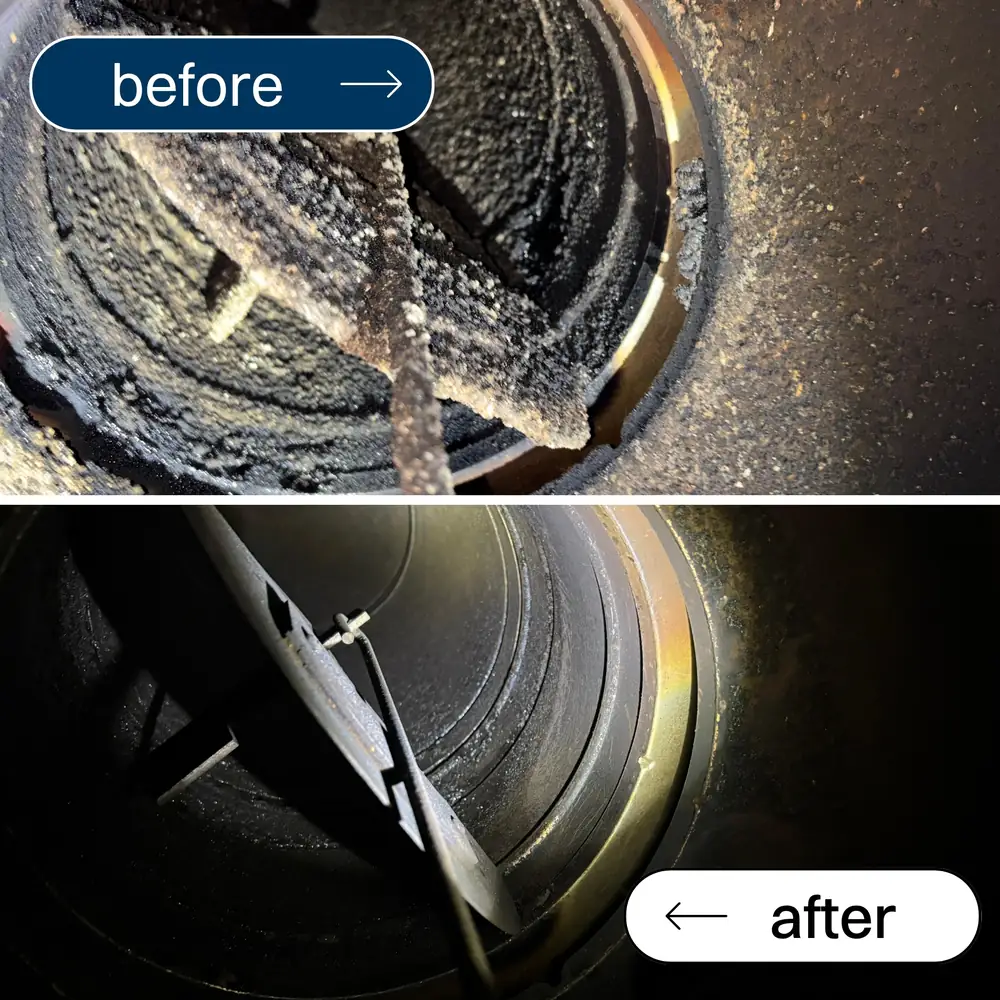
Creosote is the tar-like residue that wood smoke leaves on the inside of a chimney. Early on it looks like dry, black, flaky soot you can brush off. Left alone, it turns into crunchy, tar-like clumps, and then a shiny black glaze that looks like it was poured on. Every stage can burn. The glazed stage is the hardest to remove and the most dangerous.
If the buildup in your fireplace looks dull and powdery, a routine chimney sweep will usually handle it. If it looks crusty, sticky, shiny or like black tar, don’t light another fire until the chimney is checked.
Where to Look for Creosote
Grab a flashlight and check:
- The firebox walls
- Around the damper
- The smoke chamber just above the damper
- As far up the flue as you can see
A flashlight shows the obvious stuff, but not the whole flue. Some of the worst buildup forms higher up, where the flue is coldest. A clean-looking firebox doesn’t prove the chimney is safe.
The 3 Stages of Creosote
Stage 1: Black Powder or Velvet Dust
Dull, soft black powder that wipes off easily. It’s the least severe stage, but it still burns and should come out during a routine sweep.
Stage 2: Crunchy Black Flakes
Crusty, flaky deposits that look like burnt cornflakes stuck to the walls. If hard black flakes are falling into the firebox, the chimney needs a professional cleaning.
Stage 3: Shiny Black Glaze
The most dangerous form. It can look like:
- Shiny black glass
- Melted tar or hardened syrup
- Thick black drips running down the flue
If you see glaze, stop using the fireplace and book a chimney inspection.
Creosote, Soot or Ash?
- Black dustsoot or stage 1 creosote.
- Gray or white powderash. Messy, but not the same fire risk.
- Black smoke stains on the face of the fireplaceusually poor draft or smoke rolling back into the room.
Why Creosote Builds Up
Creosote is smoke condensation. As smoke rises and cools, it leaves residue on the flue walls. Three things speed it up:
- Wet woodIt burns cooler and smokier.
- Poor airflowA partly closed damper or blocked flue makes smoldering, inefficient fires.
- A cold flueHot smoke hitting cold masonry condenses fast, especially on an outside wall or an oversized flue.
What Creosote Removal Costs in Atlanta
| Stage | What It Looks Like | How It’s Removed | Typical Cost |
|---|---|---|---|
| 1: soot and light buildup | Dry, black, flaky | Standard sweep with brushes | $199 to $399 |
| 2: heavy buildup | Crunchy, tar-like clumps | Rotary tools and more passes | $250 to $600 |
| 3: glazed | Shiny, hard, like dripped tar | Specialized removal based on the deposit and liner | Quoted after assessment |
We assess the deposits before recommending an appropriate cleaning method. See our chimney soot and creosote removal service for details.
Why a Clean-Looking Firebox Can Be Misleading
Heavy deposits can accumulate farther up a cool flue even when the firebox appears relatively clean. An appropriate inspection can help determine whether cleaning or more extensive removal is needed.
Warning Signs You Need Creosote Removal
- A strong smoky or campfire smell, especially in humid weather or when the AC runs
- Smoke rolling into the room
- Fires that are harder to start or keep going
- Black flakes in the firebox
- Loud popping, crackling or roaring from the chimney
A lingering smell is often the earliest sign. See why your chimney smells for every cause. If you hear roaring or see sparks from the top of the chimney, get everyone out and call 911.
Creosote Myths That Make It Worse
- “A really hot fire will burn it off.” This can cause a chimney fire. Burning creosote can crack clay flue tiles and set the framing around the chimney alight.
- “Creosote sweeping logs do the job.” They loosen some buildup so it drops to the smoke shelf, where it still has to be cleaned out. They don’t replace a sweep and won’t touch glaze. See do chimney sweep logs really work?
- “Gas fireplaces don’t get creosote.” True for creosote, but gas logs still leave soot, and nests and debris can still block the flue.
- “I’ll scrape it myself.” Buildup should be assessed before choosing a cleaning method. Hardened deposits may need specialized tools, while inspection requirements depend on the chimney.
How We Remove Creosote
- Assess the deposits and determine whether additional inspection is needed
- Identify a suitable cleaning method
- Use an appropriate treatment when warranted by the deposit and liner
- Remove deposits with equipment suitable for the chimney
- Review the cleaning results and discuss any additional evaluation needed
How to Prevent Creosote Buildup
- Burn dry wood. Aim for under 20% moisture. A $25 moisture meter tells you. A lot of “seasoned” wood from roadside stands is wetter than that.
- Burn hot and bright. Don’t let fires smolder overnight.
- Open the damper fully every time you light a fire.
- Keep a cap on so rain and debris don’t make things worse.
- Get swept when buildup reaches about 1/8 inch, or yearly at minimum.
A damaged cap or cracked masonry can also cool the flue and speed up buildup. Those need chimney repair.
If You Don’t Know What It Is, Don’t Set It on Fire
Treat your chimney like an electrical panel. If something looks burned or wrong, don’t guess. Your fireplace is a controlled fire inside your house, and the chimney is its exhaust. If the exhaust looks compromised, leave it cold until someone checks it.
Frequently Asked Questions
The smell itself is mostly a nuisance, but it can irritate eyes and lungs, especially for people with asthma. A strong smell means there’s buildup worth removing.
No. A hot fire is how creosote ignites. Burning it off can crack the flue and start a chimney fire.
Glazed creosote needs a professional chemical treatment that turns it brittle, then rotary tools to remove it. Store-bought sprays and logs don’t remove glaze.
It depends on the wood and how you burn. Wet wood and slow, smoky fires can build a dangerous layer within one season.


