 Skip to content


Your chimney liner is the passage inside the brick that carries smoke and gases out of the house. In most Atlanta homes built before the 1990s, it’s a stack of square clay tiles. When those tiles crack, shift or lose the mortar between them, heat and gases can reach the brick and the wood framing around the chimney. You usually can’t see this from the fireplace. A camera can.
This guide covers the signs, the causes, and how to tell whether you need a repair or full chimney relining.
Signs Your Liner May Be Damaged
- Tile pieces in the firebox. Thin, curved or flat chunks of terracotta on the smoke shelf or firebox floor.
- A chimney fire, even a small one. Loud rumbling, a hot metallic smell, or flakes of puffy creosote on the roof or ground. Tiles often crack from the heat.
- Smoke or odor in rooms next to the chimney. Cracks can let smoke escape between floors.
- White or brown streaks on the outside brick near the top, or stains inside the house. Gas appliance exhaust can condense in a damaged or oversized flue and seep through.
- A water heater or furnace that suddenly drafts badly, often after the furnace was replaced and the water heater was left alone in the chimney.
- A chimney 50+ years old that has never had a camera inspection.
What Causes Liner Damage
- Chimney firesClay tiles can’t expand fast enough when creosote burns at extreme heat, so they crack. See how to prevent a chimney fire.
- WaterA missing cap or cracked crown lets rain run down the flue. Over the years it washes out the mortar joints between tiles.
- Gas appliance condensationGas exhaust is full of water vapor. In a flue that’s too big or too cold, it condenses into a mild acid that eats mortar and tile.
- SettlingEven small shifts in an older house can pull the tiles out of line, leaving gaps at the joints.
- AgeMany original Atlanta chimneys from the 1920s to the 1950s were built with no liner at all, or with mortar joints that have since failed.
What a Camera Inspection Shows
Depending on the inspection scope and available access, an internal camera can help reveal:
- Cracked or missing tiles, and how many
- Open or eroded mortar joints
- Offsets, where one tile has slid out of line
- Glazed creosote that hides damage underneath
- Gaps where the liner meets the smoke chamber
Internal camera scanning can be part of a Level 2 inspection under NFPA 211. It’s recommended after a chimney fire, when you sell a house, or when you change the appliance that uses the chimney. See camera inspection.
Repair It or Reline It?
| What the Camera Finds | Usually Means |
|---|---|
| A few open joints, tiles otherwise sound | Evaluate a localized repair only if a method is approved for the specific chimney and appliance |
| Several cracked tiles, or damage after a chimney fire | Reline: a new stainless liner inside the old flue, sized to your fireplace or appliance |
| Tiles badly out of line, or an oddly shaped flue | Evaluate a compatible replacement liner or another approved lining method |
| No liner at all | Reline before the fireplace is used again |
| A gas water heater left alone in a large flue | Reline with a smaller liner sized to the water heater |
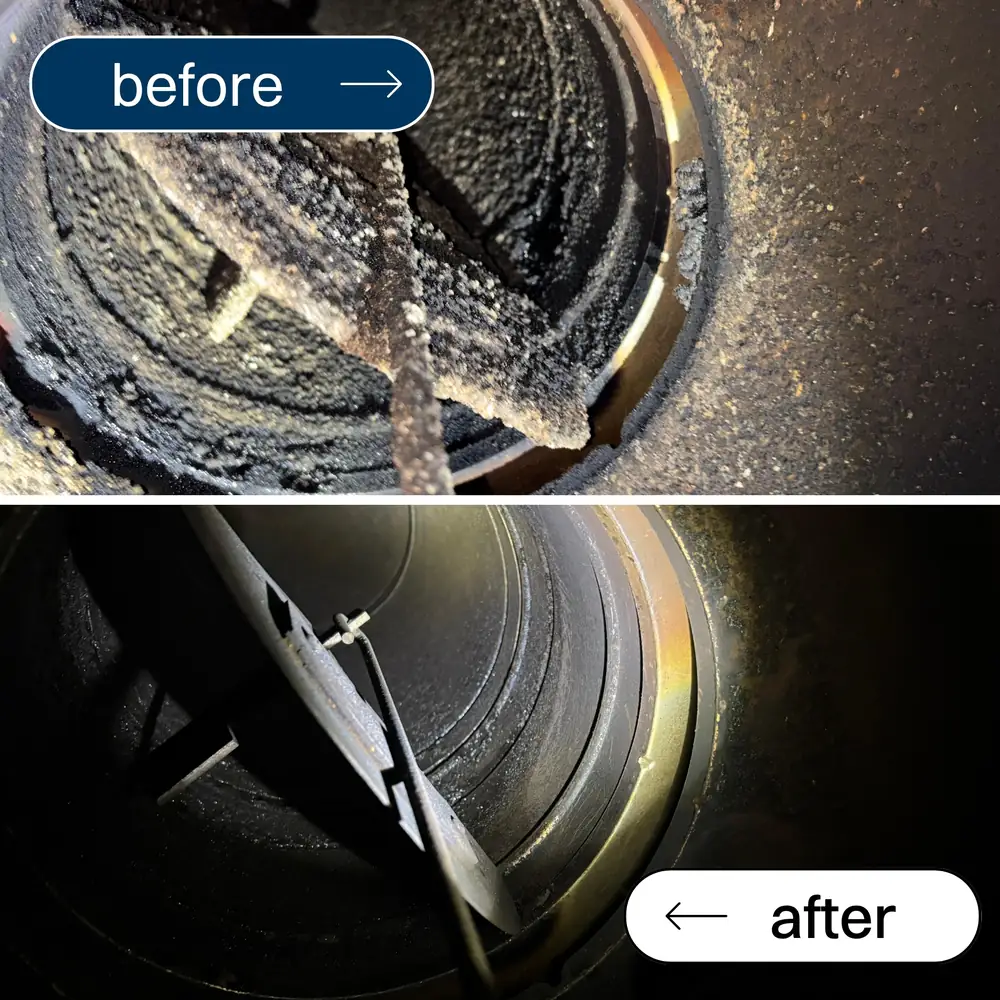
A resurfacing repair costs less and works well on limited damage. It isn’t a fix for missing tiles, offsets or a flue that’s the wrong size. In those cases a new liner is the safe answer.
What It Costs
Most full stainless relining jobs in Atlanta cost $2,500 to $5,500+. Smaller liner work runs $500 to $1,500. Chimney height, liner diameter, insulation and roof access set the final number. Full details, including liner types, are on our chimney relining page.
Why Atlanta Chimneys Are Prone to Liner Trouble
- Older intown chimneys often have original clay tiles, or none at all.
- Furnace upgrades. Many homes switched to high-efficiency furnaces that vent out the side of the house, leaving a water heater alone in a flue sized for two appliances. That flue stays cold and wet.
- Long, humid off-seasons keep moisture sitting in the flue for months.
Frequently Asked Questions
Sometimes. Limited joint damage can be sealed with a heat-rated coating. Cracked or missing tiles, offsets, or a flue that’s the wrong size need a new liner.
Often 50 years or more if it’s kept dry and never goes through a chimney fire. Water and chimney fires are what shorten its life.
Yes. Wait until it’s repaired or relined, because cracks can let heat reach the framing around the chimney.
Get one after a chimney fire, when you buy or sell a home, when you add an insert or change appliances, or if you see tile pieces in the firebox.


