 Skip to content


Cracks inside the fireplace, crumbling firebricks, missing mortar or rust on metal panels can all mean the firebox needs attention. Some of it is minor masonry work. Some of it means new refractory panels, a rebuilt firebox, or replacing a factory-built fireplace. The right answer starts with knowing what you’re looking at.
A small crack doesn’t always mean small damage. The firebox is the chamber where the fire burns, built to take heat over and over. Once its protective lining breaks down, the problem goes past looks.
Masonry Firebox or Factory-Built? It Changes the Repair
| Masonry Firebox | Factory-Built (Prefab) Firebox | |
|---|---|---|
| Built from | Firebrick and refractory mortar, on site | A metal box from a manufacturer |
| Inside lining | Individual firebricks | Molded refractory panels |
| Common damage | Cracked brick, failing mortar, spalling | Cracked panels, rust, warping |
| Usual repair | Repointing or replacing firebrick | Manufacturer-approved replacement parts |
| Replacement depends on | How much masonry has failed | Shell condition and parts availability |
A mason can replace one damaged firebrick. A cracked panel in a factory-built unit has to be repaired or replaced following that manufacturer’s instructions. The wrong material creates a new problem.
Not sure which you have? Masonry fireplaces are brick or stone built on site, with firebrick inside. Factory-built units have a metal box with molded panels that often only look like brick, and a model plate inside or behind the screen.
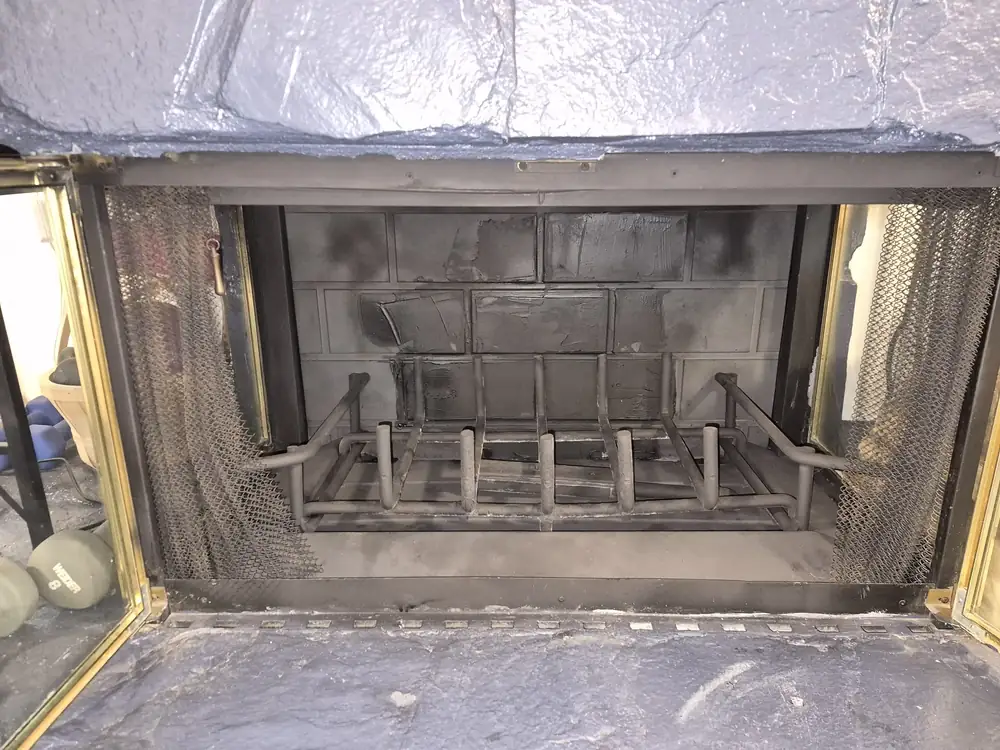
The 7 Signs Your Firebox Needs Repair
1. Cracked or Missing Mortar Between Firebricks
Thin cracks between bricks, recessed or missing mortar, sandy grit on the firebox floor, or deep gaps along the back wall. Years of heating and cooling wear refractory mortar down.
A little surface wear doesn’t mean a rebuild. When the bricks are sound, the bad mortar can be ground out and replaced with refractory mortar. A thin skim of new mortar over loose old mortar isn’t a repair. If mortar is falling out, stop using the fireplace until it’s checked.
2. Spalling, Crumbling or Cracked Firebricks
Firebrick can still break down. Spalling is when the brick face flakes or chips off, usually from heat cycles, moisture, logs and tools banging into it, or past bad repairs. Water coming down through a cracked crown or missing cap speeds it up.
If only a few bricks are damaged and the wall is sound, those bricks can be replaced. If a whole wall bows or many bricks are loose, part or all of the firebox may need rebuilding. Replacing a brick is practical. Holding a failing wall together with fresh mortar isn’t.
3. Rust, Corrosion or Holes in Metal Parts
Atlanta’s humidity and rain rust dampers, metal firebox shells, brackets and floor sections, especially in factory-built units. The water usually comes from a missing cap, cracked crown, leaking chase cover or bad flashing.
Light surface rust isn’t a crisis. Pitting, warping or holes are. On a factory-built unit, a rusted-through shell can mean new panels aren’t enough. Either way, stop the water first, or the rust keeps going. See chimney leaks.
4. Smoke Coming Into the Room
Smoke backing into the house can come from a blocked flue, house pressure, a cold flue, a bad damper or a damaged firebox. It isn’t always the firebox, but it always means stop and diagnose. Carbon monoxide has no smell; if a CO alarm sounds, get everyone outside. See why your fireplace smokes into the house.
5. Damp Smells, Water Stains or White Deposits
A wet-basement smell after rain, rust stains near the damper, white mineral deposits on the brick or water on the firebox floor all mean water is reaching the firebox. Fix the cap, crown, flashing or chase cover at the same time as the firebox, or the repair fails the same way. See why your chimney smells.
6. The Fireplace Works Differently
Fires that are hard to start, poor draft, extra smoke or unusual heat. These can come from the firebox, flue, damper or air supply, so the whole system needs a look. Gas fireplaces with ignition trouble, shutdowns or odd smells usually have a gas control or venting problem, not a panel problem. See gas fireplace cleaning.
7. Cracked, Loose or Crumbling Refractory Panels
Factory-built fireplaces use molded panels on the back, sides and floor. Over time they crack, crumble at the edges, come loose, or wear thin enough to show metal behind them.
Are hairline cracks normal? Often, yes. Many manufacturers treat small expansion cracks as normal. You’ll hear a “dime-width” rule of thumb, but limits vary by model. Some manuals call for replacement when a crack passes 1/4 inch, when metal shows through, or when pieces fall out. Your fireplace’s manual decides.
Replacement panels must be the approved part for your make and model, not just something that fits. If the right panels are discontinued and no approved alternative exists, replacing the unit may be the only safe option.
Why a Small Firebox Crack Can Need More Than Mortar
A small visible crack may be accompanied by deeper mortar deterioration or loose firebrick. The correct response depends on the condition of the surrounding wall. Sometimes a localized refractory mortar repair is enough. Other times individual firebricks or a larger damaged section must be replaced. A crack’s size alone cannot determine how much material behind it has failed.
What Damages a Firebox
- Water from a missing cap, cracked crown or bad flashing
- Oversized fires that put more heat on the lining than it was built for. See how to prevent a chimney fire.
- Heat and moisture cycles that crack damp brick and mortar
- Wet wood, trash or treated lumber
- Settling in the structure below (but a crack alone doesn’t prove foundation movement)
Repair or Replace?
| What You Have | Repair Usually Works | Replacement May Be Needed |
|---|---|---|
| Minor mortar wear | Repoint the joints | If the wall behind is failing |
| One or two broken firebricks | Replace those bricks | If large sections are loose |
| One damaged refractory panel | Replace the approved panel | If no approved part exists |
| Rusted damper | Repair or replace the damper | If wider rust damage is present |
| Bowing masonry wall | Rarely | Partial or full rebuild |
| Warped factory-built shell | Limited approved repairs | Often the whole unit |
| Damage keeps coming back | Find and fix the cause first | Rebuild or replace |
The goal is the smallest repair that actually fixes the problem. A $400 patch isn’t a bargain if the material underneath is failing, and replacing a whole fireplace for one bad panel is money wasted.
What Firebox Repair Typically Costs
| Job | Typical Starting Range |
|---|---|
| Firebox repointing | $250 to $800 |
| Firebrick replacement | $400 to $900 |
| Refractory panel replacement | $360 to $750 |
| Firebox floor or hearth repair | $155 to $805 |
| Damper repair or replacement | $100 to $700 (see damper repair) |
| Full masonry firebox rebuild | $1,500 to $3,500+ |
| Full factory-built fireplace replacement | $2,500 to $7,000+ |
Hidden damage, discontinued parts and related chimney repairs push the total up. Ask for an itemized estimate. Our firebox repair page explains how we inspect, repair and cure the work.
When to Stop Using the Fireplace
| What You See | What to Do |
|---|---|
| Slight discoloration | Check at the next routine service |
| Small crack in a refractory panel | Check the manual’s limits and have it assessed |
| Light mortar wear, no gaps | Book an evaluation |
| Loose or falling firebricks | Stop using it until evaluated |
| Open gaps or unstable masonry | Stop using it until repaired |
| Metal showing behind damaged panels | Stop using it until evaluated |
| Smoke coming into the room | Stop using it and diagnose the cause |
| Signs of an active chimney fire | Get out and call 911 |
See the NFPA’s home heating safety guidance.
What Firebox Repair Won’t Fix
- The water source behind the damage
- A damaged liner or smoke chamber above the firebox. See chimney liner damage.
- Draft or pressure problems that start higher up
- Gas valve, burner or sensor problems
- A broken damper, which is its own repair
- Oversized fires and wet wood, which will damage new brick just like the old
Why DIY Patches Usually Fail
- Regular mortar isn’t made for direct fire and cracks or falls out.
- Hardware-store “high-heat” products aren’t right for every fireplace, and factory-built units often require specific parts.
- Patching over failed mortar or moving brick hides the problem until it comes back bigger.
If you don’t know what’s under the crack, don’t cover it up yet.
How to Avoid Big Firebox Repairs
- Get the fireplace and chimney inspected every year
- Keep water out with a good cap, crown and flashing
- Burn dry wood (under 20% moisture, per the EPA)
- Don’t overload the firebox
- Clean out cold ash and look for new cracks, crumbs or rust while you’re at it
Frequently Asked Questions
Often. Individual bricks can be replaced when the wall around them is sound. Widespread damage needs more.
Hairline cracks are often normal, especially in factory-built panels within the manufacturer’s limits. Deep, open, new or unexplained cracks should be checked first.
Yes. Repointing, firebrick replacement and approved panel replacement often restore it without replacing the whole unit.
Heat cycles, moisture, age, the wrong repair materials and movement in the structure underneath.
No. Use materials made for firebox use and approved for your fireplace.
When masonry walls are failing, a factory-built shell is warped or rusted through, or approved parts no longer exist.
It depends on the product. Follow the written curing and return-to-service instructions from whoever did the work.
No. Firebricks are individual masonry units. Refractory panels are molded for a specific factory-built fireplace. They aren’t interchangeable.


