 Skip to content


A blocked chimney can look completely clear from the fireplace while a serious obstruction hides several feet above it. The most common warning signs are smoke coming into the room, a weak draft, strange chimney odors, heavy creosote, bits of brick or tile falling into the firebox, a rusted or stuck damper, and signs of animals in the flue.
It isn’t just an old-house problem. In older brick chimneys, crumbling mortar and broken clay liners cause hidden restrictions. In newer homes, nests, clogged caps and ventilation problems produce the same symptoms.
A blockage can remain hidden above a fireplace opening even when the firebox looks clear. Fallen masonry, nesting material and creosote can all restrict the flue.
The Quick Answer: 7 Signs of a Blocked Chimney
- Smoke backing up into the room instead of going up the chimney
- Strong or lingering chimney odors: smoky, damp or rotting
- Heavy soot or creosote, especially thick glaze or puffy residue
- Brick, mortar or clay tile falling into the fireplace
- A weak draft or fires that keep dying
- A rusted, corroded or stuck damper
- Birds, squirrels, nests, leaves or debris in the chimney
Not every one of these proves the flue is blocked. Some point to moisture damage or a draft problem instead. But any of them is a reason to get the chimney inspected before you use it again.
If smoke is filling the house, a carbon monoxide alarm goes off, or you suspect a chimney fire, get out and call 911.
The 7 Signs in Detail
1. Smoke Backing Up Into the Room
When a fireplace works properly, hot gases rise up the flue and out. A blockage narrows that path, and smoke spills out the front of the fireplace instead.
What you’ll notice: smoke rolling into the room, a haze near the opening, a burning smell through the house, or poor draft even with the damper open.
What could be blocking it: bird nests, leaves and pine straw, thick creosote, collapsed clay tiles, fallen masonry, a damaged damper or a clogged cap screen.
Does smoke always mean a blockage? No. A cold flue, negative air pressure, wind or a badly designed fireplace can do the same thing. A tight house with a strong kitchen hood can pull air down a perfectly clear chimney. See why your fireplace smokes into the house for those causes. Either way, stop using the fireplace and have it checked.
2. Smoky, Musty or Rotten Odors
Sometimes the first sign is a smell from a cold fireplace: an old campfire, damp ashes, wet basement air, burning tar, rotting leaves or a dead animal. Georgia humidity makes soot, creosote and debris smell stronger, and a blocked flue can hold wet nesting material above the damper.
| Odor | Possible Cause |
|---|---|
| Heavy campfire smell | Soot or creosote |
| Rotten or decaying smell | Animals or rotting debris |
| Damp, musty odor | Water getting in |
| Sour smell after heavy rain | Moisture mixing with soot or debris |
| Smoke smell when exhaust fans run | Downdraft or pressure imbalance |
A smell alone can’t confirm a blockage, but a new smell plus smoke, debris or poor draft deserves a look. If smell is your main problem, see why your chimney smells. One exception: a rotten-egg smell near a gas appliance may be a gas leak. Leave the house and call 911 or the gas company from outside.
3. Heavy Soot, Creosote or Puffy Black Deposits
Creosote builds up as wood smoke cools in the flue. Enough of it narrows the passage and can feed a chimney fire. It can be powdery, flaky, crusty, sticky or a hard shiny glaze.
Watch for puffy, honeycomb-textured creosote. CSIA says that texture can be evidence of an earlier chimney fire, and some chimney fires are quiet enough that nobody notices. Puffy creosote doesn’t prove a blockage, but it does mean the chimney needs checking for fire damage.
Never try to burn creosote off with a hot fire. See what creosote buildup looks like for each stage.
4. Brick, Mortar or Clay Tile in the Fireplace
One of the most overlooked signs. You clean out the fireplace and find red brick chips, sandy mortar or hard pieces of clay tile, and assume it’s ordinary debris. It usually means something inside the chimney is breaking down from water, age, a past chimney fire or settling.
Fallen masonry can partly block the flue, jam the damper and catch more debris. Broken flue tile can also mean the liner no longer protects the house. See chimney liner damage. Don’t use the fireplace until someone finds where the pieces came from.
5. A Weak Draft or a Fire That Keeps Dying
If flames struggle, the fire burns smoky, or it never gets a steady upward pull, airflow may be restricted. But weak draft isn’t always debris. A fireplace that’s sat unused can fill with cold, heavy air that resists draft at startup, which looks a lot like a partial blockage.
You can’t tell a cold flue, house pressure, a clogged cap and a collapsed liner apart by watching a fire. And if you suspect a blockage, don’t light a test fire.
6. A Rusted, Corroded or Stuck Damper
A damper that won’t open fully restricts the exhaust path just like a blockage. Look for a stiff handle, rust flakes in the fireplace, a warped plate, debris on the damper or water stains around it.
Rust mostly tells you water is getting in, often through a missing cap or cracked crown. It can show up alongside debris or damage higher up. A damper can be cleaned, adjusted, repaired or replaced, but the water source needs fixing too. See chimney damper repair.
7. Birds, Squirrels, Nests or Debris
Atlanta’s trees and wildlife make an uncapped chimney an easy target. Nests are one of the most common blockages in newer suburban homes.
Signs: chirping or scratching, twigs or leaves in the firebox, feathers near the damper, or nesting material visible at the top. Leaves and pine straw can pile up with no animal involved.
Chimney swifts nest in masonry chimneys and are protected under the Migratory Bird Treaty Act. Active nests, eggs and birds can’t be removed until the birds leave. If you think swifts are nesting, stop using the fireplace and get professional advice. For other animals, see animal removal. Never light a fire to chase animals out or burn a nest.
Why a Clear-Looking Firebox Can Hide a Blocked Flue
From the firebox, a chimney may look normal while masonry debris or another obstruction sits higher in the flue. Cleaning out the debris alone may not be sufficient if the liner or surrounding masonry is deteriorating. The source of the blockage needs to be evaluated before the fireplace returns to use.
What Causes a Blocked Chimney?
Atlanta has everything from 1920s brick chimneys to newer factory-built fireplaces, and they fail in different ways.
| Older Brick Chimneys | Newer Factory-Built Fireplaces | |
|---|---|---|
| Typical build | Brick with clay tile liners, often modified over the years | Metal chimney in a framed chase, or newer lined masonry |
| Common blockages | Fallen brick, mortar or tile, leaves, creosote | Nests, debris, clogged caps, soot |
| Water problems | Worn brick and mortar | Rusted caps, terminations and chase covers |
| Draft problems | Chimney design, temperature, pressure | House pressure, exhaust fans, system setup |
| What we check most | The inside of the flue | The cap, venting setup and airflow |
These are tendencies, not rules. Any chimney can have creosote, animals, damage or draft trouble.
How We Confirm a Blockage
- We ask about your symptoms: when it started, whether smoke comes in, how long the fireplace sat unused, any animal sounds, debris, past chimney fires, and whether exhaust fans change the draft.
- We check the firebox, damper and smoke chamber for soot, creosote, fallen masonry, nesting material and water damage. Some blockages show up right here.
- We run a camera up the flue when needed. It shows nests, heavy creosote, cracked tiles, fallen masonry and restrictions at bends. That’s part of a Level 2 inspection. See chimney inspection levels.
- We check the top of the chimney, when it’s safe: cap, screen, crown and flue opening.
- We look at draft and house pressure if there’s no physical blockage.
That separates three very different problems: a dirty chimney that needs cleaning, a blocked chimney that needs debris removed, and a damaged chimney that needs repair. They look the same from the living room.
How a Blocked Chimney Gets Cleared
- Contain the messDrop cloths, a sealed fireplace opening and a filtered vacuum keep soot out of the house. Animal waste needs extra precautions.
- Use the right tools for the flueA fragile clay liner or a metal chimney can’t take the same force as solid masonry.
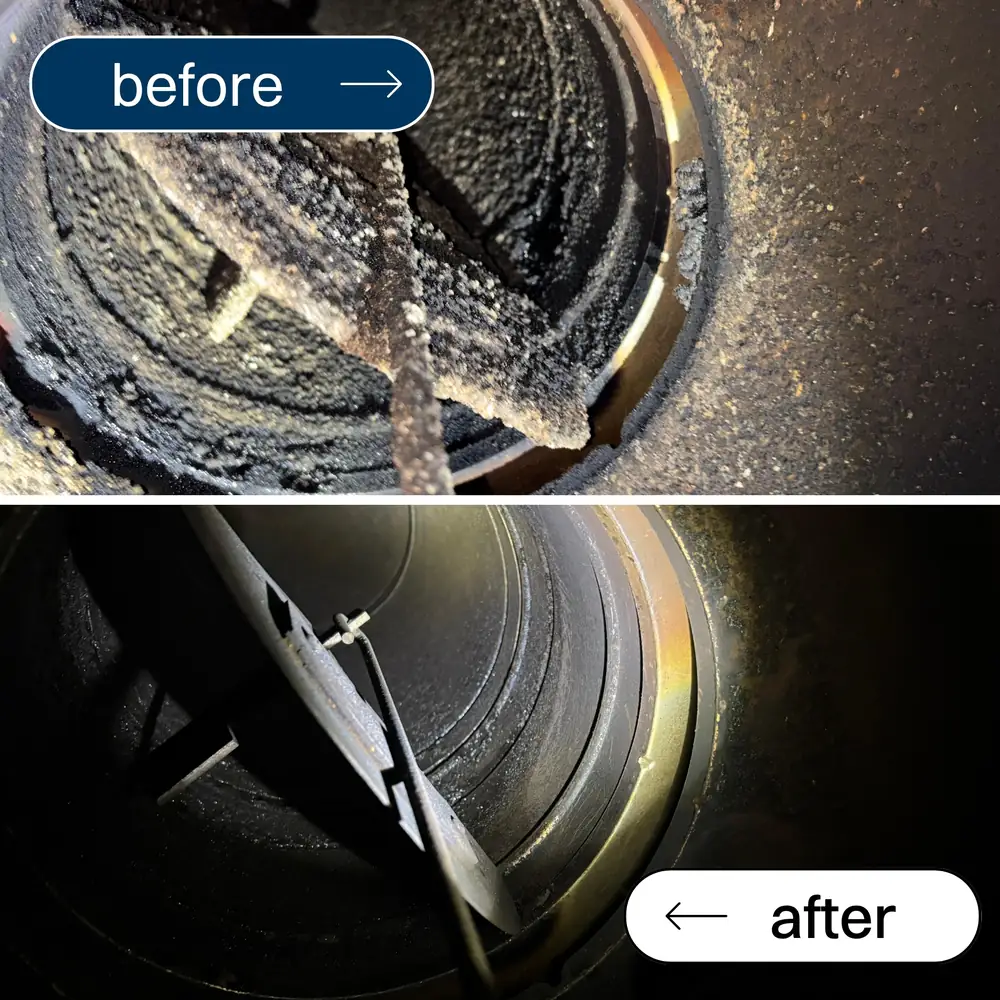
- Remove the blockage without causing more damageLeaves and many nests come out easily. Heavy creosote may need a chemical treatment. Fallen masonry has to come out carefully, especially if more is about to fall.
- Check it again before you use itClearing the visible debris doesn’t make the chimney safe on its own.
Most blockages are handled during a chimney sweep visit.
What Clearing a Blockage Won’t Fix
- A cracked or collapsed linerThat needs repair or relining.
- Crumbling mortar or loose brickThe source of the debris is still there.
- A broken damperIt needs its own repair.
- A missing or damaged capAnimals and leaves will come right back. See chimney cap replacement.
- A badly designed fireplace or ventDraft problems continue no matter how clean the flue is.
A standard sweep removes deposits and debris. It doesn’t rebuild mortar joints, replace broken tiles or stabilize a crumbling chimney.
Dangerous DIY Ways to Clear a Chimney
- Dropping bricks, logs or weights down the flueYou can crack the liner, pack the nest tighter or hurt someone below.
- Burning out the blockageA fire can light the nest or creosote, and if the chimney can’t vent, smoke and gases come into the house.
- Chimney cleaning logsThey don’t remove debris or masonry. If you suspect a blockage, don’t light anything, including a cleaning log.
- Household vacuums and makeshift brushesThey can damage the flue, blow fine soot into the room or ruin the vacuum.
When to Stop Using the Fireplace Right Away
- Heavy smoke filling the room. Leave and call 911.
- A roaring or loud cracking sound in the chimney, which can mean a chimney fire.
- Sparks, flames or dense smoke from the chimney top. Get out and call 911.
- Unusual heat or scorch marks on the walls around the fireplace.
- A carbon monoxide alarm or symptoms like headache, dizziness, nausea or confusion. The CDC warns that blocked chimneys can cause CO to build up indoors. Get everyone into fresh air and call for help.
During a suspected chimney fire, don’t climb on the roof, pour water into the chimney or try to fight it. See the NFPA’s home heating safety guidance and our guide to chimney fire prevention.
Think Your Chimney Is Blocked? Do This
- Keep the fireplace off. Don’t test it with paper or matches. A little smoke going up doesn’t prove the flue is clear.
- Look in the cold firebox with a flashlight for mortar, tile, leaves, heavy soot or nesting material. Don’t force a stuck damper.
- Listen for animals. If you hear any, leave them alone.
- Look at the chimney from the ground for a missing cap, nesting material or loose brick. Don’t climb up.
- Book an inspection and tell us everything you’ve noticed, so we bring the right tools.
If the chimney also vents a gas furnace or water heater, be extra careful. Some appliances need the flue open all the time. Stop using the affected appliance and call for help.
What Blockage Removal Costs in Atlanta (2026)
| Service | Typical Cost |
|---|---|
| Chimney sweep with straightforward debris removal | $199 to $399 |
| Nest or animal debris removal | $100 to $400 |
| Heavy or glazed creosote removal (added to the sweep) | $150 to $600+ |
| Level 1 inspection | $160 to $300 |
| Level 2 camera inspection | $260 to $460 |
| Complex blockage (collapsed tile, loose masonry) | Priced after a camera inspection |
| Relining or structural repair | $2,500 to $5,500+ for relining; rebuilding costs more |
Routine soot, leaves or loose debris usually stays in the few-hundred-dollar range. Costs go up with glazed creosote, hard roof access, animal contamination, collapsed tiles or crumbling masonry. The cause decides the price, which is why the camera comes first. See our chimney repair cost guide for full prices.
How to Prevent a Blocked Chimney
- Keep a good cap on. Stainless steel lasts best. Check the screen now and then, because it can clog too.
- Get an inspection every year, before cold weather.
- Burn dry wood. The EPA recommends firewood under 20% moisture. Wet wood builds creosote fast.
- Sort out draft problems before the first fire. Don’t assume weak draft is just cold air.
- Keep the firebox clean so fallen tile or mortar is easy to spot.
| When | What to Check |
|---|---|
| Before fireplace season | Book the annual inspection |
| After a big storm | Look at the cap and chimney from the ground |
| Before burning stored wood | Check its moisture |
| During the season | Watch for smoke, odd sounds or draft changes |
| When cleaning the cold firebox | Look for brick, mortar or tile pieces |
| If you hear animals | Stop using the fireplace and call for advice |
Frequently Asked Questions
Smoke and carbon monoxide can come into the house, and some blockages (nests, creosote) can catch fire.
Yes. A nest, a chunk of masonry or a clogged cap can narrow the flue without closing it, so the fireplace may still seem to draw on a good day.
Don’t count on it. Loose debris can shift and lodge somewhere else, and creosote and broken masonry don’t go away on their own.
It could be a blockage, a cold flue, house pressure, wind or a design problem. An open damper doesn’t prove the rest of the chimney is clear.
Yes. A cap screen packed with soot, leaves or nesting material can choke the flue. It should be cleaned, repaired or replaced.
No. Falling masonry means something inside the chimney or liner is breaking down. Have it checked first.
Yes. The CDC warns that blocked chimneys can cause CO to build up indoors. Keep working CO alarms on every floor.


