Skip to content
If water is showing up inside your fireplace, around the chimney breast, on the ceiling near the chimney, or on the wall above the mantel, don’t assume it’s “just a roof leak.” A chimney leaking water inside can come from several different places — damaged flashing, a missing or broken cap, a cracked crown, or deteriorated brick and mortar.
The biggest mistake homeowners make is treating every chimney leak like a simple caulking job. Sometimes the fix really is small. Other times, water has been entering the system for years, quietly damaging the flue liner, firebox, framing, and masonry from the inside out.
For homeowners across Atlanta, Sandy Springs, Roswell, Marietta, Alpharetta, Dunwoody, Brookhaven, Decatur, and Smyrna, the rule is simple: if you have a chimney leaking water inside, stop using the fireplace and schedule a chimney-specific leak inspection — not just a roof patch.
What Causes a Chimney Leaking Water Inside?
Most indoor chimney leaks come from one of four places: flashing, cap, crown, or masonry. Each one lets water in a different way, and each one calls for a different fix — which is exactly why these four issues are behind almost every chimney leaking water inside case we see across Atlanta.
The 4 Most Common Reasons a Chimney Leaks
Damaged Chimney Flashing
Flashing is the metal system that seals the joint where the chimney meets the roof. When it fails, water slips between the chimney and the roof structure, often causing ceiling stains, drywall damage, and attic moisture. Common problems include lifted or rusted metal, dried-out sealant, poor installation, gaps between the chimney and roof, and shingles pulling away nearby. A chimney flashing leak usually shows up fast during heavy rain, since the water is entering right at the roofline.
Missing or Broken Chimney Cap
A chimney cap covers the top opening of the flue. Without one, rain falls directly into the chimney, and animals, leaves, and debris can enter too. A missing or damaged cap can lead to water dripping into the firebox, a rusted damper, bad odors, animal nests, and water stains inside the fireplace. A properly installed stainless steel cap is one of the simplest ways to stop a chimney cap leak before it starts.
Cracked Chimney Crown
The crown is the concrete surface above the brickwork, and its job is to shed water away from the flue and chimney. When it cracks, water enters through the top and travels down inside the brick walls — one of the more dangerous leak sources, since a cracked chimney crown often stays hidden for a long time while causing water inside the firebox, a rusted damper, crumbling mortar, spalling brick, and hidden framing rot. A small crown crack can become a major chimney repair if it’s ignored long enough.
Deteriorated Brick and Mortar
Brick and mortar are porous. Over time, rainwater, humidity, sun exposure, and freeze-thaw cycles weaken the masonry, and once mortar joints soften or bricks begin to spall, water soaks directly into the structure. Signs include crumbling mortar, gaps between bricks, popped brick faces, white powdery staining, and dark wet patches after rain. If water is entering through deteriorated masonry, surface caulk won’t solve it — the chimney may need tuckpointing, waterproofing, crown repair, or partial rebuilding.
How to Tell Where the Leak Is Coming From
The location of the water damage can give you real clues about a chimney leaking water inside.
| Where You See It | Likely Source | Typical Signs |
|---|---|---|
| Ceiling near the chimney | Flashing | Brown rings, quick leaks during heavy rain, moisture in the attic near the roofline |
| Inside the firebox | Cap or crown | Dripping, rusted damper, damp brick, white powder (efflorescence), musty odor |
| Wall above the mantel | Crown, brick, or chase cover | Dark vertical streaks, peeling paint, bubbling drywall, staining on the chimney breast |
Flashing leaks tend to be fast — water enters at the roofline and shows up quickly during heavy rain. Cap and crown leaks are often slower, since masonry can absorb water for a while before it releases it inside the home.
Warning Signs You Shouldn’t Ignore
- Brown ceiling stains or dark wall streaks above the fireplace
- Peeling or bubbling paint, or soft drywall near the chimney
- A musty odor or dripping sounds during rain
- White powdery deposits on brick (efflorescence)
- A rusted damper, or rust stains inside the fireplace
- Crumbling firebox mortar or damp brick inside the fireplace
A rusted damper is one of the clearest signs of all. The damper is metal — if it’s rusting, sticking, or flaking orange rust, water is getting into the system somewhere above it. Any combination of these signs points to a chimney leaking water inside somewhere in the system, even if you can’t see exactly where yet.
A Real Example From an Alpharetta Home
A homeowner in Alpharetta noticed a water ring on the drywall above the fireplace mantel after a round of heavy storms. They assumed it was roof flashing and called a roofer, expecting a quick patch or a bead of caulk.
But when a chimney technician inspected the system, the flashing looked fine. The real problem was at the top — the concrete crown had been cracked for years, and every time it rained, water had been running down inside the brick walls instead of shedding away from the chimney.
From the ground, everything looked mostly normal. Inside the chimney, the damage was serious: the masonry had been soaked over and over, wood framing near the chimney had started to rot, and inside the flue, clay liner tiles had absorbed moisture, cracked, and begun falling apart — partially blocking the exhaust path. What looked like a simple roof leak turned into something much bigger: a chimney leaking water inside for years without anyone noticing, and a fire and carbon monoxide hazard on top of the water damage. The fix became a full restoration — masonry repair, flue relining, and framing repair — instead of the quick patch the homeowner expected.
Why Chimney Leaks Are So Common in Atlanta
Heavy Rain and Summer Storms
Atlanta storms can drop a lot of water fast. When flashing, crowns, caps, or mortar joints are already weak, a heavy downpour can force water into the system quickly — and a leak that only shows up during hard rain is still doing damage every time a storm hits, even if it’s invisible between storms.
Humidity and Freeze-Thaw Cycles
Atlanta humidity keeps masonry damp longer, and when brick, mortar, or framing can’t dry properly, moisture-related rot and mold risk can spread behind walls and ceilings. Add in winters that swing above and below freezing, and trapped water inside brick or concrete expands as it freezes — cracking crowns, popping brick faces, and opening mortar joints over time. This freeze-thaw cycle is one of the biggest reasons brick chimneys begin to spall.
Tree Debris
Atlanta’s heavy tree coverage means leaves, pine needles, and organic debris collect around chimney bases, gutters, and chase covers, trapping water against the chimney longer than it should sit. Debris can also clog caps and gutters, forcing water to back up around the chimney.
Historic Brick Chimneys
Older neighborhoods like Midtown, Inman Park, Grant Park, Decatur, and Virginia-Highland often have older masonry chimneys with porous brick, aging mortar, older flashing, or crowns that have already been patched multiple times. These need careful inspection, since water can enter through several small weaknesses at once.
Builder-Grade Chase Covers
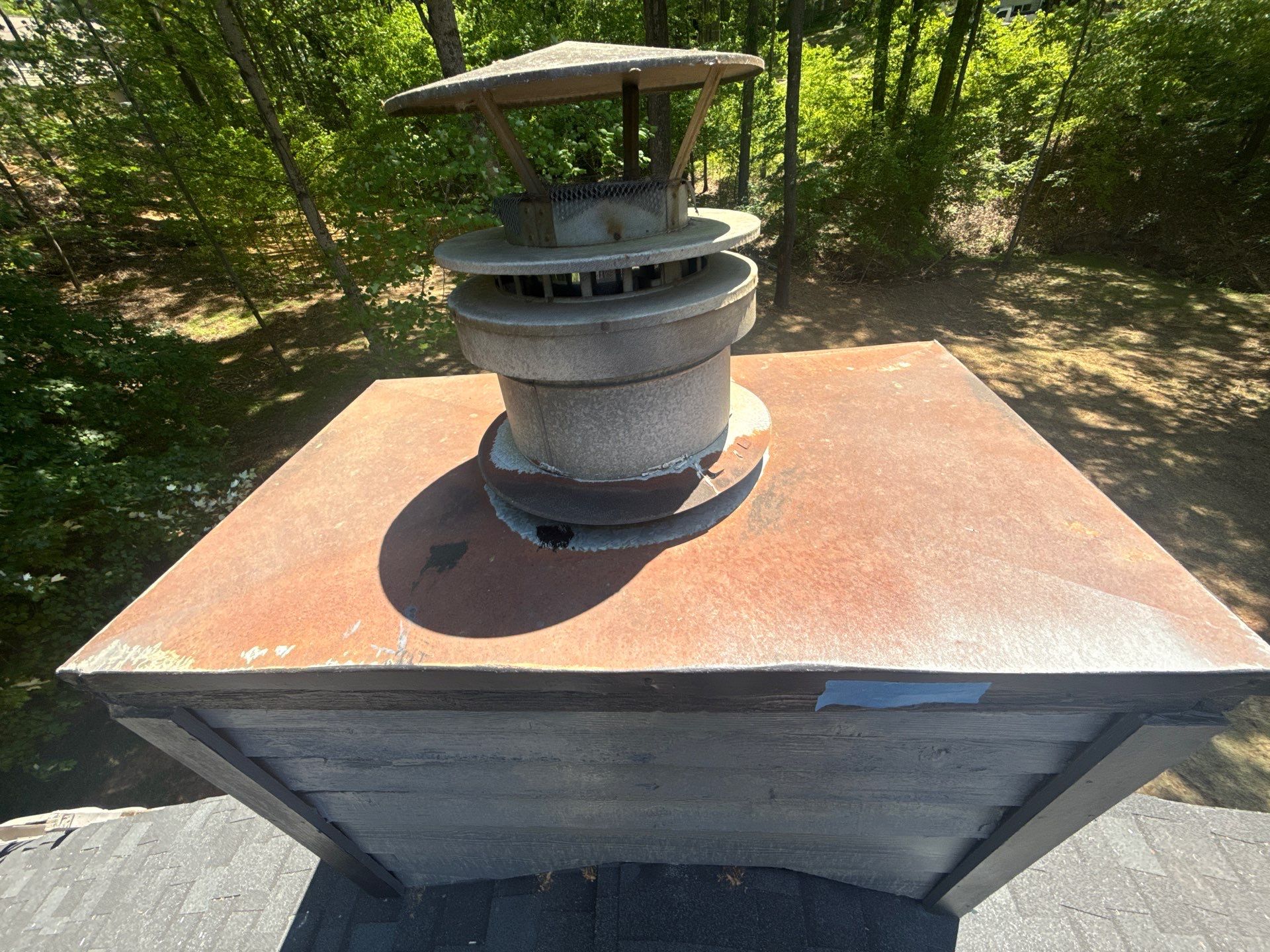
Many suburban Atlanta homes built in the 1990s and 2000s have wood-framed chimney chases with metal chase covers. A common problem is a flat or poorly sloped galvanized cover — over time it rusts, holds standing water, and eventually leaks directly into the chase, damaging framing, drywall, insulation, and the firebox area.
What Not to Do When Your Chimney Is Leaking
- Don’t light a fire. Water can damage clay flue liners, cause pieces to collapse, rust metal components, and create hidden blockages — treat the fireplace as out of service until it’s inspected and cleared.
- Don’t smear roofing tar or silicone on the crown. These fail under sun exposure and temperature swings, and can trap water inside cracks, making freeze-thaw damage worse. A crown needs chimney-specific repair materials — an elastomeric coating for small cracks, or a proper rebuild for structural failure.
- Don’t wrap the chimney tightly with a plastic tarp. This can trap moisture inside the masonry and create a greenhouse effect that accelerates deterioration instead of preventing it.
- Don’t ignore a leak just because it’s seasonal. A leak that only shows up during heavy storms is still doing damage between storms — waiting can turn a simple repair into drywall replacement, wood repair, or a full rebuild.
- Don’t hire only a roofer for a chimney system problem. A roofer may not inspect the flue liner, firebox, damper, crown, smoke chamber, or internal chimney structure — if water is showing up inside the fireplace or chimney breast, you need a chimney and fireplace company that inspects the whole system.
What a Proper Chimney Leak Inspection Includes
A real chimney leaking water inside deserves a top-to-bottom inspection, not a ground-level glance.
Roofline, Crown, and Cap Inspection
A hands-on check of the crown, cap, chase cover, flashing, counter flashing, step flashing, sealant condition, and nearby shingles — many chimney leaks start right where the chimney meets the roof or at the very top.
Masonry Inspection
The exterior brick and mortar get checked for spalling, soft or missing mortar, cracks, loose brick, efflorescence, and prior poor repairs. Masonry should be repaired before waterproofing — waterproofing over damaged mortar doesn’t restore structure.
Firebox and Damper Check
Inside the home: firebox brick and mortar, damper rust, water puddles, odor, and any staining inside the fireplace. The damper is often one of the first metal parts to show water damage.
Flue Camera Scan
A Level 2 camera inspection can reveal cracked clay tiles, gaps between liner sections, collapsed liner debris, blockages, animal nests, water staining, and areas where gases or heat could escape — along with creosote hidden by moisture that a standard sweep might miss. For an active water leak, this is often the single most important part of the inspection, since the most dangerous damage may be inside the flue.
Attic and Interior Wall Check
When accessible, the technician checks attic framing, insulation near the chimney, ceiling and wall stains, damp wood, and signs of rot — this helps determine whether the leak is still minor or has already spread into the home’s structure.
Controlled Water Testing
When the source is unclear, one technician sprays water on isolated chimney sections while another watches inside for where the leak appears, usually starting low near the flashing and moving up toward the crown and cap. The goal is to isolate the actual source instead of guessing.
Most Common Chimney Leak Repairs
The right repair depends on where the water is entering and how much damage has already happened.
Flashing, Crown, Cap, and Chase Cover Fixes
Flashing repair can mean resealing gaps, replacing rusted flashing, or correcting poor step flashing — if it’s old or badly installed, replacement usually beats another patch. Small crown cracks can often be repaired with a flexible, chimney-specific coating; severely damaged crowns may need a full rebuild with correct slope, drip edge, and overhang. A missing cap gets replaced with a properly sized stainless steel, copper, or multi-flue cap. And for wood-framed chases, a rusted cover gets replaced with a properly sloped, durable stainless steel or aluminum one — flat, poorly sloped metal covers are exactly what lets water sit, rust, and eventually leak.
Masonry Repairs
Tuckpointing repairs damaged mortar joints by grinding out failing mortar and replacing it — the right call when the brick itself is still solid. Breathable waterproofing, using a proper silane or siloxane-based repellent, can then help protect brick and mortar from absorbing rainwater going forward. The key word is breathable — regular paint or non-breathable sealers trap moisture and make damage worse.
Flue and Structural Repairs
If water has damaged the clay flue liner, relining with stainless steel creates a new, continuous exhaust path. If the damage has gone further — spalling brick, mortar that’s turned to sand, a leaning stack, or an unstable upper section — a partial or full masonry rebuild may be needed. Either way, the repair needs to address the original water source too: rebuilding the brick without fixing the crown, cap, flashing, or chase cover just restarts the same problem.
Small Repair or Major Restoration?
Not every chimney leaking water inside needs a full rebuild. But not every leak gets fixed with caulk, either.
Signs You Likely Need Only a Small Repair
- The cap is missing but the chimney is otherwise sound
- The flashing has one localized gap
- The crown has small hairline cracks
- The firebox is dry except during specific storms
- The flue liner is intact and the bricks aren’t spalling badly
- There’s no leaning, structural movement, or widespread water damage
Signs You Likely Need a Major Restoration
- Brick faces are popping off, or bricks crush when touched
- Mortar turns to dust, or the chimney is leaning
- The crown is severely broken or the chase cover has rusted through
- Water has damaged attic framing, or drywall is soft or sagging
- The flue liner is cracked or collapsed, with tile pieces in the firebox
- The same leak has already been patched more than once
What a Chimney Leak Repair Won’t Fix
Sealing the leak source stops new water from getting in — it doesn’t undo damage that’s already happened. A repair on its own won’t fix:
- Water damage already inside the home. Soft drywall, rotted framing, or existing mold concerns need their own remediation and carpentry work, separate from the chimney fix itself.
- A liner that’s already cracked or collapsed. Stopping the water doesn’t repair liner tiles that have already broken — that still needs its own relining work.
- A damper damaged by the same leak. If rust has already set in, the damper itself may need separate repair or replacement, even after the water source is sealed.
- Ongoing creosote or soot buildup. A dry, sealed chimney still needs regular cleaning and sweeping — fixing the leak doesn’t replace that maintenance.
Why You Should Stop Using the Fireplace After a Chimney Leak
A chimney leaking water inside isn’t only a water problem — it can become a fire and venting problem too. Water can crack clay flue liners, rust dampers and metal components, collapse liner tiles, soften mortar, and create hidden blockages. If the flue liner is cracked or blocked, smoke and gases may not exit properly, and heat may reach areas that were never meant to be exposed to it. The NFPA’s home heating safety guidance covers exactly this kind of risk. The safest advice: do not light a fire until the chimney has been inspected and cleared.
How to Choose the Right Chimney Company
Roofers are good at shingles and roof flashing — but chimney leaks aren’t always roofing problems, and a roofer may never inspect the flue liner, firebox, damper, crown, or smoke chamber. If water is showing up inside your fireplace or chimney breast, look for a chimney and fireplace specialist, not just a roofing contractor. Beyond that, the same baseline credentials matter for any chimney work:
- CSIA certification — the Chimney Safety Institute of America sets the industry’s recognized training standard
- Proof of insurance — protects you if something goes wrong on your property
- BBB accreditation — a verifiable track record, not just a promise
A good chimney company shouldn’t just tell you where the leak is. They should show you.
Final Answer
If you’re dealing with a chimney leaking water inside, the source is almost always one of four places: flashing, cap, crown, or masonry. Flashing leaks tend to show up fast during heavy rain. Cap and crown leaks are usually slower, since masonry absorbs water before it releases it inside the home. Either way, the fix depends entirely on where the water is actually getting in — which means a real inspection, not a guess from the yard.
Final Advice From Our Team
This depends on the chimney — but do not assume it’s only flashing, do not smear hardware-store caulk on the crown, and do not keep using the fireplace while you wait and see. A leak that starts as a small crown crack or missing cap can end up damaging masonry, liners, metal parts, drywall, and framing the longer it’s ignored.
Call (470) 706-6431 or contact us to schedule an inspection for a chimney leaking water inside in Atlanta, GA.
FAQ
Why is my chimney leaking water inside?
Water may be entering through damaged flashing, a missing chimney cap, a cracked chimney crown, deteriorated brick and mortar, a rusted chase cover, or damaged flue components.
Is a chimney leak the same as a roof leak?
Not always. A chimney leak can come from roofline flashing, but it can also come from the chimney cap, crown, masonry, chase cover, or internal flue damage.
Why is there water inside my fireplace after rain?
Water in the fireplace often points to a missing cap, cracked crown, damaged flue liner, or deteriorated masonry — usually water entering from the top of the chimney or soaking through the brick.
What are signs my chimney is leaking?
Common signs include ceiling stains, wall streaks, musty odor, a rusted damper, white powder on brick, peeling paint, soft drywall, dripping sounds, and crumbling firebox mortar.
Can I use my fireplace if my chimney is leaking?
No. Stop using the fireplace until the chimney is inspected. Water damage can create hidden blockages, cracked liners, and fire or carbon monoxide hazards.
Can I fix a chimney leak with caulk?
Regular caulk, roofing tar, or silicone isn’t a proper long-term fix. Chimneys need the correct flashing, crown repair materials, breathable waterproofing, or masonry repairs depending on the leak source.
Does a missing chimney cap cause leaks?
Yes. A missing or damaged cap allows rain, animals, leaves, and debris to enter the flue directly.
What is the white powder on my fireplace brick?
White powder on brick is usually efflorescence — it appears when moisture moves through masonry and leaves mineral deposits behind as it evaporates.
When does a chimney leak become serious?
A chimney leak becomes serious when it causes spalling brick, crumbling mortar, rusted metal parts, damaged firebox mortar, rotted framing, soft drywall, or a cracked and collapsed flue liner.
Who should I call for a leaking chimney in Atlanta?
Call a chimney and fireplace company that can inspect the roofline, flashing, crown, cap, masonry, firebox, damper, attic areas when accessible, and the internal flue liner. Clean Air Duct Cleaning & Chimney can inspect the full system and help determine whether the leak is a small repair or a larger restoration issue.