Skip to content

Before you light the first fire of winter, your chimney needs more than a quick glance from the living room — it needs real winter chimney prep, starting with a professional look at what you can’t see from the hearth.
A fireplace can look clean and still have dangerous creosote buildup, animal nesting, a stuck damper, cracked liner tiles, water damage, or hidden flue problems that only show up under heat. The U.S. Fire Administration recommends having heating equipment and chimneys cleaned and inspected every year by a qualified professional, and CSIA references NFPA 211 guidance calling for chimneys, fireplaces, and vents to be inspected annually for soundness, deposits, and proper clearances.
For homeowners across Atlanta, Sandy Springs, Roswell, Marietta, Alpharetta, Dunwoody, Brookhaven, Decatur, and Smyrna, the goal of winter chimney prep is simple: confirm your chimney can safely handle heat, smoke, moisture, animals, and hidden flue damage before the first cold snap hits.
The Winter Chimney Prep Checklist
Before fireplace season starts, focus on five things:
- Schedule a professional chimney inspection and sweep.
- Test your smoke and carbon monoxide alarms.
- Check that the damper opens, closes, and seals properly.
- Clear furniture, decorations, and firewood away from the hearth.
- Do a ground-level check of the chimney cap, crown, flashing, and exterior masonry.
That list sounds simple, but a chimney isn’t just a brick tube — it’s a venting system that has to move smoke, heat, sparks, and gases safely out of the home. If one part fails, the fireplace can become a fire, smoke, or carbon monoxide hazard. Here’s how to work through each piece.
Basic Safety Steps Before Your First Fire
Test Your Smoke and Carbon Monoxide Alarms
Test every smoke alarm and CO detector in the home, replace old batteries, and check expiration dates. This matters because chimney problems aren’t always visible — carbon monoxide is odorless, and if a blocked chimney or draft problem pushes gases back into the home, you may not know until an alarm sounds. A working detector isn’t a substitute for a chimney inspection, but it’s an essential backup layer.
Clear the Area Around the Hearth
Move furniture, rugs, curtains, holiday decorations, firewood stacks, paper, and pet beds away from the fireplace opening. Many homeowners prep the inside of the fireplace but forget the area around it — sparks can jump, logs can roll, and decorations can dry out near heat. A clear hearth area is basic winter fire safety, not an afterthought.
Check and Test Your Damper
The damper is the metal plate that opens and closes the fireplace throat, and it’s one of the most important pieces of winter chimney prep to get right. With the fireplace cold, open and close it and check whether it moves smoothly, sticks, feels rusted, is blocked, or doesn’t fully open or close.
Don’t force a stuck handle — that can snap hardware or bend the frame. If the damper won’t open fully, don’t use the fireplace until it’s inspected. Once you confirm it works, remember the rule: closed when the fireplace isn’t in use (to reduce cold air movement), fully open whenever a fire is burning or smoldering (so smoke and gases can escape).
Check the Chimney Cap and Exterior From the Ground
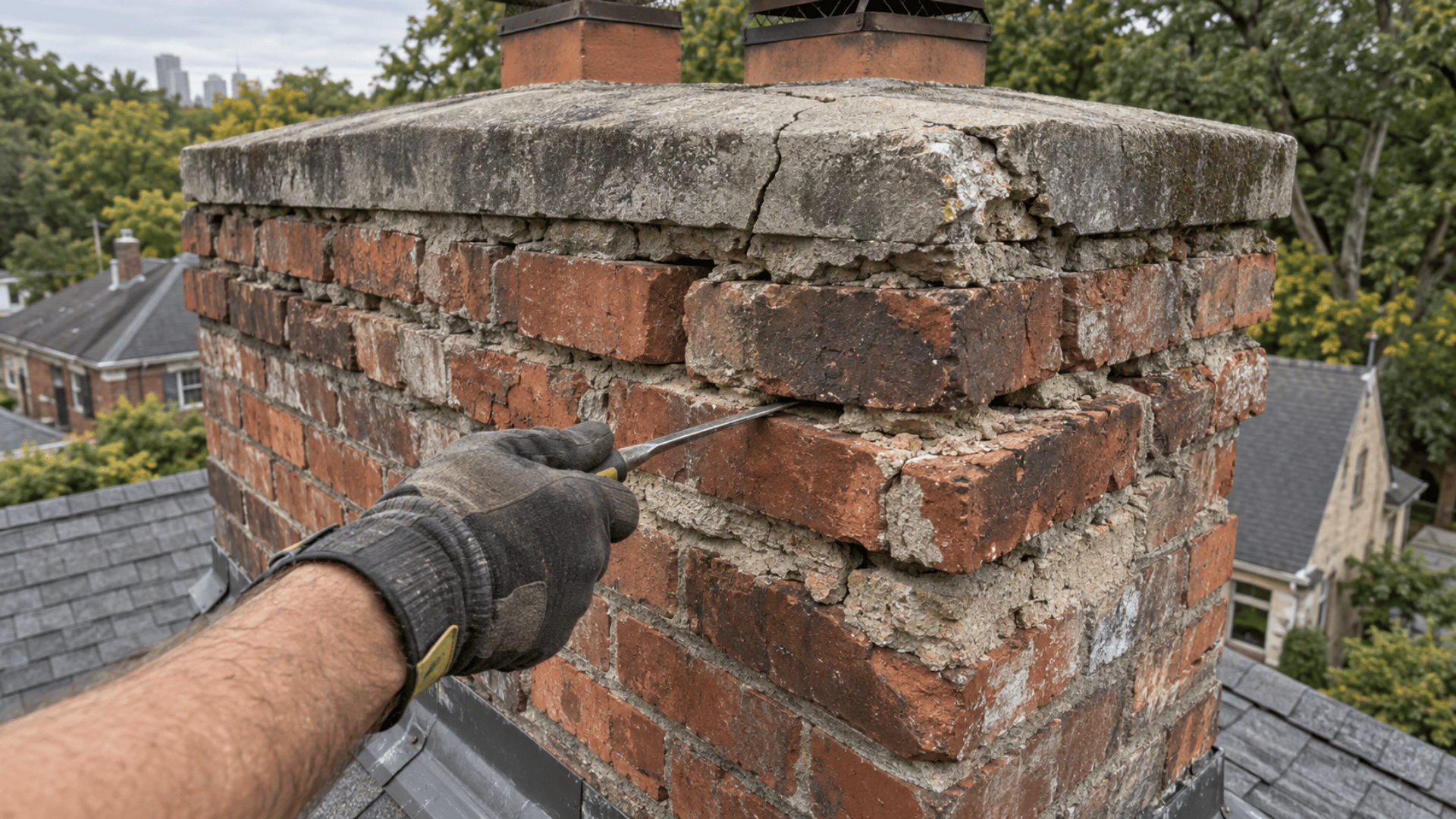
You don’t need to climb onto the roof. Step outside, look at the chimney from the yard, and use binoculars or your phone’s zoom. Look for a missing or crooked chimney cap, rust stains, broken masonry, a leaning chimney, cracked crown, loose bricks, missing mortar, tree debris near the top, or white powdery deposits on the brick.
This doesn’t replace a professional inspection, but it catches obvious problems early. If the cap is missing, don’t ignore it — an open flue lets in rain, animals, leaves, and debris, and that’s often where winter chimney prep problems start.
What Happens If You Skip Winter Chimney Prep
Using an uninspected chimney is risky because the most dangerous problems are usually hidden inside the flue, not visible from the room.
Creosote Chimney Fires
Creosote is a flammable byproduct of burning wood — it can look powdery, flaky, sticky, or shiny depending on the stage, and the more it builds up, the more dangerous the chimney becomes. CSIA warns that chimney fires can occur without the homeowner realizing it, and fire damage to the liner and masonry can endanger the home and occupants.
Carbon Monoxide Backup
A blocked or damaged chimney can push carbon monoxide and other combustion gases back into the home — common causes include animal nests, collapsed flue tiles, heavy creosote buildup, a closed damper, or poor draft. This is one of the main reasons a chimney shouldn’t be used until it’s been inspected and cleared.
Smoke Damage
If the chimney doesn’t draft properly, smoke can spill into the living room and stain walls, furniture, and ceilings, leaving an odor that’s hard to remove. A smoky fireplace isn’t normal — it usually points to a draft problem, obstruction, cold flue, or negative pressure issue, which we cover in more depth in our guide on why fireplaces smoke into the house.
Hidden Heat Transfer
One of the scarier hazards is heat escaping through cracks or damaged liners into areas that should never be exposed to it. Building codes require real clearance between masonry chimneys and combustible materials — the 2024 International Building Code lists a minimum 2-inch airspace clearance for masonry chimneys located inside or within exterior walls. Prolonged heat exposure can lower the ignition temperature of nearby wood framing, which is exactly why hidden heat transfer is so dangerous.
Common Pre-Winter Chimney Problems in Atlanta Homes
Atlanta chimneys have their own pattern of problems tied to local weather, humidity, trees, older masonry, and wildlife. The National Weather Service describes North and Central Georgia as having warm, humid summers, winter periods that swing between mild and cold, over 60 inches of annual rainfall in parts of the region, and frequent spring and summer thunderstorms — a rough environment for chimneys, and exactly what winter chimney prep is designed to catch before it becomes a bigger problem.
Spalling Bricks and Crumbling Mortar
Heavy rain and humidity keep masonry damp, and winter temperature swings can cause trapped water inside brick and mortar to expand when it freezes. Watch for brick faces breaking off, sandy or loose mortar, white powdery deposits, and dark wet masonry. If the masonry is already failing before winter, fireplace use should wait until it’s inspected.
Chimney Swift Nesting Blockages
Chimney Swifts commonly nest inside chimneys, and the U.S. Fish & Wildlife Service notes they’re protected under the Migratory Bird Treaty Act — meaning homeowners shouldn’t try to remove active nests themselves. If birds nested during spring or summer, leftover nesting material can block the flue before winter use. A professional can determine whether a nest is active or abandoned and recommend the right timing and solution, and a properly meshed cap helps prevent it from happening again.
Cracked Chimney Crowns
Atlanta crowns crack often from weather exposure, sun, moisture, and freeze-thaw cycles. A cracked crown lets water run down inside the chimney structure, leading to a rusted damper, water stains, firebox damage, and spalling brick — and it should be repaired before winter rain and cold make it worse. If you’re not sure whether a crack means a quick repair or something bigger, our guide on chimney repair vs replacement walks through that decision.
Rusted Dampers and Flashing Leaks
Humidity and water entry rust metal chimney components — watch for a stiff or squeaking damper, orange rust flakes, rust streaks on the exterior, or water stains near the ceiling. A rusted damper is often a symptom of a bigger water problem, like a missing cap, cracked crown, or flashing leak.
Humid Creosote Odor
Some homeowners notice a strong campfire smell before they’ve even lit the first fire of the season. Old soot and creosote can sit in the chimney all spring and summer, and rising humidity often makes that odor stronger and pulls it into the living room — usually a sign the chimney needs cleaning and inspection, not just an air freshener.
A Real Example From a Decatur Home
One of the most dangerous assumptions homeowners make is “it worked fine last winter, so it’ll be fine this winter.” That’s not always true.
A homeowner in Decatur used their fireplace all winter with no obvious problems — no smoke backup, no leak, no bad smell. But during the last few fires of the season, a tiny hairline crack formed in one of the clay flue liner tiles from repeated heating and cooling. Nobody saw it. The fireplace sat unused through spring and summer, and the crack sat there too.
When the first cold snap hit and the homeowner lit a fire, heat was no longer fully contained inside the flue. Over repeated fires, it transferred through that hidden breach toward nearby wood framing. The fire didn’t start in the living room — the framing inside the wall cavity was slowly exposed to heat until, during a later weekend of heavy use, the wall cavity ignited. The homeowner smelled smoke but couldn’t see flames, because the fire was burning inside the wall.
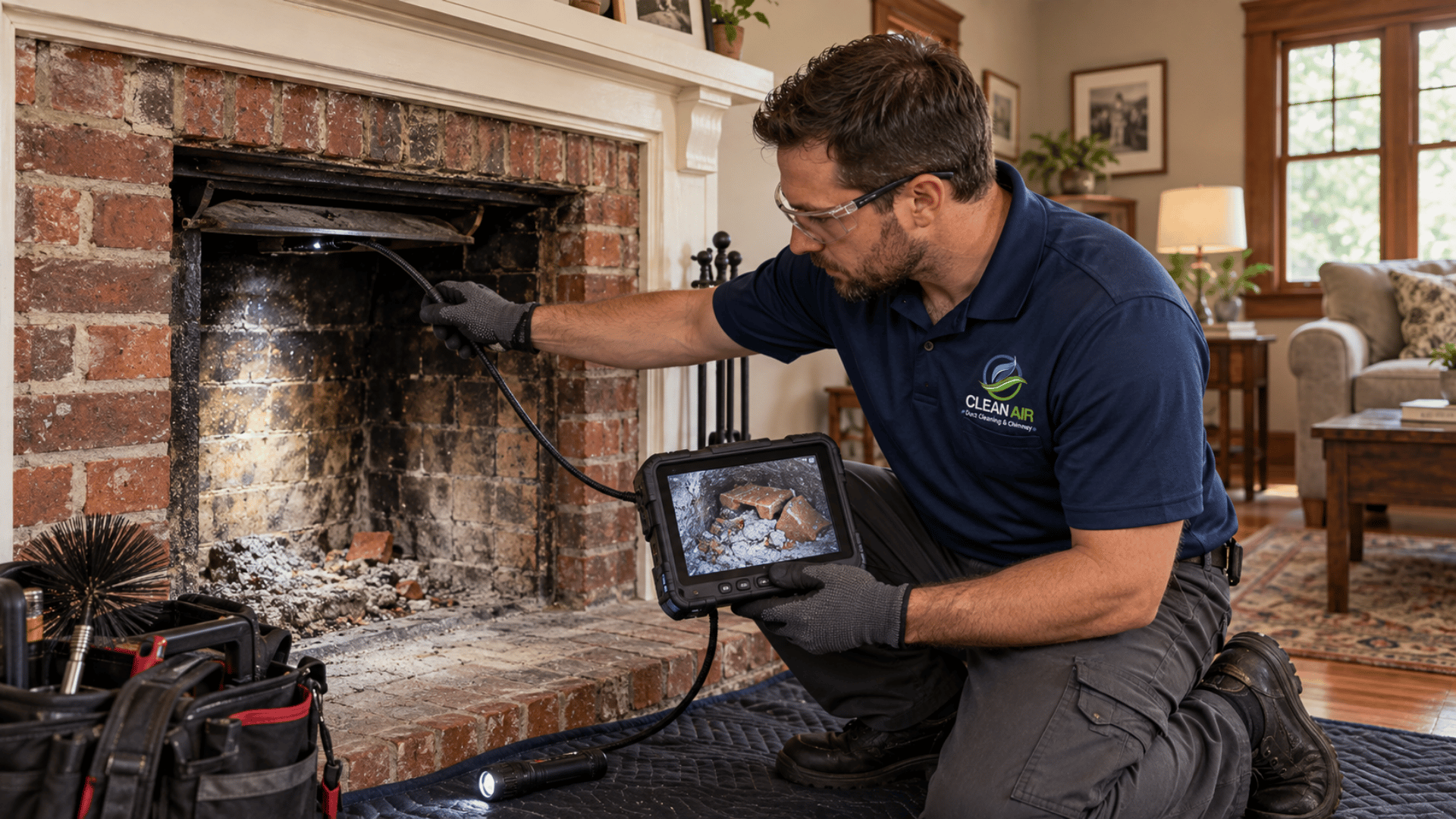
A homeowner looking up from the hearth would never have seen that crack. A Level 2 camera inspection would have. That’s exactly what proper winter chimney prep is meant to catch before the season starts, not after.
What Else to Check Before You Call a Professional
This doesn’t replace a professional inspection, but it helps you describe symptoms clearly when you call.
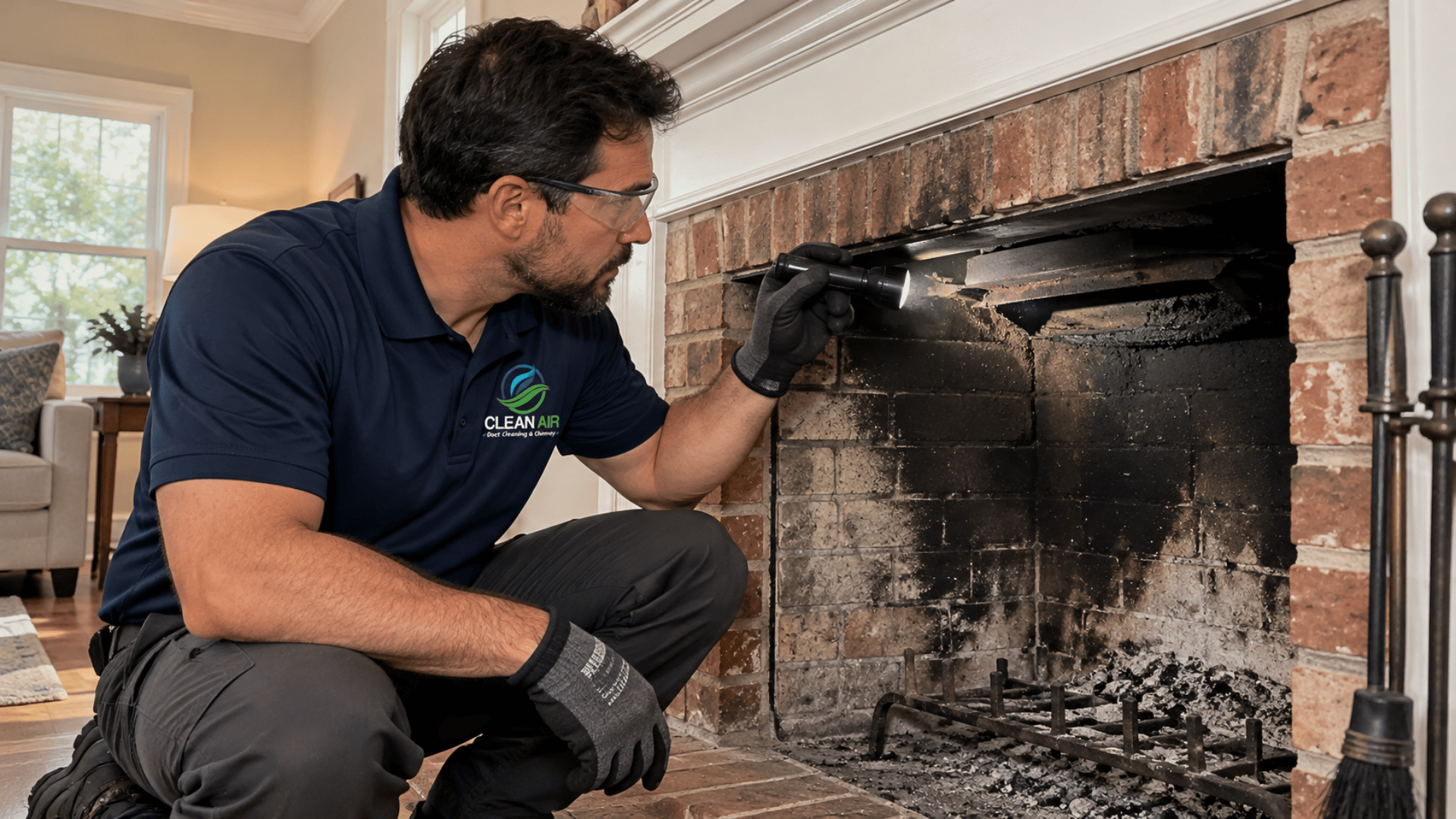
Shine a Flashlight Up the Flue
From inside the fireplace, look for nests, leaves, fallen brick, clay tile pieces, heavy black buildup, or rusted metal. A flashlight only shows the lower visible area — it can’t confirm the entire flue is safe.
Inspect the Firebox
Look at the brick and mortar where the fire burns for cracks, missing mortar, loose brick, rust stains, water stains, or white powdery deposits. Firebox damage should be repaired before regular winter use.
Look for Water Stains
Check for brown ceiling rings, stains above the mantel, peeling paint, soft drywall, musty smells, or damp brick. Water damage before winter is a major red flag — if any of this looks familiar, our guide on why chimneys leak water inside covers the most likely sources.
If your self-check turns up any of these — plus a chimney that’s visibly leaning, a recent chimney fire, or storm and lightning damage — treat the fireplace as out of service until a professional clears it. When in doubt, don’t light it.
What NOT to Do When Prepping Your Chimney for Winter
- Don’t rely on creosote sweeping logs. CSIA’s homeowner guidance is clear that chemical cleaning products shouldn’t replace annual inspection and professional cleaning — logs may loosen light deposits, but they don’t remove thick creosote, inspect liner cracks, or clear nests.
- Don’t use the fireplace with a stuck damper. A partially closed damper can force smoke and carbon monoxide into the room. This isn’t something to “test” — it needs to be inspected and corrected first.
- Don’t remove animal nests yourself. You could get injured, run into wildlife protections, or push debris deeper into the flue. Have it inspected and handled properly.
- Don’t use makeshift cleaning tools. Chains, bricks, or homemade brushes down the chimney can crack liner tiles, damage the smoke chamber, or push debris into a worse blockage.
- Don’t light a test fire to “burn out” debris. Never try to burn out a nest, soot, or creosote — that can trigger a chimney fire that damages the liner, cracks masonry, or creates hidden structural hazards.
- Don’t paint over damaged masonry. Painting crumbling brick or mortar traps moisture inside, accelerating freeze-thaw damage. Repair it properly first, then protect it with a breathable water repellent if needed.
Best Firewood and Burning Habits for Winter
Once winter chimney prep is done and the chimney’s cleared for use, your burning habits determine how clean it stays.
Burn Seasoned Hardwood, Skip the Wet Stuff
Use seasoned hardwood like oak, ash, maple, or hickory. The EPA recommends burning dry, seasoned wood at less than 20% moisture content — a moisture meter is one of the simplest tools a homeowner can buy. Wet or green wood wastes heat boiling off moisture before it can burn efficiently, and it creates more smoke, more creosote, a stronger odor, and dirtier glass doors along the way.
Never Burn Treated Wood, Trash, or Evergreens
Skip painted wood, treated lumber, pallets, construction scraps, cardboard, trash, Christmas trees, and evergreen branches. Treated and painted wood can release toxic fumes, and evergreen material can burn too hot and spark aggressively.
Keep the Damper Fully Open During the Fire
The damper needs to stay fully open the entire time a fire is burning or smoldering. Closing it early traps smoke and gases inside, which can mean smoke backup, carbon monoxide risk, and more creosote.
Build Smaller, Hotter Fires
Smoldering fires create more smoke and creosote than clean ones. A better burn comes from dry wood, good airflow, smaller fires, proper kindling, and not overloading the firebox — a smoky, lazy fire isn’t doing your chimney any favors.
Crack a Window in a Tight Home
Newer or tightly sealed homes can struggle with draft. If the house is under negative pressure, smoke may roll back into the room — cracking a window slightly can provide makeup air. This isn’t a fix for a blocked or damaged chimney, but it can help draft in tight homes once the chimney’s already been inspected and cleared.
What a Professional Winter Chimney Prep Service Should Include
A professional pre-winter visit shouldn’t be rushed — it should include real cleaning, inspection, safety checks, and documentation.
Full Chimney Sweep
Flue brushing, smoke chamber and smoke shelf cleaning, firebox cleaning, and soot, creosote, and debris removal, typically with HEPA vacuum control and protection for the home’s interior. The goal isn’t just a cleaner-looking fireplace — it’s removing combustible deposits and obstructions.
Level 1 or Level 2 Inspection
For routine annual service with no symptoms, a Level 1 inspection may be appropriate. A Level 2 is the right call if the home is being bought or sold, there are smoke or water issues, there was a chimney fire or storm damage, the fireplace history is unknown, or the technician finds warning signs during a Level 1 look. A good company should explain which level they’re recommending and why, not just default to whichever is cheaper.
Exterior, Roofline, and Cap Evaluation
Brick condition, mortar joints, spalling, cracks, leaning, crown condition, cap condition, flashing, rust stains, chase cover, and nearby tree debris or gutters. A chimney can be perfectly clean inside and still be vulnerable to a winter leak if the crown, cap, or flashing is failing.
Component and Clearance Check
The damper, ash dump door, firebox, smoke chamber, hearth area, doors or screens, and log grate — plus a check of the clearance around the mantel, trim, nearby furniture, rugs, and decorations. Clearance matters because heat and sparks need room to be safe.
Photos and a Written Report
Expect a written report, photos of any defects, an explanation of safety concerns, repair recommendations, and a clear priority list separating what’s urgent from what’s routine maintenance. A good chimney company shouldn’t just tell you what’s wrong — they should show you.
What Winter Chimney Prep Won’t Fix
An inspection and sweep confirm the chimney is safe to use and catch problems early — they don’t repair everything they find. Winter chimney prep won’t fix:
- Existing cracks or spalling brick. The inspection identifies structural damage, but fixing it is its own job — see our guide on chimney repair vs replacement for what that involves.
- A liner that’s already cracked or collapsed. That’s a separate relining project, not something a sweep resolves.
- A damper that’s rusted through or broken. Testing reveals the problem; actual repair or replacement is a separate visit.
- An active leak already causing interior damage. Prep can identify the source, but repairing water damage to drywall or framing is a separate job.
- Bad burning habits. A clean, inspected chimney still needs dry, seasoned wood and good fire practices from the homeowner — prep gets the system safe; it doesn’t burn the wood for you.
Best Time to Start Winter Chimney Prep in Atlanta
For Atlanta homeowners, late summer through early fall — August and September — is the ideal window.
- You beat the first cold-snap rush. Once the first chilly week hits, chimney companies get flooded with calls, and scheduling early means you’re not waiting weeks for an appointment.
- You leave time for repairs. If the inspection finds a cracked crown, spalling brick, or flashing problems, masonry repairs need the right weather conditions to cure properly — waiting until winter makes that harder to schedule and complete.
- You handle wildlife issues properly. If Chimney Swifts used the chimney over the summer, early fall is a better time to identify and address abandoned nesting material safely, before a cap goes back on.
- You prepare before heavy leaf drop. Atlanta’s tree canopy means leaves and debris can clog caps, gutters, and roof valleys — early service beats the worst of it.
How to Choose the Right Chimney Company
Whether it’s your first winter chimney prep or your tenth, look for:
- CSIA certification — the Chimney Safety Institute of America sets the industry’s recognized training standard
- Proof of insurance — protects you if something goes wrong on your property
- BBB accreditation — a verifiable track record, not just a promise
- Willingness to show proof, not just tell you what’s wrong — photos, video, and a written report before any work is approved
Final Answer
Winter chimney prep in Atlanta comes down to five things: a professional inspection and sweep, working smoke and CO alarms, a damper that opens and seals properly, a clear hearth area, and a ground-level check of the cap, crown, and exterior. A lot can change between fireplace seasons — animals nest, water gets in, dampers rust, crowns crack, and liner tiles can shift without ever being visible from the hearth. The only way to know your chimney is actually ready is to have it checked before you strike the first match.
Final Advice From Our Team
This depends on the chimney — but do not light the first fire of winter just because it worked fine last year. If you haven’t had the chimney inspected yet, treat the fireplace as out of service for now. A cozy fire isn’t worth risking a chimney fire, carbon monoxide backup, or a hidden fire inside the wall.
Call (470) 706-6431 or contact us to schedule winter chimney prep in Atlanta, GA.
FAQ
How do I do winter chimney prep before using my fireplace?
Schedule a professional chimney inspection and sweep, test smoke and carbon monoxide alarms, check the damper, clear the hearth area, inspect the chimney cap and exterior, and use only dry, seasoned wood once the fireplace is cleared for use.
Do I need a chimney inspection every year?
Yes. The U.S. Fire Administration recommends having chimneys cleaned and inspected every year by a professional, and CSIA references NFPA 211 guidance for annual chimney inspection as a core part of winter chimney prep.
When is the best time to start winter chimney prep in Atlanta?
Late summer through early fall is ideal, especially August and September. This helps homeowners beat the winter rush and leaves time for repairs before colder weather.
Can I use a creosote sweeping log instead of hiring a chimney sweep?
No. Creosote sweeping logs don’t replace professional chimney cleaning or inspection. They can’t confirm liner safety, remove major blockages, or inspect hidden damage.
What are signs my chimney is not safe to use?
Warning signs include smoke backup, a stuck damper, water leaks, rust, strong odors, animal sounds, visible nests, fallen tile pieces, heavy black buildup, cracked firebox brick, or stains near the chimney.
What kind of wood should I burn in my fireplace?
Burn dry, seasoned hardwood such as oak, ash, maple, or hickory. The EPA says wood burns best when moisture content is less than 20%.
Can I burn wet wood if I keep the fire hot?
No. Wet wood creates more smoke, less heat, and more creosote. Use properly seasoned wood and test it with a moisture meter.
Should I keep the damper open or closed?
Keep the damper closed when the fireplace isn’t in use to reduce cold air movement. Keep it fully open whenever a fire is burning or smoldering so smoke and gases can escape.
What if birds are nesting in my chimney?
Don’t remove active nests yourself. Chimney Swifts are protected under the Migratory Bird Treaty Act, according to the U.S. Fish & Wildlife Service. Call a chimney professional for proper guidance.
Who should I call to prepare my chimney for winter in Atlanta?
Call a chimney and fireplace company that can sweep the chimney, inspect the flue, check the firebox and damper, evaluate the cap, crown, flashing, and masonry, and provide photos with a written report. Clean Air Duct Cleaning & Chimney can handle winter chimney prep from start to finish.